By Dr Norman Monks | Director Research and Conservation (ALERT)
Helping Communities who live on the boundaries with Protected Areas with human-wildlife conflicts is a major aspect of ALERT’s Community program. This report concentrates on the communities to the north, west and east of Chizarira National Park. The Park is nearly 2,000km2 in extent and the Community we are actively involved with is the Mucheni Community.
Living next to an unfenced National Park such as Chizarira makes the villagers vulnerabkle to wildlife incidents. Our role is to mitigate these incidents as far as possible using none-lethal methods and forewarning villagers of possible raids by elephants, lions and spotted hyaena.
As a means of forewarning Communities of a possible raid by elephants or lions we (together with the management of the park) are collaring lions and elephants in the park so that we are able to track their movements and identify hot spots that will need special attention. As the animals move towards the villages, we are able to alert the villagers to take precautions such as building fires around fields and ensuring that the livestock is kept secure and guarded.
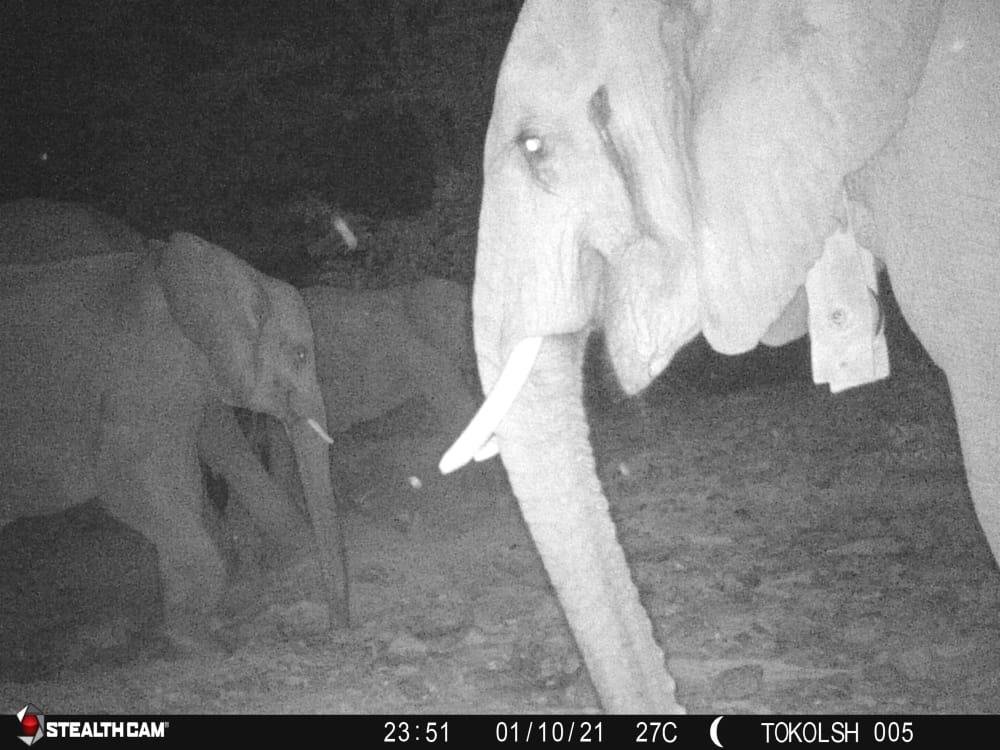
During the period covered by this report we managed to collar a bull elephant and were able to warn villagers of a possible raid. The bull was photographed using a trail camera on the edge of the Park which makes the project very real to us and the villagers.
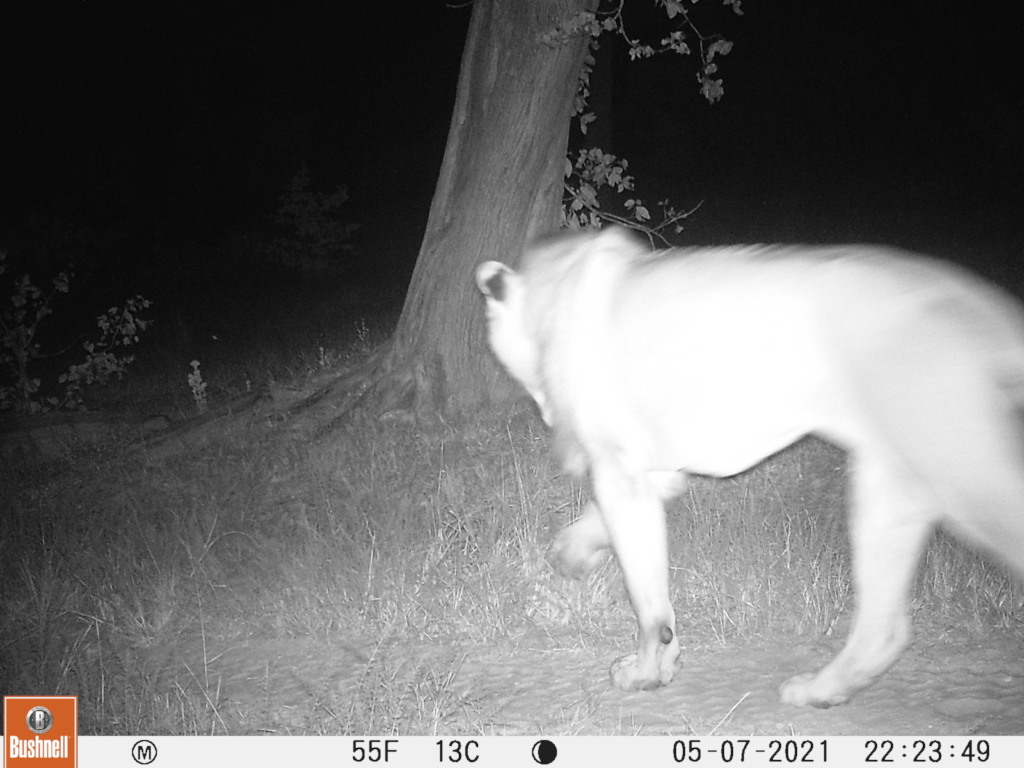
In addition we attempted to collar a male lion that was a potential problem but we failed in this endeavor. Two University attachment students joined us and we built a hide from which to dart the lion. A big leopard came up to the meat we had hung from a tree and later a spotted hyaena came up and ripped the meat off the tree. A lion was roaring nearby and we could tell by the volume of the roar that he was coming closer but he did not come up to that bait. When we left, the lion came up to smell the tree that the bait was on and he was captured on a trail camera.
We will continue our mitigation work this next period by putting in predator-proof holding pens for wildlife and will continue to attempt to collar more lions and elephants so that we can work out movements and potential hot spots that will need our attention.
Project reports on GlobalGiving are posted directly to globalgiving.org by Project Leaders as they are completed, generally every 3-4 months. To protect the integrity of these documents, GlobalGiving does not alter them; therefore you may find some language or formatting issues.
If you donate to this project or have donated to this project, you can receive an email when this project posts a report. You can also subscribe for reports without donating.