By Sahar Tuffaha | Arts & Drama Teacher
As an Arts & Drama Teacher at TYO, I utilize psychodrama, a therapeutic technique in child psychotherapy involving role-playing and social interaction. This approach relies on theatrical representations of experiences and emotions, helping children express themselves and understand their feelings in creative and indirect ways.
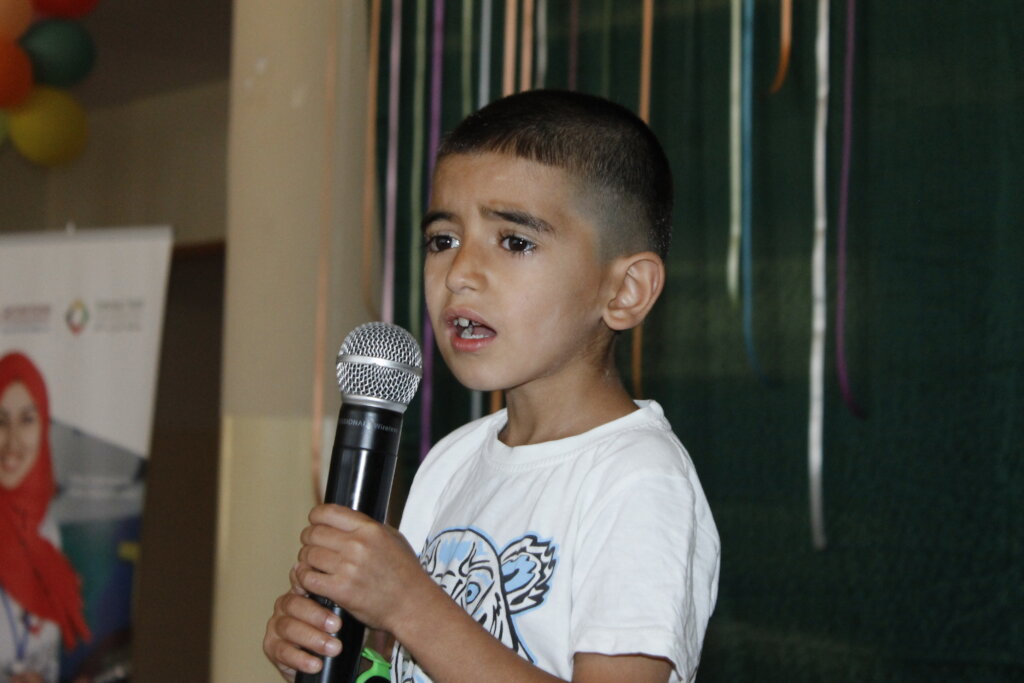
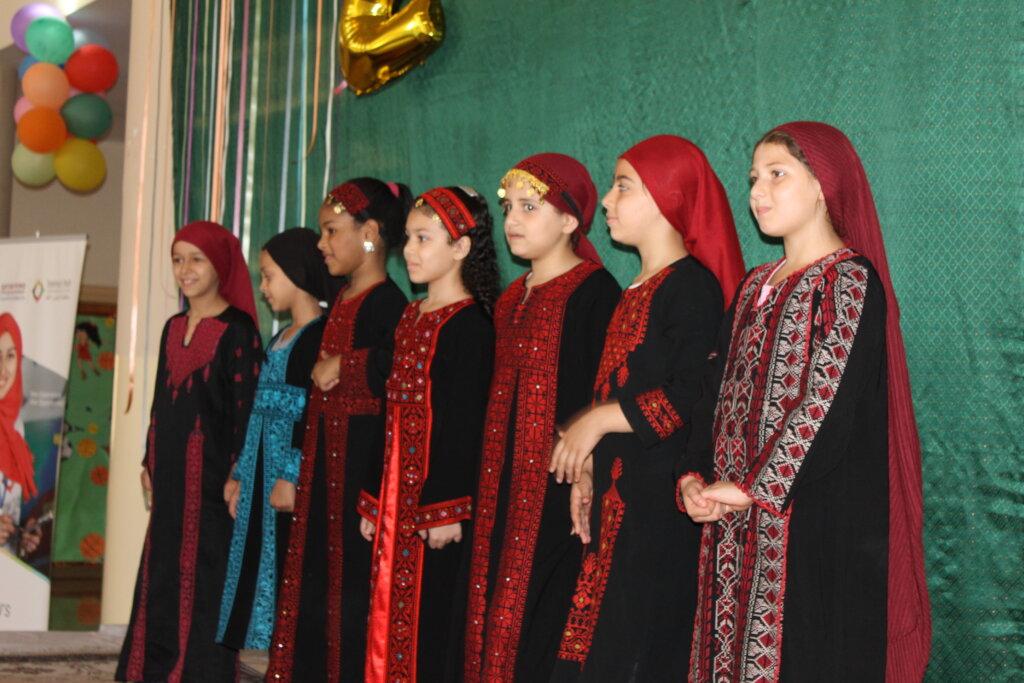
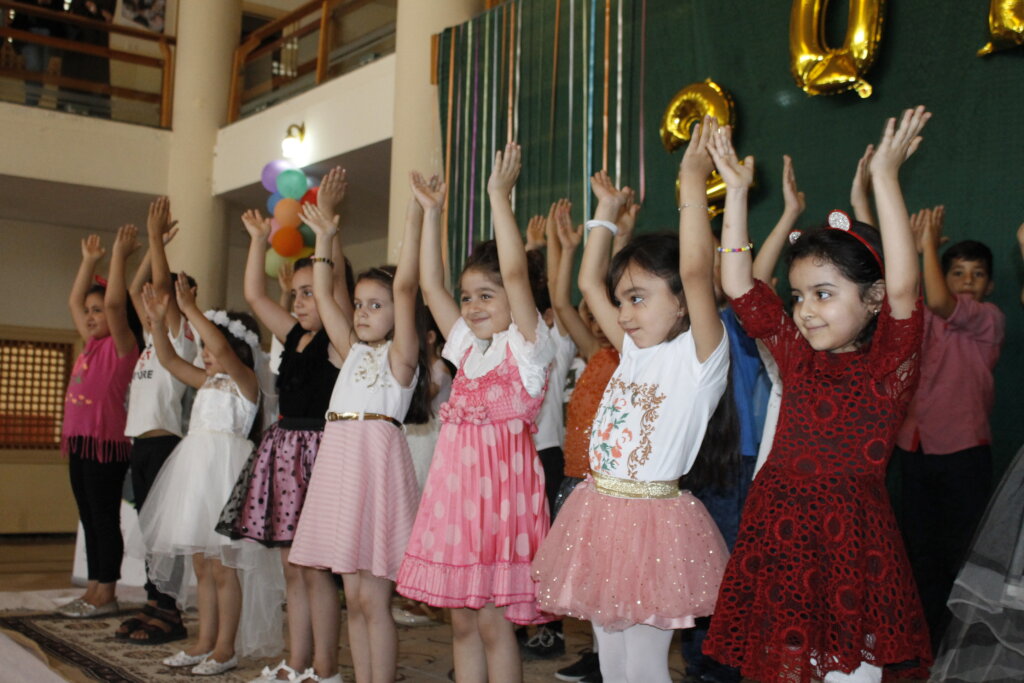
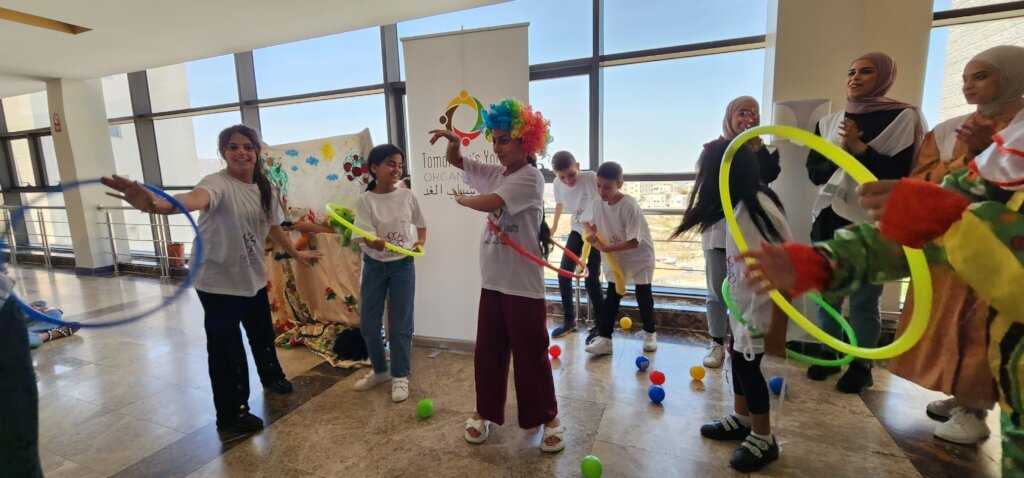
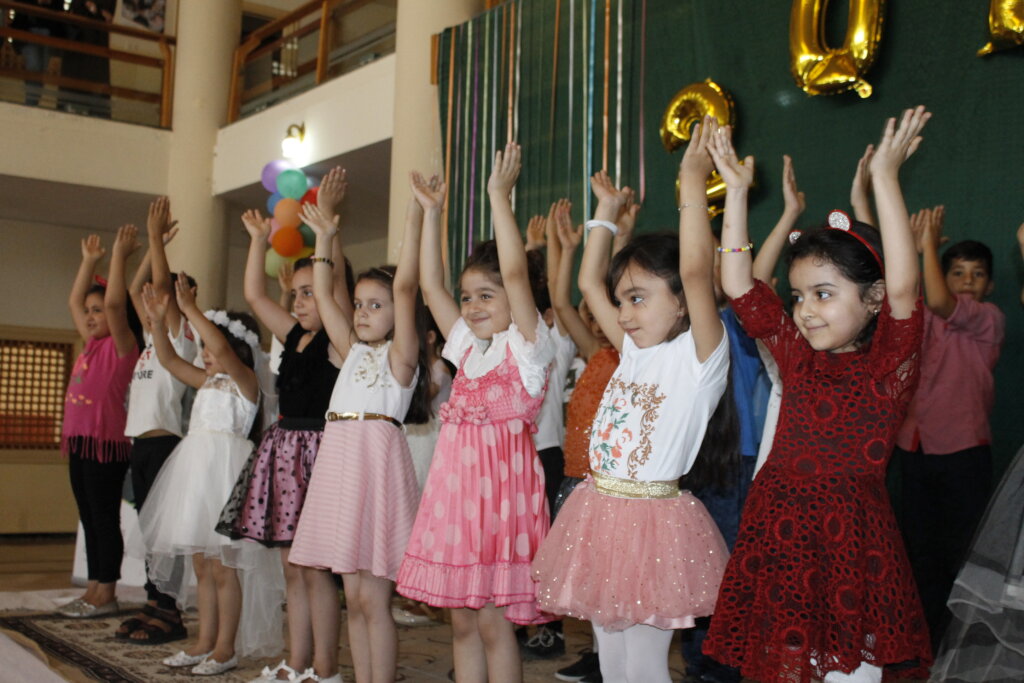
During this year’s Summer Session, I created a program for 5th-grade students, where they enjoyed activities centered around arts, drawing, theater, and music. This is my expertise, and I had worked with them in the previous spring and fall sessions as well. What set this program apart was our initiative to take these activities beyond the organization, sharing them with the local community. Our goal was to instill the importance of community work in the students, shaping leaders and raising awareness about the role of arts in alleviating daily stress, tensions, and trauma within their communities.
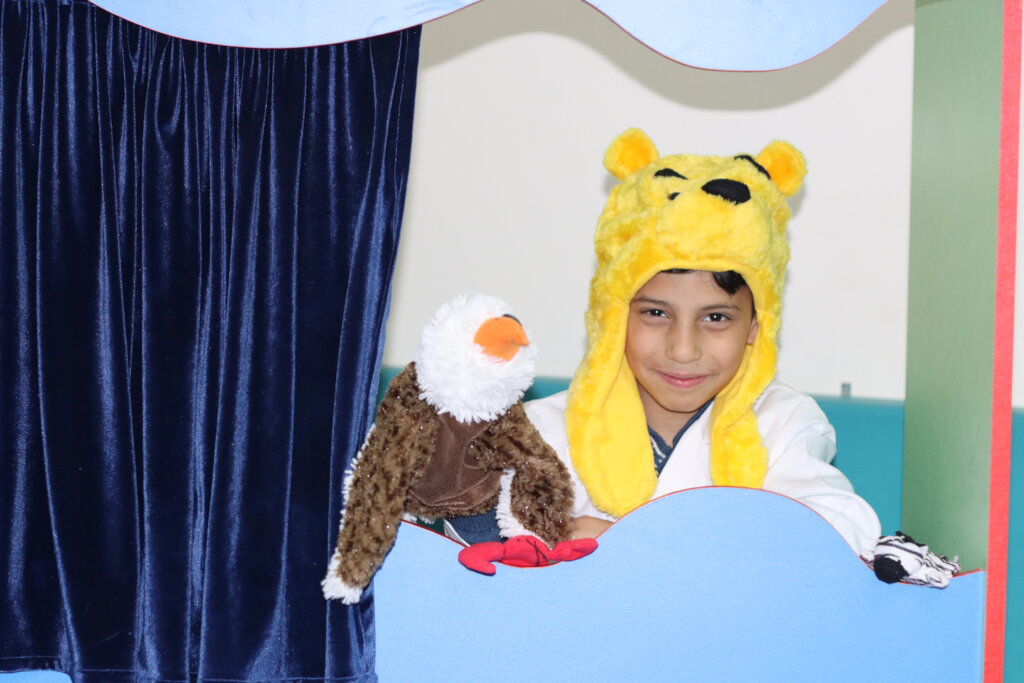
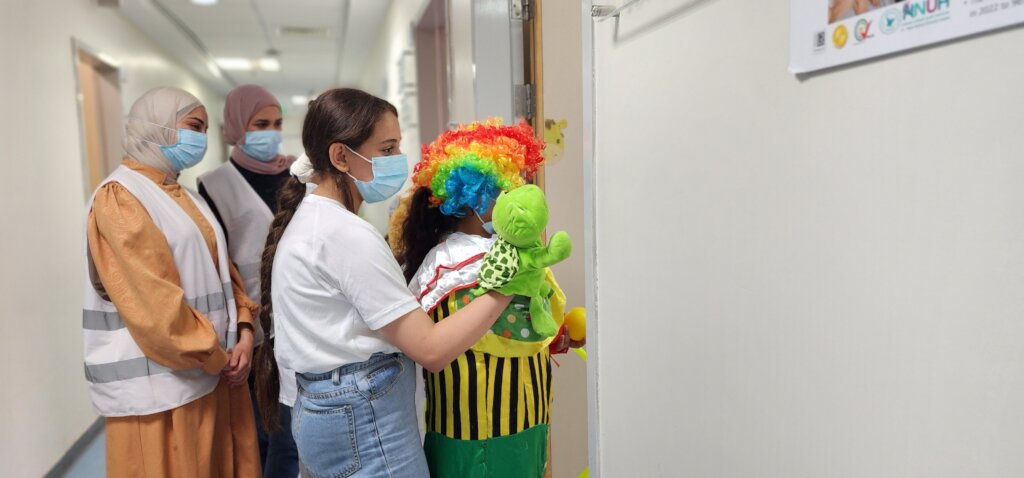
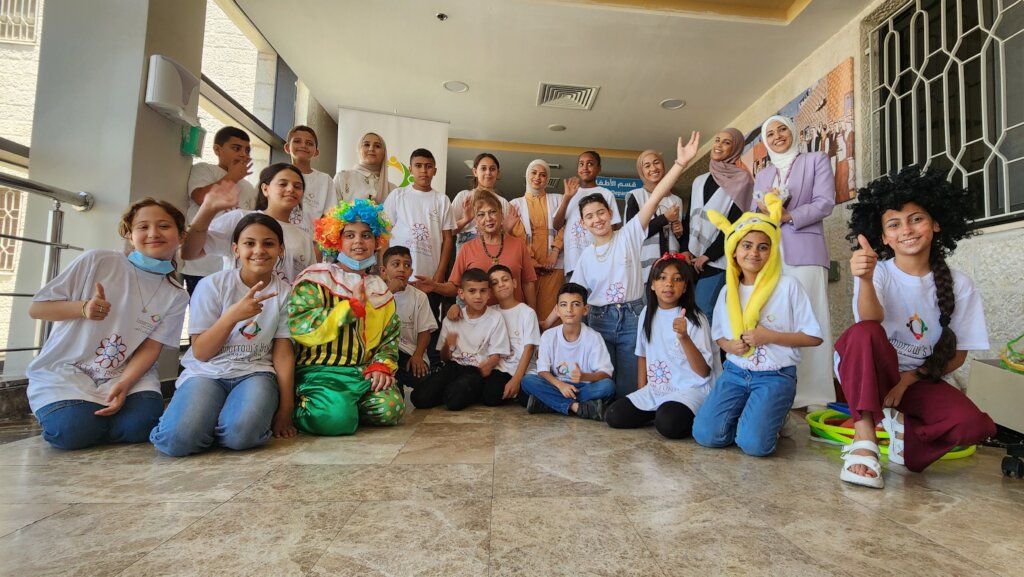
Assisted by local volunteers, we developed a plan to enhance students’ various artistic skills. Some participated in puppet theater, while others focused on recreational arts such as clowning. They rehearsed every day in preparation for showcasing their skills and performances at a local orphanage and the children’s cancer ward at An-Najah University Hospital in Nablus. Our goal was to uplift the children, improve their mental well-being, and offer relief from the burdens of their daily treatment.
At first, when I told the students we would take our projects outside the TYO center, they felt insecure. They were shy and didn’t know much about cancer treatments and the needs of cancer patients. One of them was scared to go to the hospital because she mistakenly thought cancer was contagious. But her perspective changed afterward, and she enjoyed making the children happy.
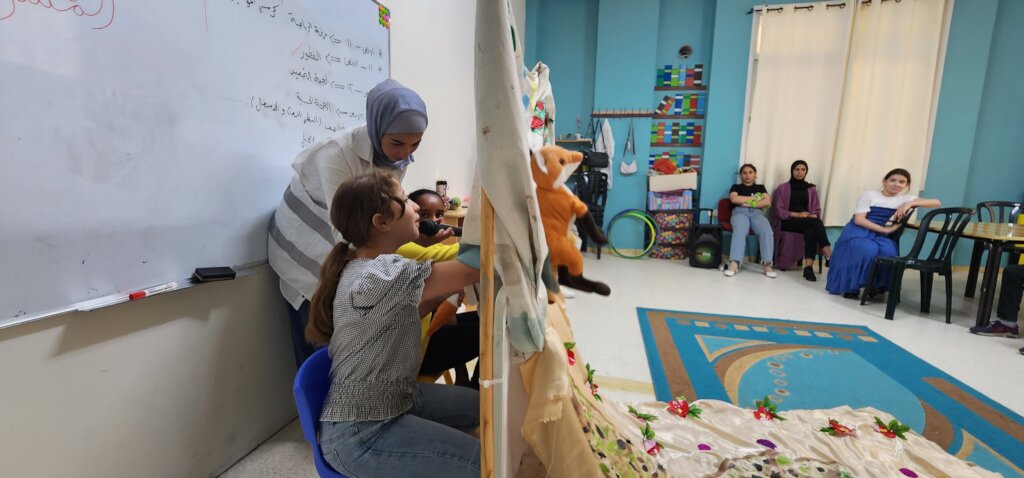
Every day, the students rehearsed a bit, and I prepared their mindset to engage with the children at the orphanage and the hospital. They had to learn how to interact without making patients feel different. At times, they felt discouraged about their acting or artistic abilities, but by assigning different roles to each child, we boosted their confidence and involvement.
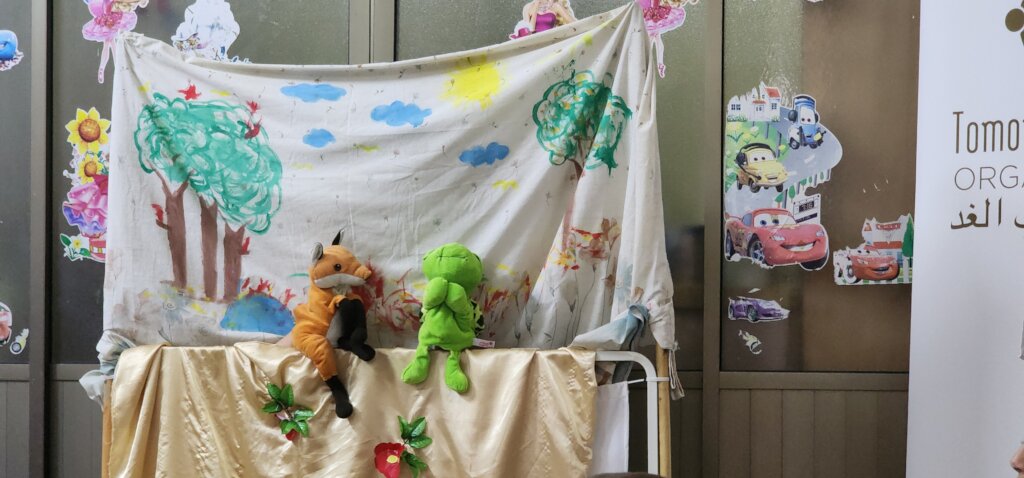
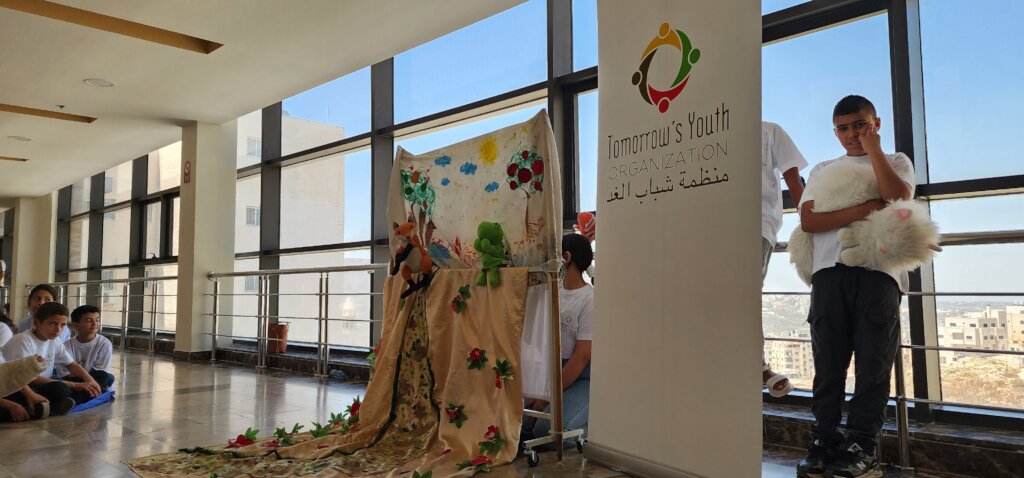
We needed a lot of tools for the performances and activities the students prepared: costumes, acting props, and a portable puppet theater. For the latter, students and volunteers came together to build it by reusing and recycling materials. And it turned out great! With that, students performed the play “The Fox That Lost Its Tail,” which narrates the story of a fox that overcomes the loss of its tail and highlights themes of resilience and self-acceptance through psychodrama.
I chose psychodrama as a method due to its impact on others, its ability to convey messages easily, and its effectiveness in masking underlying issues while promoting empathy and acceptance. Initiatives like this help children interact with one another, breaking the isolation barrier and improving their mental health while making them happy and more positive. It also gives them a sense of community and boosts their self-worth.
It was visible how fast students developed during this summer and through this initiative. Ghazal, for example, was our narrator in the play. She was extremely shy and had low self-esteem, but her courage and dedication helped her become more confident and realize her self-worth. And Nawal, who felt lonely, took on the role of distributing gifts as an opportunity to make friends.
All in all, this project improved participants’ understanding of acceptance, cooperation, and the importance of giving back to the community—a much-needed sense of purpose amidst these challenging times in our country.
As for the local community, staff members at the hospital said, “This is the first time we have had a team interested in artistic performances for therapy. I believe this is beneficial for the mental health of our young patients.” It was heartwarming to watch as children at the hospital enjoyed the activities and shared this experience with their friends. Even those in different parts of the hospital joined after hearing the music and excitement that echoed in the halls.
Project reports on GlobalGiving are posted directly to globalgiving.org by Project Leaders as they are completed, generally every 3-4 months. To protect the integrity of these documents, GlobalGiving does not alter them; therefore you may find some language or formatting issues.
If you donate to this project or have donated to this project, you can receive an email when this project posts a report. You can also subscribe for reports without donating.