By Shadrack Mutembei | Project Leader
Executive Summary
During this reporting period, our work with partner schools continued to demonstrate the value of practical, experiential environmental education. Through tree care and school food forests, vertical gardens, beekeeping awareness, and creative climate action, students are gaining opportunities to learn by doing while developing a deeper understanding of their relationship with nature.
These activities are helping schools become more than places where environmental issues are discussed. They are becoming living learning spaces where students can grow food, care for trees, discover pollinators, explore sustainable practices, and use their creativity to communicate environmental messages.
1. From Tree Planting to Growing School Food Forests
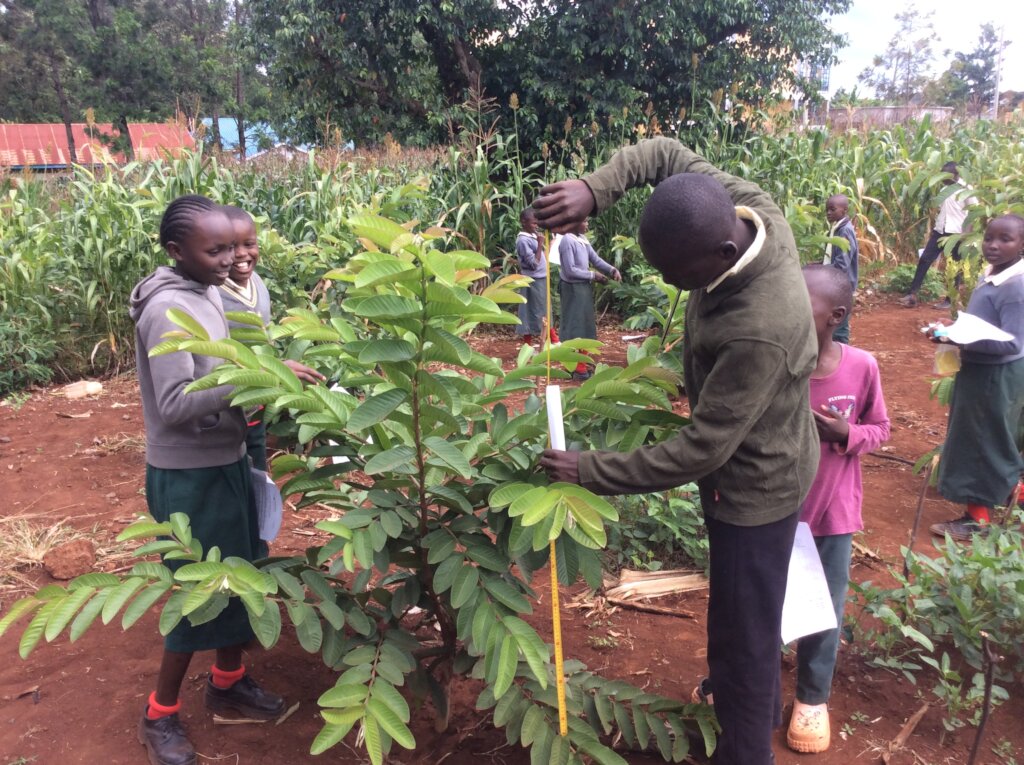
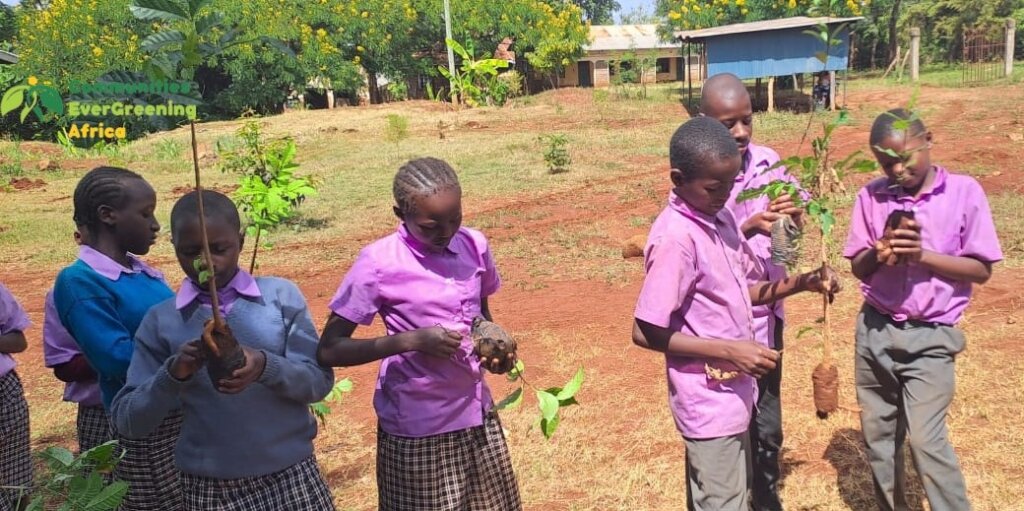
During this reporting period, our team conducted follow-up visits to five partner schools to assess the progress of trees planted with our support and observe how schools are continuing to care for and nurture them.
At one partner school, the transformation was particularly encouraging. 120 fruit trees planted last October are growing well, gradually turning previously bare school grounds into an emerging food forest.
Several of the trees have already begun bearing fruit, giving students a tangible opportunity to see the results of their care and commitment. What began as a tree-planting initiative is developing into a productive green space that can provide shade, support biodiversity, create opportunities for outdoor learning and, over time, contribute fresh and nutritious food to the school community.
Students continue to participate in caring for the trees, reinforcing an important lesson: planting a tree is only the beginning; lasting impact depends on continued care and stewardship.
The developing food forest is becoming a living classroom, helping students experience the connections between trees, healthy ecosystems, food and human wellbeing.
These follow-up visits also highlight the importance of supporting schools beyond the initial planting activity. By encouraging continued care and stewardship, we are helping transform tree planting into a longer-term environmental learning experience.
2. Building Vertical Gardens: Growing Food Where Space Is Limited
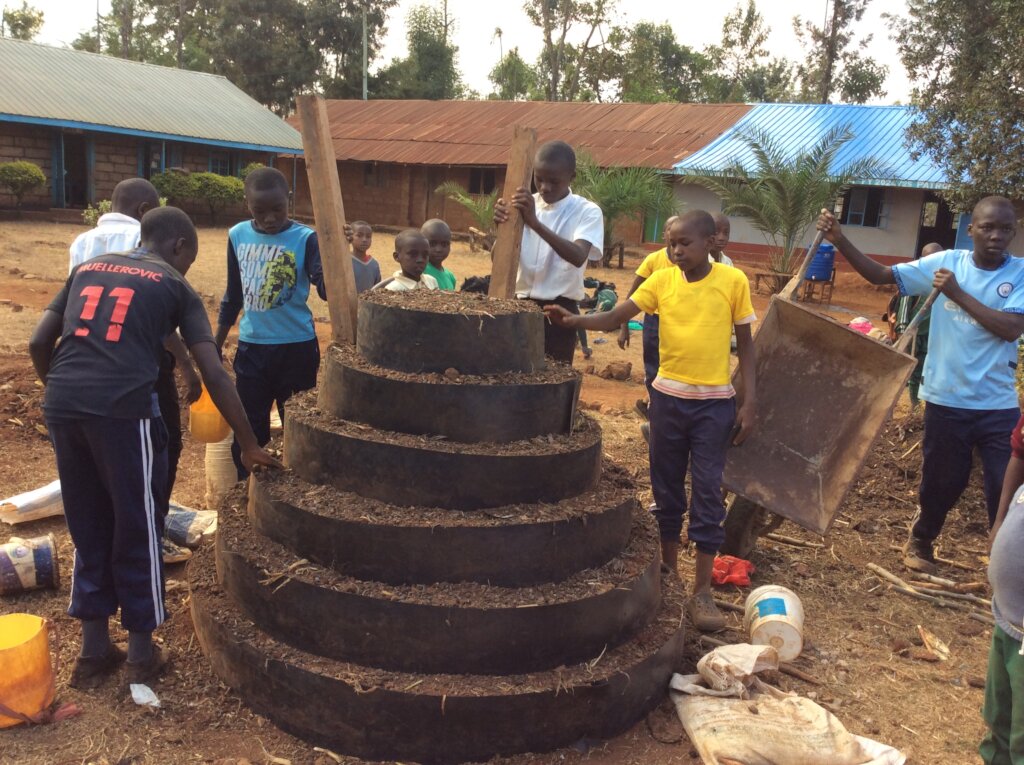
In Tharaka-Nithi County, we worked with two schools to establish vertical gardens, giving school students a practical introduction to sustainable food production and efficient use of limited space.
Rather than simply installing completed structures, 150 junior school students participated directly in building the gardens. This hands-on approach turned the construction process itself into a learning opportunity.
Students were introduced to the importance of healthy soil and explored how food can be produced while making efficient use of water and limited land.
The vertical gardens demonstrate that productive food-growing spaces do not always require large areas of land. By growing vertically, schools can make better use of small spaces, with potential applications in urban and other land-constrained environments.
The gardens will also serve as living laboratories where students can observe plant growth, care for vegetables and explore the relationship between soil, water, plants, food and nutrition.
As the gardens mature, the vegetables grown will provide nutritious food while reinforcing practical lessons about sustainable food production and environmental stewardship.
3. Raising Young Pollinator Champions Through Beekeeping
Our team also conducted beekeeping awareness sessions in three schools in Tharaka-Nithi County, reaching approximately 800 children with practical knowledge about bees, beekeeping and their importance to the environment.
For each of the three schools, these were the first-ever beekeeping awareness sessions, making the experience particularly memorable for both students and teachers.
The sessions provided an opportunity for learners to see and engage with beekeeping equipment, including protective clothing and a smoker. Students and teachers showed considerable curiosity and enthusiasm as they were introduced to the fascinating world of bees.
Beyond learning about beekeeping, the sessions encouraged students to appreciate the importance of pollinators and biodiversity and to think more deeply about their role in maintaining healthy ecosystems.
The excitement and curiosity of the learners demonstrated the value of practical environmental education. By bringing students into direct contact with the natural world, we can help them understand that protecting biodiversity is not an abstract concept, it is something in which they can actively participate.
Through initiatives such as these, we are helping nurture a generation that understands the importance of protecting pollinators, caring for ecosystems and building a more sustainable future.
4. Raising Young Global Climate Champions Through Creativity
We are also using creativity and the arts to give young people a platform to express their ideas about climate action and environmental conservation.
One of the highlights of this reporting period was the achievement of Thika Road Christian School, which won First Place in the Drama Competition Category of the Direct Climate Cooling Initiative (DCCI) International Awards, competing against schools from Africa and Europe.
The winning performance used drama to communicate a message about environmental conservation, demonstrating how young people can use storytelling and creativity to engage others around environmental issues.
During the school's Cultural Day, our Executive Director, Shadrack Mutembei, presented the trophy and awards in the presence of students, teachers, school leadership and more than 400 junior high school learners.
We also recognised the students who represented the school in the Artwork Category. Although they did not receive a trophy, their creativity and commitment to communicating environmental messages through art were an important part of the school's participation.
The achievement demonstrates how arts-based environmental education can give young people a voice, enabling them to explore environmental challenges, communicate their ideas and inspire others through creative expression.
Project reports on GlobalGiving are posted directly to globalgiving.org by Project Leaders as they are completed, generally every 3-4 months. To protect the integrity of these documents, GlobalGiving does not alter them; therefore you may find some language or formatting issues.
If you donate to this project or have donated to this project, you can receive an email when this project posts a report. You can also subscribe for reports without donating.



Support this important cause by creating a personalized fundraising page.
Start a Fundraiser