By Stefanie Homann | Scientific Director
In my last post, you learned about AIDS Research Alliance’s first leukapheresis procedure, and why our research team needs to collect white blood cells in order to advance ARA’s HIV cure research.
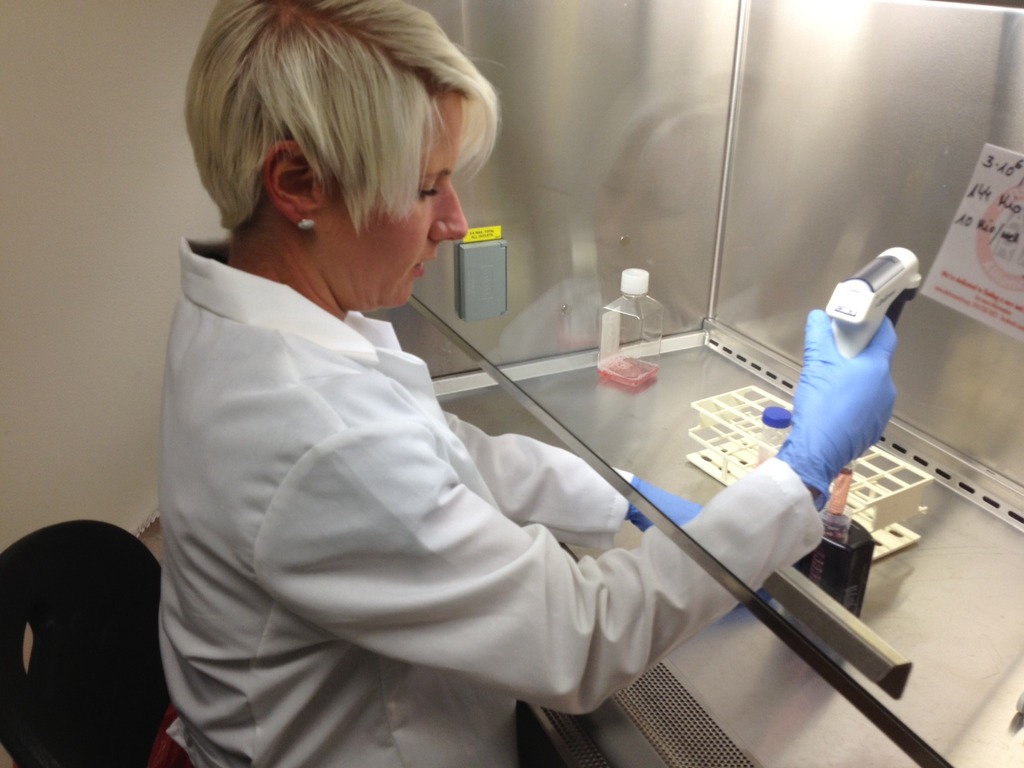
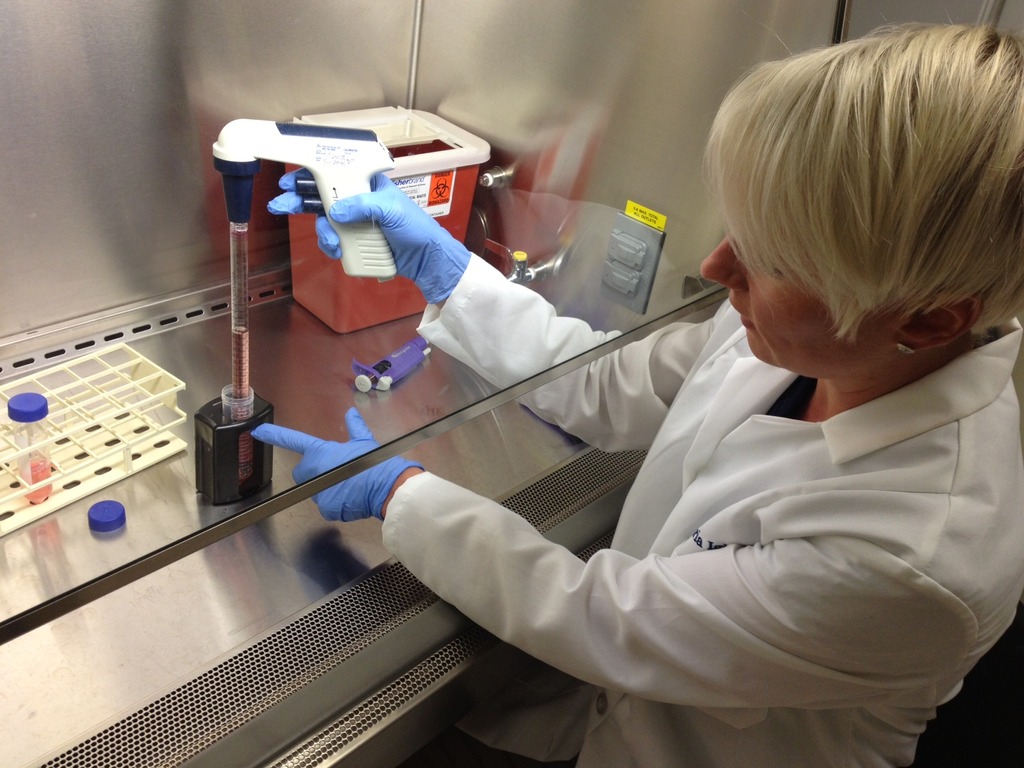
Since I wrote my last post, we have performed leukapheresis on several more study volunteers, and I have worked to perfect our process for isolating the resting CD4 T cells, which contain the HIV reservoir, from the white blood cells that we collect from each volunteer.
The HIV reservoir is the barrier to curing HIV. The viral reservoir is “invisible” to the immune system and antiretroviral therapy, so they can’t attack it. But when ART is discontinued, the reservoir can be activated, and the virus will come roaring back if ART is not resumed.
So as researchers working to find a cure for HIV, we at ARA need to focus on the reservoir. But isolating the HIV reservoir is not easy work. Why? Because the reservoir cells are extremely rare. To give you an idea,
To make it all the more complicated, we cannot “see” the reservoir cells; we have to detect them by other means.
So, before we can begin our prostratin research, we must confirm that our research process for isolating the reservoir cells will work.
So far, our process looks to be accurate and effective. I have already extracted the resting CD4 T cells from the leukopak solution. I tested this population of cells, and found it to be 97% pure resting CD4 T cells. Pretty high!
Our next step is to work with the UCLA Virology Core Lab, using their assay in combination with a new assay developed at Robert F. Siliciano’s Lab at Johns Hopkins, to quantify how much virus our reservoir cells produce when stimulated. This way, we can determine which concentrations of prostratin are able to stimulate the reservoir cells in our sample. We will use this information when we conduct our prostratin research to understand how potent prostratin is, and to answer the question—which doses of prostratin induce the reservoir cells to produce virus without being harmful to the human body?
Confirming that our systems are working properly and are sensitive enough to detect the small amounts of virus produced by the rare reservoir cells is no easy thing. But with the help of our collaborators, our research volunteers, and you, our community, we are moving closer to our goal – HIV cure research that could change the course of 35 million lives, and more.
If you have any questions about our work, please contact our team anytime at communications@aidsresearch.org
Thank you for your continued support,
Stefanie
Links:
Project reports on GlobalGiving are posted directly to globalgiving.org by Project Leaders as they are completed, generally every 3-4 months. To protect the integrity of these documents, GlobalGiving does not alter them; therefore you may find some language or formatting issues.
If you donate to this project or have donated to this project, you can receive an email when this project posts a report. You can also subscribe for reports without donating.