By Joanne Pinto | Report Writer
Greetings from Team Toybank!
While numerous studies have shown that Play is vital for children’s holistic development and the UN Convention on the Rights of the Child's Article 31 recognizes every child’s Right to Play, in India this basic right still remains unrecognised, undervalued and unadopted. This is especially true for the marginalised communities for whom the benefits of Play remains an unachievable luxury. It’s crucial for children to be engaged in playful learning, for them to grow into well-rounded individuals who will make better life decisions.
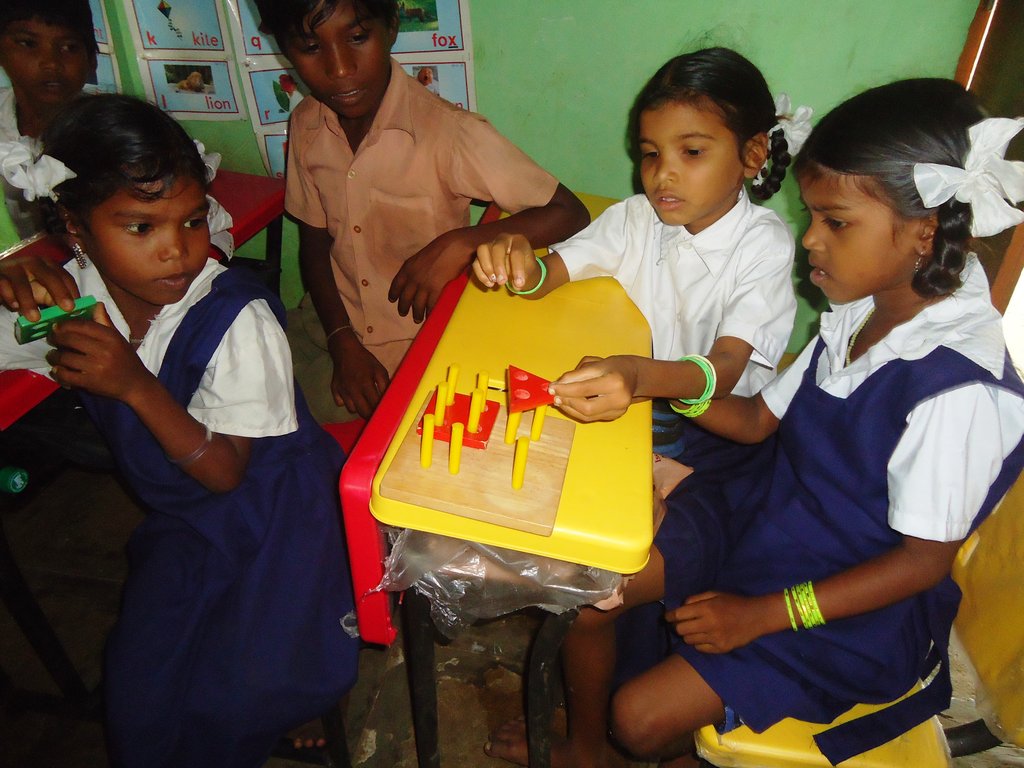
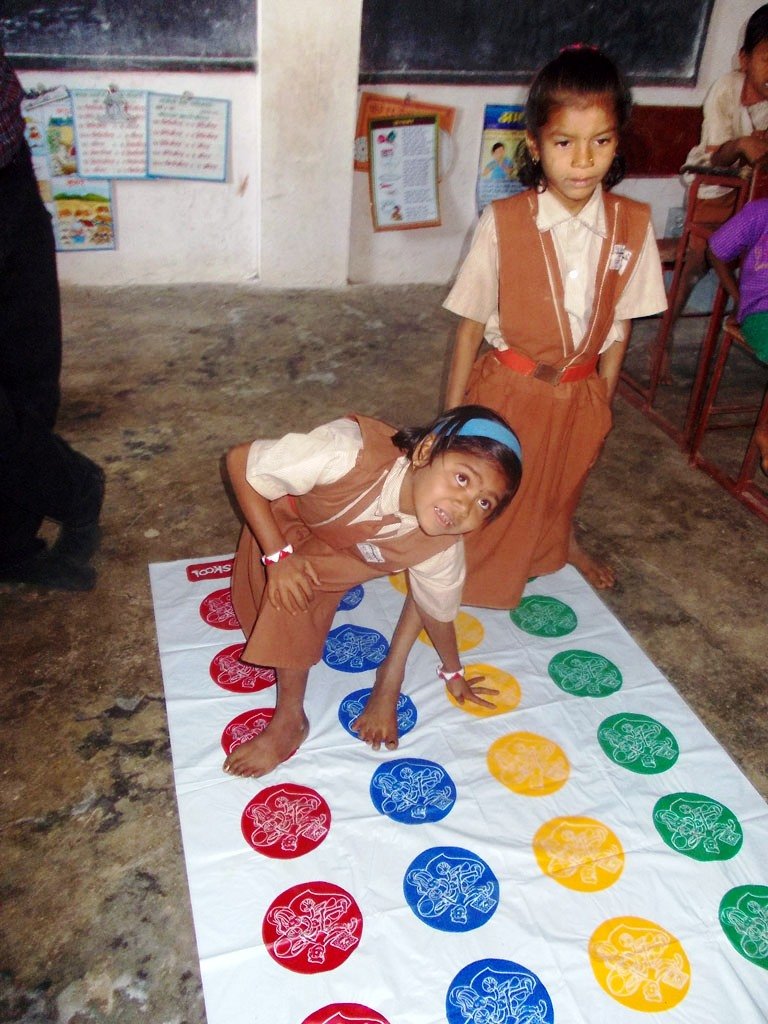
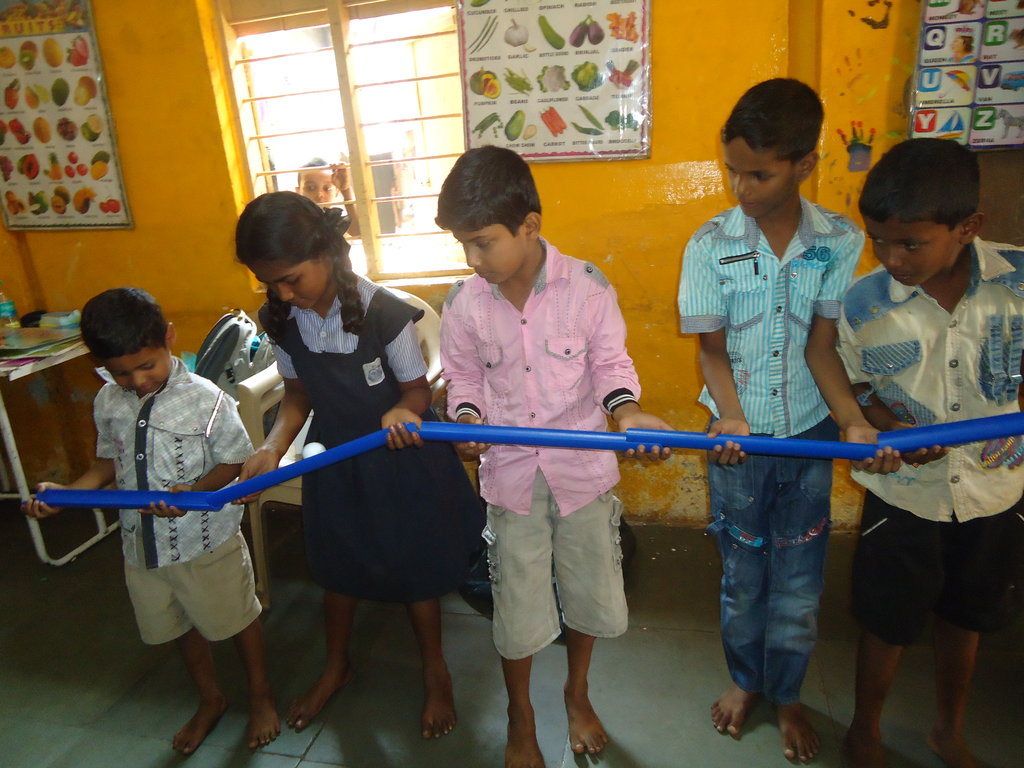
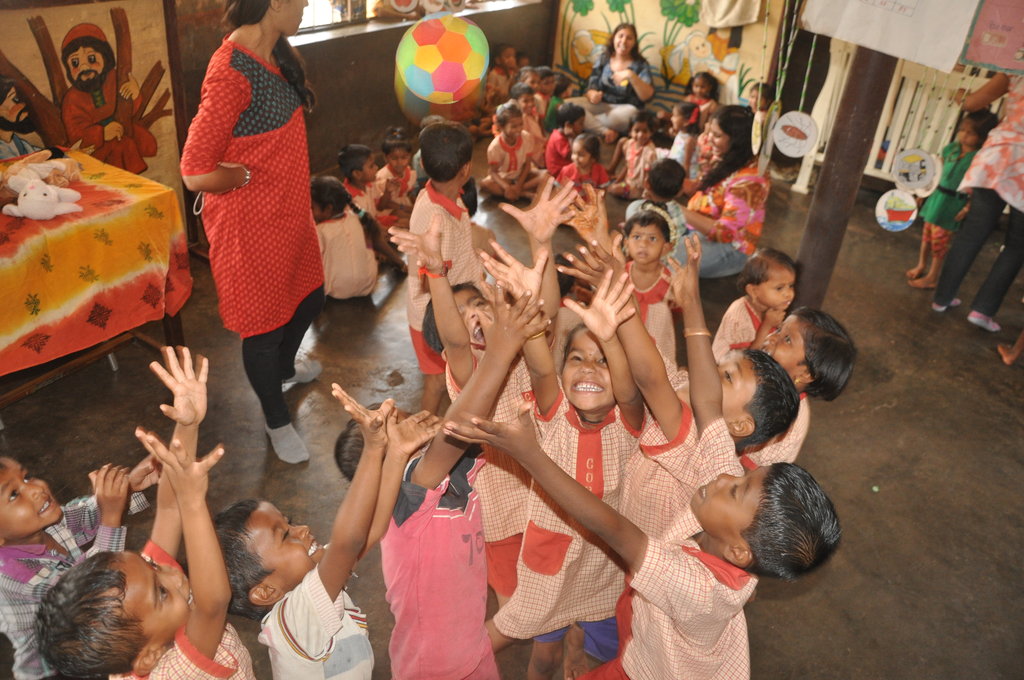
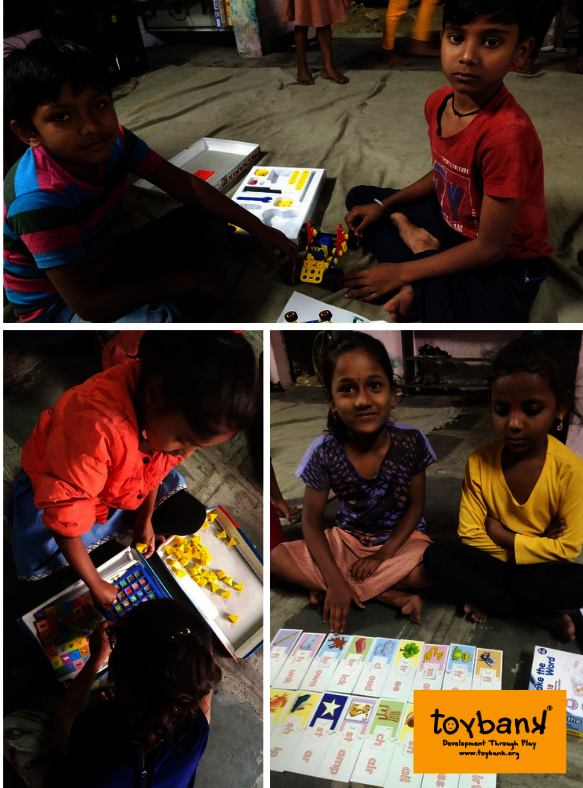
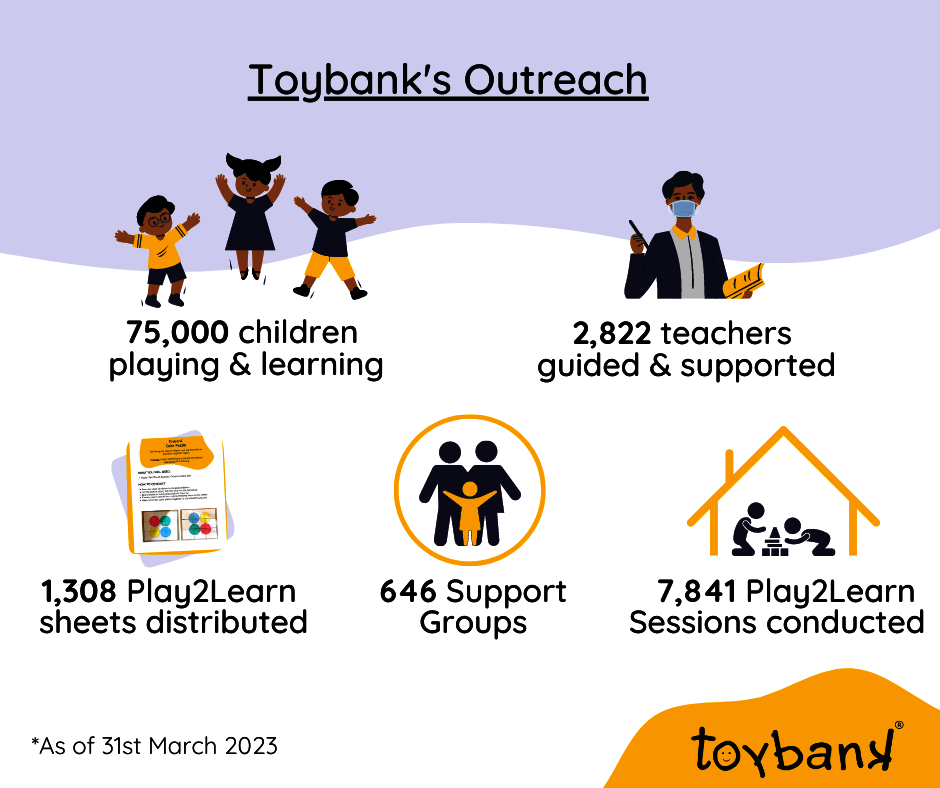
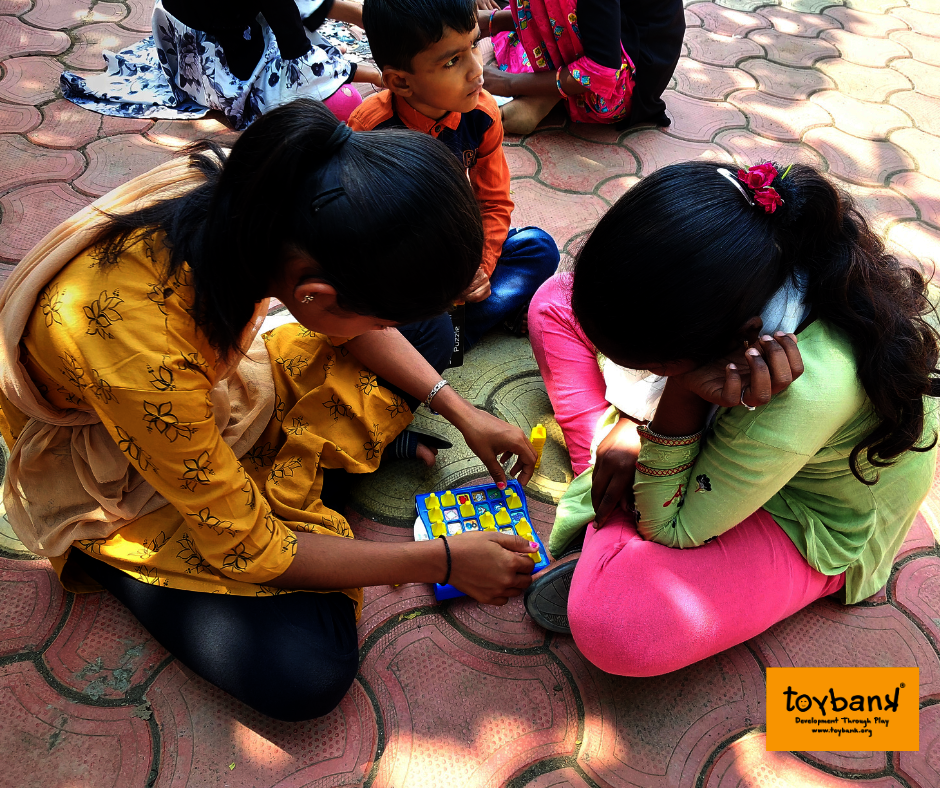
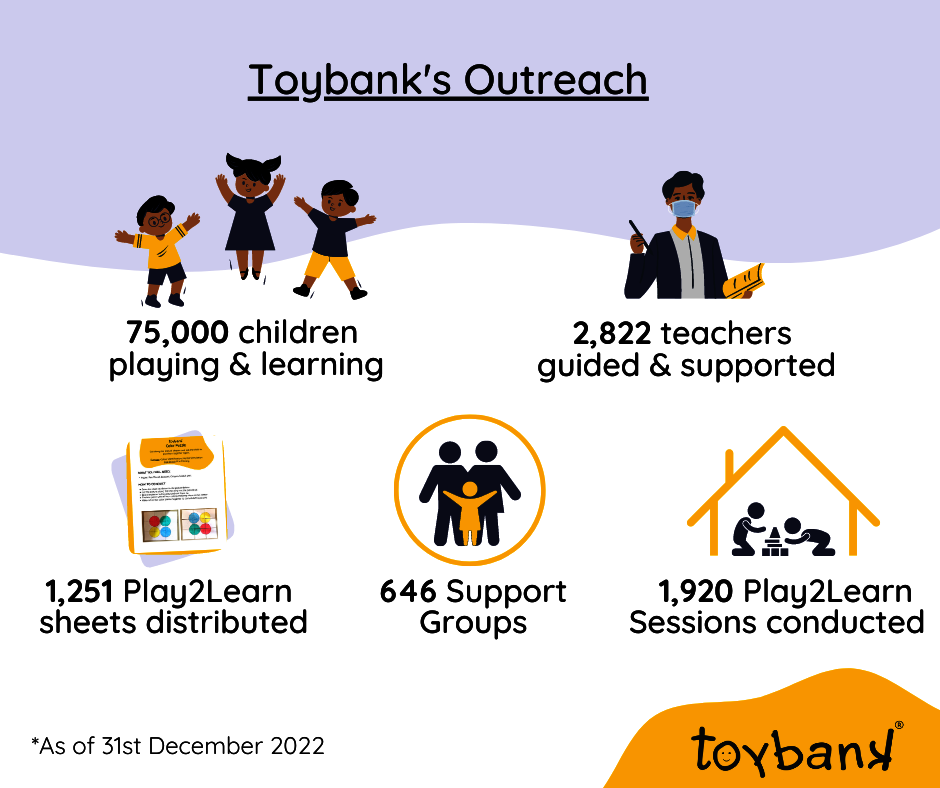
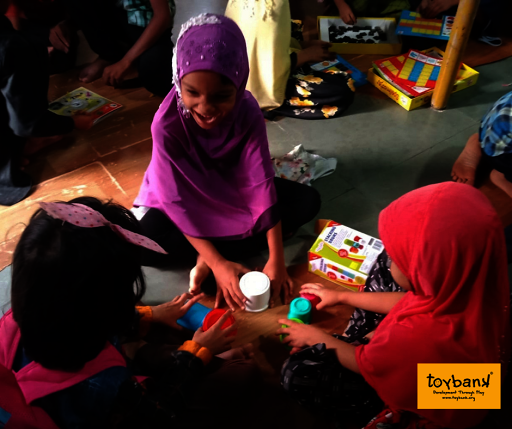
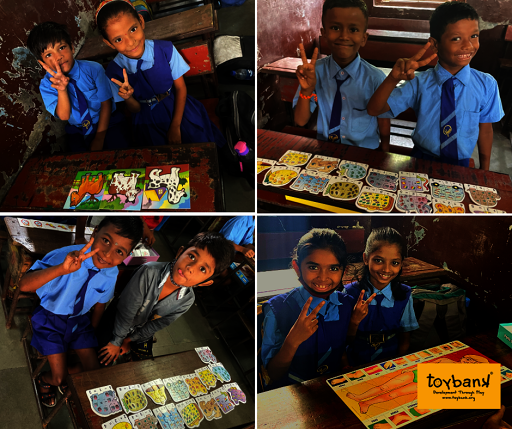
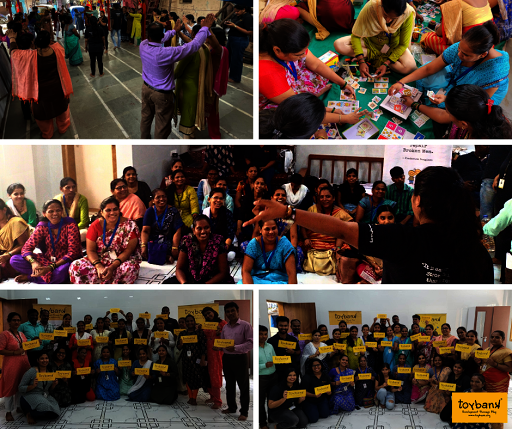
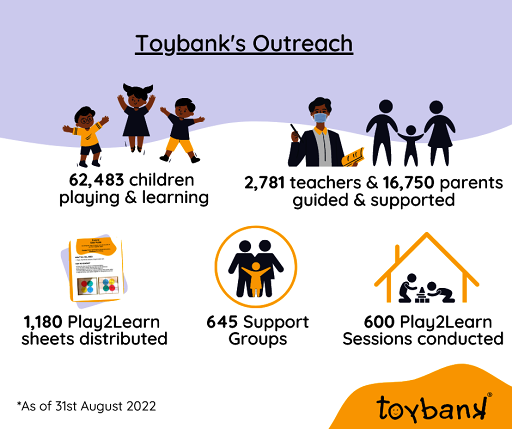
With your support, Team Toybank has continued to create safe and playful learning environments for 75,000 children across 12 districts in Maharashtra and 4 states and 1 Union Territory in India. Toybank’s Play2Learn centres are safe spaces for children to engage in developmentally appropriate play sessions and develop crucial 21st-century life skills needed to thrive in this changing world. Our programme guides and supports 2,822 teachers through 646 support groups and 575 Play2Learn centres and we are partnered with 332 government schools throughout rural and urban Maharashtra (as of 31st March 2023).
We are glad to share updates of our work from April 2022 to March 2023. We look forward to continuing to create safe, happy learning spaces with opportunities for them to learn and holistically develop through Play!
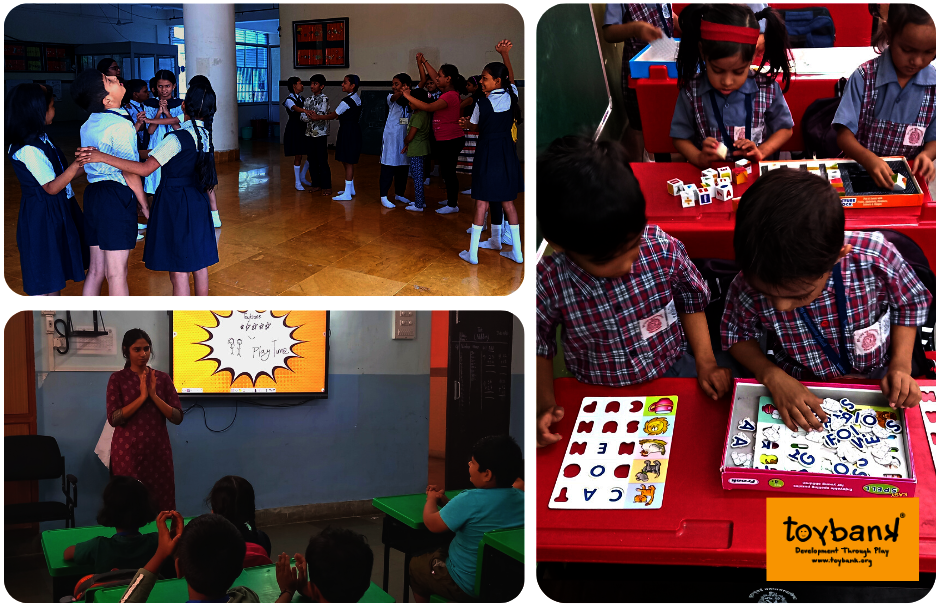
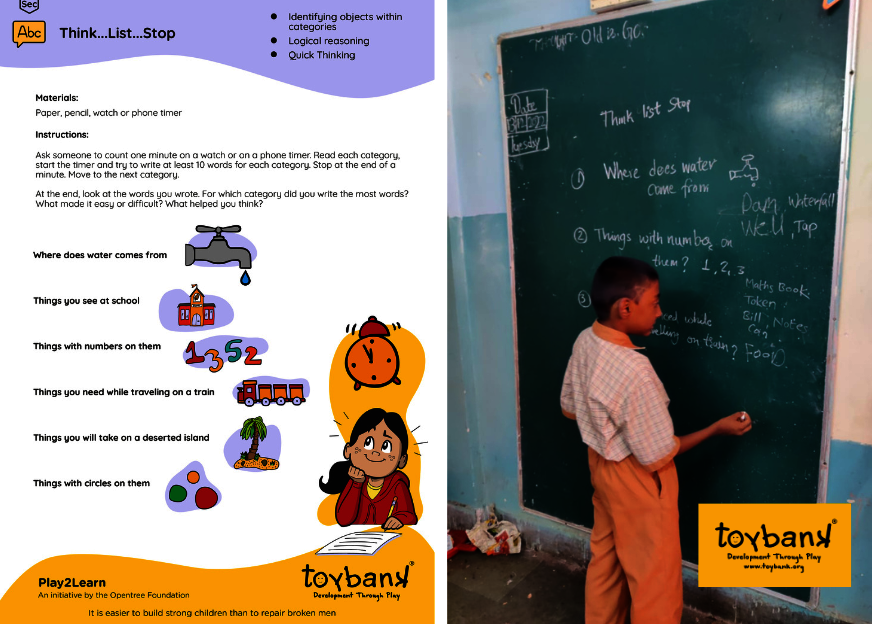
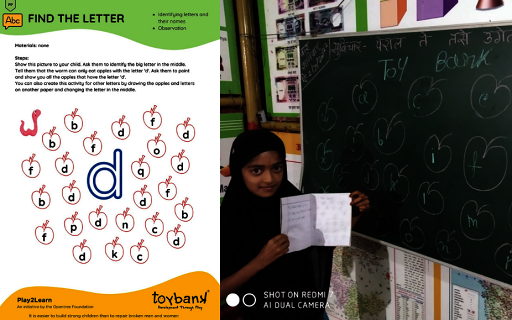
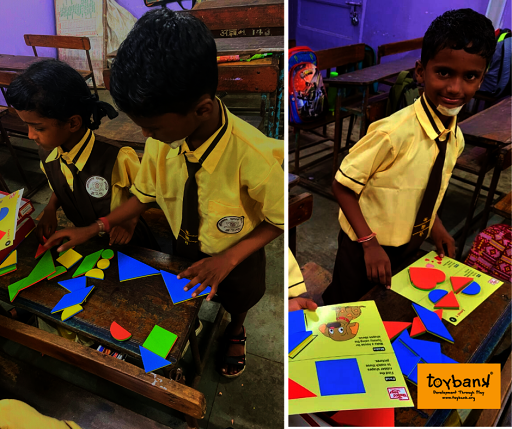
These playsheets are designed in-house by a skilled play-content developer and include age-appropriate content aligning with their academic curriculum and developmental goals. Through the Digital Play2Learn activitiest, the children improved their:
“These trainings helped me understand the need for and importance of learning through play. The most interesting part of play-based learning is how it engages students and helps them concentrate for long periods of time. I want to use this teaching not only at school but also to help my daughter,” said a Teacher at Mumbai Public School Aziz Baug, Play2Learn centre U409.
Story of Change: Setting the foundational stones of academic learning through Play
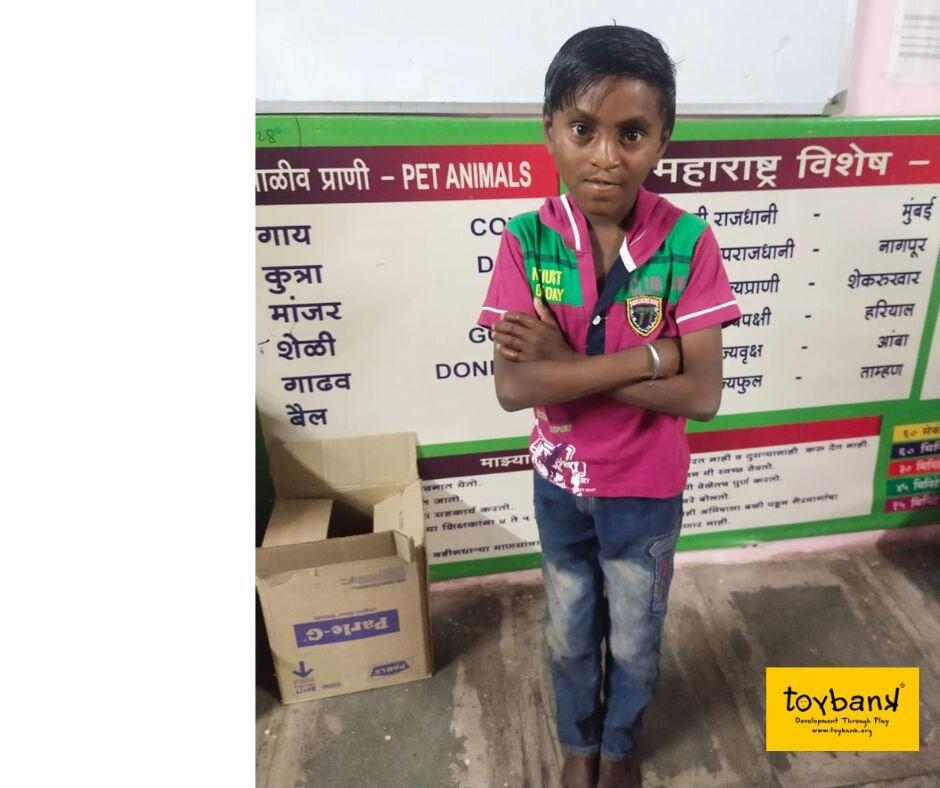
“Pratik(name changed) was lagging behind in his 5th-grade curriculum. While his classmates were already solving complex multiplication, he struggled with identifying numbers from 1-100. His teachers would call him to the Bal Bhawan to help him build his foundational learning in Math, but Pratik would never show up. Concerned that Pratik would fall behind in class and eventually drop out of school, his teacher even went to his house to get his parent’s support to send him to the Bal Bhawan, but to no avail.
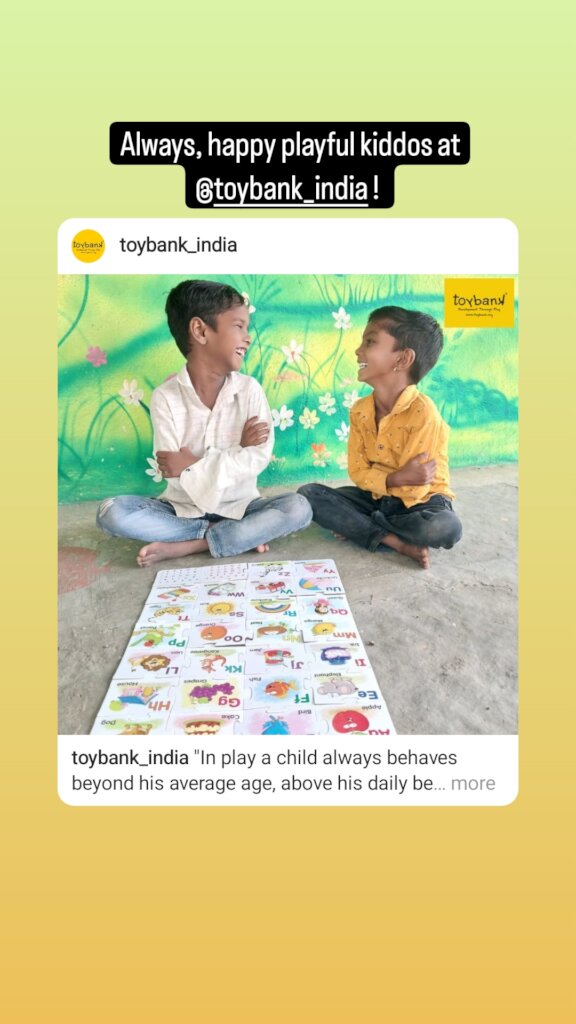
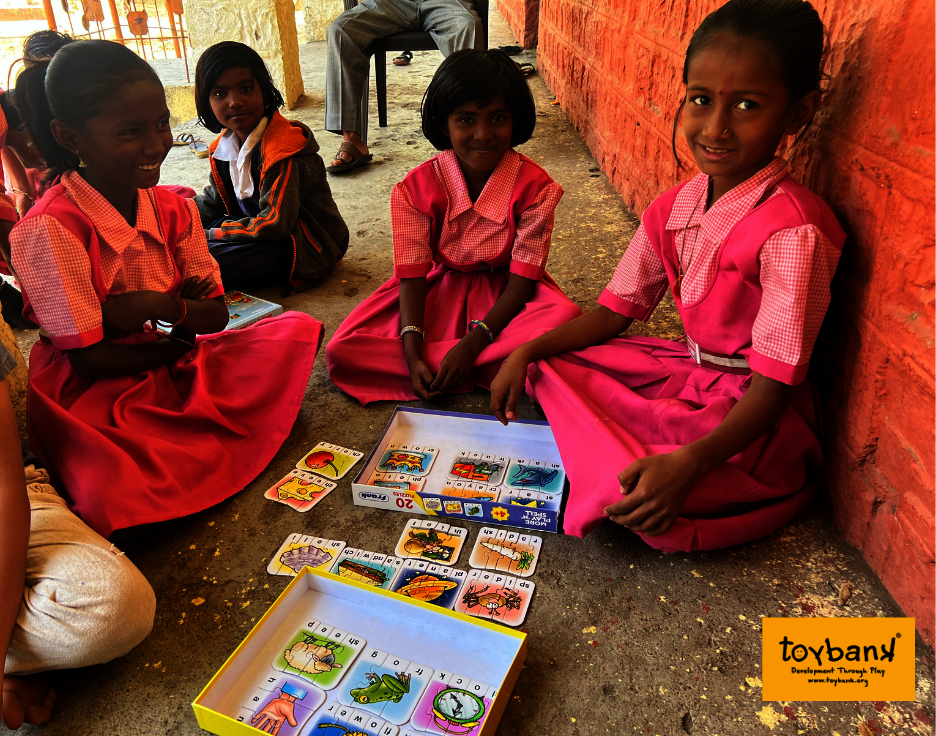
In school one day, Pratik’s teacher asked him to come by the Bal Bhavan to play board games. This motivated him to show up. He was given a few age-appropriate games and he had a blast. Pratik began visiting the Bal Bhavan more often since that day. He was encouraged to use more numerical games. And in just 15 days, Pratik was able to count up to 100 and even began understanding how to add and subtract. Through alphabet games, he also learned to spell and started taking an interest in reading. Gradually, over a month, Pratik's interest in learning grew, and now he is often seen requesting for more sample questions to practice.”
—Shared by the Teacher in charge of Kshitij Bal Bhavan, Ahmednagar, Play2learn Centre R66
Invest to Rebuild a World of Play for At-risk Children
Investing in Play to make mental well-being and learning accessible for at-risk children is the need of the hour. Your support will build the well-being and happiness of 75,000+ children who continue to Play and learn!
Thank you and Happy Toybanking!
By Joanne Pinto | Report Writer
By Aayushi Maira | Manager- Resource Mobilisation
Project reports on GlobalGiving are posted directly to globalgiving.org by Project Leaders as they are completed, generally every 3-4 months. To protect the integrity of these documents, GlobalGiving does not alter them; therefore you may find some language or formatting issues.
If you donate to this project or have donated to this project, you can receive an email when this project posts a report. You can also subscribe for reports without donating.