By Gabriela Christie | Program Associate, Global Initiatives
Now in our second month of work, the project has come to life!
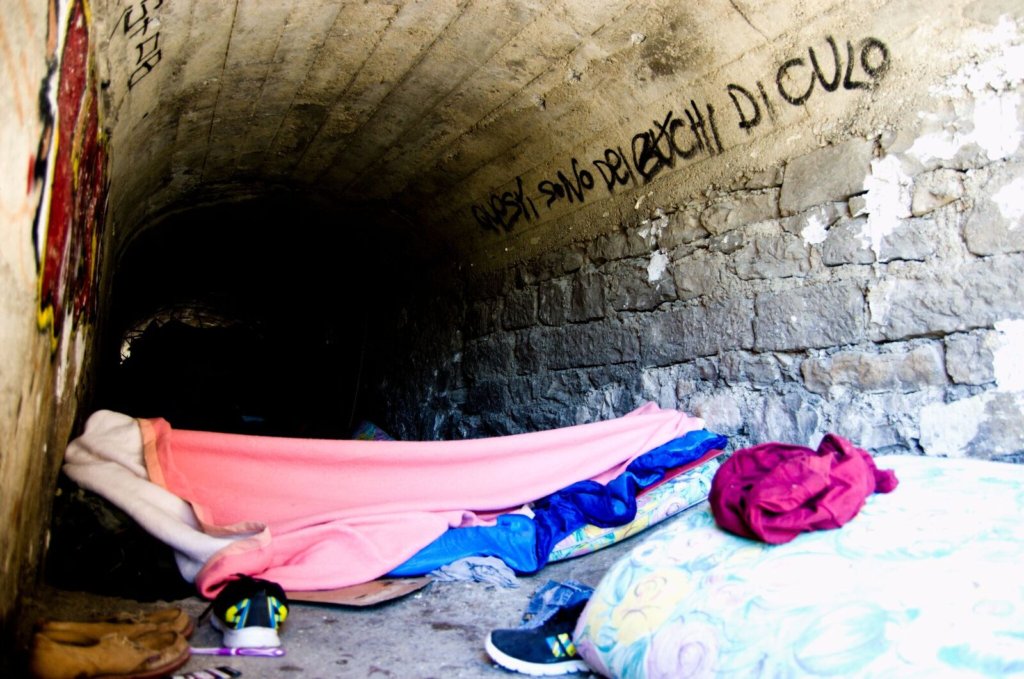
After gathering all the materials needed for Wifi connection and radio, the team set up a fixed appointment with migrants at the informal camp under Ventigmiglia’s bridge where many have set up small tents, huts, and beds. Due to the precarious hygienic conditions, episodic violence and the lack of most basic services, those who live by this bridge, around 150-200 people, have many grievances and concerns that need to be voiced.
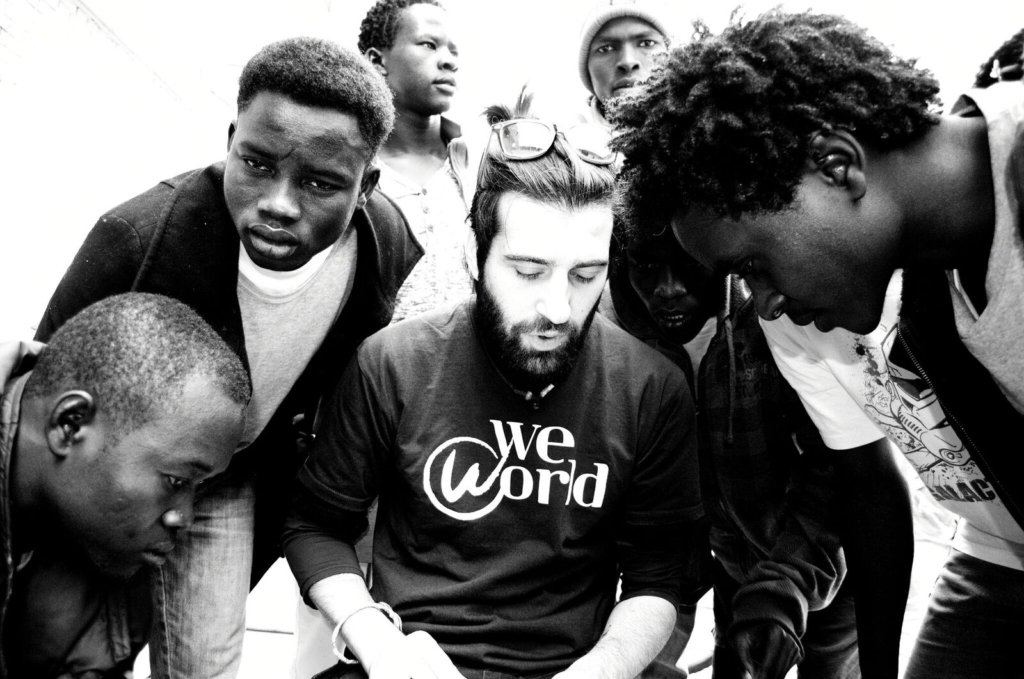
These daily meetings provide several people with Wifi, which is not even available at the Red Cross camp for the 300 people hosted there. The Info Legal point also does not provide this service, making WeWorld services necessary to complement other basic service provision in the area.
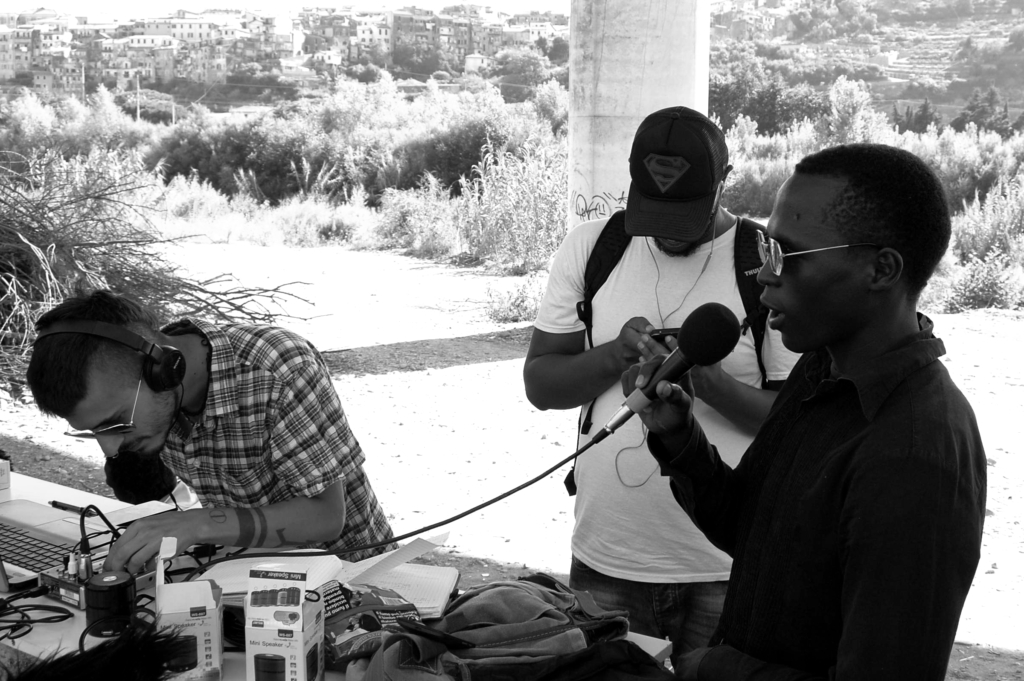
In addition to internet connection, the web radio project has also recorded loops in Arabic, English and French with basic information like where to find medical assistance, legal assistance or food distribution areas, which are streamed online and by the main bridge site. The team is also organizing to record legal information in several languages to add to these five radio broadcasts a week. As each broadcast brings people together, the work is very helpful for NGOs to find and help the most vulnerable cases and connect them with a WeWorld lawyer or a social worker.
“I don’t like journalist, people take photos. But you. You, I like. I like the radio and I feel good to make the interview. With you it’s ok,” one of the migrants stated to WeWorld.
The daily presence of the web radio staff has allowed the team to overcome the original mistrust of the migrants and has served as a way to directly hear their stories. To counteract misleading media discourse, the team tries to emphasize the human side of these migration stories. In the interviews, migrants usually talk about the desert and the hard journey done in groups of 40-60 people where the greatest danger is the lack of water as well as the danger that lies in Libya, referred to as “an extremely dangerous place where people’s lives are worth nothing and you can die at any time for the most trivial reasons.” Given these traumatic experiences, the web radio also tried to play local and migrant musicians to provide a moment of tranquility and entertainment amongst the stressful and harsh environment.
“The music unites people and is international,” said Aly, a Sudanese web radio user, while a group of Sudanese people intoned together a song of Mahmoud Abdel Aziz.
During this period, the team discovered an application that enables people to listen to web radios around the world, which seems very popular among the migrants. It includes radio stations from African countries as well (among them Sudan, Mali, and Chad) so migrants can even receive news about their country of origin which would otherwise be difficult to access.
Project reports on GlobalGiving are posted directly to globalgiving.org by Project Leaders as they are completed, generally every 3-4 months. To protect the integrity of these documents, GlobalGiving does not alter them; therefore you may find some language or formatting issues.
If you donate to this project or have donated to this project, you can receive an email when this project posts a report. You can also subscribe for reports without donating.