By Nicole Marie Alexander | Senior Manager, Communications
We often share stories from the perspectives of the girls at risk of FGM. This story is from the perspective of a former cutter who plays a significant role in reducing the practice in her community. Without people like Darmi, girls will remain at risk for FGM.
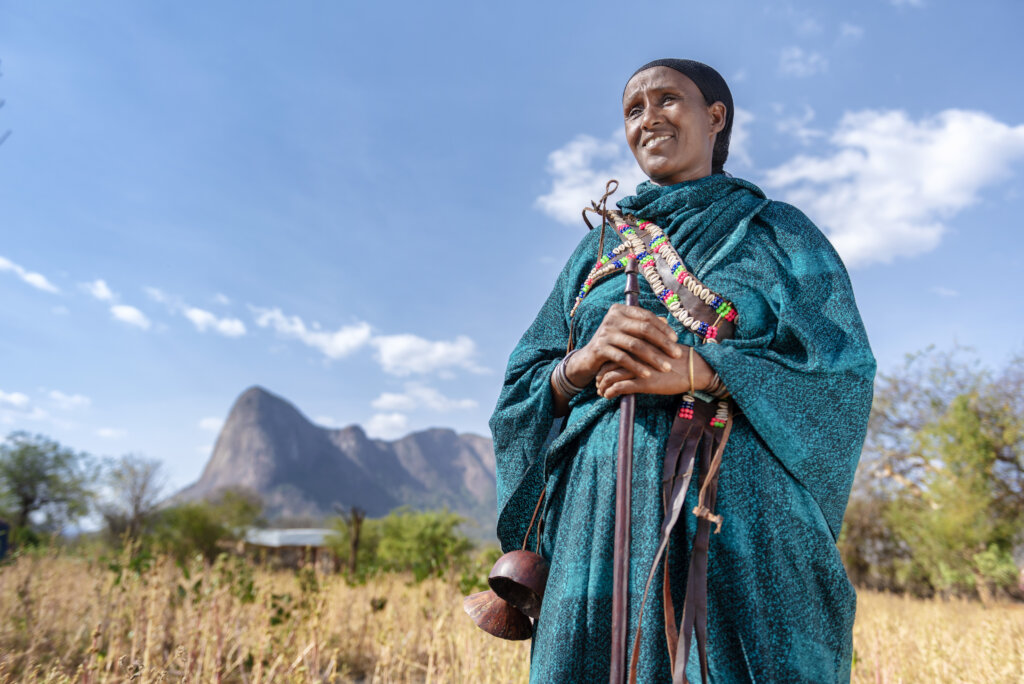
"I can't go back to cutting." Meet Darmi
Darmi is 45 and lives in Kenya. Like most women in her village, Darmi was subjected to female genital mutilation/cutting (FGM/C) at age eight and was married to a much older man soon after. "The man approached my father, who decided to give me away," she remembers.
For Darmi, FGM/C and being married very young were just part of the culture that women were expected to endure. So, when her community approached her to become a circumciser, she gladly accepted the position, as circumcisers are well-respected and revered. "The community perceives the circumciser as someone who has wisdom. It was my job. It helped pay for food and clothing for my children, and it was part of my father's culture." Darmi was a circumciser for five years.
In 2017, Amref Health Africa came to Darmi's community and held a seminar about FGM/C as part of our Koota Injena initiative, which trains elders, youth, and respected community leaders on how to use discussions to change people's minds about FGM and child marriage and abandon these practices. At the seminar, Darmi learned about the harmful effects of FGM/C and child marriage that she did not know about because it was taboo in her community to discuss 'women's issues.'
Darmi says:
"Once I understood the effects, I decided to stop circumcising. I realized that FGM/C was a tradition that brought absolutely no value to a girl. It just brings a lot of pain. I began to remember how difficult it was to be married very young to an older man. I decided to be against child marriage as well. Two of my daughters are very young. I will not circumcise them, and I will marry them off when they are older after they have finished school. I am reformed, and I can't go back to cutting. Now I am trying to re-establish my life and do something better for the community."
As a well-respected member of the community, Darmi is invited to many ceremonies and attends village meetings. Using the training she received from Amref, Darmi holds regular discussions about FGM/C:
"Whenever I get the opportunity, I gather women, even midwives, and tell them the effects of FGM and why it is not good for girls to undergo. There are many naming and wedding ceremonies happening, especially during the holidays. At those ceremonies, I hold discussions about FGM. I tell respected elders present not to marry off their girls young and to take them to school. There are also village meetings that I attend. There, people still approach me and ask me to circumcise their daughters. I say no and explain the negative effects of FGM. I tell them that there are no positive effects of FGM. Many people who approach me are Muslim and try to relate FGM to scripture. I tell them that yes, FGM is part of our culture, but it is not written anywhere in the Quran. It is something that we can change."
Project reports on GlobalGiving are posted directly to globalgiving.org by Project Leaders as they are completed, generally every 3-4 months. To protect the integrity of these documents, GlobalGiving does not alter them; therefore you may find some language or formatting issues.
If you donate to this project or have donated to this project, you can receive an email when this project posts a report. You can also subscribe for reports without donating.