By GEOFFREY ANGUYO | PROJECT LEADER
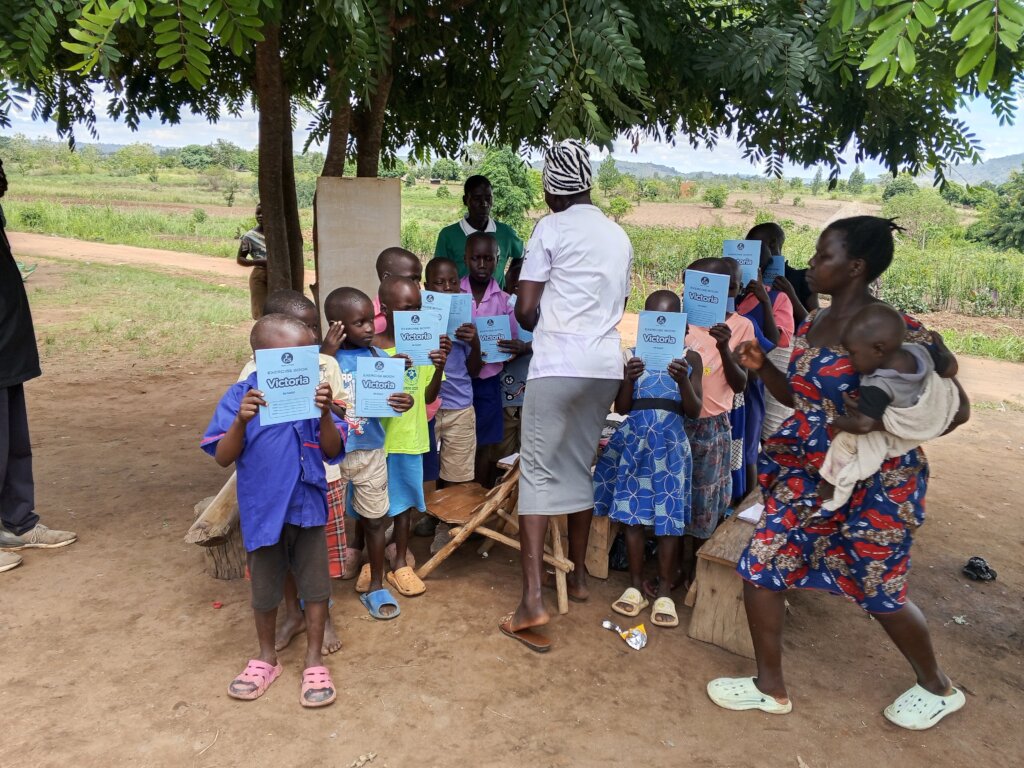
Kigezi Healthcare Foundation has helped one disadvantaged community to start a school under mango tree with only two teachers. The nearest school is about seven miles and most of the children can not walk that distance. Many children in rural Uganda start school late (often after age 10) primarily due to extreme distances, as walking long distances to school is challenging for young children.Many factors lead to this kind of scenario some of which include: Poverty which necessitates that children work at home or engage in income-generating activities first, while high indirect costs (uniforms, books, meals) and poor school infrastructure, such as overcrowding or lack of teachers, discourage early enrollment. Children in rural areas often travel very long distances to school, a key reason for delayed enrollment. The lack of schools in rural, remote areas, combined with poor safety on the way, makes it challenging for young children, resulting in parents waiting until they are older and physically stronger. Poverty is a major driver, with parents often requiring children to help with agricultural work, household chores, or cattle herding (particularly in pastoralist areas like Karamoja) before they are sent to school. While Universal Primary Education (UPE) eliminated tuition, significant indirect costs persist, such as purchasing uniforms, books, pens, and paying for school lunches, which poorer households cannot afford initially. Poor school environments, including inadequate facilities, lack of school feeding, and poor teaching methods, discourage early attendance. Children are often needed to look after younger siblings or participate in child labor, especially when families cannot afford alternative care or paid help.In some regions, parents may hold low awareness of the need for formal education at a young age, or poor health (child malnutrition, drought-induced food insecurity) may delay the child's readiness for school.One community in West Nile region was supported to start educating children with any available resources. Parents have been encouraged to support the initiative so that children do not overstay at home. Different classes study in shifts. When two shifts are in session other children are sent out to play.
Project reports on GlobalGiving are posted directly to globalgiving.org by Project Leaders as they are completed, generally every 3-4 months. To protect the integrity of these documents, GlobalGiving does not alter them; therefore you may find some language or formatting issues.
If you donate to this project or have donated to this project, you can receive an email when this project posts a report. You can also subscribe for reports without donating.



Support this important cause by creating a personalized fundraising page.
Start a Fundraiser