By Edward Mukiibi | Local Coordinator
January 2010 to April 2010
Background
The participation of school going children in food production does not only enhance their taste behaviours and nutrition status, but can possibly lead to social transformation. Social conditions are complex and therefore positive attitude towards cultivation should be built within children that will in turn help to reverse the existing food shortages. This project aims at engaging school children and the local youth communities in real life production of Clean, Safe and Fair food through working with schools and communities. The project restores young people’s relationship with agriculture through the introduction of school gardens to grow local fruit and vegetable varieties using environmentally friendly, traditional methods. Through students’ experience in the garden and related educational activities, they develop an understanding of local food, their flavors and traditional uses, thus learning to favor good, clean and fair foods.
OUTPUTS
Annual Fruit and Juice Party
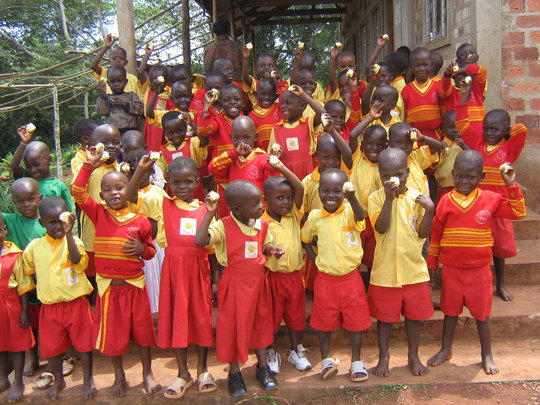
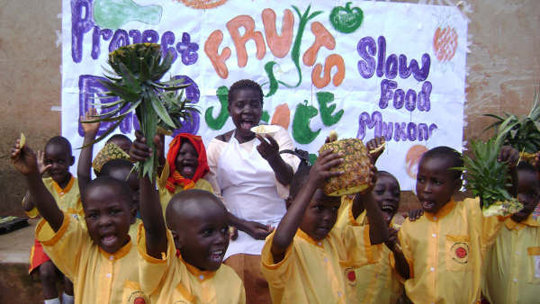
It was on Saturday April 10th, when the Slow Food Education Project in Uganda (DISC), organized a fruit and juice party, at St. Balikuddembe Senior Secondary School Kisoga where 173 children from 18 Schools attended along with 21 teachers. A variety of local and other fruits where prepared by the students and also served. Different schools contributed to the success of the occasion as they brought some fruits from their gardens to share. Students harvested some wild berries from St. Balikuddembe Garden and they where added to the menu. As preparation of the fruits and juice went on, also the Project Coordinator, Edward Mukiibi, gave a speech on Slow Food school projects and envisioned the way forward offering the goals set for this year. The head school mistress, Ms. Nassaazi Jane, on behalf of St. Balikudembe SS, thanked the project for having selected her school to host this year’s fruit and juice party.
See the Photo slide show smile box at:
http://secure.smilebox.com/ecom/openTheBoxsendevent=4d5459794d5445324d7a633d0d0a&blogview=true&campaign=blog_playback_link;
http://dreamcanteen.ning.com/photo/photo/showPopoutfeed_url=http%3A%2F%2Fdreamcanteen.ning.com%2Fphoto%2Fphoto%2FslideshowFeedForContributor%3FscreenName%3D11urvew4wa3xd%26mtime%3D1273134204%26x%3D2b9fKsHo406ODkicfpbvjOKAfPkRQnRC&autoplay=1
You can also watch the tasting Quiz Video at http://www.youtube.com/watch?v=o9-i2i_aXlw
Cooking Class
In partnership with Dembe catering services, a local Terra Madre cooks group, we conducted a cooking class for secondary school students in March 2010. This was hosted by Buiga Sunrise Pre-school. In this class, Julie, a cook and our volunteer, introduced the students to the most unique local recipes used in preparing traditional and cultural meals in different cultures of Uganda. She also introduced them to the traditional ways of preparing meat, grasshoppers, ants and peanut paste.
School gardening, planting, weeding, manuring and harvesting
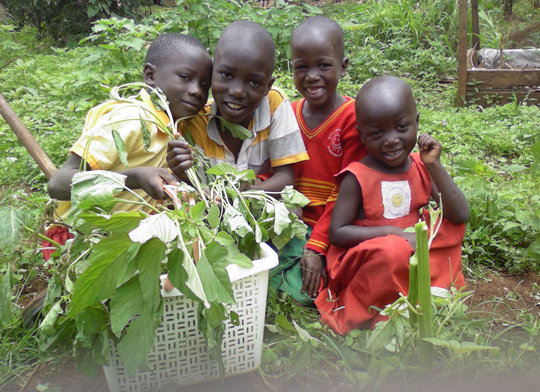
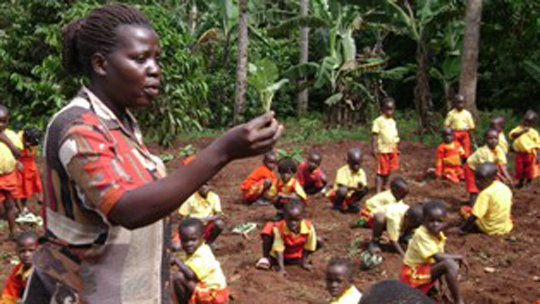
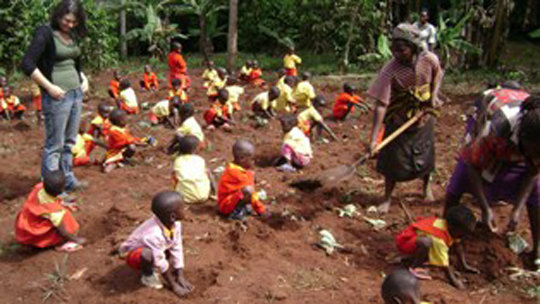
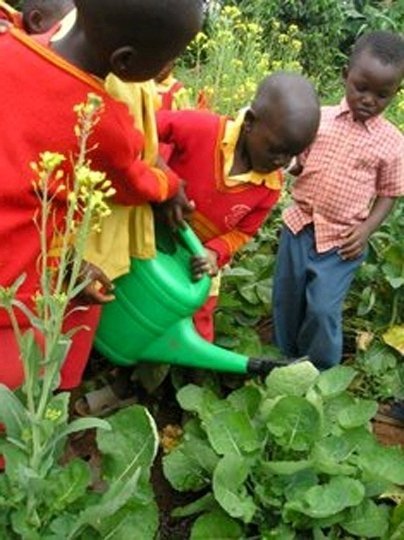
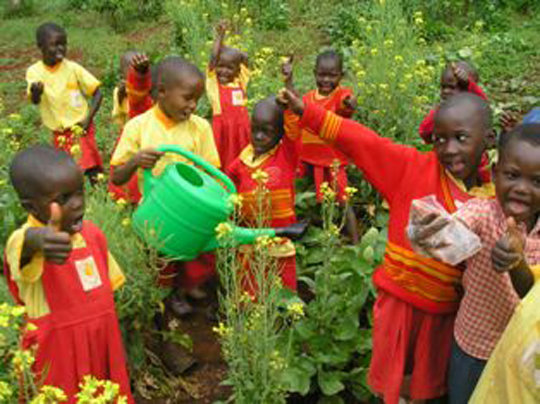
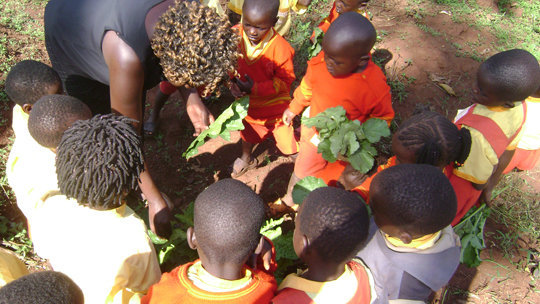
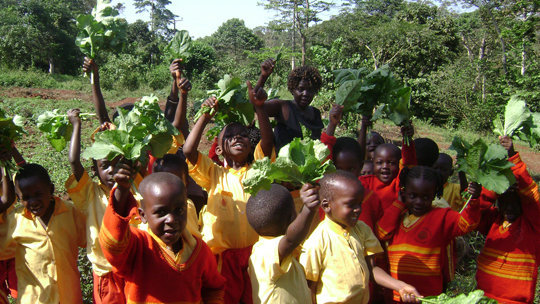
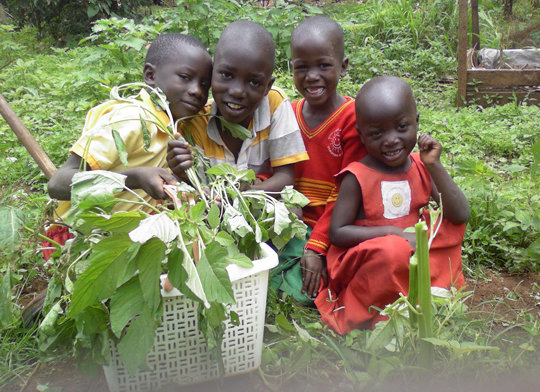
With over 15,000 pineapple suckers planted in 12 school gardens and lots of vegetables planted by the school children, the project has been exploiting the rainy season that started early February for “Learning at the Scene,” the name of our approach to hands on learning for practical experience in the garden or kitchen. Most of the schools have been planting and manuring their local and drought-resistant fruit trees and vegetable gardens, in fun-filled learning days not only for students but also for teachers, parents and project volunteers. It is always exciting to have students getting down to farm and grow there own food at school. But again, another impact that we are now seeing is that the older students are creating their own gardens at home and also planting fruit trees. Another learning journey in the project has been in March and April, when the manuring and mulching of the pineapple gardens with coffee husks took place. This attracted a number of people who helped us do it in the way our grandfathers once did; to begin we followed a demonstration from one of the great grandfathers of a student at St. Andrews Primary School Kisoga.
Local Fruit Tree Planting
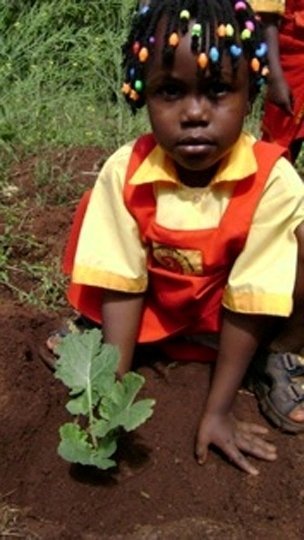
Fruit tree planting in schools has been running since February 2010 but an ultimate high was reached that same day (10/April/2010) we had the fruit and juice tasting event. The event started with students planting some fruit trees in St. Balikudembe Gardens and school compound. Among the fruit trees planted so far in the 12 schools are; Avocado, Jackfruits, Mangoes, Oranges, Wild Berries, Passion Fruits, Paw Paws, Guava, and many others. We aim at having a fruit tree forest at each school which accompanies many nutritional, aesthetic, and environmental advantages. Fruit tree planting was not only done in school gardens but also in school compound as we strive to create green school yards for all project schools. “I say thanks to this great initiative for the local fruit forest that has been put in place at my school and other schools represented here and I promise to be one of the great customers for any school that can have excess of fruits and vegetables from their gardens because from now, I only want to eat crops locally grown with such great love’’ said Ms. Nassaazi Jane, Head Mistress for St. Balikuddembs Senior School Kisoga.
For the fruit tree planting slide show, see our Smile box at: http://secure.smilebox.com/ecom/openTheBoxsendevent=4d5459794e4455344e7a513d0d0a&blogview=true&campaign=blog_playback_link
Seed collection for local seed bank
At the end of the term in late April, seeds from the school gardens were collected mainly from Nazigo Seeta, Jesus Alive, Buiga Sunrise Pre-School and Ihango Primary School. These seeds were distributed to the school children who had put in requests for vegetable seeds to take home for starting their own home vegetable gardens and practice what was covered in their school garden lessons while enjoying their holidays. The home gardens have been monitored closely, and positive results have been recorded from a number of homes where our seeds have been planted, especially given that it has been a heavy rain season. We hope to preserve more seeds from these home gardens as each child who picked the vegetable seeds is expected to leave some part of the garden for seed harvest and collection when the school program resumes again in late May 2010.
Local sharing of knowledge through Slow Food Movie showings
Knowledge sharing was one of the key themes for this first quarter. This activity was implemented through the movie weekends. One movie weekend on taste education was organized alongside a fruit and juice tasting event for children. This also took place on the 10th of April 2010 at St. Balikuddembe Senior School, Kisoga. In this event, children had a visual presentation of the Origins of Taste guide and the animated DVD of the Journey to the Origins of Taste was the main feature of the day. Students got to understand the real senses of a human being when it comes to daily food, eating and selection.
Conclusion
Our goal can be reached when we join hands together with different people around the world. And also we hope our innovations can be copied all over the country and the world at large to be food secure in future. Coming together is a beginning; keeping in touch is a progress and working together is a success. That’s why we have to keep in touch with the world to address such critical food issues.
Appreciation/Acknowledgements
All this has been possible with support from Slow Food international and its partners; local partners like the National Agricultural advisory services in Mukono District, Buiga Sun-rise Pre-School, and community based organisations, such as, Makerere University Land managers Association, Uganda Environmental Education Foundation, Dembe Catering Services, Access for Action (Local NGO), and PROPA (local young producers group); in addition to the Mukono youth food community and all individual supporters.
More Links
1. http://sites.google.com/site/projectdisc/ 2. http://dreamcanteen.ning.com/profile/EdwardMukiibi 3. http://www.projectdiscnews.blogspot.com/
Links:
Project reports on GlobalGiving are posted directly to globalgiving.org by Project Leaders as they are completed, generally every 3-4 months. To protect the integrity of these documents, GlobalGiving does not alter them; therefore you may find some language or formatting issues.
If you donate to this project or have donated to this project, you can receive an email when this project posts a report. You can also subscribe for reports without donating.