By Ram Chandra Rai | Project Incharge
Location: Tribeniganj Block, Supaul
Implementing Agency: Bihar Gram Vikas Parishad
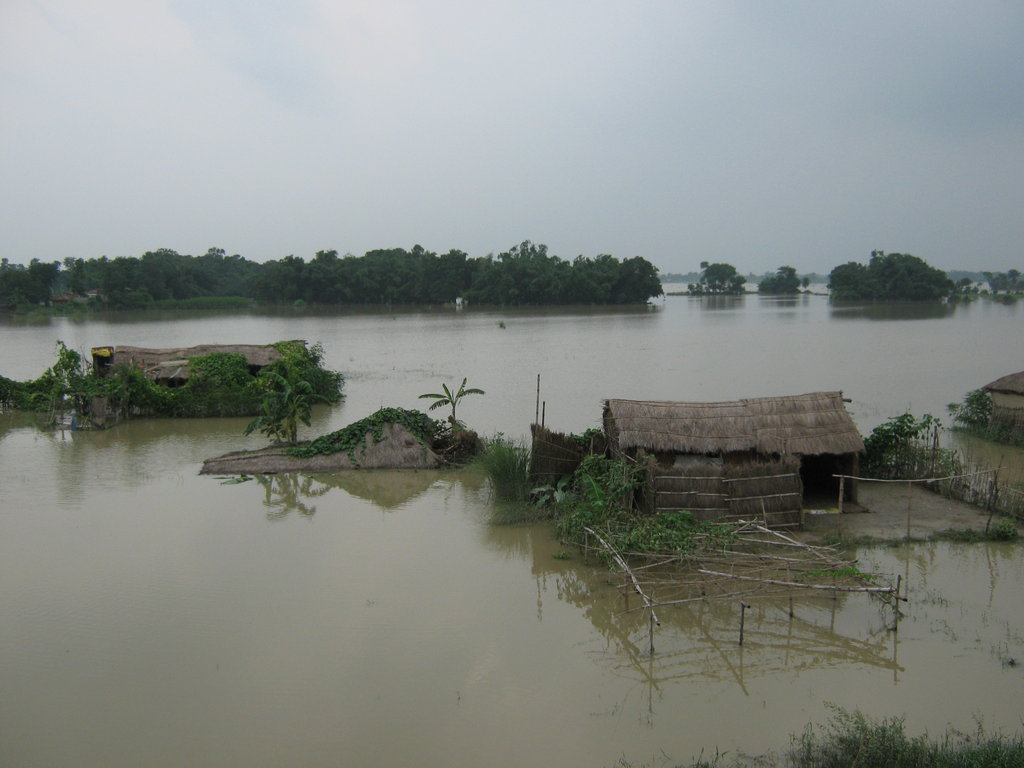
Result Area: Basic community resilience to future flooding
Activity: Training on Disaster Management, First Aid and Search & Rescue, Training on water and sanitation, PRI member training and Prepositioning of boats and other materials.
Details of DRR Activities:
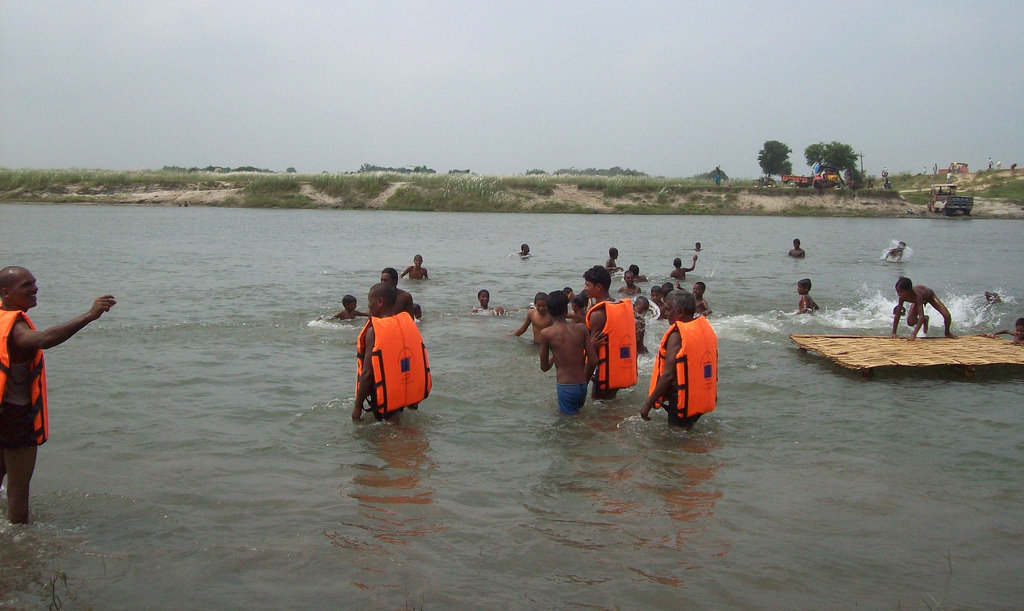
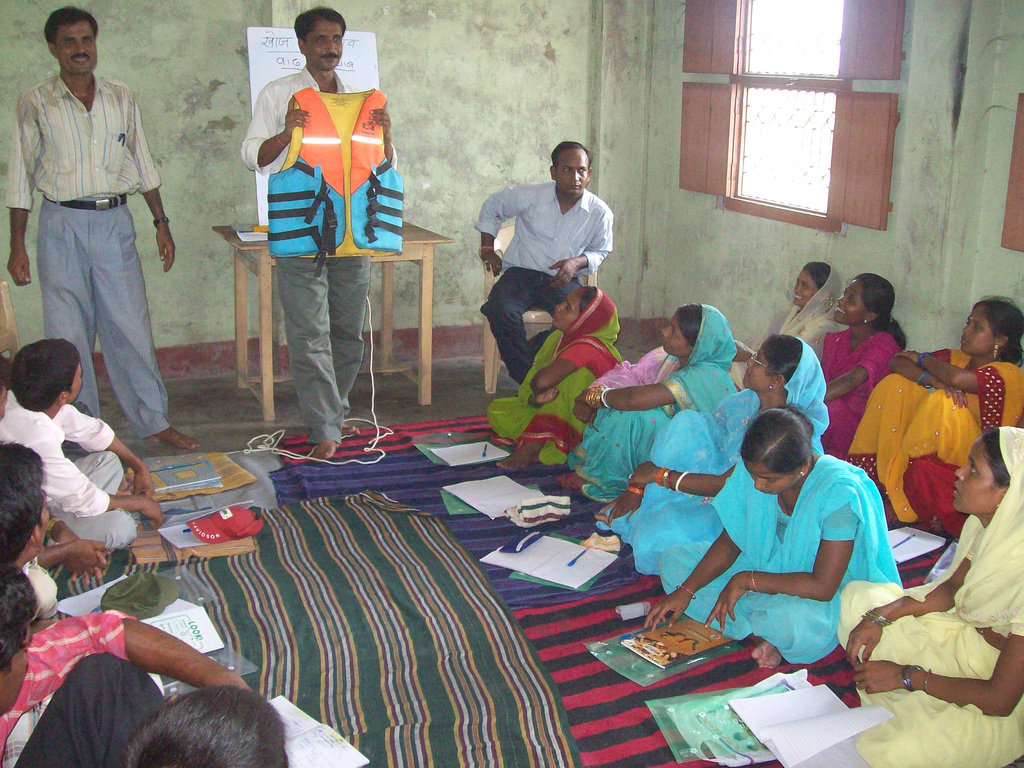
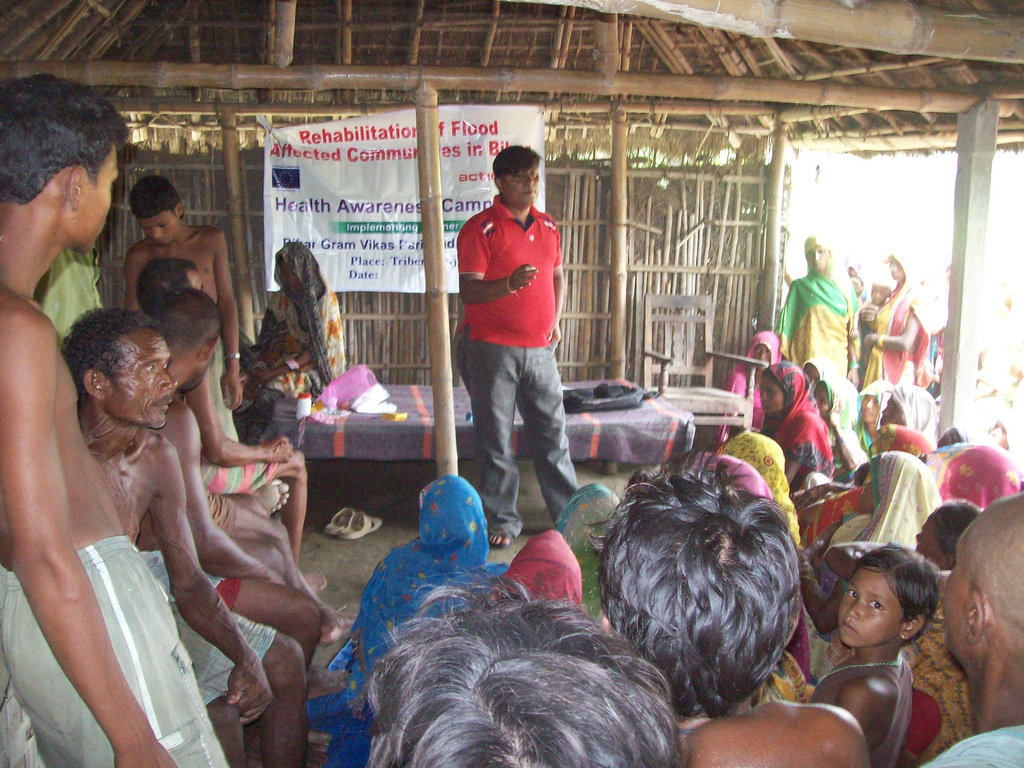
Disaster management training: The training programme for all selected volunteers has been organized and the disaster management committee has been formed in all the villages. Disaster management and First Aid training has been provided to 116 volunteers and Search & Rescue training has been given to 120 volunteers. The village level Disaster Management Committees along with their contingency plan has been formed in all covered villages and 9 types of task force has been formed and linked with the VDMC. The task forces are viz. Evacuation team, Shelter Management team, Search & Rescue team, Early Warning and Information team, Water & Sanitation team, First-Aid team, Waste Disposal team, Damage Assessment team, and Relief and Rehabilitation team. Training on Disaster Management, First Aid and Search & Rescue: The training was for 2 days ith a third day for mock drill. There were different resource persons for different topics. They are Mr Saurabh Srivastava, Team Leader, (Formerly associated with the GoI-UNDP DRM Program, UP) & Expertise in DRM Planning; Mr Rahul Srivastava, Expertise in Search & Rescue Operations, Resource Person, UP Disaster Management Institute; Mr Arvind Kumar, Expertise in First Aid, Resource Person, St. John Ambulance; Mr Rakesh Kumar, Expertise in Conducting Mock Drill, Associated with GoI-UNDP DRM Program, UP; and Mr Chandeswar Prasad Misra, Expertise in Communication & Mobility Needs of Disabled during Disaster. The objective of this training was to prepare the volunteers as a master trainer at village level, who could take the responsibility of First Aid and Search & Rescue during the emergencies and also make other community people aware of the same. These trained volunteers are also part of our task force constituted at village level and members of the Community Based Disaster Preparedness committee. The topics covered were. • What is Disaster? • Different type of Disaster • What is Disaster Management? • Definition of first aid • Objects of first aid, and Qualities of First aiders • ABC(Airway, Breathing & circulation)rule • Recovery Position • Tunicates • Head injury • Types of bandages and knots • Support condition of fracture bones • Spinal injury, support and functions • How to develop rescue kit at spot with available resources • Blockages of Airways • Method of Artificial Respiration. • CPR (Cardio pulmonary resuscitation) • Snake bite Dog bite. • Shock and Recovery • Handling and transport of injured person • Different features of poisoning • Handling of drawn injured person • Handling situation of Electric shock to First aiders • Knowledge of Heart beat, pulse, Respiration, Blood Pressure • Protection of Burn injured/ Acid Burn • What is Search and Rescue • Need of Search and Rescue • Formation of Search and Rescue Team • Objective of Search and Rescue team • Search, Rescue and Evacuation in Different Disaster • Formation of Life jacket and tearing boats at community level. • What is Fire • Fire fighting • Early Warning System • Shelter Management • Search and Rescue, evacuation, early warning system and shelter management according to need of PWD’s. • MOCK Drill regarding flood and fire • MOCK Drill according to PWD’s
Training on water and sanitation: A two day training programme was organised where a total of 215 community volunteers participated out of which there were 61 women. The resource person was Mr Ajay Pandey of Action for Community Empowerment. The objective of this training was to prepare the volunteers as a master trainer at village level, who could take the responsibility of water and sanitation during the disaster. The role of volunteers is also to make community people aware of safe drinking water and how to secure our hand pumps from bacterial infections by properly fixing the hand pumps with proper drainage system. The topics/components covered are: • Role of a Trainer • Meaning of Hygiene and Sanitation • What is Safe Drinking Water •Indicator of Hygiene and Sanitation (7 Indicator) Safe Drinking Water Proper Drainage Proper Management of human acid/ extract Proper Management of wastage and dung Sanitation of house and food Personal Hygiene Community Hygiene •Use of bleaching powder •Use of Halogen Tablets •Use of Chlorine Tablets •DDK- Disposable Delivery Kit
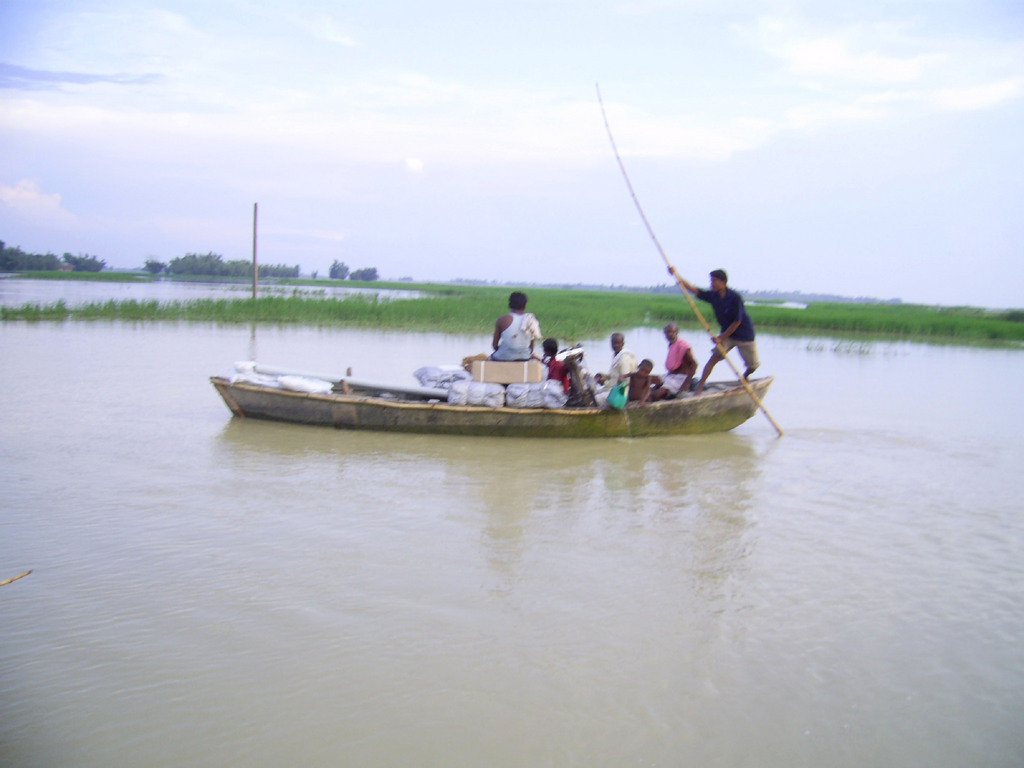
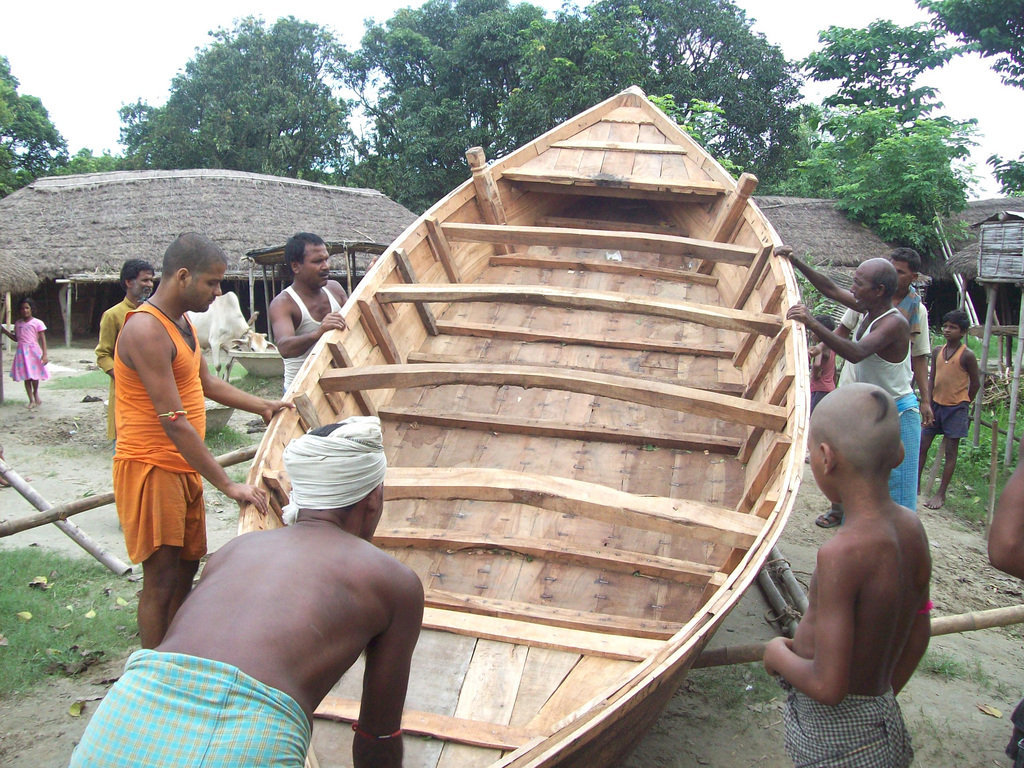
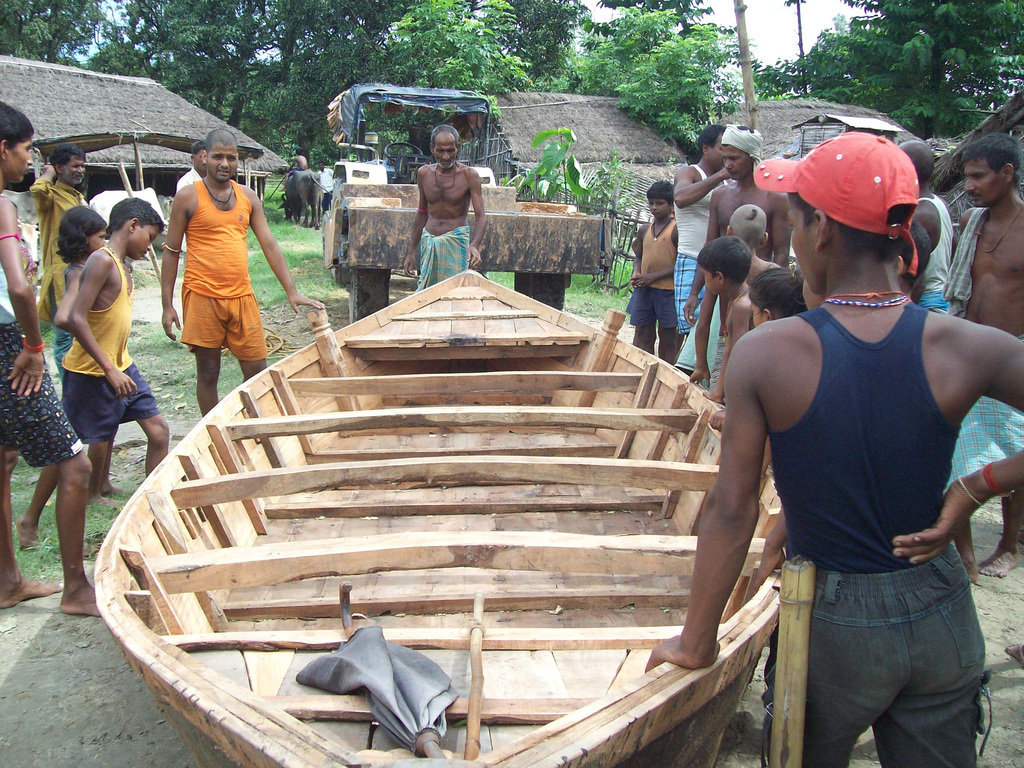
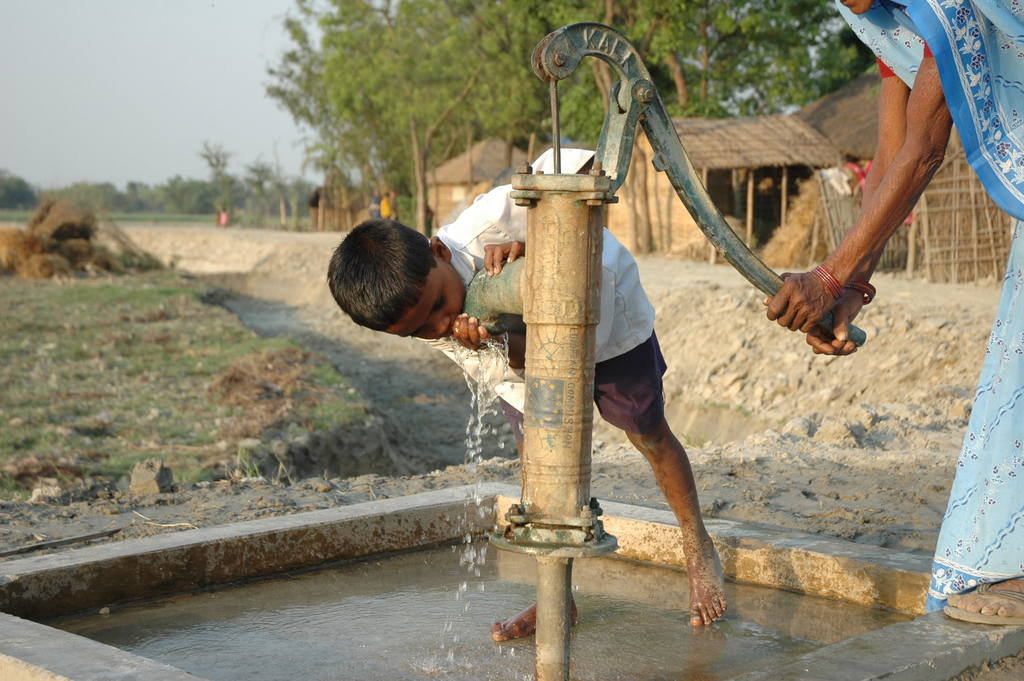
PRI member training A training programme for PRI members to make them aware of their role and responsibilities during any disaster & emergencies and capacitate them to undertake necessary steps to mitigate the situation. The participation of women PRI members particularly was encouraged and they participated enthusiastically in the programme. The total of 87 PRI members participated in the training programme among which there we 23 women PRI members. The topics/ component covered are: • What is Disaster Management? • Need of Disaster Preparedness Plan? • Role and Responsibility of PRI’s in Disaster preparedness plan. • Understanding different type of Disaster. • Need of community Based Disaster preparedness plan. • Community and Vulnerability. • Component of community Based Disaster preparedness plan. • Community Based Disaster Preparedness in Pre- Disaster Phase. • Community Based Disaster Preparedness during Disaster Phase. • Community Based Disaster Preparedness in Post Disaster Phase. • Understanding Village level Disaster management/preparedness plan • Formation of village level DMC. • Roll and Responsibility of village level DMC. Provision of boats with life jackets In the aspect of DRR, prepositioning of those materials which can reduce the impact and effect of flood i.e. Boats and Life Jacket, halogen tablet, bleaching powder and ORS powder has been done in covered villages. The last three materials were placed in all covered village in publicly accessible places. 7 boats have been placed in Tribeniganj block. After the placement of these boats in villages a boat management committee has also been formed to take care of and for proper maintenance. Life Jackets has also been procured and placed with boats. On the each boat no. of life jacket is 6. These were also handed-over to the boat management committee. Installation Water Facility in Villages. Identification of places for installing new hand pumps has been done in all villages with community meetings. 24 new hand pumps have been installed with depth varying from 96 feet to 412 feet’s. There are 11 hand pumps (Mark-III) installed with the depth of 96’ to 110’ along with raised platform up to 2.5 to 3’ height. Water testing has also been done in the project area. After the visit of ECHO Regional WatSan Coordinator who has given suggestion to redesign the hand-pump installation/repairing. Budget of the Hand pumps has been revised as per the recommendations and we have installed 13 deep bore hand pumps up to 412’(varying from 250’ to 412’) with Mark-III model. Approximately 700 families got benefitted covering around 3,500 persons. The local practice of installation of hand pump is 40’-60’ deep by hand installation. When we started boring by the machines everywhere hard rock was found after 150’. It made very difficult even for machines to go beyond 200’ .Therefore the machine hired for the purpose got failed to install all pumps with same depth. Only in two cases we were able to complete the approved guidelines. Given the soil structure which largely sand mixed in our covered region it become very difficult to achieve the target. However, we tried to maintain the depth above 250’. Awareness Building: Various awareness generation programmes has been conducted in our covered villages such as Health & hygiene campaign, water & sanitation awareness programme etc. to aware the villagers regarding safe sanitation practices. Apart from this we have organised street plays and puppet shows to make people aware of the same. Our awareness generation programmes conducted in villages has largely benefited the people and approximately 50-60% people are following the basics of safe sanitation practices. Repairing of other hand pumps: Identification of damaged and defunct hand pumps has been done in the villages and all of them have been repaired. Total 122 hand pumps in 7 villages has been repaired and chlorinated. Approximately 600 families got benefitted covering around 3,500 populations. Fogging for Mosquito Control Fogging in villages has been done to curb mosquito population post monsoon. With vector population curtailed greatly in these villages, there are hardly any case of fever due to mosquito bite was reported. A total of 6,000 families and 25,000 people were benefitted from fogging in 7 villages. Construction of Raised Pit and Community Toilet The construction of raised pit and community toilets were done mostly for the women and the adolescent girls. Raised pit toilet models have been constructed in the villages. In some places where land was scarce community toilet have been made but their operation and maintenance is a big challenge. The construction of the toilet was a boon for the female, aged and handicapped persons. There was a steady decline in open defecation with the construction of the toilets. Learning: Demand for safe water and sanitation (toilet) was huge Awareness building through street plays, puppet shows increased the level of participation of the masses Operation and maintenance of the resources is done by the community. Their skills are to be enhanced.
Project reports on GlobalGiving are posted directly to globalgiving.org by Project Leaders as they are completed, generally every 3-4 months. To protect the integrity of these documents, GlobalGiving does not alter them; therefore you may find some language or formatting issues.
If you donate to this project or have donated to this project, you can receive an email when this project posts a report. You can also subscribe for reports without donating.