By Alison Hall | Founder
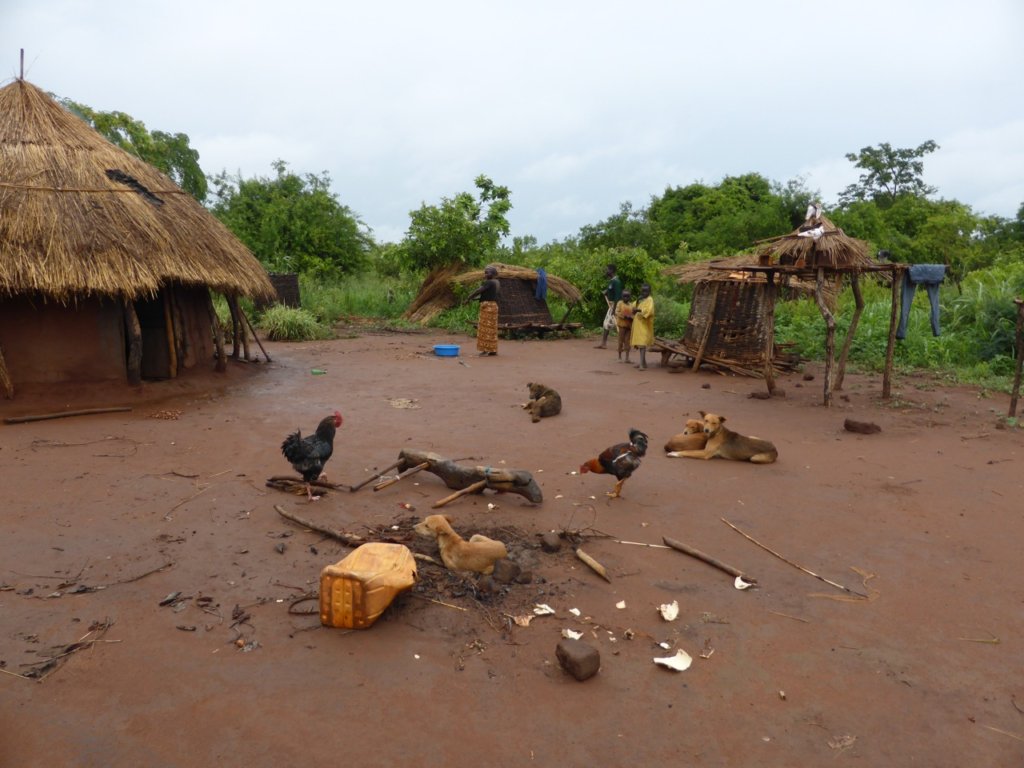
Brenda and her sister Stella are happy to be back at school after the half-term holiday. It isn’t just because they get to sing and share stories but because she will, once again, be having something to eat, other than mangoes. For two weeks, many of the children in the nursery school at Paibwor, near Kitgum, the only food they had was what they foraged from the trees and the land around their homes. There is no food, no money and not a lot of hope for these children. I know this because I have just returned from my latest trip visiting our projects and seeing for myself how things are progressing – or not.
This trip was both uplifting and depressing at the same time. Uplifting because our farming projects are doing so well – 225 farmers, parents of the children in the nursery schools we support, have all planted one acre of maize seeds. Seeds for Development advanced these seeds to the farmers as part of our “farming as a business” projects. The farmers will sell the maize to the nursery schools to feed the children. The money the farmers receive will help them with their day to day lives and pay for the children to attend school. A win-win situation all round, as the money stays within the local area and helps achieve our goal of thriving self-sustainable communities.
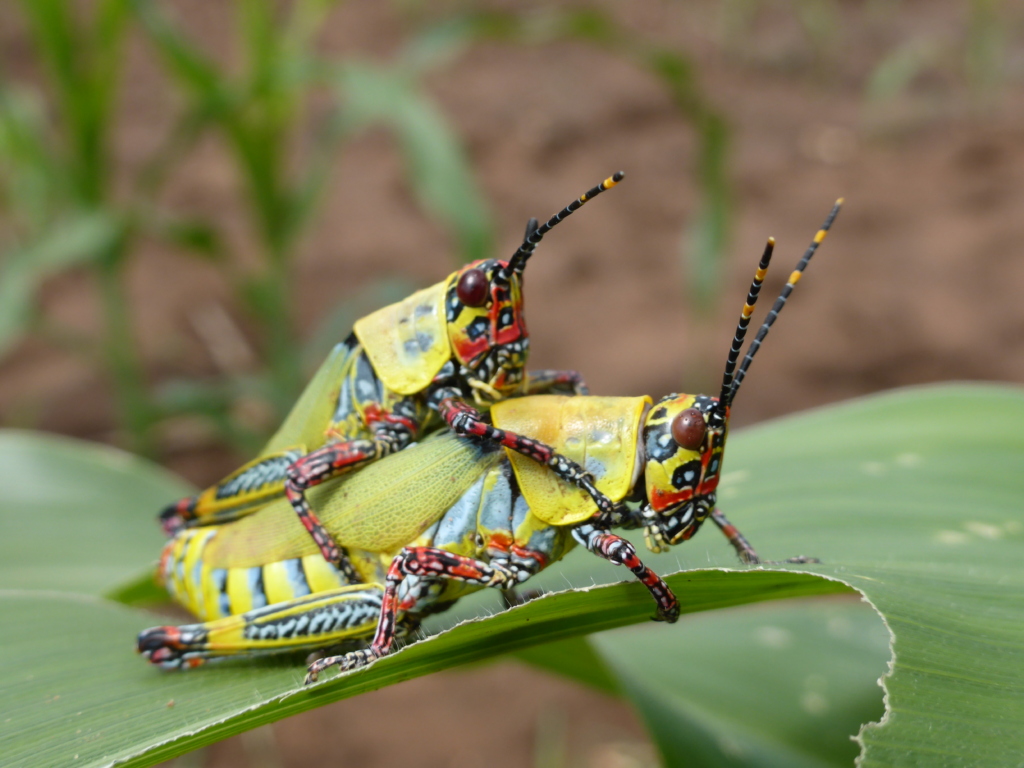
Depressing because there is a killer grasshopper destroying every plant that we planted. Uplifting because I was on the ground and we were able to take immediate action. That action was to set up an emergency task force, buy 225 litres of chemicals to kill the grasshoppers and 4 sprayers for the taskforce to administer the lethal dose. Depressing because for the last 9 years we have advocated, encouraged and promoted organic farming – but we had no choice. Kill the grasshopper or risk dying yourself. Also slightly depressing because the chemicals and sprayers are not cheap and so we had to eat into our valuable funds to ensure the crop survives - I hope you agree that we had no choice. Imagine those poor farmers who spent weeks preparing the land (remember they do everything by hand, with no tractors or tools other than the hand-hoe), planting the seeds, weeding the seedlings and then this. Don’t worry though, thanks to your amazing generosity this has not impacted our school feeding project, but we have made a few changes that you will read about.
I feel very privileged that I can visit our projects 2 or 3 times a year. I pay for these trips myself (I have a full time job and run Seeds in my spare time) . These regular visits mean I see with my own eyes exactly what is happening and I don’t have to rely on other people telling me things they think I would like to hear!
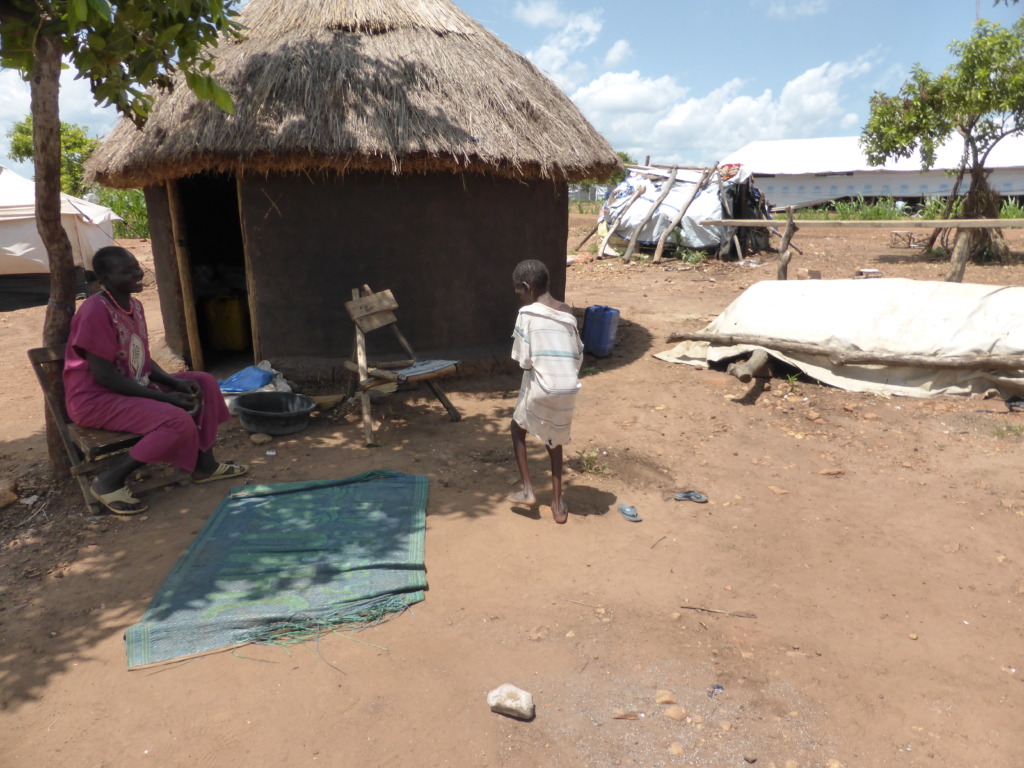
I saw the devastating impact of the drought that is causing so many problems across the wider region of east Africa and resulting in the terrible refugee crisis in several countries. Uganda is hosting nearly a million refugees from South Sudan and I was able to visit 2 refugee camps. It is clear to see that the UN and other large NGOs are doing an incredible job helping the refugees who arrive at the camps in their thousands - with nothing – but they are buckling under the pressure. In one camp (where refugees have lived for a year) it was clear that there is no food. The last food delivery was 2 months ago and the situation is desperate.
This has a massive knock on effect on the local “host” communities, who find themselves unable to provide food for their families – because of the drought and the crops dying and the price of food rocketing, due to the refugee crisis. Our projects are all within 60km of refugee camps, which means that, whilst they are not in the immediate vicinity, they feel the impact as well.
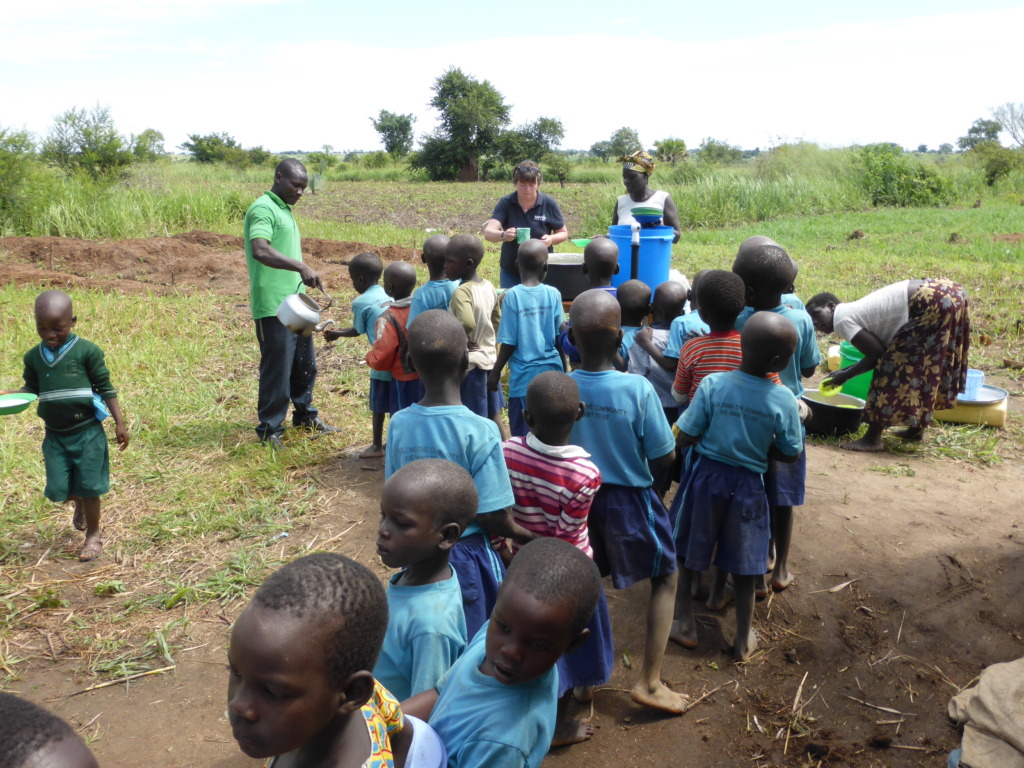
Thanks to you, we have been running our school-feeding programme in one of our nursery schools, but so many other children are going hungry. During this trip, we made the decision to feed more children less food and ensure that as many children as possible will eat something, that isn’t foraged, every day. Instead of feeding the children in one nursery school solid food (posho and beans) we are now going to feed the children, in all 5 nursery schools, a big cup of porridge at the end of their morning at school. You can watch our children receiving your porridge in this short video
This means that the goal of our project has changed slightly with the number of children increasing and the food provided decreasing. I hope you agree with us that it is vitally important that all children should have something to eat every day.
I would like to take this opportunity to thank you again for your support and generosity – and apologise for the late arrival of this report.
With all best wishes
Alison
Links:
Project reports on GlobalGiving are posted directly to globalgiving.org by Project Leaders as they are completed, generally every 3-4 months. To protect the integrity of these documents, GlobalGiving does not alter them; therefore you may find some language or formatting issues.
If you donate to this project or have donated to this project, you can receive an email when this project posts a report. You can also subscribe for reports without donating.