By Stephen Perlman | Consultant, Help the Afghan Children
The Paghman District of Afghanistan lies only 20 miles or so west of Kabul, Afghanistan's bustling capitol, but in many respects it is light years away. The District has suffered through several wars. Approximately 98% of the population has no electricity and there are not nearly enough schools to accommodate the District's children.
In one small part of this District there was a school, but it had no buildings, no facilities; not even chairs, or books or the most basic of supplies. All this school had was a few caring men and women who wanted to teach and share their knowledge with the children living in the nearby community. The only 'real school' in the area had been destroyed 25 years ago during one of several wars.
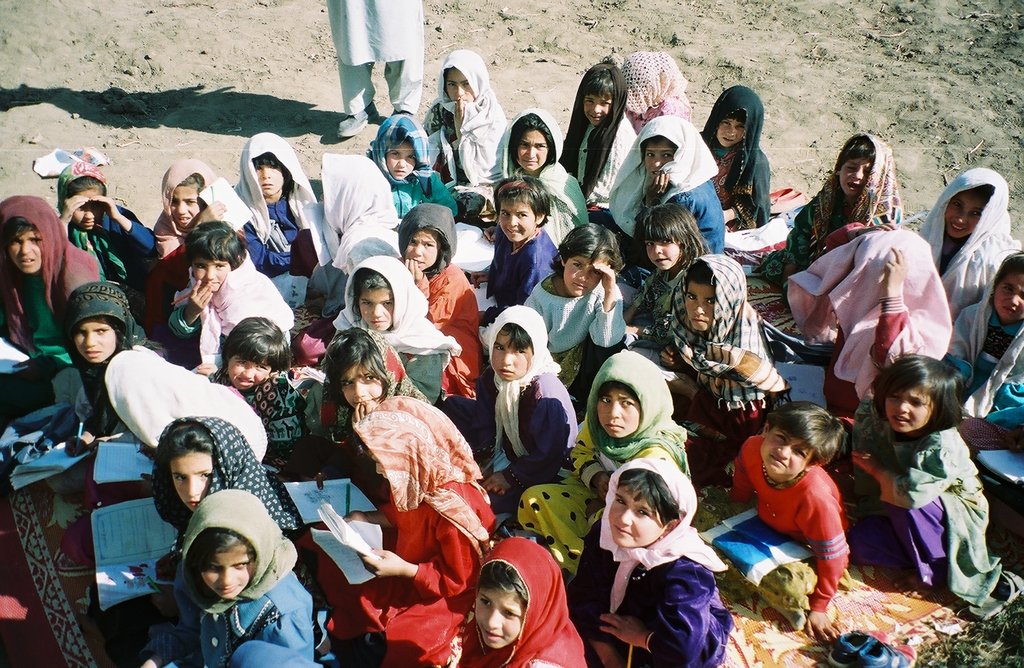
The word went out and amazingly, the children came. They sat on blankets and mats in the open air. A few lucky ones came with notebooks and pencils. Others came from families too poor to afford any school supplies. But they all had one thing in common; the desire to learn.
During the summer it got very hot and the only relief for the students and teachers was to conduct 'classes' under some of the large walnut trees nearby. Because there were no lavatories, the students would have to walk a long distance to find a facility they could use. When the Fall months arrived, the weather became cool, then cold, even in daytime. But the weather or lack of facilities would not deter these children. In November, the last official month of the school year, they came dressed in warmer clothes with many of them carrying blankets to wrap around their bodies as they sat shivering on the cold ground as their teachers (often shivering themselves), continued to teach lessons.
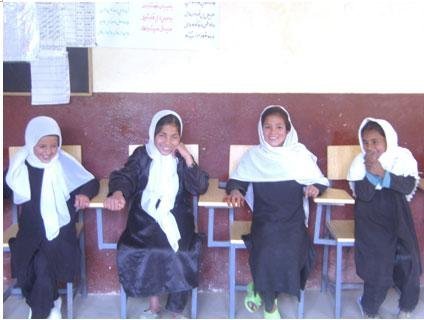
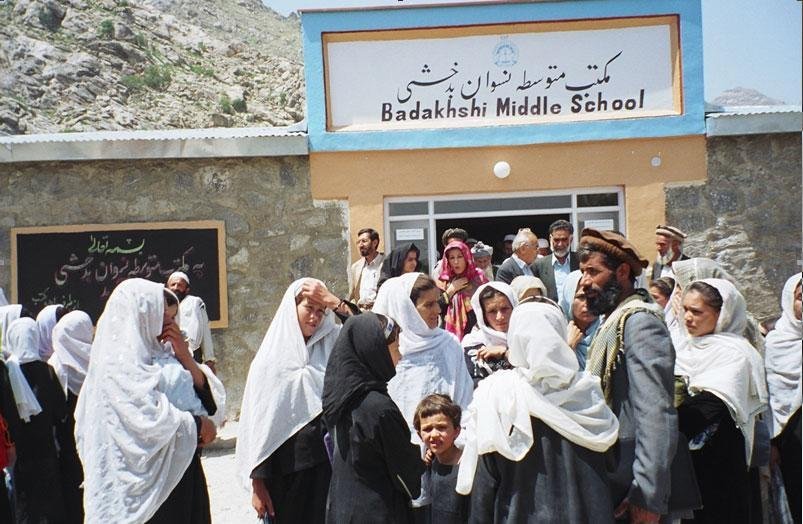
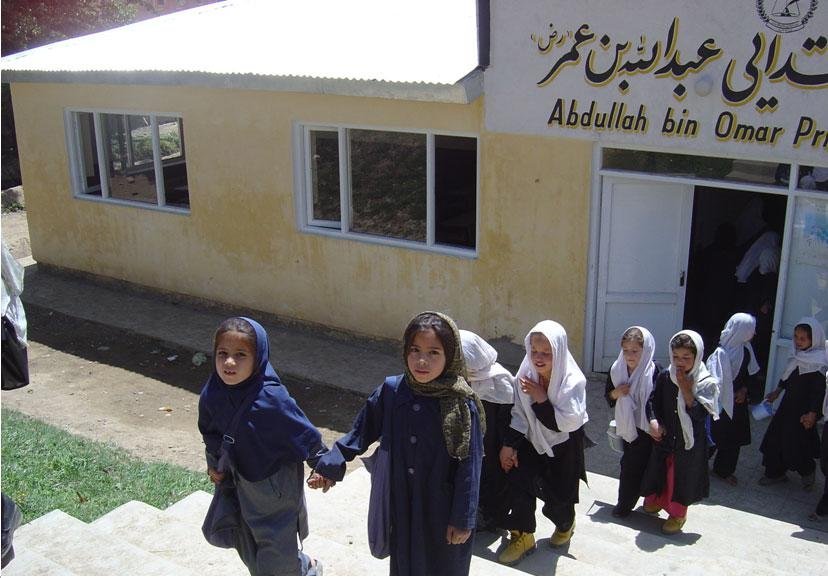
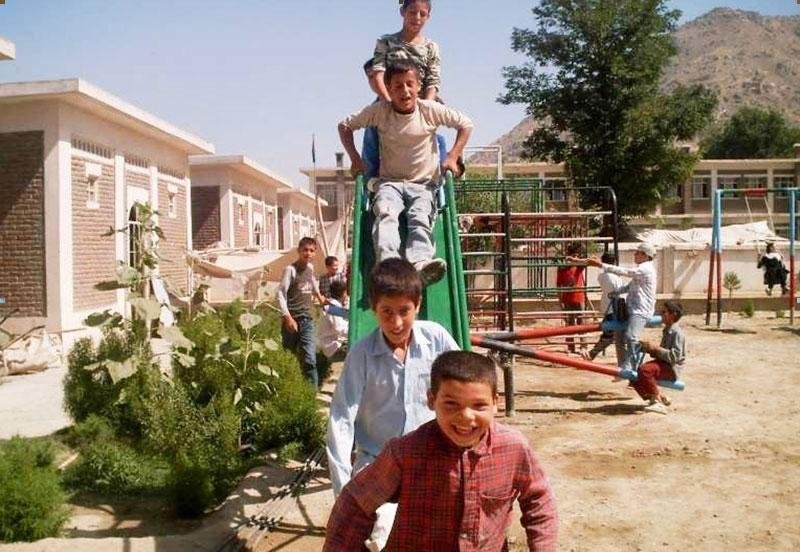
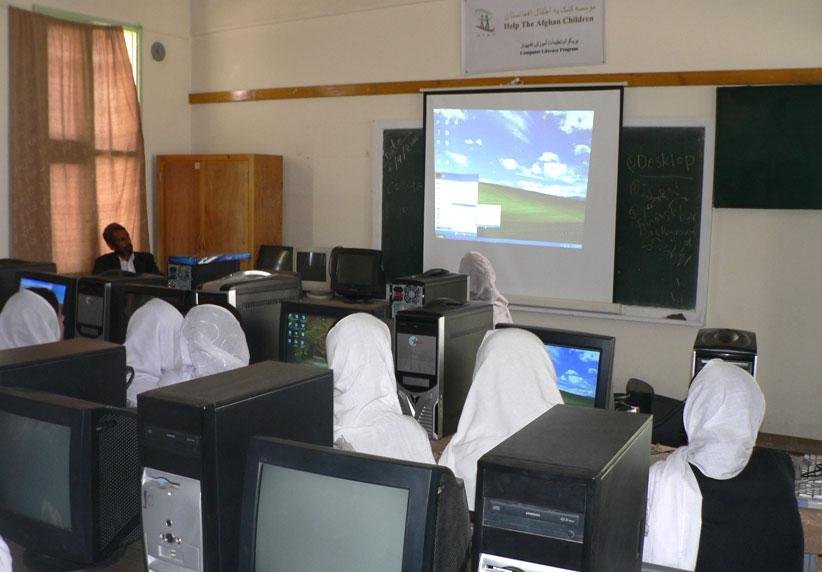
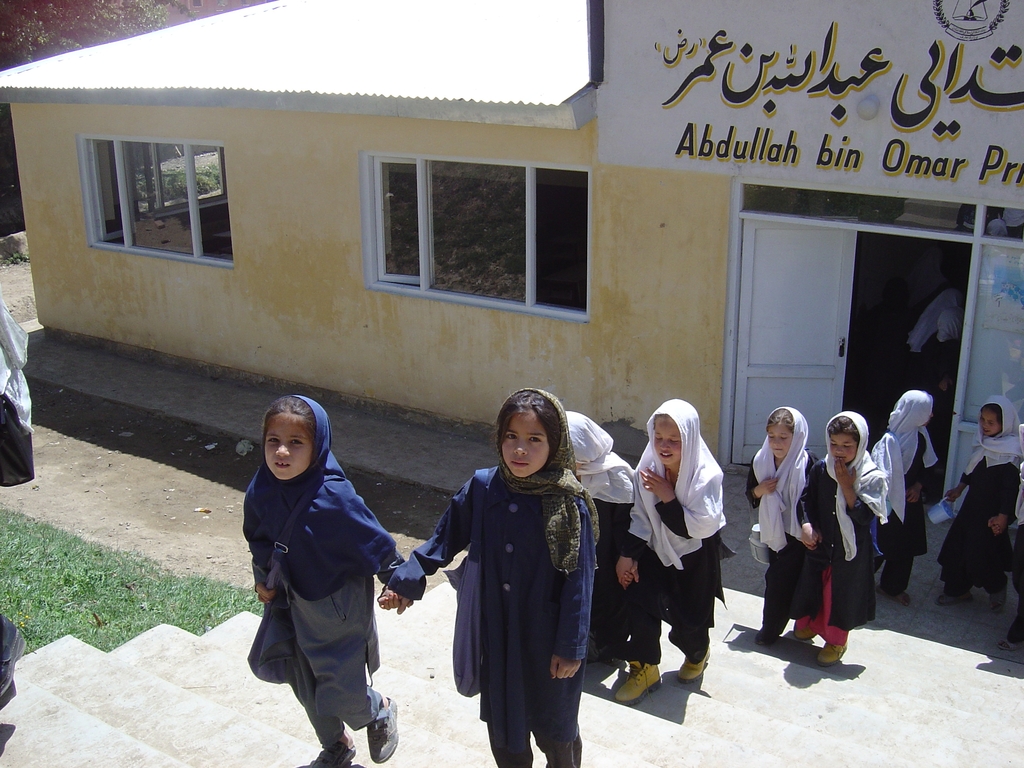
This same outdoor site became the inspiration for Help the Afghan Children's first model school. Thanks to the generosity of donors, both large and small, a new school was built that would not only transform education in this area, but represent a model for the future of schools throughout Afghanistan. After eight months of hard work, Abdulla bin Omar Primary School opened its doors for 850 students. It boasted 26 classrooms, 7 administrative rooms, 2 guardrooms, a deep well and 12 sanitary latrines. Also installed was a computer laboratory with fifteen computers, a network printer and a generator with fuel to power the equipment.
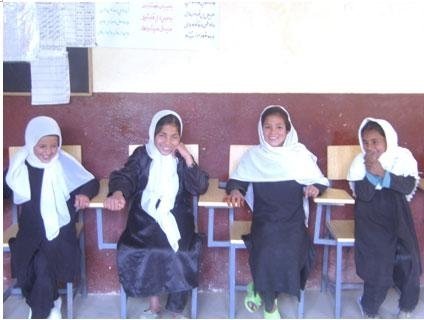
During the opening ceremonies, a group of students sang Afghanistan's National Anthem and HTAC's executive director, Suraya Sadeed along with the Ministry of Education's General Director delivered speeches. One of the teachers was beaming from ear to ear. Last year he conducted his classes on top of piles of stone and under the shade of trees. Now he would teach in a real classroom with a chalk board, chairs and desks for the students, books and ample school supplies. He glanced at some of the excited children who (before) had nothing, and there were tears running down his cheeks. "Now they have something" he said. "And I'm very proud to be associated with this wonderful school to teach them."
Abdullah bin Omar currently serves approximately 1,600 students in two shifts and has 41 teachers. HTAC relies on donors to help support this school..
Project reports on GlobalGiving are posted directly to globalgiving.org by Project Leaders as they are completed, generally every 3-4 months. To protect the integrity of these documents, GlobalGiving does not alter them; therefore you may find some language or formatting issues.
If you donate to this project or have donated to this project, you can receive an email when this project posts a report. You can also subscribe for reports without donating.