By Kencho Tshering | Programme/Communications Officer
Young Voices Reshape Local Governance in Samtse
When 16-year-old Richa Chhetri walked into the workshop hall in Phuentsholing on a quiet April morning, she had never spoken to a local government official before. Six days later, she was standing in front of the Dzongkhag administration, presenting a community action plan she had helped design and being listened to. "I never knew children could be part of how our village is planned," she said. "Now I know my voice matters."
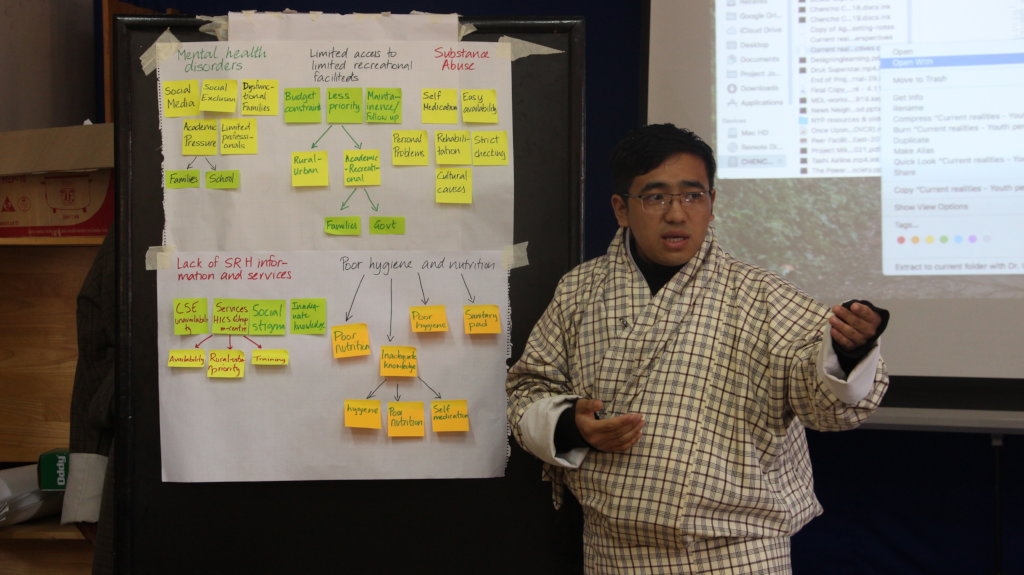
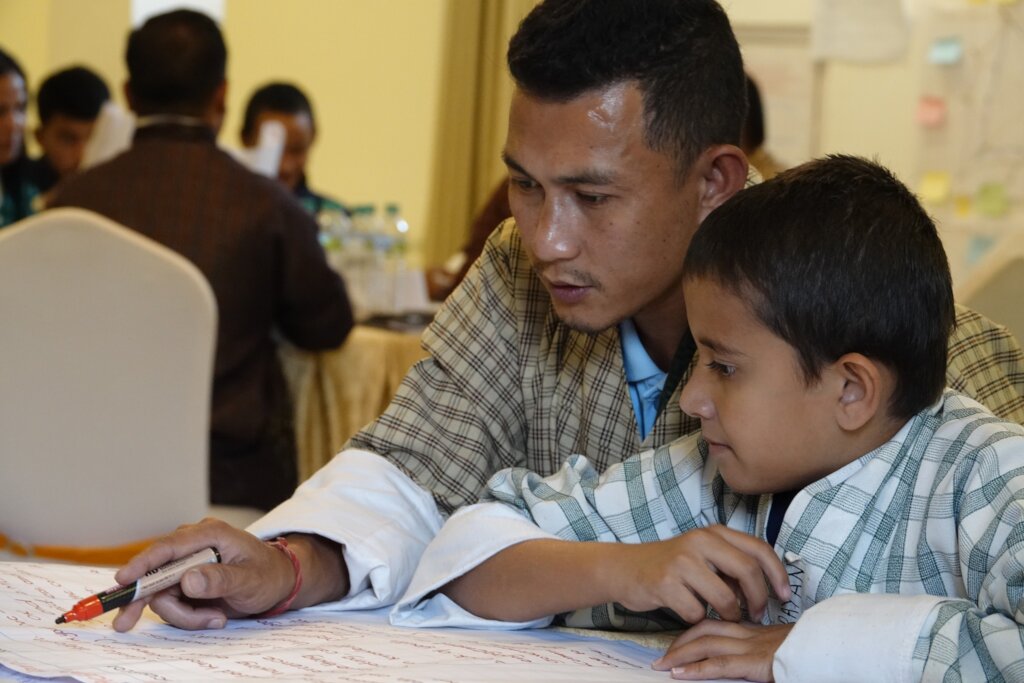
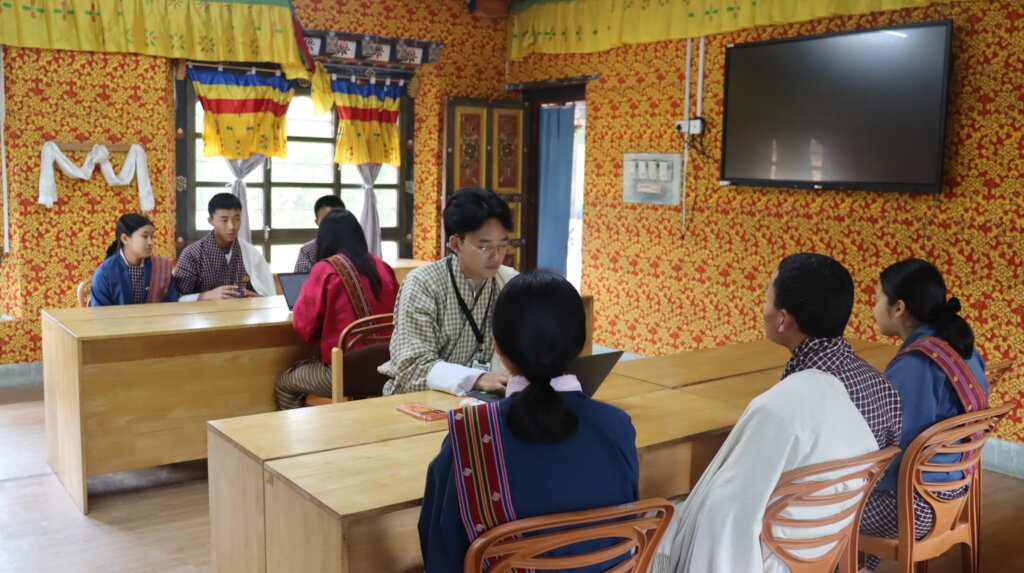
Over six days, 43 participants came together in Phuentsholing for an intensive workshop on Child Friendly Local Governance (CFLG). Among them were 18 local government leaders and Dzongkhag sector heads from across Samtse, alongside students and teacher coordinators from four schools from four Gewogs. The first two days equipped local leaders with the understanding and facilitation skills they need to genuinely engage young people in planning and decision-making. The remaining four days brought students into the room as equal partners, and not just as guests or observers.
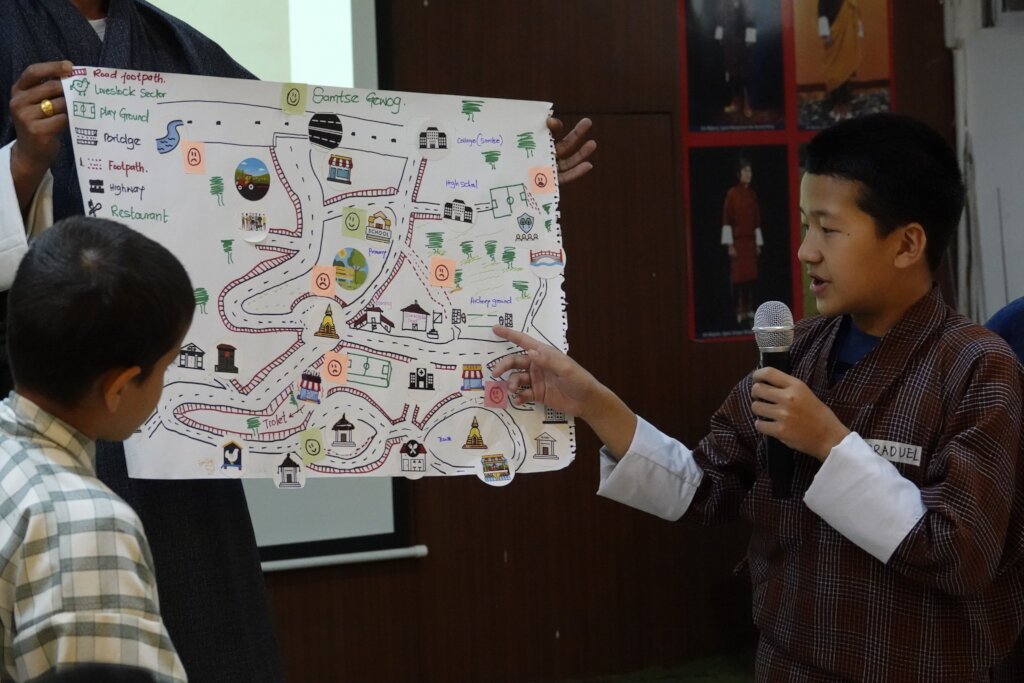
Through community mapping, issue identification, and collaborative problem-solving, children moved beyond passive roles to become active contributors to their community development. Together, students and government officials co-developed joint youth–government action plans for each participating community.
In Sang-ngag Chhoeling, for example, students raised concerns that adults had largely overlooked: the safety of children living in rental housing far from their families, and the absence of children's voices in Gewog Tshogde meetings. The plan they co-created with local leaders includes:
Sonam Tshering, a student participant, shared that he now understands "being a good citizen starts before you're old enough to vote." Equally striking was the reflection from local leaders, several of whom acknowledged that children's perspectives had been "overlooked" in their planning processes and committed to changing that.
The workshop has produced a strong foundation: a cohort of duty-bearers who understand CFLG, a cohort of young people equipped to meaningfully engage with governance processes, and a set of jointly authored action plans grounded in local realities. The next phase of work must focus on operationalising these plans, and embedding them within institutional structures. Following the development of the action plans, BCMD will organise a knowledge sharing session with Dasho Dzongdag and sector heads to secure their buy-in and institutional endorsement; this session is intended to be conducted in May.
Citizen Journalism Workshop
In a primary school in Samtse, a group of children put up handmade “NO SMOKING” signboards in the corners of their community. They had never done anything quite like it before. Months earlier, they had known media only as something they consumed videos to watch, messages to forward, accounts to scroll. Now they have decided to use it.
The signboards were just the beginning. Soon, the students at Samtse Primary School were producing vlogs about the issues they saw around them: bullying in their school corridors, water shortages in their homes, the wasted electricity nobody seemed to notice, and the trees disappearing from the hillsides above their village. They posted photo stories about alcohol and substance abuse. And when their school held its captain election, they covered it themselves, recording, photographing, writing like a real newsroom run by ten-year-olds.
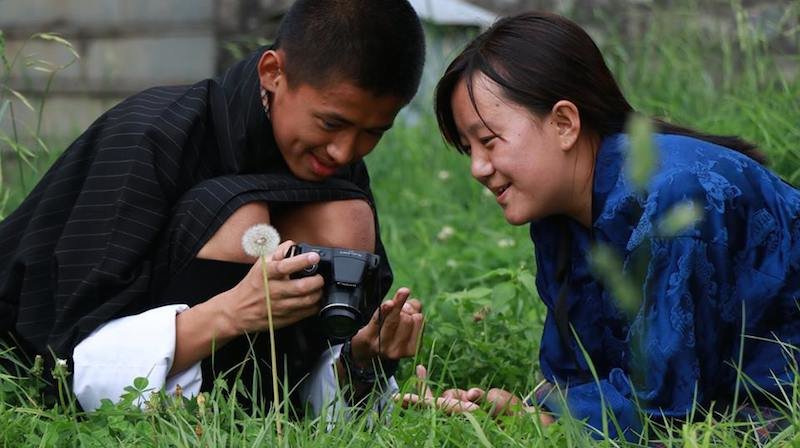
Earlier this year, BCMD worked with the Media and Democracy Clubs in the four schools, including Samtse Primary School, Sakteng Lower Secondary, Samcholing Middle Secondary, and Langthil Lower Secondary, reaching close to 400 students. They learned how to engage with media and online information critically, how to fact-check a claim, how to take a photograph that tells a story, how to make a vlog responsibly. They learned the difference between misinformation and disinformation. They learned, perhaps for the first time, that they too could be citizen journalists.
“We thought that the media was just a platform to chat. Now we know about the responsibilities of posting and sharing news,”, a participant from Samcholing Middle Secondary School expressed.
Across all four schools, students are asking for more. More time. More practical sessions. More cameras in their hands. At Langthil Lower Secondary School, where many students speak Kheng-kha (a local dialect spoken in south central districts of Bhutan) at home and arrived at the workshop with little prior exposure to the idea of citizen journalism, students have already named what they want to report on next: water access in their villages, and the everyday concerns nobody else is covering. They are not waiting for permission. They are taking action on what can be done within their means.
This is what citizen journalism looks like when it takes root in a young person not simply as a skill, but as a stance: that the issues in one’s community are yours to notice, yours to name, yours to tell and yours to act upon. Going forward, BCMD will continue strengthening MDCs as platforms for youth-led media literacy, responsible digital participation, and community storytelling. Future support will focus on improving access to practical equipment, strengthening coordinator capacity, supporting student media outputs such as e-magazines and vlogs, and helping schools create safer online spaces for young people to share their work with confidence.
Citizen Storytelling & Local Reporting: A Virtual Exchange
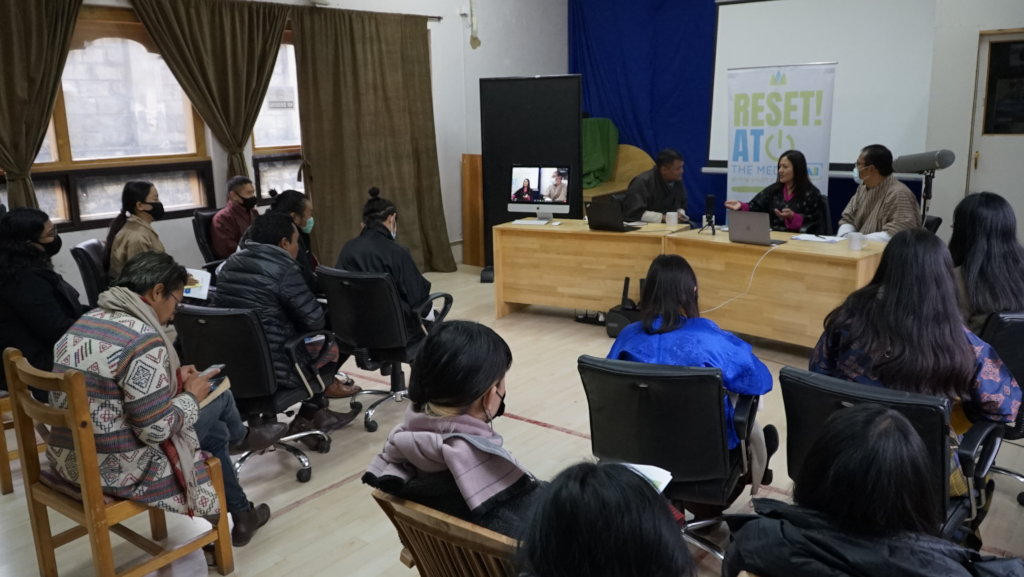
In late April, in a virtual classroom that connected Media and Democracy Club members from nine schools across Bhutan, a participant from Sherubtse College raised a question that the facilitators had not prepared a tidy answer to. “If reporting an issue harms someone’s livelihood, should one act as a citizen journalist or an active citizen?”
The question stopped the conversation and then it changed it. What had begun as an introductory session on citizen journalism (what it is, why it matters, how to begin) became, for a moment, a working seminar on the ethics of telling the truth. Other students responded. Facilitators reflected back. The room arrived not at a clean answer but at a more honest realisation: that journalism and citizenship sometimes pull in different directions, and that learning to recognise that tension is itself part of the work.
Across April, 300 MDC students from ten schools, Taktse Central School, Samcholing Middle Secondary School, Langthil Middle Secondary School, Samtse Primary School, Sakteng Lower Secondary School, Rangjung Central School, Dorokha Central School, Peljorling HSS, Sherubtse College, and Sang-Ngag Chhoeling Lower Secondary School joined three regional online sessions.
The exchanges marked the opening phase of the 2026 Story Development and Showcase Series, designed to help students move from learning about citizen journalism to actually practising it.
When asked to describe their communities in a single word, the students chose words like peaceful, united, beautiful, harmonious, progressive, helpful. However, when encouraged to view their communities through the lens of a journalist, a more nuanced picture emerged. They pointed to issues such as the sale of expired goods in local markets, the slow pace of development, gender inequality, and the growing influence of alcohol on the lives of young people around them.
These are not the issues students are typically encouraged to discuss in school. They are also not, often, the issues that surface in mainstream Bhutanese media. The fact that 30 Media and Democracy Club members from 10 schools, representing a wider network of nearly 900 students, independently identified these concerns is significant in itself.
Alongside the issues, the students brought up other questions of their own: how to tell the difference between left and right political ideologies; how to share information responsibly online; how to engage with peers in other schools whose communities looked different from their own. The exchanges, by design, did not always resolve these questions. They held them open long enough for students to begin sitting with them.
In May, the students will present their early story ideas to working journalists and civil society organisations, who will offer feedback and help them sharpen their angles. By the end of the series, the strongest of their stories will travel with them to Thimphu for a national-level exchange. But the work that matters most has already begun in the moments when students look at the issues in their communities and decide that somebody needs to tell those stories, and that the “Somebody” is them.
Project reports on GlobalGiving are posted directly to globalgiving.org by Project Leaders as they are completed, generally every 3-4 months. To protect the integrity of these documents, GlobalGiving does not alter them; therefore you may find some language or formatting issues.
If you donate to this project or have donated to this project, you can receive an email when this project posts a report. You can also subscribe for reports without donating.



Support this important cause by creating a personalized fundraising page.
Start a Fundraiser