By Carolina Kuzaks-Cardenas | Latin American Coordinator
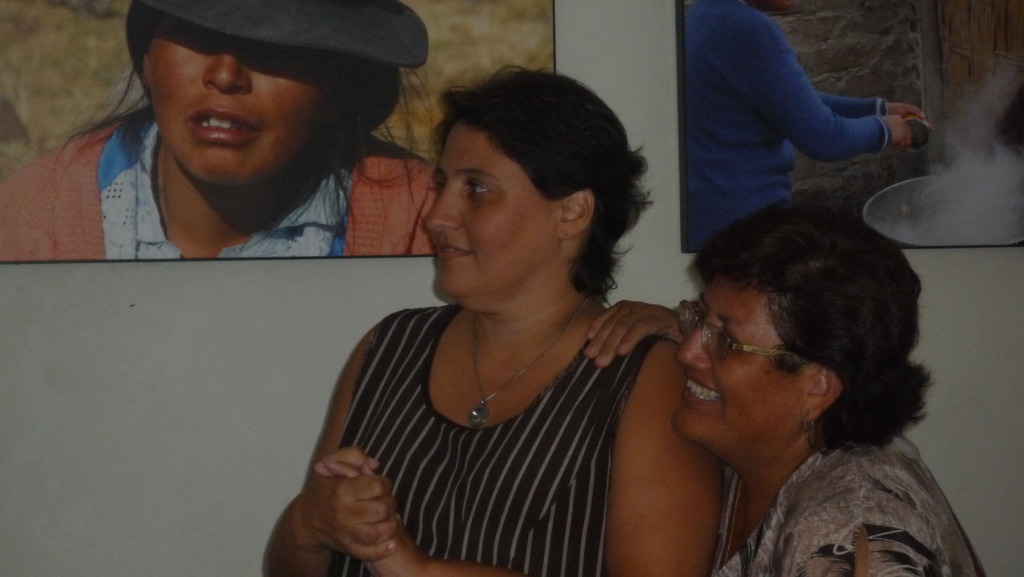
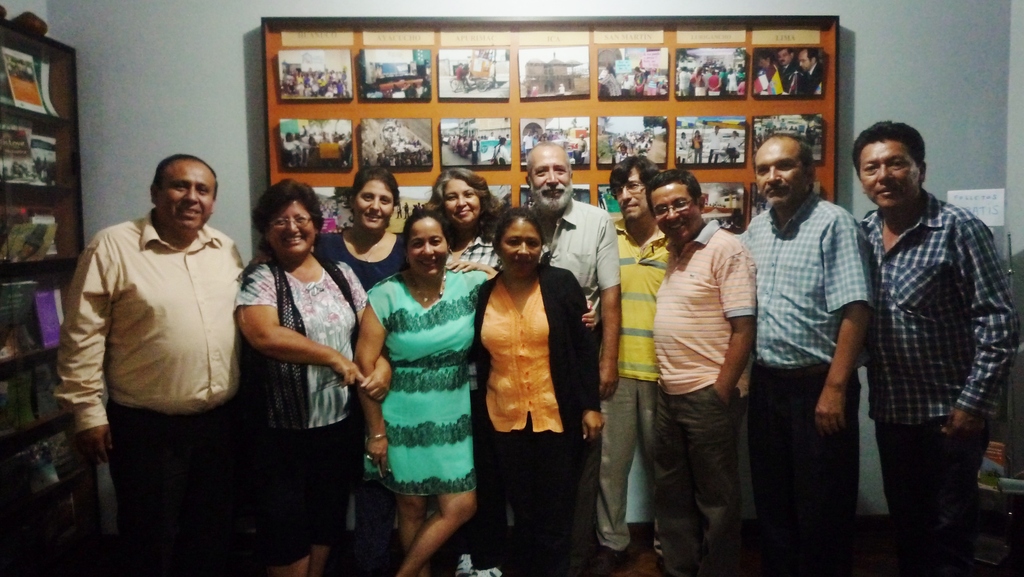
I spent a week in Peru in the middle of February with our partner organisations that are taking part on this pioneer research. We got together to discuss the results, agreed conclusions and draft the basis of what will be a continental campaign around the issue of domestic violence.
Baseline studies have been conducted of domestic violence in church communities in four countries: <Argentina, Bolivia, Ecuador and Peru. Listening to the different presentations by each country representative it was very clear what a large amount of work had been carried out by each team. This is not an easy topic to address in public and there was some opposition coming from different circles, however the persistence and perseverance displayed by the teams contributed to the fulfilment of the study.
The research shows that the levels of domestic violence outside and inside the church are very similar, a small decrease when it comes to physical violence but equally an increase when emotional violence is compared.
We also found out that men feel equally affected by domestic violence, and we will to use the more detailed information collected in the focus groups and the in-depth interviews to understand these answers in more depth. We hypothesise that this has to do with the way men feel when they are challenged by the empowerment of women and the way this has affected women’s/men’s roles in the household. The fact that the wife may not always be doing all the housework, spending less time at home or having a say in the sex-life of the couple could be read by the men as a “denial of affection”, which was the highest category mark for the men who identified themselves as victims of abuse.
This result in particular will undoubtedly need more analysis, but one thing is certain, designing a campaign to raise awareness of domestic violence will involve working with men and masculinity.
Last summer during our time at Greenbelt (A Christian summer event in the South of England) I have the privilege to listen to Paulo Ueti, Anglican Alliance facilitator in Latin America and the Caribbean. He formulated the idea that power can be seen as an elastic band, if you stretch one side the other one needs to give and vice versa. To basic principle being that to empower others we need to be prepared to be disempowered. He also challenged the idea of disempowerment as a negative result and rather invited us to see it as a way to bring freedom and equality to others and to ourselves.
If we understand that the abuse of power and control is at the centre of the domestic violence, we need to recognize that the research is showing us a clear need to support men to use and give up power well and to deal with feeling disempowered in the same way we support women to be empowered.
We will have the executive summaries of each country study in April as well as the full compendium of the research for the four countries. We will be circulating links for accessing thesewhen they are available.
This research wouldn’t have taking place without your support and we are very grateful to each and every one of you for your faithful contribution.
Kindest Regards
Project reports on GlobalGiving are posted directly to globalgiving.org by Project Leaders as they are completed, generally every 3-4 months. To protect the integrity of these documents, GlobalGiving does not alter them; therefore you may find some language or formatting issues.
If you donate to this project or have donated to this project, you can receive an email when this project posts a report. You can also subscribe for reports without donating.