By Anjana Shakya | Chairperson
Empowerment and Leadership Building of Marginalized Groups in Makwanpur
Himalayan Human Rights Monitors (HimRights)
Supported by: CORE International
Himalayan Human Rights Monitors (HimRights) has worked in Makwanpur District and other districts of Nepal since 2000 with marginalized women, youths (girls and boys) together with community and government stakeholders. We have supported with educational and income generation programs as well as 1000 programs on empowerment and rights of vulnerable population against human trafficking and leadership building.
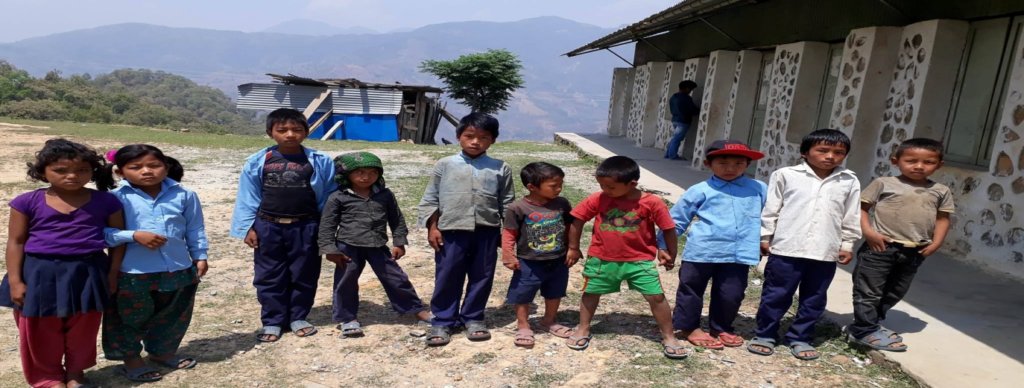
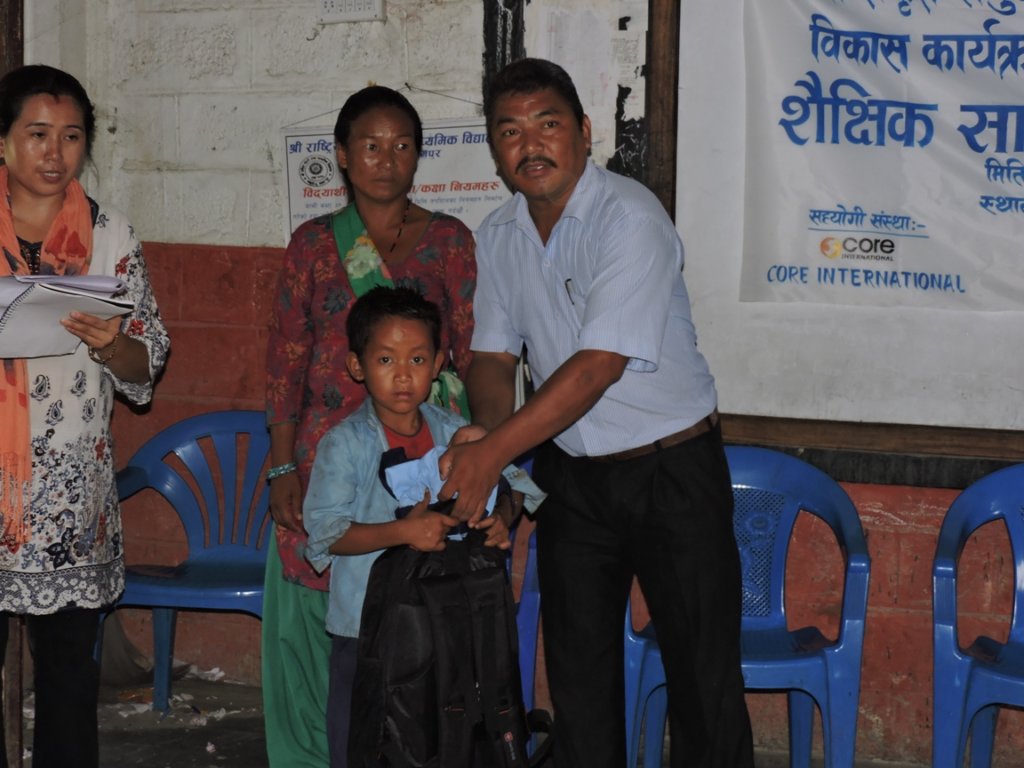
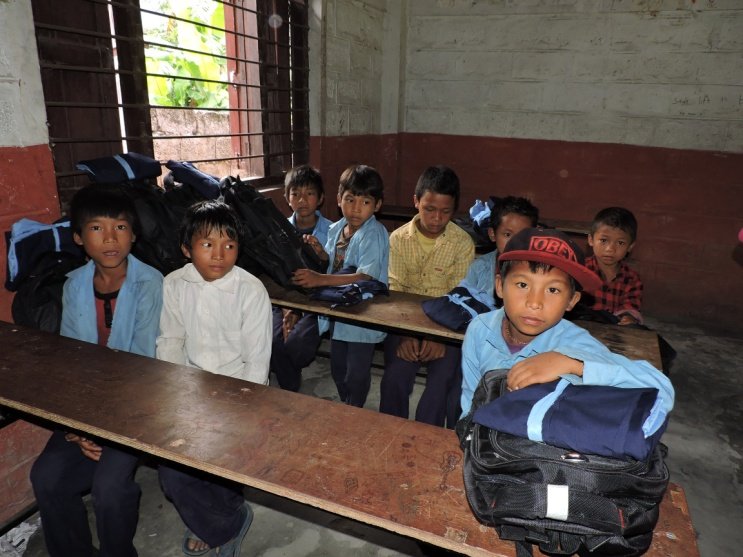
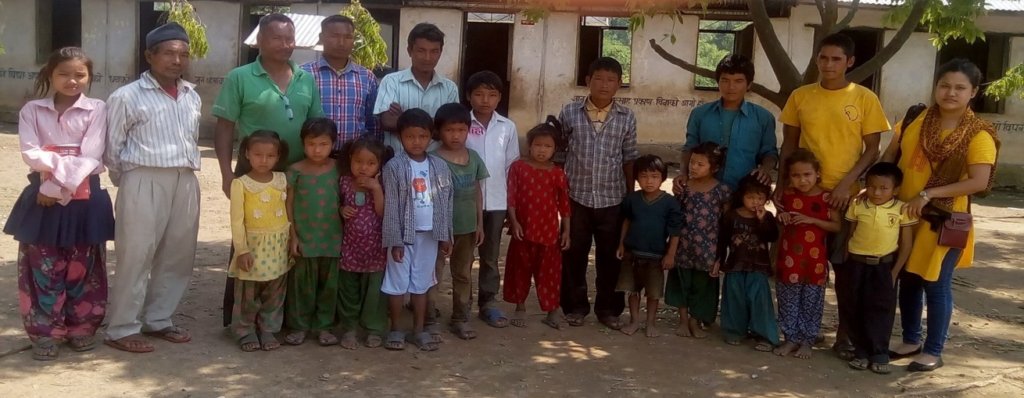
For the first time we are specifically working with the Chepang community who are marginalized local indigenous group, some of whom continue to live in jungles and caves with the support from Core International. In this project we are supporting 40 children, 18 girls and 22 boys. We distributed educational materials and school uniform to 40 Chepang Children from Sarikhet, Raksirang, Manahari and Handikhola of Makwanpur. We selected 10 children from each of these places based on extreme impoverished family background and need for educational support without which they would not be able to enroll or continue in school.
We have long history of working with marginalized communities and in most remote places of different districts that encouraged us to work with Chepang community from some of the remote parts of Makwanpur.
Our objective
To provide children from marginalized communities with access to education, retain through higher studies, empowerment, and voice the issues they are facing.
Reasons for Chepang children not in school: Poverty, lack of awareness on importance of education, lack of sustainable economic means, access to schools, not included in the mainstream and remote settlements.
Field visit
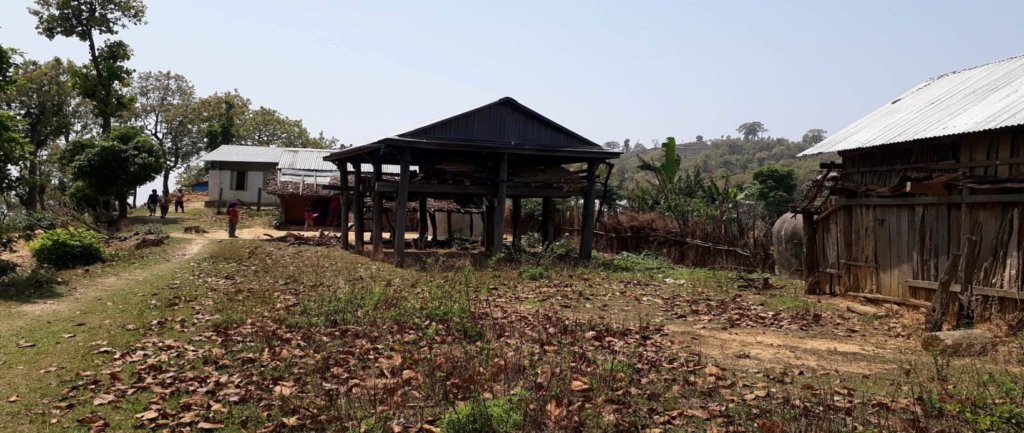
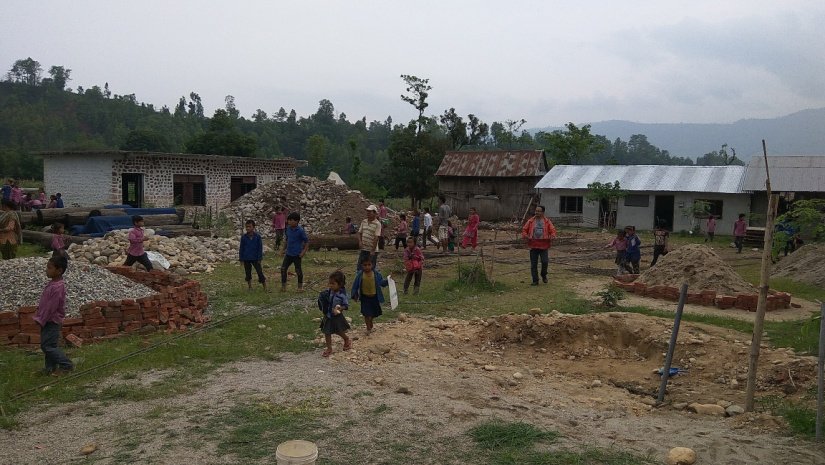
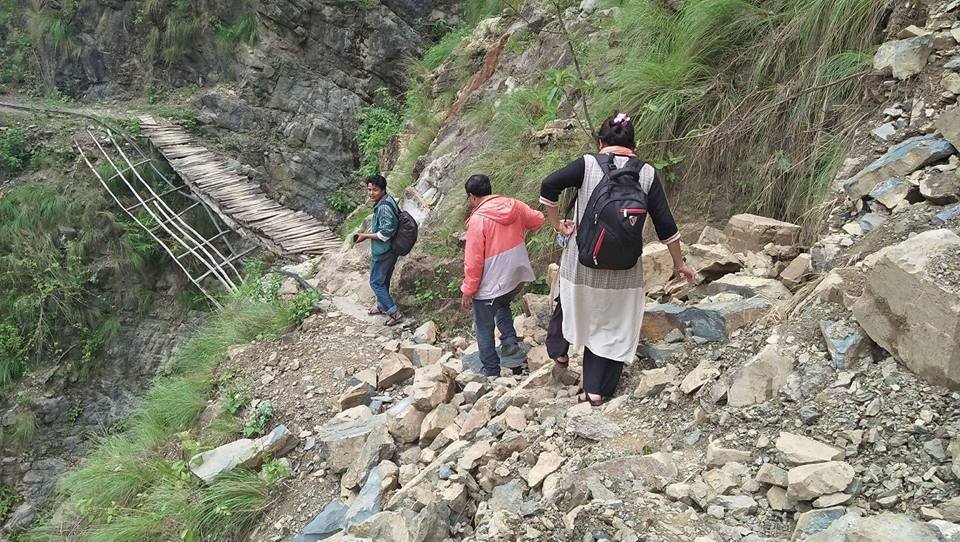
On June 5 – 6, 2017, HimRights distributed education materials to 40 children from Chepang community of Sarikhet, Raksirang, Manahari and Handikhola of Makwanpur district. Although, Makwanpur is one of the neighboring districts of Kathmandu Valley, most part are very mountainous and remote, especially where the Chepangs live. From last motorable road it takes hours of hiking and crossing rivers on foot or bus, no bridges or very primitive ones.
The educational support for children included school bag, note books, pencil, ball-point pens, erasers and sharpeners, crayon, water bottles, lunch boxes, school uniforms, flip-flops, and school admission fee. We are providing tutors to help with children with school and home work as well as small food money.
Sarikhet Village
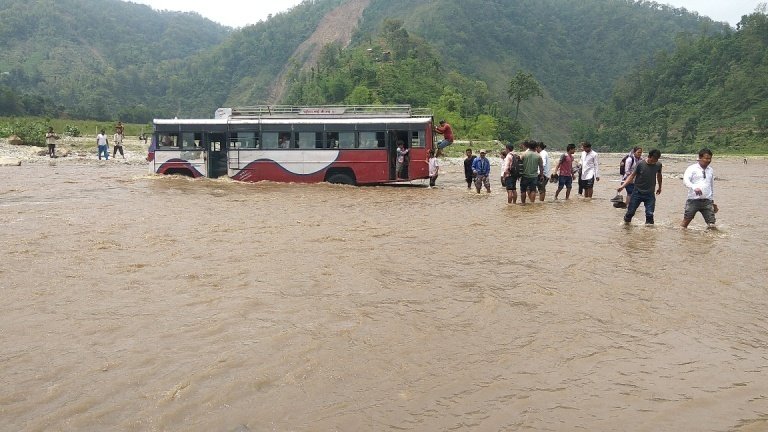
Sarikhet was our first destination which is two and half hour bus ride from the East West Highway in Manahari. The road from Manahari to Sarikhet is very difficult as it goes through the Raksirang River riverbank crossing the same river for more than 12 times without any bridges. During monsoon, people do not have other options than walking to and fro; many times get swept away by the powerful current which is about waist deep in few places where people attempt to cross the river.
Difficult accessibility to the village
Unfortunately, on the travel day, there was heavy rainfall in the mountains increasing the river water level. After an hour on the bus, it got stuck in the middle of the river at Kutasingh. There were several unsuccessful attempts to get the bus out of the river before a bull-dozer pushed it to the other side of the river bank. Most interestingly, the bus had to cross the same river 5 more times before reaching the destination – and some of the crossings are more dangerous. Fortunately for us, the school principal of Suryodaya Secondary School was travelling on the same bus that made our lives easier. After discussing with him we decided to hand over education materials to the principal. Unfortunately, we could not travel to Sarikhet and meet 10 children who have never been enrolled in schools; very interestingly, some of them were 12 years old. As soon as the monsoon is over we will visit the children and the school, monitor their progress.
“There are still hundreds of children in same locality who have never been to schools especially due to poverty. They desperately need external support to bring them to school and retain till higher studies.”
- Principal, Suryodaya Secondary School, Sarikhet
This is striking statement but a reality – we believe, this is a good start and support with 10 children. Hiking back through recently developed rural trails from Kutsingh to Manahari was even more adventurous. At the same time, we realized the difficulties remote village lives disconnected from road linkages.
"The public vehicles are closed during monsoon for more than 3 months."
Manahari Village
We supported to enroll 10 Chepang children in Shree Sagarmatha Lower Secondary School, Rupachuri, Manahari. The route to school is very difficult and it was impossible to hike for about 5 hours with all the support stuffs. Hence we arranged the distribution program in Manahari. All children were accompanied by their parents and/or older siblings. Both children and guardians were happy to get the support and parents committed send their children to school regularly and monitor their performance in school.
There is trend among Chepang children to bunk the classes and go to jungles and caves. So schools should have positive and fun learning environment for them to retain in schools.
Chepang children drop out of the school especially due to poverty – they have to engage to some income generating activities to support their families. Likewise, there is no higher secondary education available in our village that means they have to quit their studies because they cannot afford higher education in urban centers.
- Principal, Shree Sagarmatha Lower Secondary School, Rupachuri
Handikhola village
Trip to Handikhola was again full of adventure. We hired an auto-rickshaw. The road again goes through the stream. The tuktuk stuck dozen of times before reaching Shree Praja Lower Secondary School, Siddhakali, Handikhola. We pushed and lifted vehicle to cross stream.
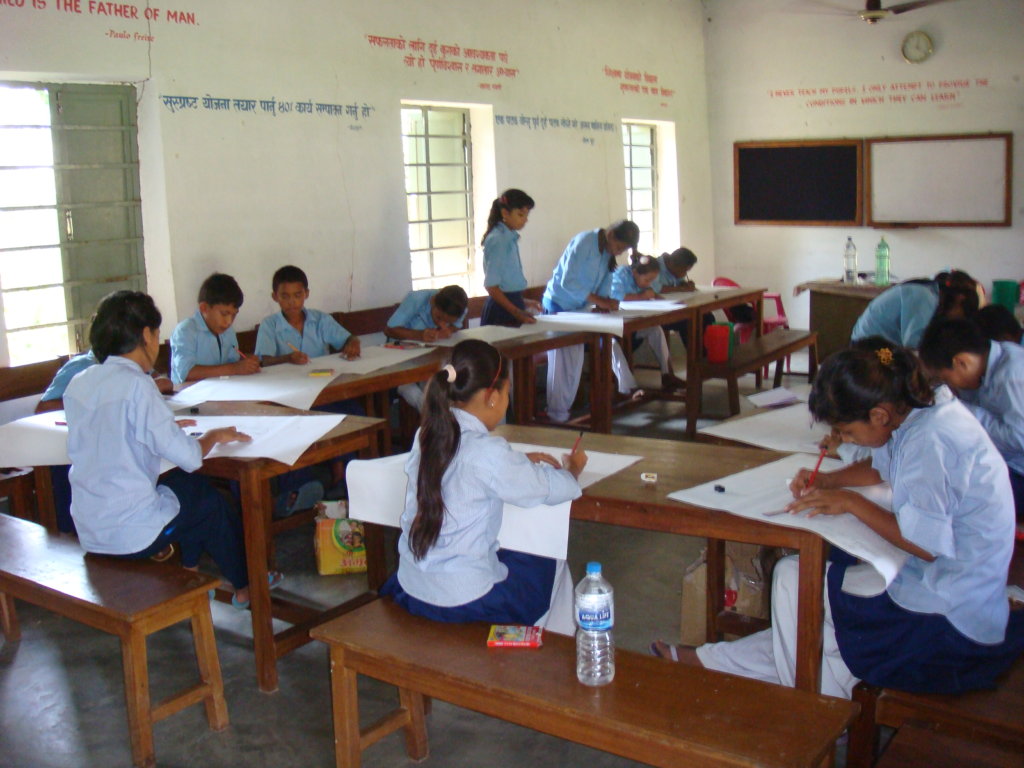
We had interaction with the Principal and the Chairperson of School Management Committee during the distribution process. They suggested to include children not only Chepangs but also Dalit and other marginalized. However, they were very positive about the selection process as the selected children were from poor and real marginalized families. There are hundreds of children from Chepang and other marginalized communities who need support to enroll in the schools and continue through higher level.
Conclusions
1. The parents committed to ensure the children go to school daily; they drop and pick them up. Apparently some of them stay in caves during school hours and reach home accordingly. Thus, they cannot give exams and become a dropout.
2. There is a need to make school a fun and learning space for these marginalized children and mix with others; school system need to address them and their issues empathetically. There is need for dialogues to understand the issues of these children including their treatment with respect and equality.
3. These supports would definitely help Chepang children get higher education and explore various opportunities. The children, parents and teachers are all excited with this support and project.
Appeal to GlobalGiving Donors
With this fundraising, we are planning to reach to 200 Chepang children from Kankada, Bharta, Kalikatar and Khairang of Makwanpur district. These are some of the most remote places with high Chepang population. The number of out-of-school Chepang children is even higher in these places. They desperately need support to enroll and continue their studies and explore opportunities localy and beyond.
Your support is very important!
Links:
Project reports on GlobalGiving are posted directly to globalgiving.org by Project Leaders as they are completed, generally every 3-4 months. To protect the integrity of these documents, GlobalGiving does not alter them; therefore you may find some language or formatting issues.
If you donate to this project or have donated to this project, you can receive an email when this project posts a report. You can also subscribe for reports without donating.