By Jigdrel Kinley Namgyel | Communications Officer
Local Exchange Programme
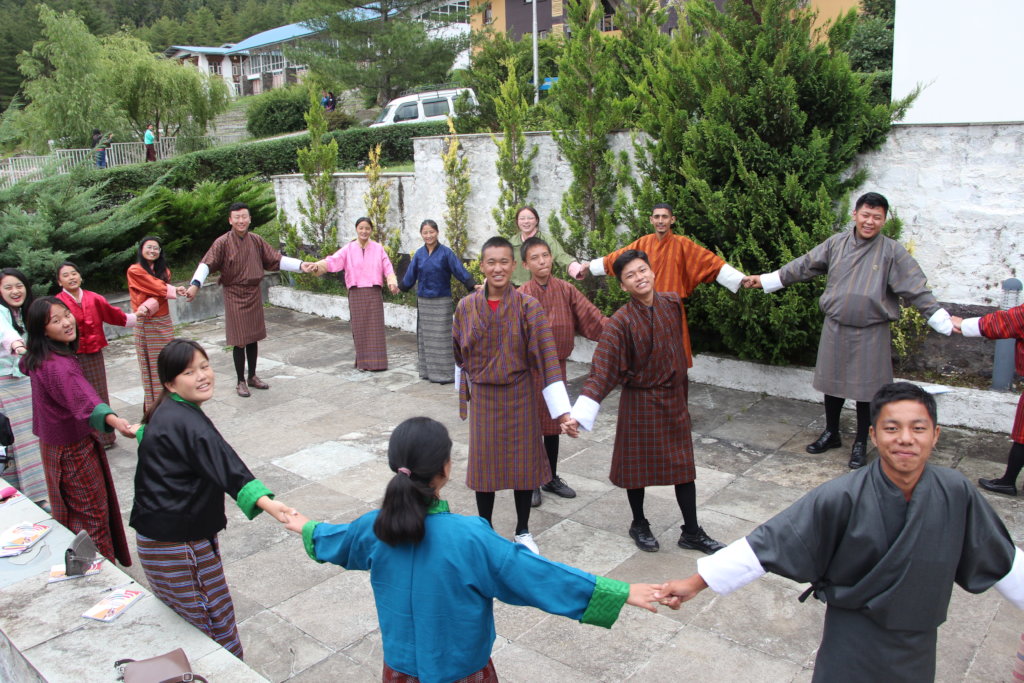
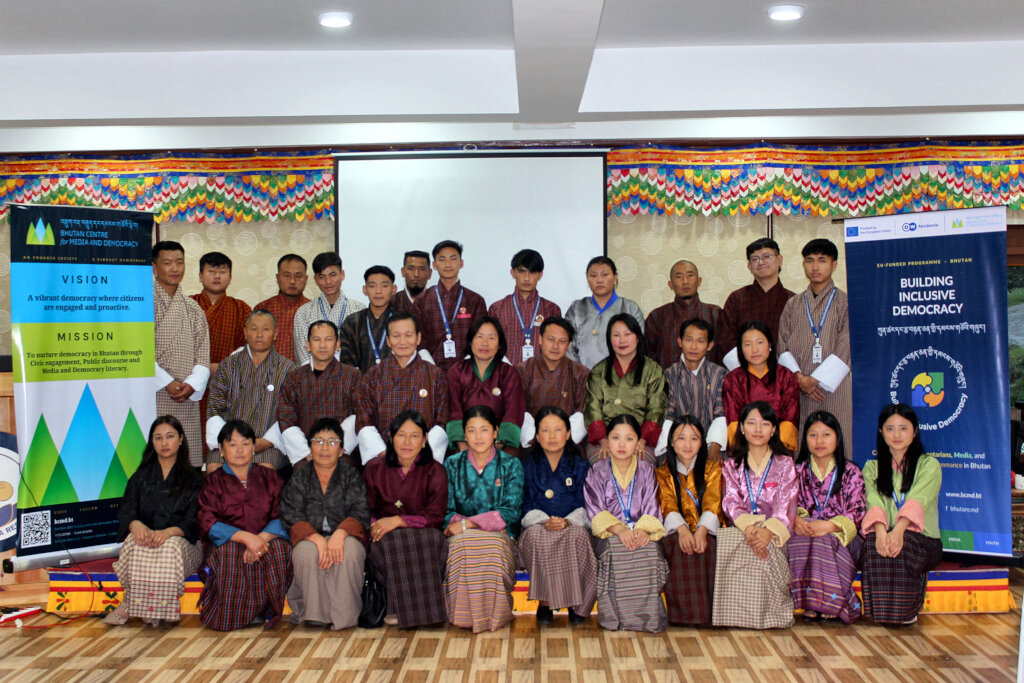
The Local Exchange Programme for Samtse was held on 25th July 2026 at Samtse Higher Secondary School. Following the exchanges in Trashigang and Trongsa in March 2026, it completed the first annual round of the exchange format across all three project regions. The programme aimed to strengthen collaboration between Local Governments, Civil Society Organisations (CSOs) and youth in addressing community development priorities.
The programme brought together 49 participants. They included Local Government leaders and Sector Heads from the Samtse Dzongkhag Administration, and Media and Democracy Club students from Peljorling Higher Secondary School, Dorokha Central School, Samtse Primary School and Sang-Ngag Chhoeling Lower Secondary School. Nine CSOs, out of 50 registered in the country, took part: RENEW, BAOWE, Bhutan Kidney Foundation, Bhutan Cancer Society, Organization for Youth Empowerment (OYE), Nazhoen Lamtoen, the Journalists' Association of Bhutan (JAB), the Disabled People's Organisation of Bhutan (DPOB) and BCMD.
Each organisation presented its mandate, services and ongoing programmes, followed by questions from participants. These covered information on microfinance loan conditions, donation channels and fundraising schemes, scholarship eligibility, case management and support provided by CSOs to children and youth in conflict with the law, fact-checking in news reporting, and inclusive language for persons with disabilities. When a student raised concerns about derogatory language among students, Samtse Primary School shared its anonymous online reporting system, which has encouraged students to report bullying incidents safely to school authorities for timely action. In a closing group activity, mixed groups of CSOs, Local Government leaders and students identified local issues and ways to work together.
Participants gained a clearer understanding of the roles and services of CSOs and how they complement government efforts in ensuring inclusive development and leaving no one behind. They also gained practical knowledge of loan terms, donation and scholarship procedures, and how to report child protection and disability-related concerns. Several leaders committed to follow-up action. The Mangmi of Phuntshopelri expressed interest in reaching out to Nazhoen Lamtoen for further collaboration, RENEW and BAOWE recognised the need to bring their services to this community, and the Mangmi of Norgaygang said he would contact DPOB to support persons with disabilities in his community.
The exchange showed the value of structured collaboration between civil society and Local Government, and helped participants identify existing gaps that have hindered service delivery to communities. Knowing what the participating CSOs offer allows Local Governments, youth and communities to turn to the relevant organisation where Government services do not reach. Participants noted that while CSOs already make a visible difference in many communities, some of their services remain unknown or underused, underlining the importance of holding the exchange regularly.
Parliament – Civil Society Organisation Meet 2026
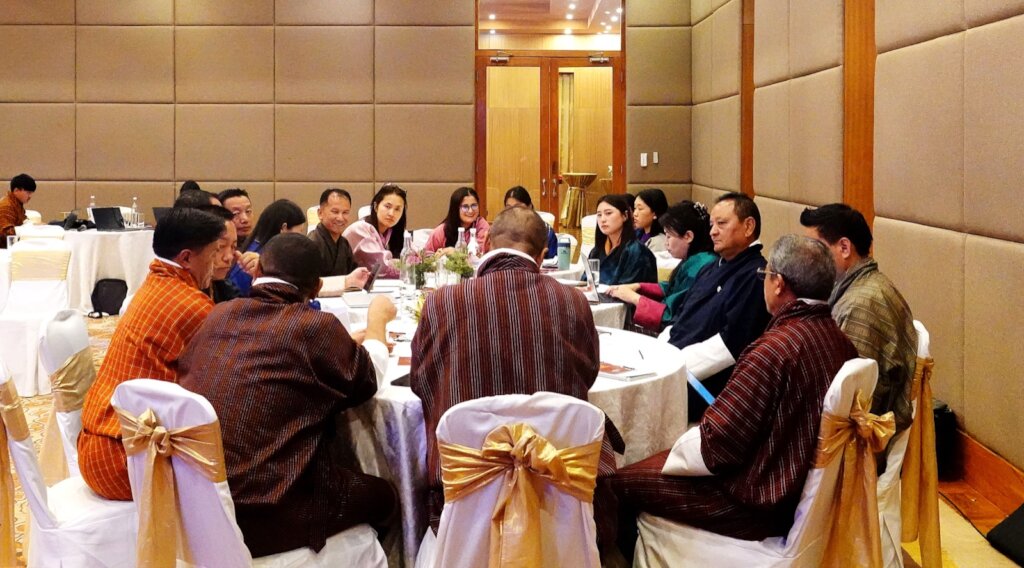
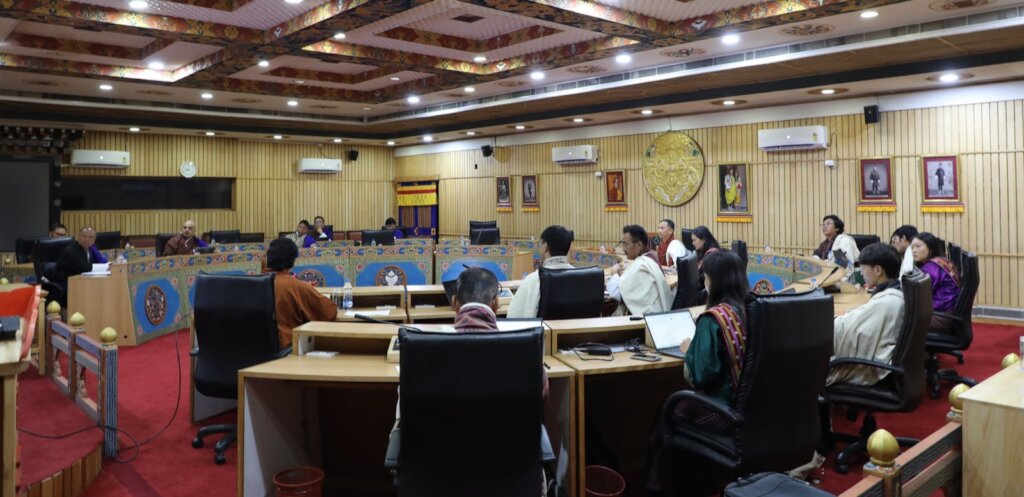
The first Parliament – Civil Society Organisation Meet 2026 was held on 7th August 2026 at Terma Linca, Thimphu, under the theme “Strengthening collaborative engagement between Parliament and civil society”. It was the first formal engagement since the adoption of the Parliament-CSO Strategic Document and Engagement Guideline. The meet brought together 50 participants, including Members of Parliament from both the National Assembly and the National Council, Parliamentary Secretariat officials, the Civil Society Organisations Authority, members of the media and CSO representatives.
The event was moderated by Mr Needrup Zangpo and jointly organised by BCMD with DW Akademie, International IDEA, the Bhutan Transparency Initiative and Save the Children.
Opening the meeting, the Hon'ble Chairperson of the National Council described it as a shared commitment to deepening Bhutan's democracy through dialogue. He noted that while Parliament legislates, scrutinises the Executive and represents the people, CSOs contribute through community work, research and advocacy for vulnerable groups. He called the relationship “a partnership founded on mutual trust, shared responsibility, and a common commitment to the public good”.
Participants were briefed on the work of the Fifth Session of the National Assembly and the National Council's 37th Session, the agendas for the coming sessions, and the state of the CSO sector. Parliament's nine standing committees already consult CSOs on bills and policy, and Bhutan has about one CSO for every 16,000 people. In the plenary, CSOs raised tax penalties on businesses, the prevention and screening of non-communicable diseases, which account for around 70 per cent of deaths, and GST on assistive devices such as white canes. The Deputy Speaker clarified that public hearings have not been suspended, and that public feedback is also received through multiple platforms.
Breakout groups identified three challenges to continued collaboration: fragmented communication, the loss of institutional memory as personnel change, and uncertain funding. They recommended an annual Parliament-CSO meet, information sharing through designated CSO focal points and committee chairs, and a restricted-access digital platform to record discussions. They also proposed focusing each annual meet on one or two shared issues and developing joint advocacy materials on topics such as non-communicable diseases, alcohol abuse and domestic violence.
Closing the meet, the Hon'ble Deputy Speaker said Parliament bears responsibility for creating an enabling environment for responsible and accountable CSOs, and urged that the ideas discussed be turned into action before the next annual meet.
Functional Literacy Test (FLT) Preparatory Workshops for Aspiring Women Leaders
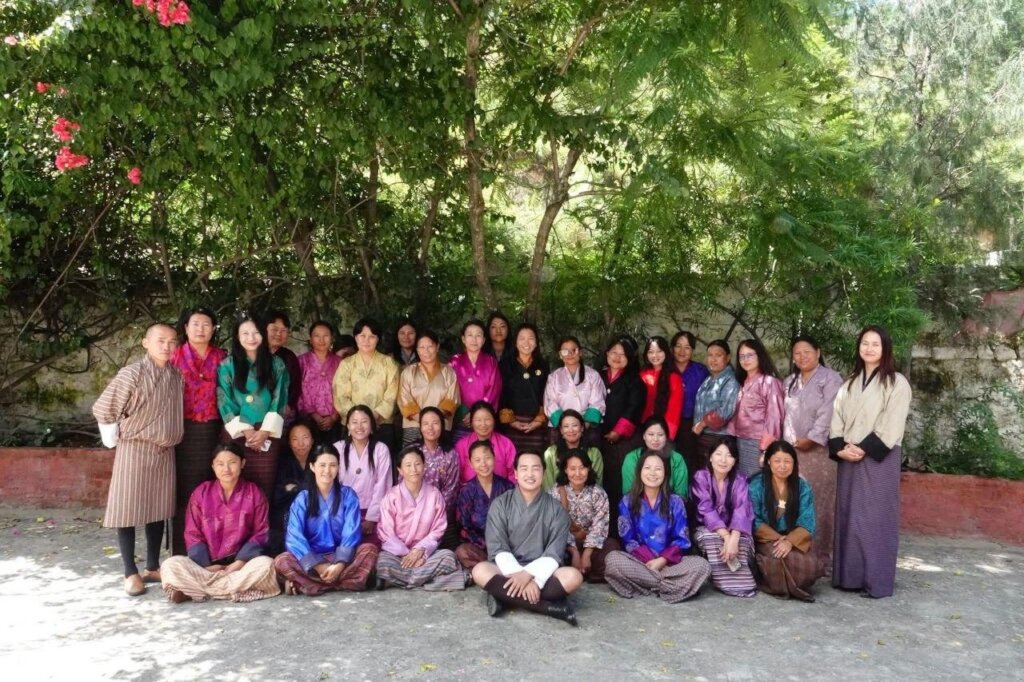
Ahead of the Fourth Local Government Elections, scheduled for the first half of 2027, BCMD, in collaboration with the National Commission for Women and Children (NCWC), delivered four preparatory workshops for the Functional Literacy and Possession of Skills Test (FLT) from 16th to 29th August 2026. Passing the FLT, which now includes a digital assessment, is a prerequisite for candidates vying for Local Government office. Many male candidates prepare through private digital literacy institutes, an option largely out of reach for women, who carry more domestic responsibilities and more often lack independent income. Of the nearly 3,700 candidates registered for the 2027 elections, just over 650 are women.
Owing to limited resources and limited access to information, for BCMD and aspiring candidates alike, the workshops reached only 121 aspiring and current women leaders from 17 Dzongkhags, with sessions in Mongar, Tsirang (two batches) and Wangdue Phodrang. Using past FLT papers, they covered every part of the test: Dzongkha writing, including the application and the agreement; reading comprehension; problem solving and numeracy; and digital skills using Gmail, Google Drive and the G2C portal. In Wangdue Phodrang, BCMD covered caregivers' travel and accommodation so that women with young children could attend.
In total, 92 women – 83 per cent of the 111 who sat the examination – passed the FLT and are now eligible to contest the elections. Serving leaders and first-time contestants performed equally well, with pass rates of 85 and 90 per cent. Average self-rated confidence across ten FLT skills rose from 2.66 to 3.59 out of five, with the largest gains in digital skills and problem solving. As one serving woman leader from Gozhi Gewog, Dagana, preparing to contest for Gup, put it: “It is never too late to learn.”
Challenges remain. The pass rate was lowest among participants from Dagana, at 50 per cent, where formal schooling and exposure to computers were most limited, and agreement writing and digital skills need the most support. Participants named limited community support (57 per cent) and social norms (44 per cent) as the main barriers to standing for office, and one participant withdrew after members of her community told her she was not educated enough.
BCMD will offer sustained support to prepare candidates, particularly those with limited schooling, provide mock tests for practice, and make the caregiver arrangement standard practice in its programme delivery. The 92 successful women will receive support on nomination requirements, public speaking, manifesto development and campaigning, and BCMD will stay connected with the 19 who did not pass the FLT and engage them in its future programmes. Coaching and mentorship are also being extended to women who need support.
Bhutan Democracy Forum 2026
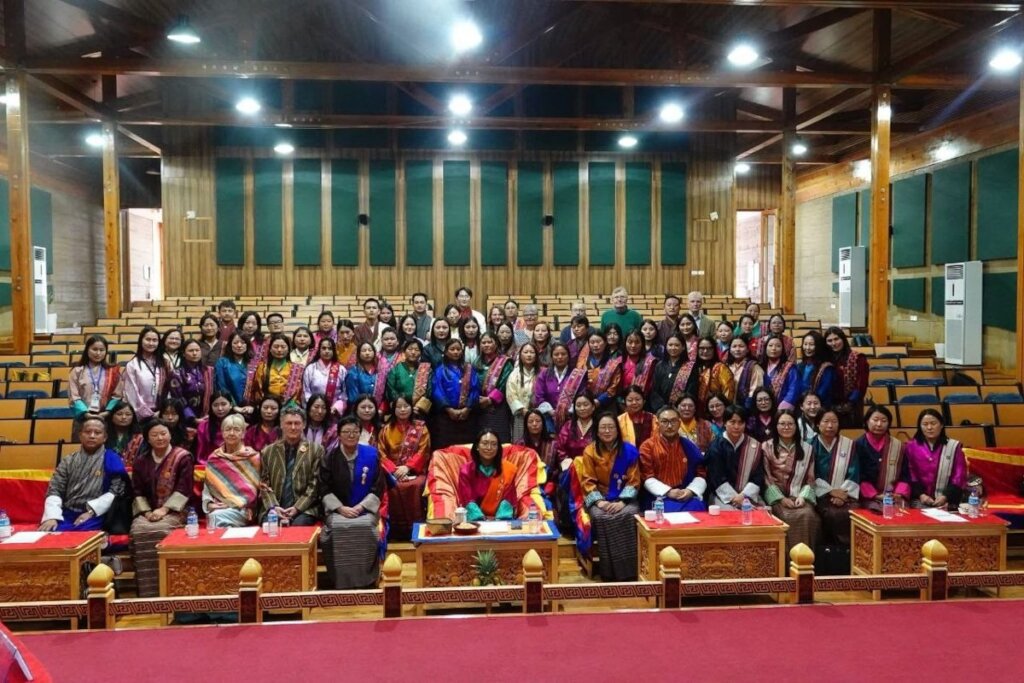
Coinciding with the International Day of Democracy, BCMD convened the Bhutan Democracy Forum 2026 on 15th September 2026 in Thimphu under the theme “Strengthening Inclusive Governance through Women's Leadership”. The Forum presented the findings of BCMD's 2026 Needs Assessment on Women's Participation in Local Governance to the institutions able to act on them.
Hon'ble Lyonpo Yeezang De Thapa, Minister for Education and Skills Development, graced the Forum as Chief Guest. It brought together 47 women, 15 serving Local Government representatives and 32 aspiring leaders, with Members of Parliament and representatives of government agencies, CSOs, the media, development partners and the German-Bhutan Himalaya Society.
Three moderated panels brought together incumbent and aspiring women local government leaders, including Gups, Mangmis and Tshogpas, to discuss policy and legal frameworks; structural and financial barriers such as campaign financing, the FLT, childcare and mobility; and social norms around women's leadership. Incumbent panellists shared their own experiences of local government planning, budgeting and decision-making, as well as the opportunities and challenges of building a political career in a field that is still male-dominated.
The one-day Forum was preceded by a full-day gender training for local women leaders on 14th September 2026. The training aimed to strengthen their public-speaking skills and prepare them to take part as panellists at the Forum the following day.
The Forum gave women a platform to share their experiences and aspirations, and placed the evidence from the Needs Assessment directly before policymakers. Aspiring candidates gained a clearer picture of the path to local office and the confidence to stand for their communities.
BCMD’s programme will support women throughout the electoral cycle. In the coming months, BCMD will support women who have successfully completed the FLT in progressing from eligibility to candidacy, while continuing to engage relevant institutions to address the barriers identified during the Forum.
Local Exchange Programme (Trongsa, Trashigang and Samtse)
The second annual round of the Local Exchange Programme returned to all three project regions in October 2026, with exchanges at Norbulingka Resort in Trongsa on 7th October, Druk Doethjung Resort in Trashigang on 10th October and Samtse College in Samtse on 13th October. Building on the first round held earlier in the year, it aimed to deepen understanding between Local Governments, communities and civil society of each other's roles, share the challenges particular to each district, and identify practical ways to work together on local development needs.
The three exchanges brought together 123 participants, including Local Government leaders, community members and students. Six different CSOs presented their mandates, programmes and services in three rounds, each followed by questions and discussion: Ability Bhutan Society and the Bhutan Stroke Foundation; Queer Voices of Bhutan and Chithuen Phendhey Association; and the Bhutan Transparency Initiative and BCMD.
The clearest finding across all three Dzongkhags was how little participants knew about the range of CSOs in Bhutan and the services they offer. In Trashigang, the Gup of Bidung Gewog noted that leaders were familiar with RENEW and Tarayana but knew little of other organisations. Questions covered how to request CSO support, whether through the gewog or directly; assistive devices and the cost of care for children with disabilities; the warning signs of stroke; the legal position of same-sex couples; relapse and stigma after rehabilitation; and the effect of performance-based grant requirements on gewog budgets. Students were among the most active participants, asking about internships and jobs in the CSO sector and about training to support children with special educational needs.
Participants also proposed practical ways to close the information gap. A gewog official in Trashigang suggested listing CSO services on the Government-to-Citizen (G2C) platform, participants in Samtse recommended social media such as TikTok, and Local Government leaders asked CSOs to share presentation materials they could use for awareness activities in their own communities. Students in Trashigang suggested that leaders pass on information about CSO services through schools, and participants in Trongsa and Trashigang called for the needs of vulnerable households to be built into local development plans.
The October exchanges confirmed strong interest at the local level in working with civil society, and showed that this interest depends on clear information, working referral links and regular contact. The recommendations from all three districts provide a basis for continued engagement between CSOs, Local Governments, youth and communities.
Parliament – Civil Society Organisation Roundtable on the Marriage Act
On 23rd October 2026, BCMD convened a roundtable consultation between CSOs and Members of Parliament on the Marriage Act of Bhutan 1980, held at the Plenary Hall of the National Council in Thimphu with the relevant parliamentary committee, the Natural Resources and Environment Committee (NREC), in attendance. BCMD organised the consultation to bring inclusive and representative voices, particularly those of the most vulnerable, into the amendment of the Act, after observing that only a few CSOs had been reached during the government-led consultations.
The Marriage Act dates from 1980, and its provisions on compensation, child alimony and the definition of marriage reflect the monetary values and limited understanding of gender nuances that existed in Bhutan at the time. The roundtable gathered the views of civil society to inform the Committee and Parliament in their review of the Act and the Marriage (Amendment) Bill.
Nine CSO representatives, together with fourteen parliamentarians and secretariat officials, took part in the consultation. The agenda was built from written opinions and recommendations that the participating CSOs submitted in advance, so the discussion started from the concerns of the organisations working most closely with affected communities and the most vulnerable. The call for a uniform minimum marriage age of 18 was quickly settled, as the Act already sets the age at 18 regardless of gender.
Most of the discussion focused on compensation and child alimony. Ability Bhutan Society argued that the 20 per cent child alimony provision and the requirements for Gaow and Log Jyel can place undue hardship on unemployed people and farmers, and called for clear definitions that align with related laws and an equitable basis for calculating these amounts. The Bhutan Stroke Foundation pointed to rising divorce rates and their effect on children, while Nazhoen Lamtoen and RENEW raised the difficulty of enforcing alimony when parents face hardship or move abroad. A Committee member proposed linking alimony to the actual cost of raising a child where the child lives, and stakeholders were invited to suggest an equitable basis. The Committee noted that enforcing child support lies largely outside its remit and with the Government under the Child Care and Protection Act 2011, but said it may raise these concerns on an appropriate platform.
Queer Voices of Bhutan (QVoB), which represents the LGBT+ community but is not yet a registered CSO, presented an exploratory community survey of 54 respondents connected to 15 Dzongkhags, in which 48 supported the option for same-gender and gender-diverse couples to marry legally. QVoB described the difficulties caused by the lack of legal recognition in medical emergencies, shared property and inheritance, access to services and the end of relationships, and asked whether the Bill would apply equally to every eligible couple. Committee members observed that the Act was framed when gender was understood only as male and female, and that further deliberation is needed on whether such provisions belong in the Marriage Act or in a separate legal framework.
The roundtable brought civil society evidence and lived experience directly into the review of the Act. Participants broadly agreed that the provisions on child alimony and compensation no longer reflect present economic realities, and the NREC undertook to consider the issues raised in its further deliberations on the Marriage (Amendment) Bill.
Links:
Project reports on GlobalGiving are posted directly to globalgiving.org by Project Leaders as they are completed, generally every 3-4 months. To protect the integrity of these documents, GlobalGiving does not alter them; therefore you may find some language or formatting issues.
If you donate to this project or have donated to this project, you can receive an email when this project posts a report. You can also subscribe for reports without donating.


Support this important cause by creating a personalized fundraising page.
Start a Fundraiser