By Christoph Lubczyk | Project Leader
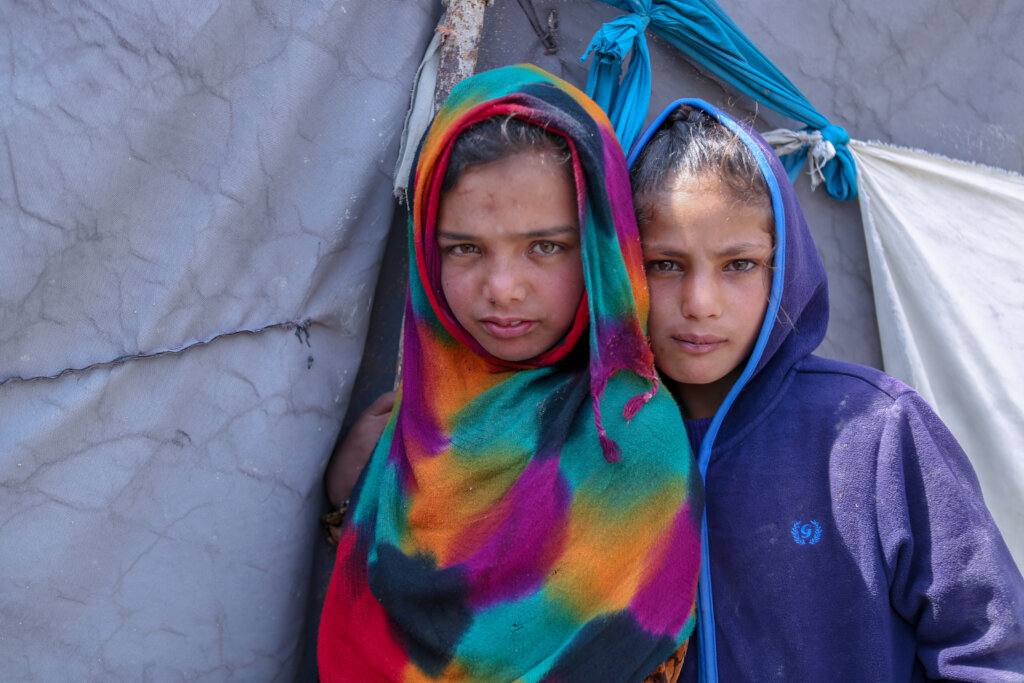
Rashida fled Sudan with her five
children to escape bombs and hunger.
She is now waiting at the overcrowded
reception center in Yida to travel on
to a camp. The partner organization of
Aktion Deutschland hIlft, CARE, provides
refugees like her with medical aid and
supports them as they settle in.

Between arrival and onward travel
Three buses are lined up. Engines hum
and horns blare across the courtyard of
the refugee reception center in Yida, near
the border between South Sudan and Sudan.
Children occupy most of the seats. The
queues in front of the buses are growing
shorter. Women carry heavy sacks or
suitcases containing all their worldly
possessions and call out to their children.

This morning, 284 refugees are setting off.
They are being transported by the UN Refugee
Agency (UNHCR) to the official refugee camp,
located about a two-hour drive inland. The
reception center in Yida serves only as a
temporary stopover for refugees. It is here
that we meet 25-year-old Rashida, who is
staying behind today with her children
because she has not yet completed the
registration process.
“Nothing but bombs and hunger”
Rashida watches the scene unfold from the
shade of a line of trees. Around her, more
than 600 people are crowded into an area
designed for half that number. And every day,
another 50 to 100 people arrive.

Rashida has been in Yida for three days. She
comes from Kadugli in South Kordofan, a
Sudanese city that was cut off by armed
groups for more than two years. During that
time, no food, fuel, or aid reached the city.
The UN confirmed famine-like conditions there.

“In my city, there was nothing left but bombs
and hunger,” she recalls. Prices had skyrocketed.
Her husband is a farmer; there was no work left
for him. “We could no longer afford to stay there.”

Just keep moving
The reception center’s waiting area is packed.
New arrivals sit on low wooden benches. A CARE
medical worker stands before them, explaining
how to prevent cholera. With so many people in
such a confined space, there is always a risk
of an outbreak.

A small boy sitting in a corner of the waiting
area wears an eye patch. A woman has a bandage
wrapped around her head. Not far away, a mother
lies flat on the ground. A young boy kneels
beside her, holding a plastic bag filled with
water. He pokes a hole in it and carefully lets
the drops fall onto her lips.

The family was separated
Rashida and her children arrived in a similar
state, she tells us. “For two months, I listened
to the explosions. Sometimes we hid in the bushes
at night, throwing ourselves to the ground when
the bombs fell—and returning home during the day.”
Her sister’s house was the first to be hit directly
by a rocket.

Not long after, her own home was destroyed, too.
“A bomb fell on my house, and we fled,” she recalls.
At that moment, the family was separated. Her
husband ran in a different direction, and she has
not seen him since.

Aktion Deutschland Hilft along with its partner
organizations is doing everything in their power
to help people like Rashida on every step of their
journey towards a better life. Every donation
makes a difference to help our cause.

Thank You for Your kind donation!
Project reports on GlobalGiving are posted directly to globalgiving.org by Project Leaders as they are completed, generally every 3-4 months. To protect the integrity of these documents, GlobalGiving does not alter them; therefore you may find some language or formatting issues.
If you donate to this project or have donated to this project, you can receive an email when this project posts a report. You can also subscribe for reports without donating.



Support this important cause by creating a personalized fundraising page.
Start a Fundraiser