![]()
Anganwadis – The Background
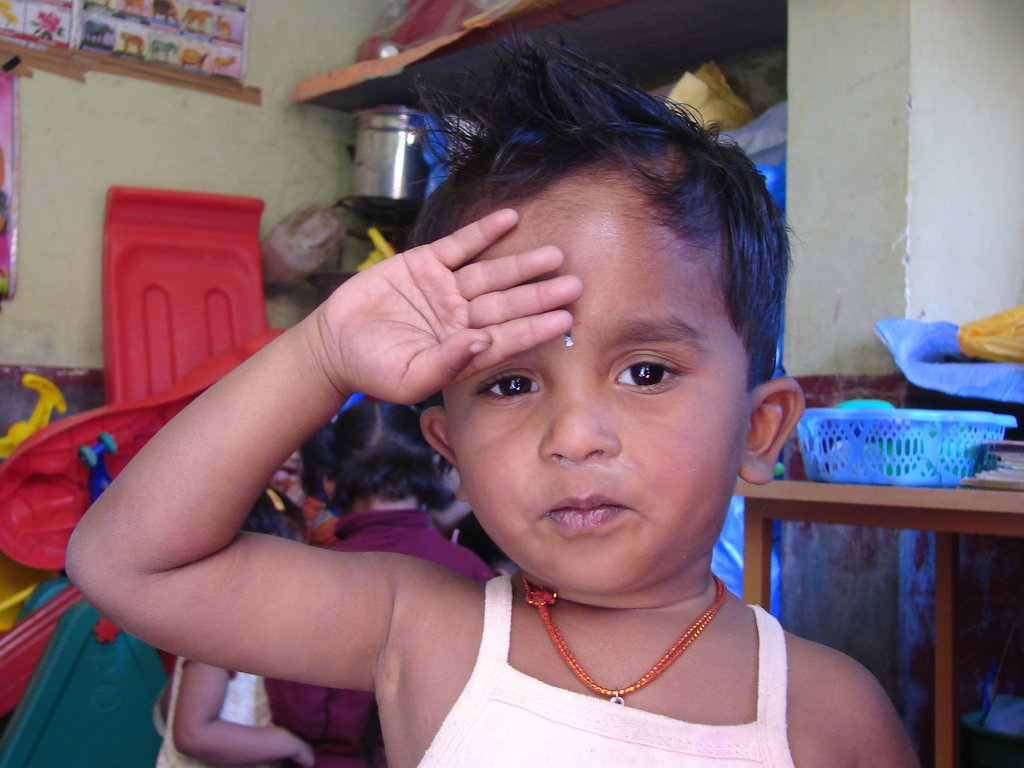
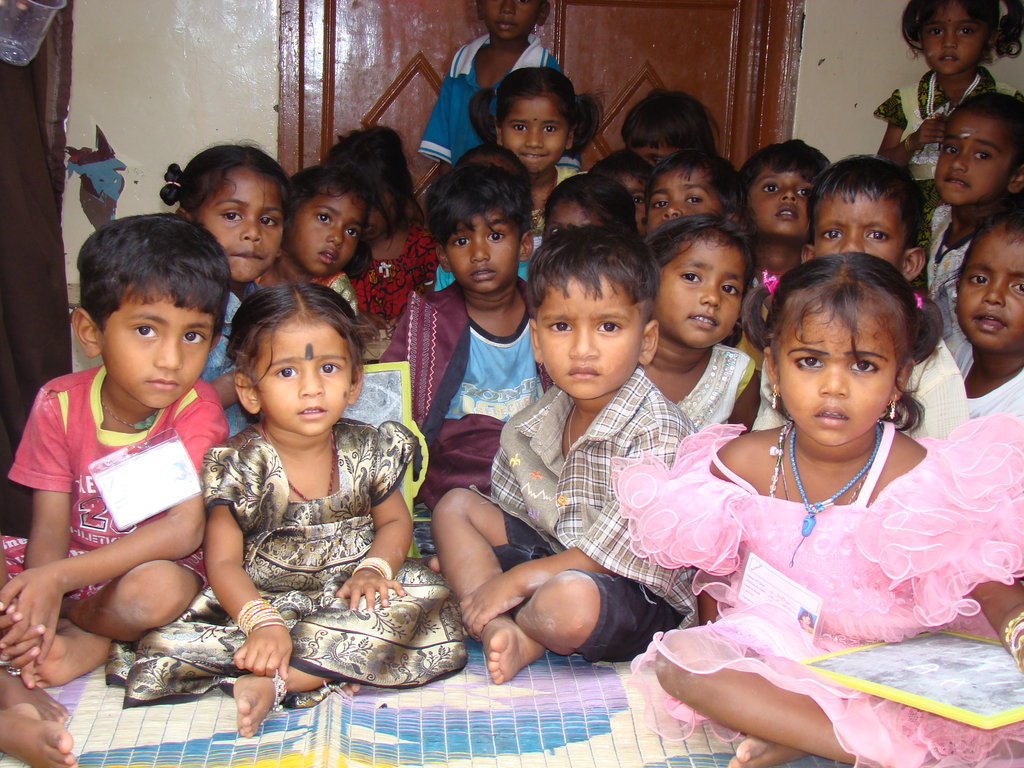
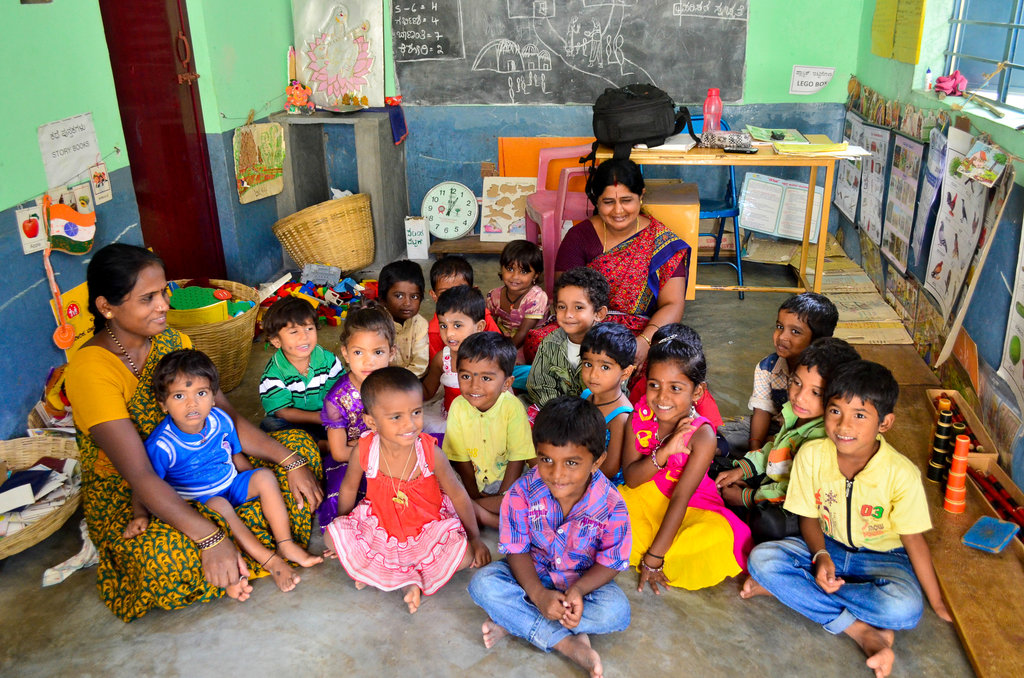
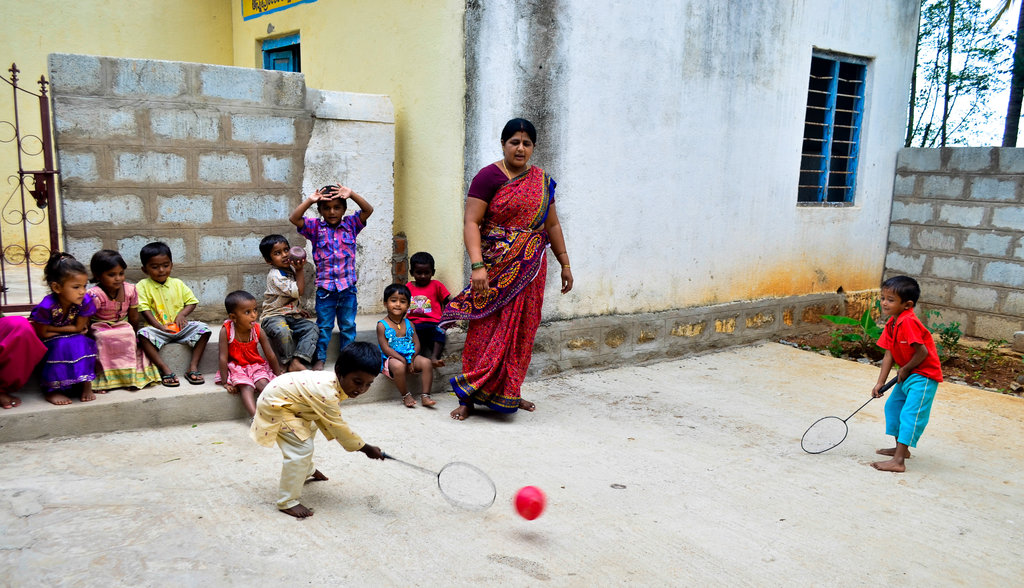
Anganwadis are government preschools in India. The word itself, meaning “courtyard shelter” in Hindi, has implications of nurturing and ministering and conjures images of pleasant surroundings of joy, delight and recreation. It was a grand ambition that started anganwadis in 1975, which to this day remain an original Indian hybrid of many dimensions. It is preschool, nutrition provider, community custodian of sorts, and purveyor of government’s social welfare schemes. The Integrated Child Development Services (ICDS), which envisaged and manages anganwadis under the Department of Women and Child Development (DWCD), has remained, since 1975 when it was founded, one of the world’s largest and unique programmes for early childhood development.
When it began, the anganwadi was the ideal agent of change for a far-flung, poor and populous country. The anganwadi worker, or preschool instructor, was conceived as child-carer and keeper of the community’s health and records, and a person of stature propelling change in under-developed areas. That vision has tarnished with time, the burnish of early intent despoiled by the overwhelming burden of daily management and delivery. Both anganwadis and anganwadi workers stand diminished today. Between policy and practice is a large, widening gap. The institution has not failed, not yet, it is floundering.
Anganwadis have not kept up with the changing panorama of needs around. India is getting to be a world of aspirations. Progress, prosperity, a better life, are priorities. Education is edging closer to the top of the list. They matter as never before. Parents, even in villages and urban slums, dispossessed and marginalised people, are demanding quality education, abandoning the anganwadis for the private preschool for their children.
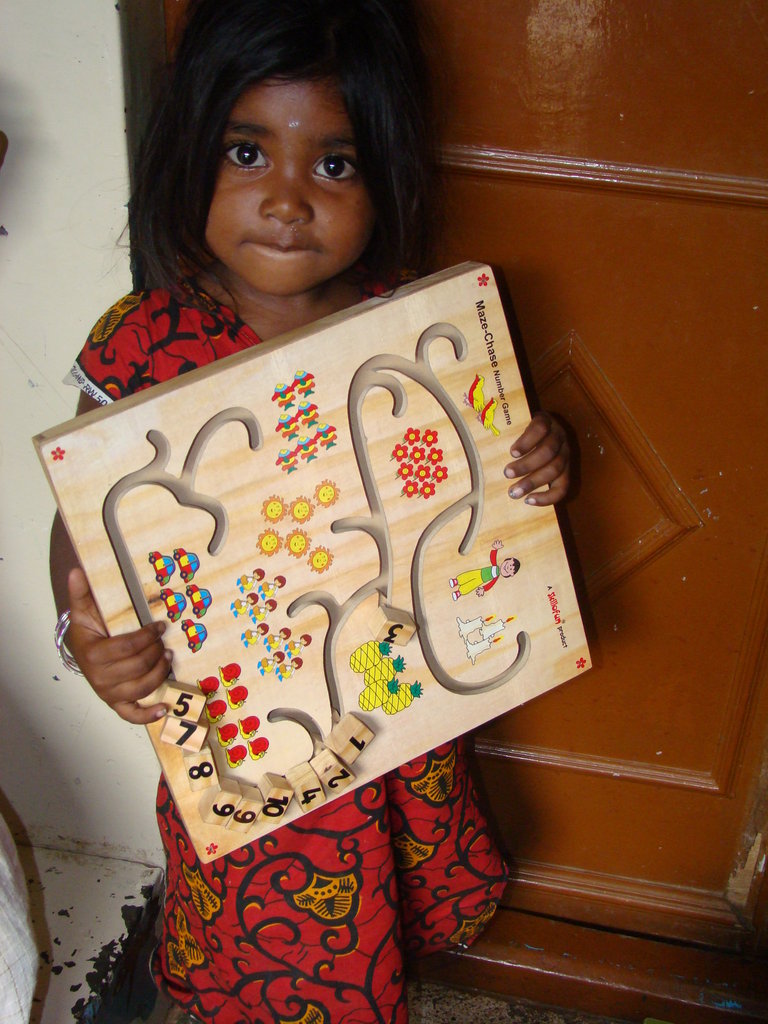
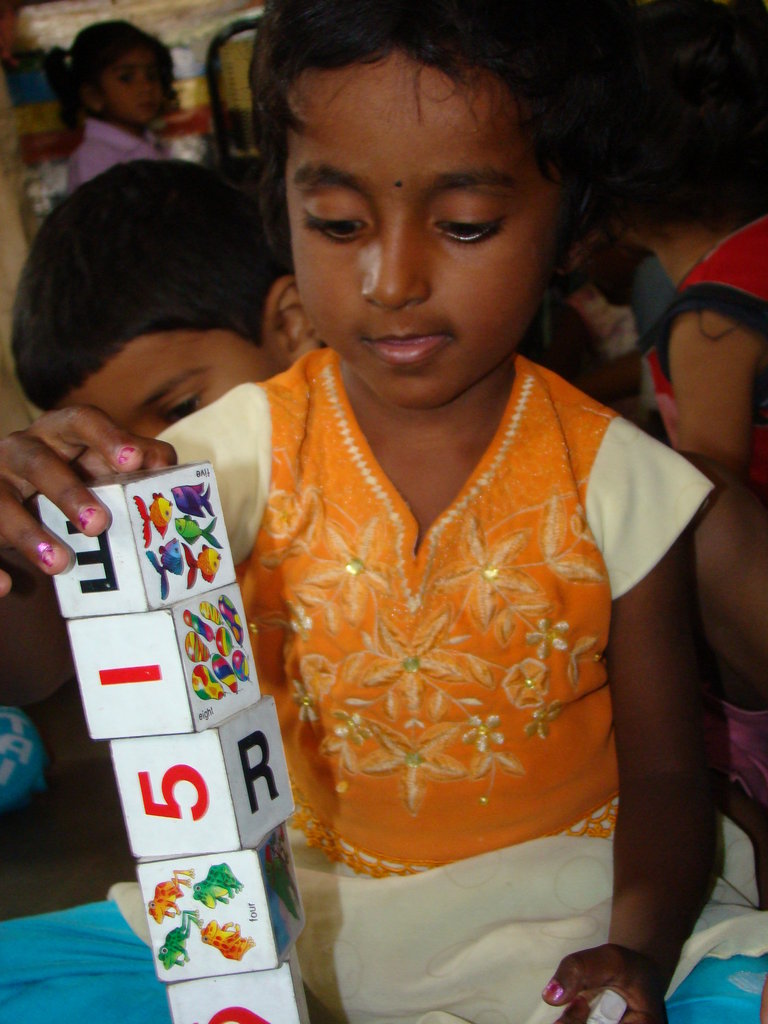
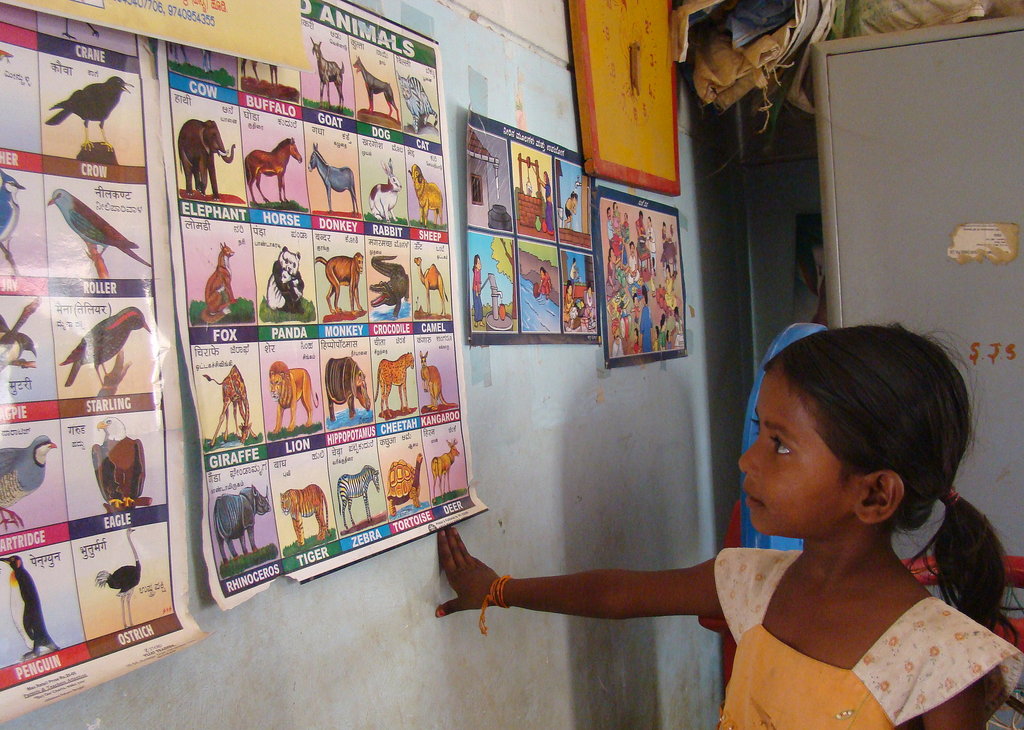
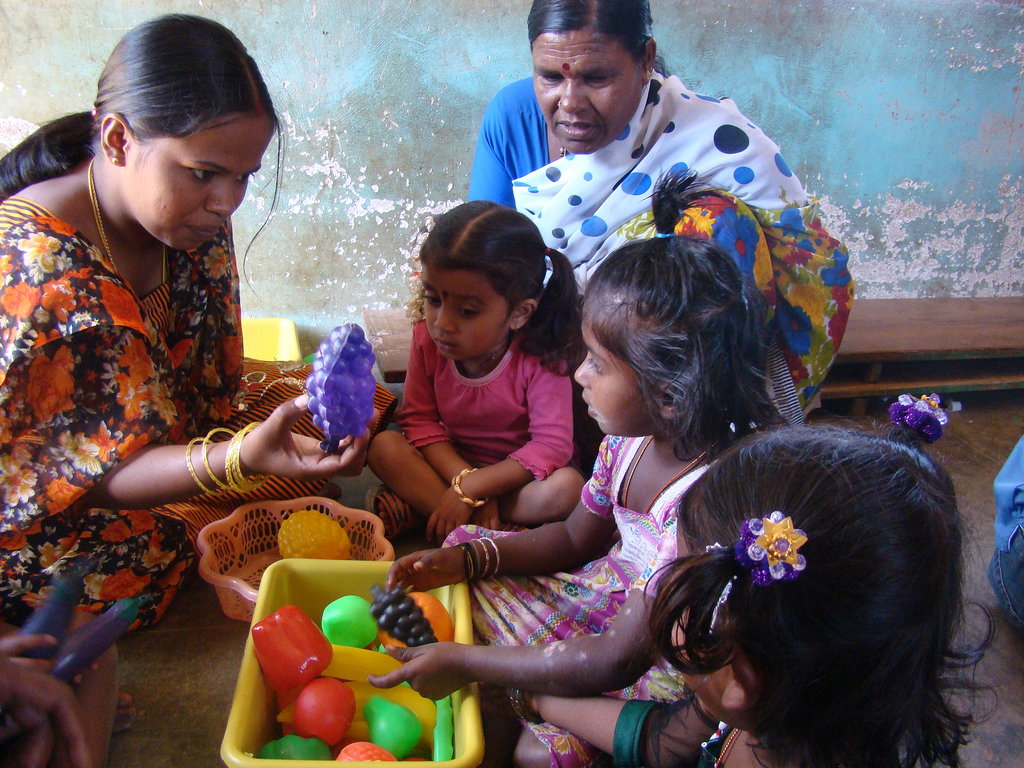
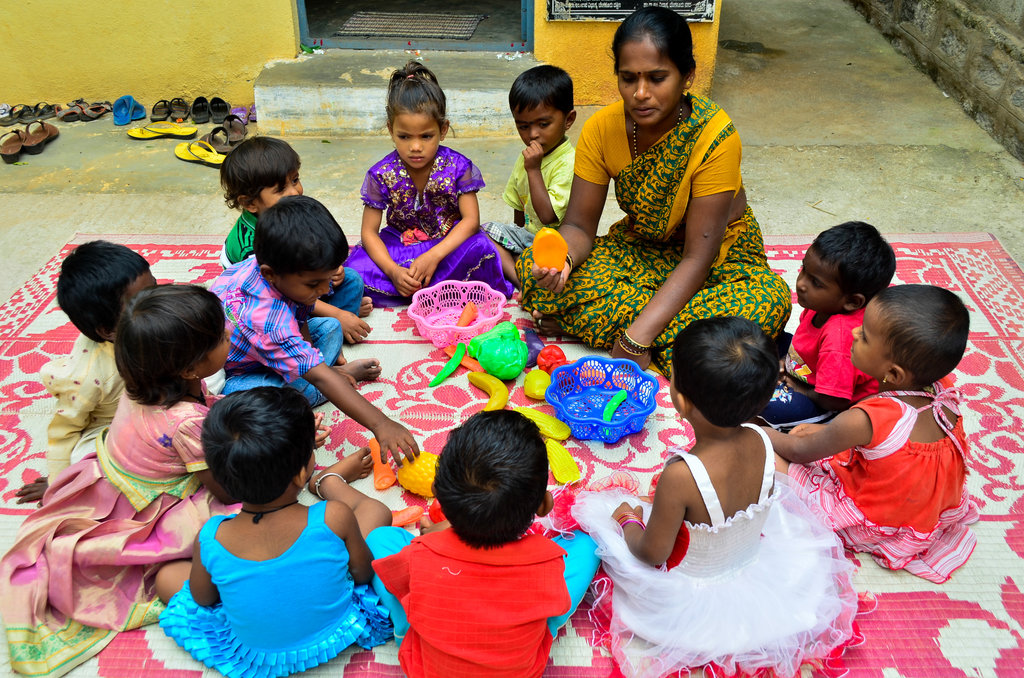
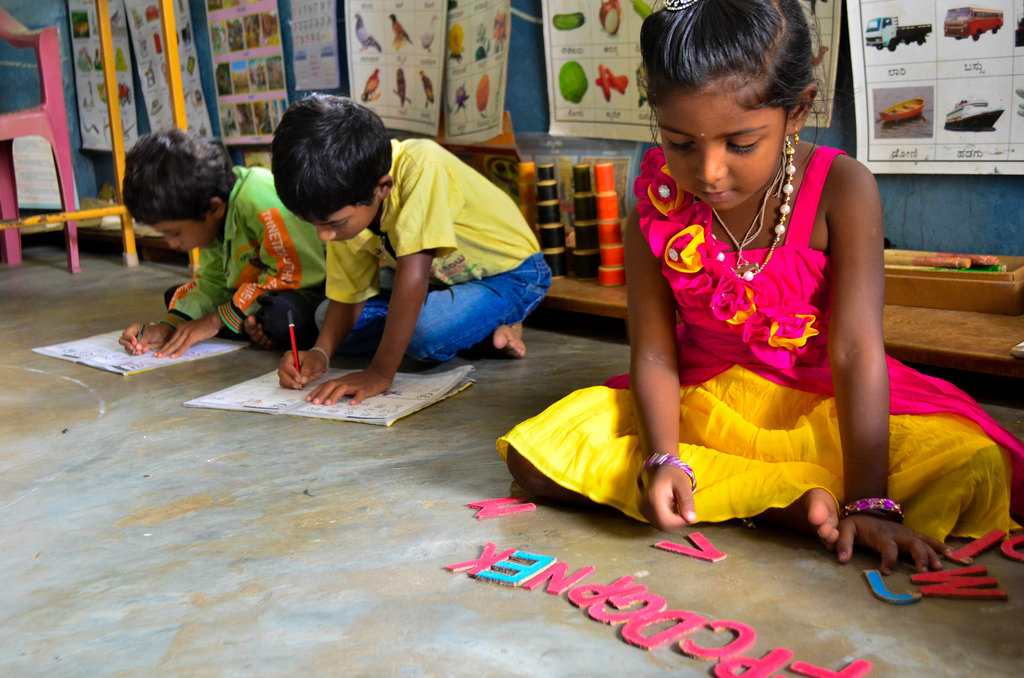
Many anganwadis are scenes of dereliction, no power, no water, no toilets. The shortage of space is widespread. At a time when the focus is shifting from child care - that too ineptly managed - to child development, anganwadis are caught in a mire, the anganwadi worker poorly qualified and trained to handle the awakening. She is perceived as lethargic and unresponsive to change, more a child-minder than a child educator. Though the ICDS has a rigorous timetable of topics to teach and learn every week, the anganwadi worker is not equipped to deal with it. Preschool education is not given the seriousness it deserves. Play material that sparks learning is largely conspicuous by its absence. Children have little to work or play with, little to stimulate and activate their minds.
Akshara’s Preschool Programme
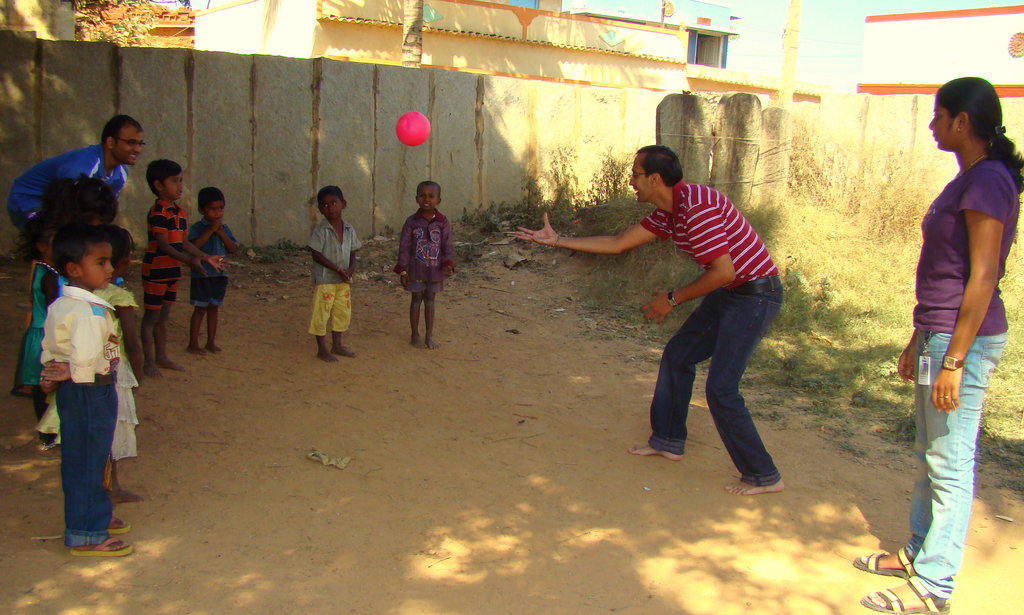
Akshara entered the picture in Karnataka as a non-governmental organisation collaborating with government on a large scale to rebrand anganwadis as centres that promote learning and excellence. In a vast effort recently, its preschool programme undertook a restructuring of all 1776 anganwadis in Bangalore by providing variegated teaching-learning materials (TLMs) for children, training anganwadiworkers and energising community support for the centres. Its attempt to reverse the decline was a significant success, based on which it designed the model anganwadi concept and, together with the DWCD, hand-picked centres and anganwadi workers known for performance. Akshara, with Department support, is preparing them for top-notch achievement, with an intensified curriculum, an expanded teaching-learning kit to address preschool development domains, and training and monitoring of anganwadi workers.
LEGO, An Enabler
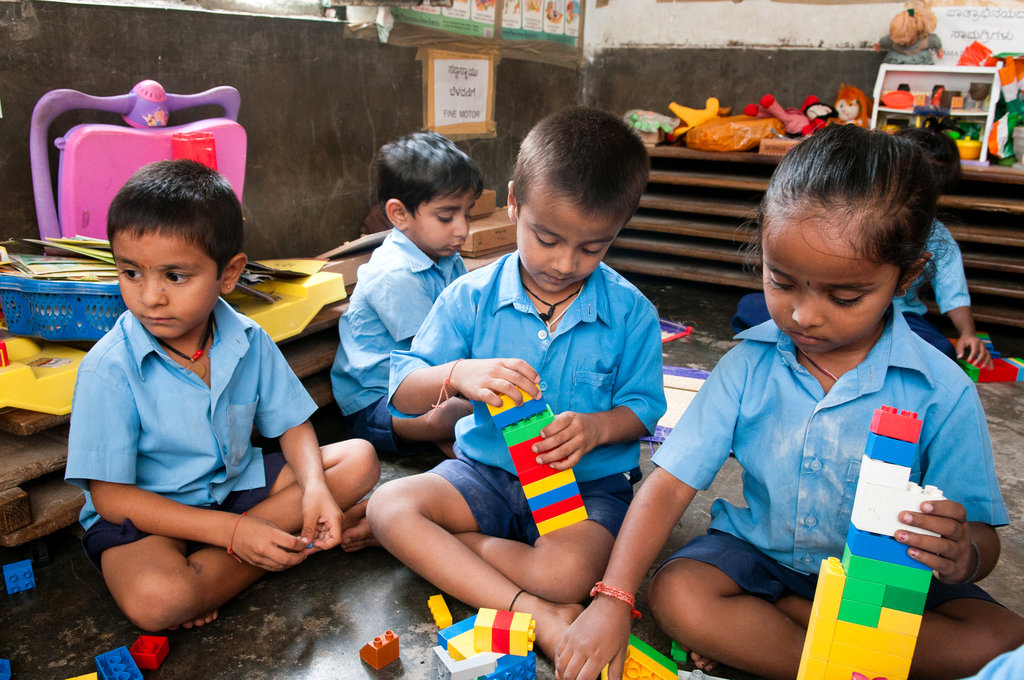
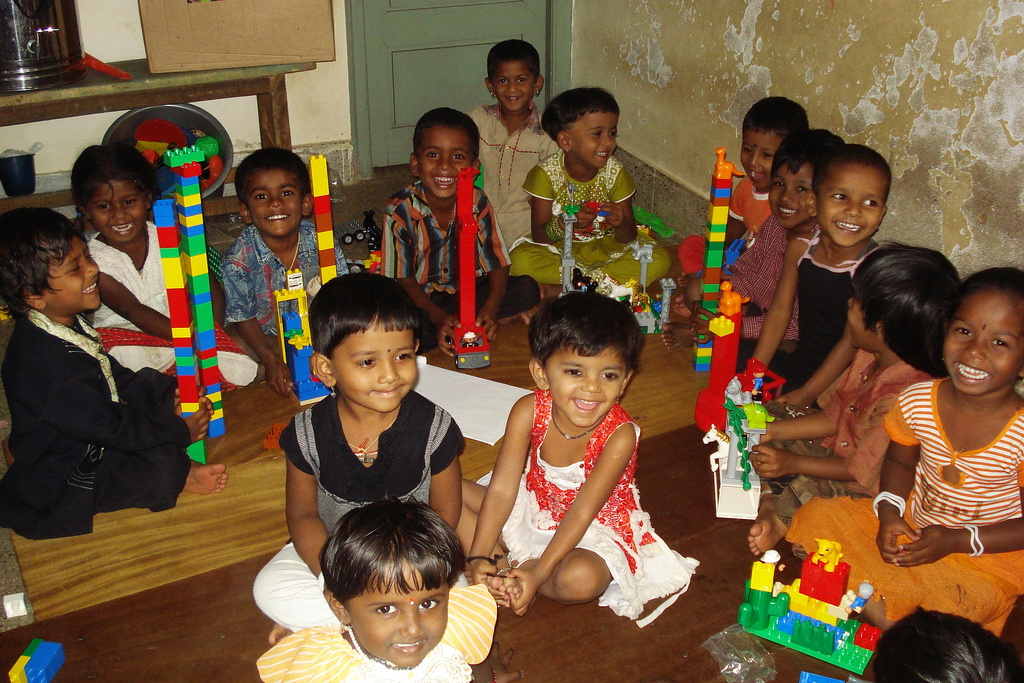
Akshara saw in LEGO an opportunity to escalate play and learning in its model anganwadis. DUPLO play sets, gifted by LEGO Charity, were distributed to all centres in its programme.
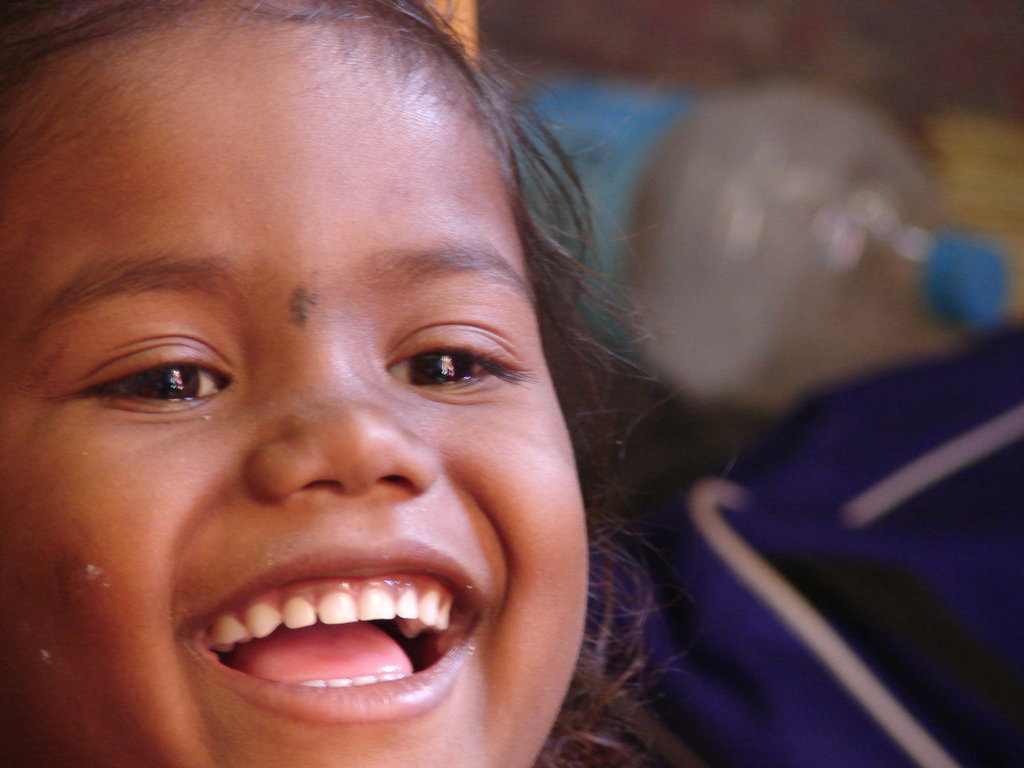
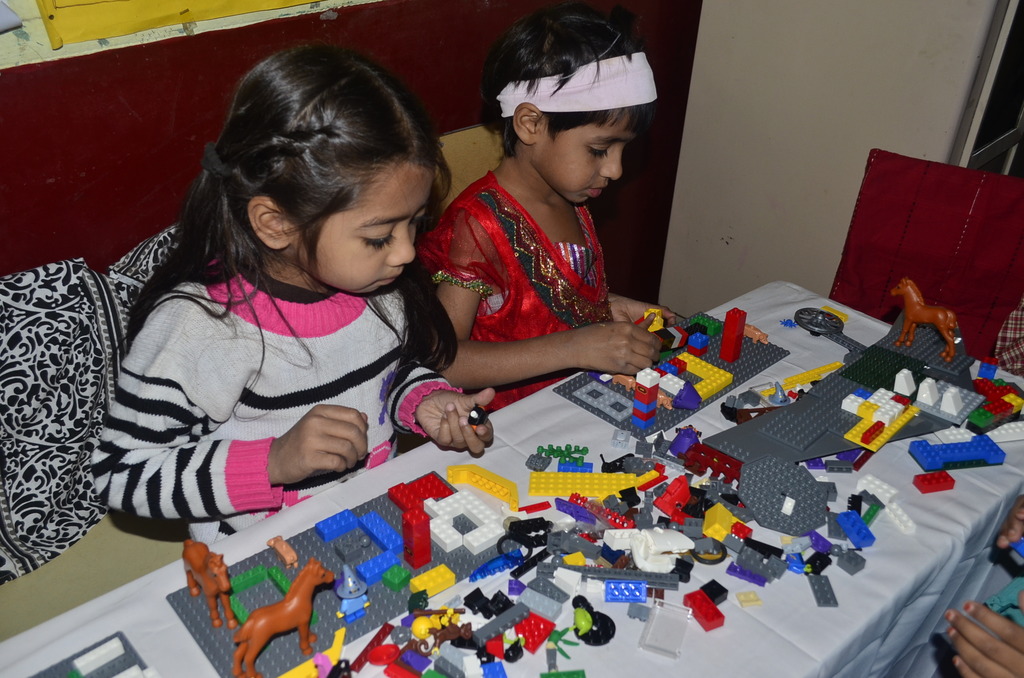
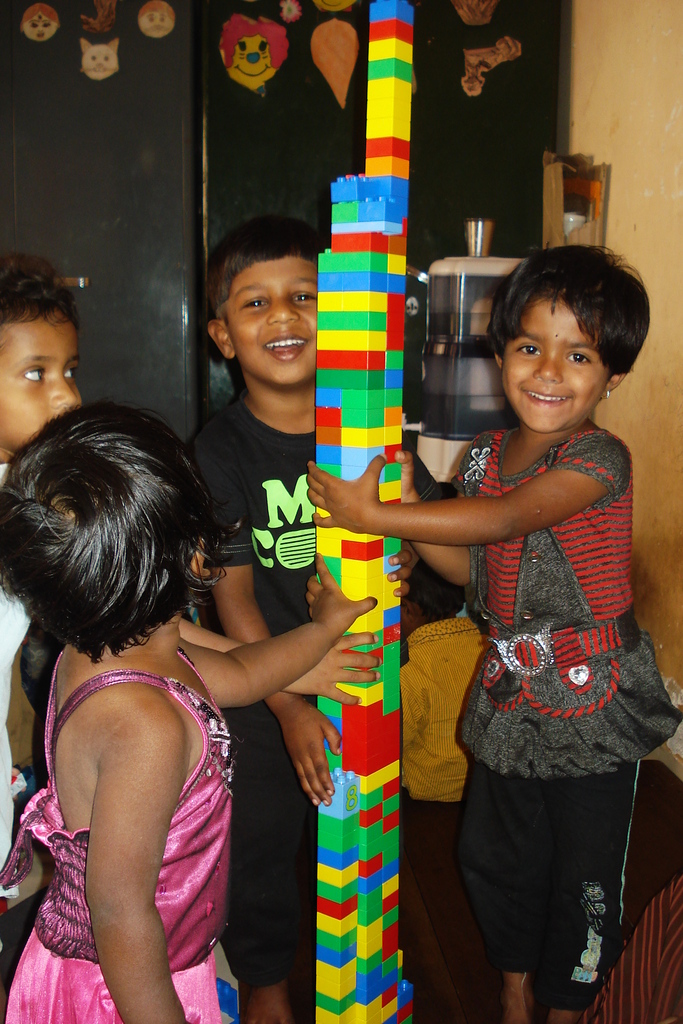
LEGO has whipped up unprecedented tumult in anganwadis. Excitement reaches a pitch as the bricks tumble from boxes and baskets. Children are speechless at first before this splendid, multi-coloured disarray and then overjoyed, rattling the jumble, hands wallowing, listening to the clatter. They pick their pieces voraciously and begin piecing together. In anganwadis, stark and resource-deprived as many are, LEGO is value addition, not only because it lights up the atmosphere with resplendence and brings unfettered joy to children, but also because it is an enabler. Children learn in incidental ways with LEGO. They take leaps of imagination, their eye and hand coordination gets stronger, they learn to identify and segregate colours and shapes, they reproduce stories through the models they make – some of the obvious benefits.
The company’s literature says, “LEGO DUPLO preschool building toys are specially designed for the small hands and big imaginations of children aged 1 ½ - 5 years. DUPLO bricks are twice the size of standard LEGO bricks, making them a great way to kick off a child’s building career. DUPLO is all about giving your child the opportunity to build, create, and develop while discovering so many ways to play.”
Anganwadi workers have embraced LEGO without reserve and even if they are not always able to channelize learning through it effectively enough, they realise its potential.
As Renuka of the Kasturi Nagar anganwadi in Bangalore said at her training in January 2012, “The children in my anganwadi will get a sense of engineering, they will learn how to plan a house or build a truck, how to put things together. They will get an idea of colour. It is mental and physical training for them. Their memory, their powers of absorption and retention, will develop. They don’t get such opportunities at home.”
A Structured Approach for LEGO
To maximise learning prospects in anganwadis LEGO needs a structured approach, notes Latha, Head of Akshara’s Preschool Programme. She and her team trained anganwadi workers, realising their skill deficiencies and their lack of exposure. In much of the developed world, LEGO is childhood’s essential rite of passage, but here it is an ahead-of-the times application. The LEGO milieu is new for children and anganwadi workers. Even so, why a formalised training in activities emerging out of, quintessentially, play material? Why a framework for play?
As Latha points out, LEGO is all about possibilities. It is not all about play, there is clear purpose at its core. There is learning entwined with the playing. As Renuka, the anganwadi worker sensed, the basics of design, engineering and construction are embedded in it. Children develop fine motor skills, learn to think out-of-the-groove and get exposed to international standards of play and learning, made available to them in government preschools in deprived communities.
Activity Time
After the initial warm-up of individual, independent forays with LEGO, comes learning from play. LEGO activities are an unchanging character of the training, then and now. The Akshara team picks up five random pieces, puts them in a long broad cover and her hands mould them unseeingly into a shape. Participants have to feel the model in the furtive confines of the cover and assemble a similar piece. The cover goes around the groups, each participant gingerly plunging her hand in for a quick, undercover assessment and trying to reproduce that shape in the full light of day. It is a cognitive activity, an exercise in sensory intelligence, in registering impressions and transmuting them into concrete, identical shapes. Children must be able to understand that things can be made by sensing them.
The next activity is building the tallest tower under a minute – that is the test. A simple enough design with similar pieces stacked one on top, each trainee fitting in a brick, contributing her mite. Some of them fumble, some snatch a piece away from their friends in a hurry to get on; some are frustrated by a hesitating partner. The activity emphasizes the element of speed, precision and alertness.
Another time-focussed activity unfolds – clamping and unclamping clothes hooks on the edge of a small square LEGO brick. Participants prise off the hook their colleagues have fixed and attach their own.
It requires delicateness of action, fine motor coordination, timing, and hand and eye working together – all of which are learning goals for preschool children.
A Communication Activity
A communication activity, straight out of the Manual, has anganwadi workers working in pairs, sitting back-to-back, deciding beforehand the bricks they will use. One of them tells her partner what she wants made and how to go about it. The other has to respond to it and put it together.
The challenge is that a child in the anganwadi should be able to design from a set of oral instructions. It speaks as much for the communication skills of the instructor as for the responsiveness of the doer. An accurate description, precise vocabulary and a keen grasping instinct are of key importance. The thing is that as the game goes around, the players evolve and sharpen their early rough-hewn skills, which the children will also learn to do in the anganwadi as they play along.
The Memory Game
The memory game teaches participants how to remember and subconsciously activate memory, to focus, concentrate and absorb detail with alacrity. One group puts up a structure. The other group takes a short, scrutinizing look at it, at each of the pieces that have gone into it, the colours, the shapes, goes back and tries to emulate the design.
The Grip Activity
The grip activity is meant to attain the perfect balance. Participants walk fast across the length of the hall, detouring around chairs and tables, with DUPLO bricks balanced on their heads - easier than having them perched on shoulders and backs, as they later have to do. The competitive spirit is kindled, with participants cheering the performers to greater achievement. The winning team exults in victory with wild shouts of exuberance.
Telling Stories with Bricks
The penultimate activity is making the DUPLO bricks tell stories and recite rhymes. The Akshara team gives the participants a rhyme and the bare bones of a story and the trainees have to flesh it out with narration and flow using LEGO. Imagination leads in this exercise, not in a riotous spillage, but in focussed interpretation. The activity inculcates sequential thinking, language, communication and plot development, attention to detail and character delineation.
The Tallest Tower
The final activity of the training invariably sees an animated frenzy of construction. Which of the groups will build the tallest tower?
Group One puts up twin towers, ascending higher and higher till someone prognosticates ominously that it might start swaying. A few of the group make hasty recompense at the ground level, adding volume and depth to the base with the bricks, leaving the others free to construct on top. The towers coalesce into one, towering right over everyone’s heads. A participant brings over a chair on which she stands for the finishing formalities at the top. They all have opinions on how to make it stand while a quiet crew works on still, buttressing the foundations. Of little avail. The engineering seems doomed, and their tower is in a shambles. Group Two has a competing tower which they have to hang on to in case it all collapses. They let out a hopeful scream invoking stability as they give up their tremulous hold on the tower. It stands on its own a few solid moments, a man at the pinnacle, a pennant too, and then keels over. A case of ambitions running high, an anganwadi worker remarks! The learning values of building the tallest tower are problem-solving in math, understanding shape and space, height and stability.
LEGO had surely made a difference in the ways of learning for thousands of children studying in the anganwadis in Bangaore. We hope to continue introducing innovative ways of teaching so that learning becomes for for children
![]()
![]()
![]()
![Share on Twitter]()
![Share on Facebook]()