By Mary | Chief Functionary
Radhamma teacher of Marasandra Center - 2 - towards effective utilization of learning resources
“Having resources is of no use if a person is not trained and equipped with the information of how to utilize them”, says Anganwadi Teacher Radhamma.
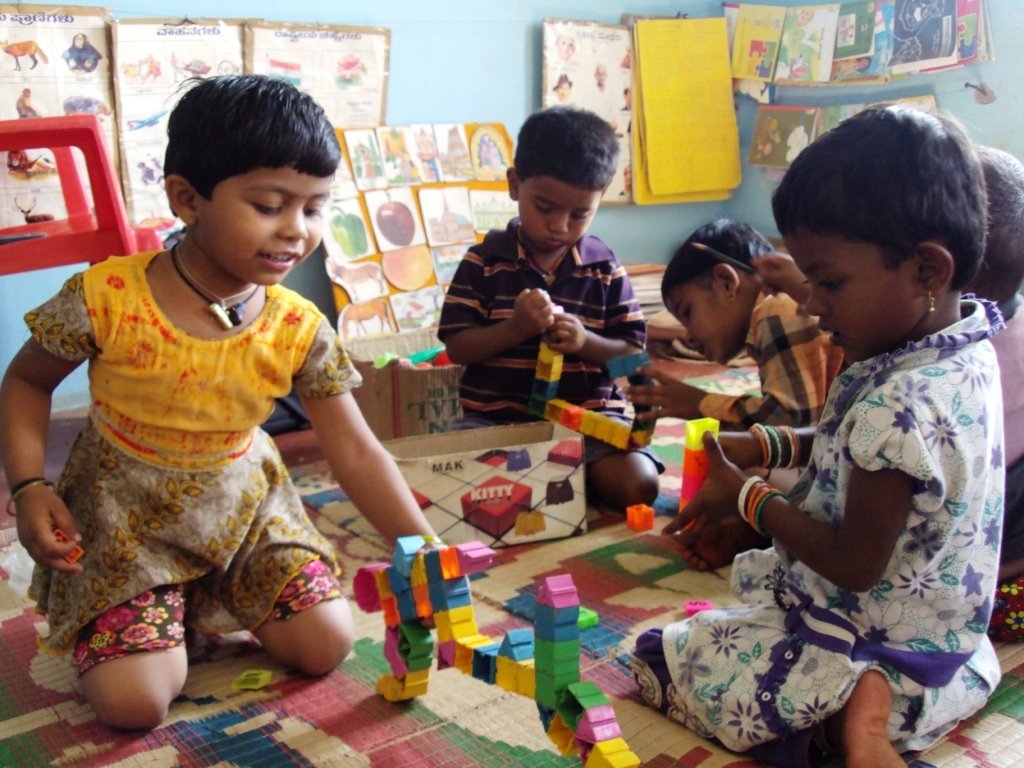
The teacher felt that earlier though the Centre had materials, it had always been used as materials to be displayed rather than as tools to enhance the learning process.
This was demonstrated by the day which followed at the Centre:
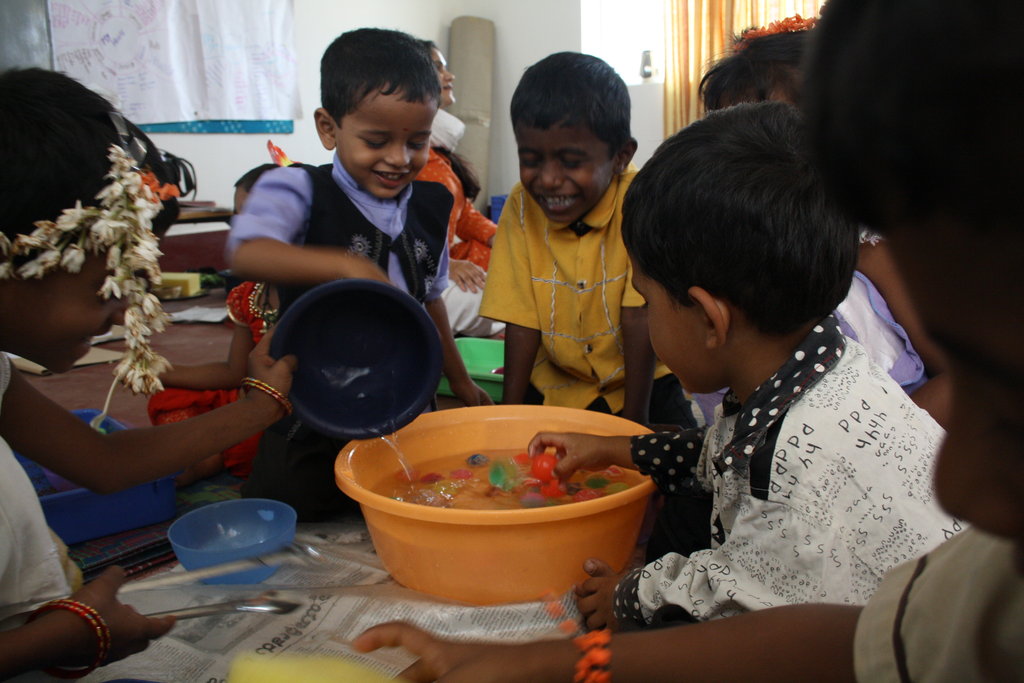
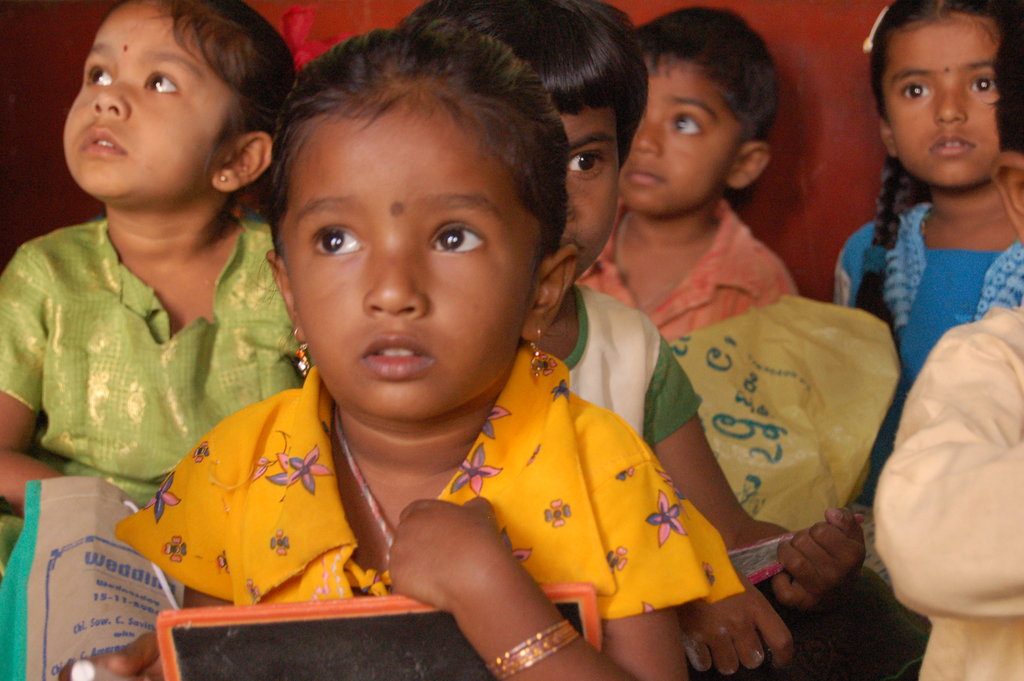
The day started off with children trooping into the Centre and settling down by taking the available play materials and playing with them and each other. Radhamma teacher then started off the activities by singing a song after which a prayer was recited. The session for the day started with Radhamma teacher facilitating a discussion about ‘animals’ for which she used the models of the animals in the Centre. She asked the children to name all the animals that they had seen in their (short) lives. The children listed all the animals such as dog, cat, sheep, hen, goat, rabbit etc. As some of them were reciting the names, the younger ones kept looking at them and tried to repeat the words. The teacher then asked them to make the sounds that the animals that they had named made, which the children did with great gusto.
The teacher then asked the children to name the colour of the animals and describe them. In the course of each child’s narration, she kept asking them questions and clarifying their doubts which ensured the engagement of all the children and their interest. She then narrated a story of ‘the two ducks and the tortoise’ using the story board during which she kept asking them questions through which she ensured the attention of ever child to make sure that they were following and understanding the story. She was quite successful because children were able to answer to all her questions. Meanwhile the assistant teacher too got involved by sharing her experience which added to the learning of the child.
The teacher then got all the children to make models of the animals with clay. Some other activities, depending on the capabilities of the children, were done such as the younger children having to line the outline of animals with stones and the older children having to colour drawings of animals. The older children were then made to write the beginning letters of the alphabet of the various animals and the younger ones made to practice pre writing skills.
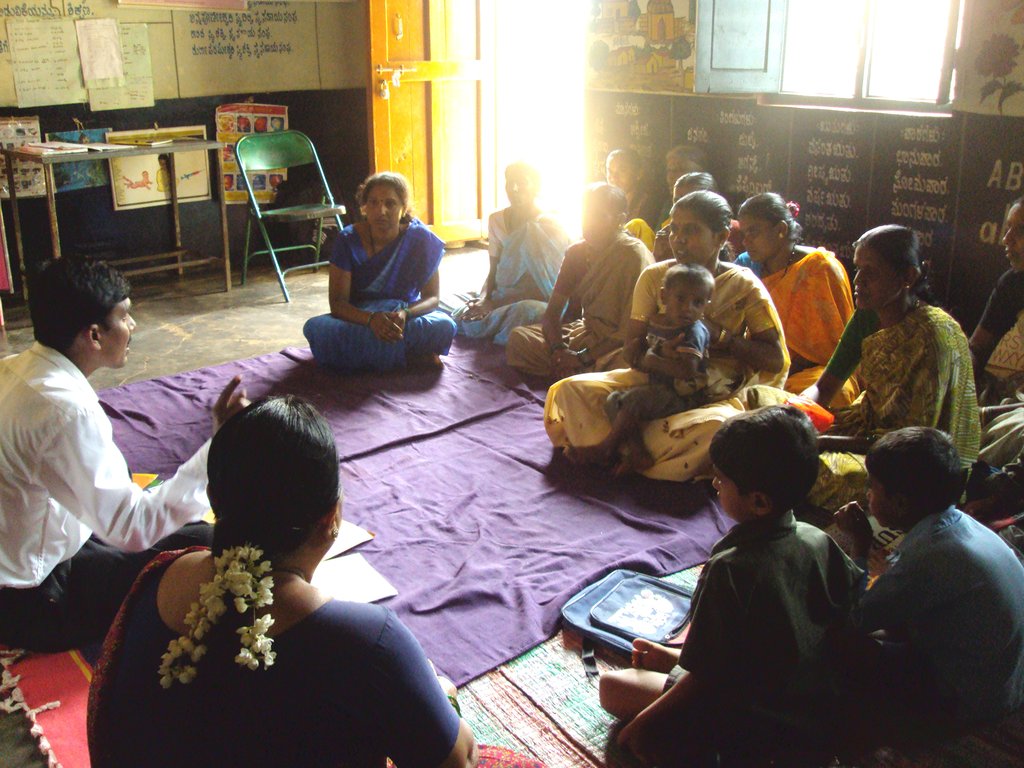
It can be seen that the all these processes ensures the holistic development of the children in the Centres. It was seen that the community was also seeing the effect of the learning process in the Centre. As meetings with the parents and other members of the community were now being conducted and they were aware of the activities in the Centre, it was but natural that they were also involved in fulfilling the needs of the Centre. The Centre which was functioning out of a small room in the nearby government school, was then shifted out to their own building constructed with the funds given by the Department of Women and Child Development (responsible for the running of the Anganwadi Centres), to which the the Taluk Panchayat (the local self government at the block level) contributed their share and ensured that a proper building was made. The community took the initiative and alongwith the teacher, got a proper door for the toilet, got the walls of the Centre and the compound painted, and got a tank for the water. This ensured that there was a conducive environment for all the children to learn and develop.
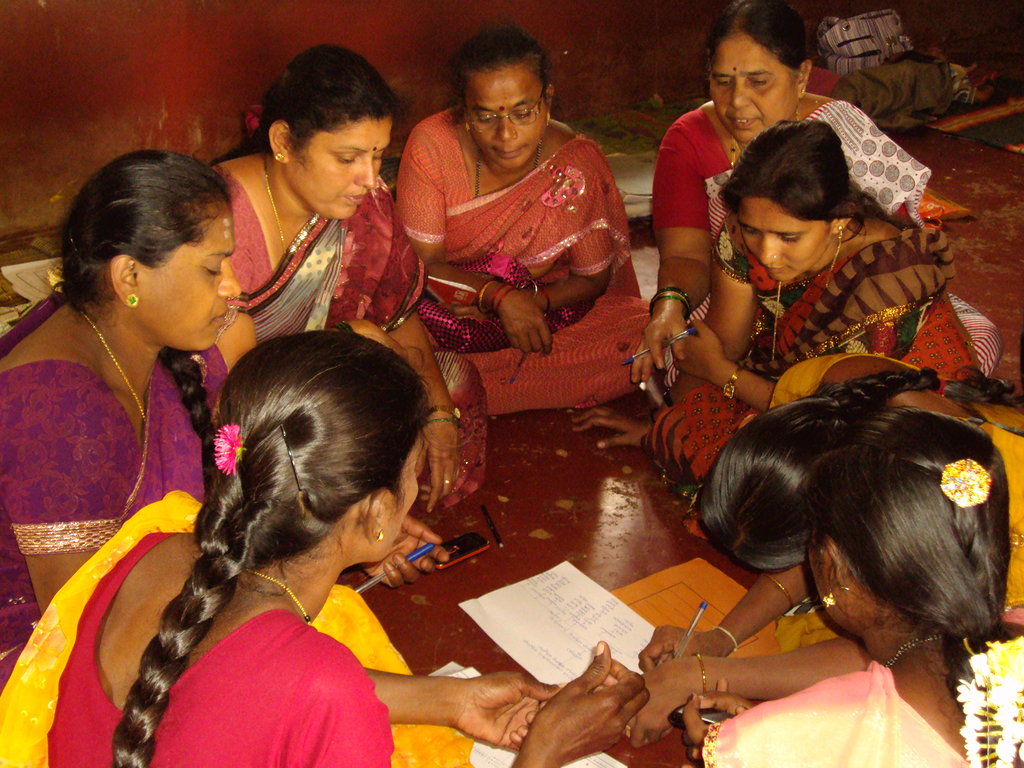
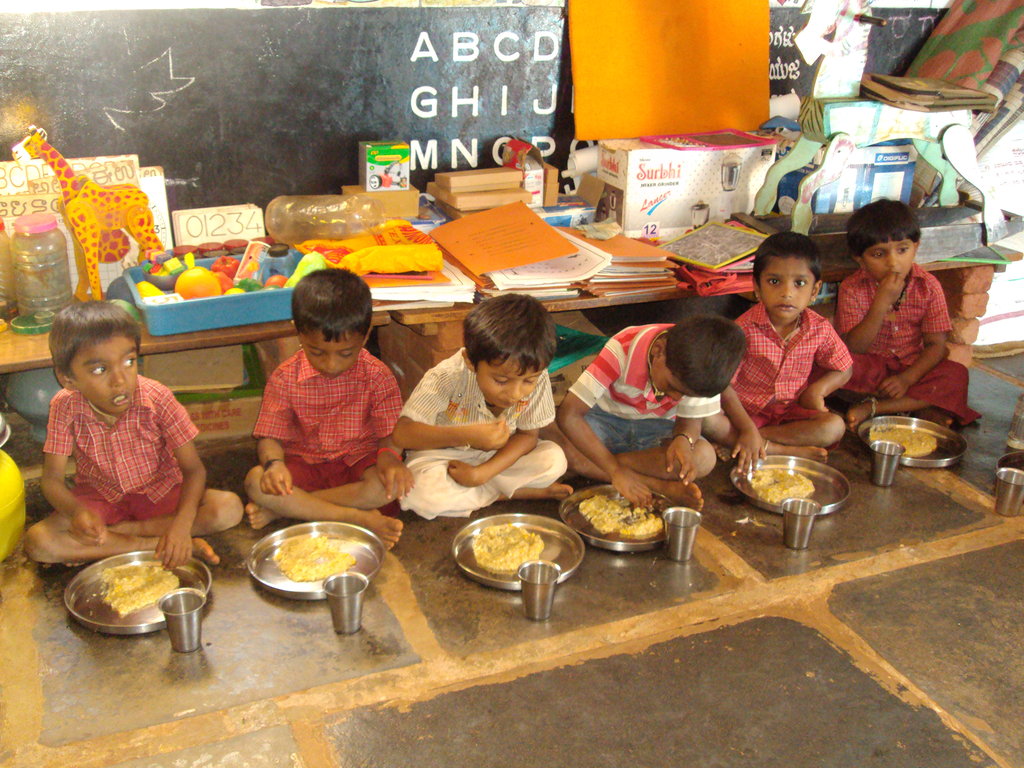
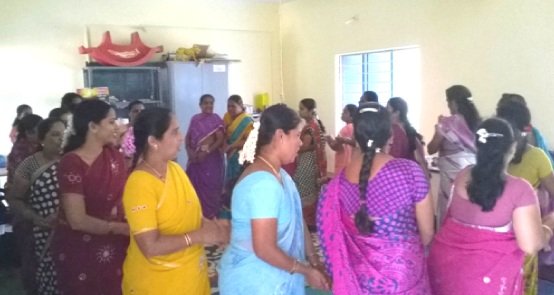
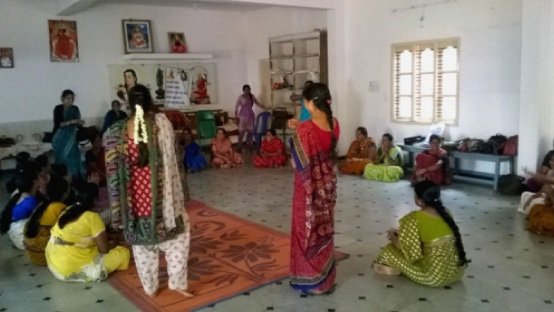
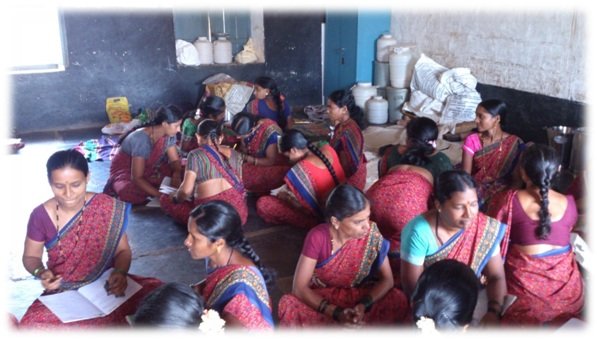
Some of the other activities conducted during this quarter:
Project reports on GlobalGiving are posted directly to globalgiving.org by Project Leaders as they are completed, generally every 3-4 months. To protect the integrity of these documents, GlobalGiving does not alter them; therefore you may find some language or formatting issues.
If you donate to this project or have donated to this project, you can receive an email when this project posts a report. You can also subscribe for reports without donating.