By Risha Samanta | Project Leader
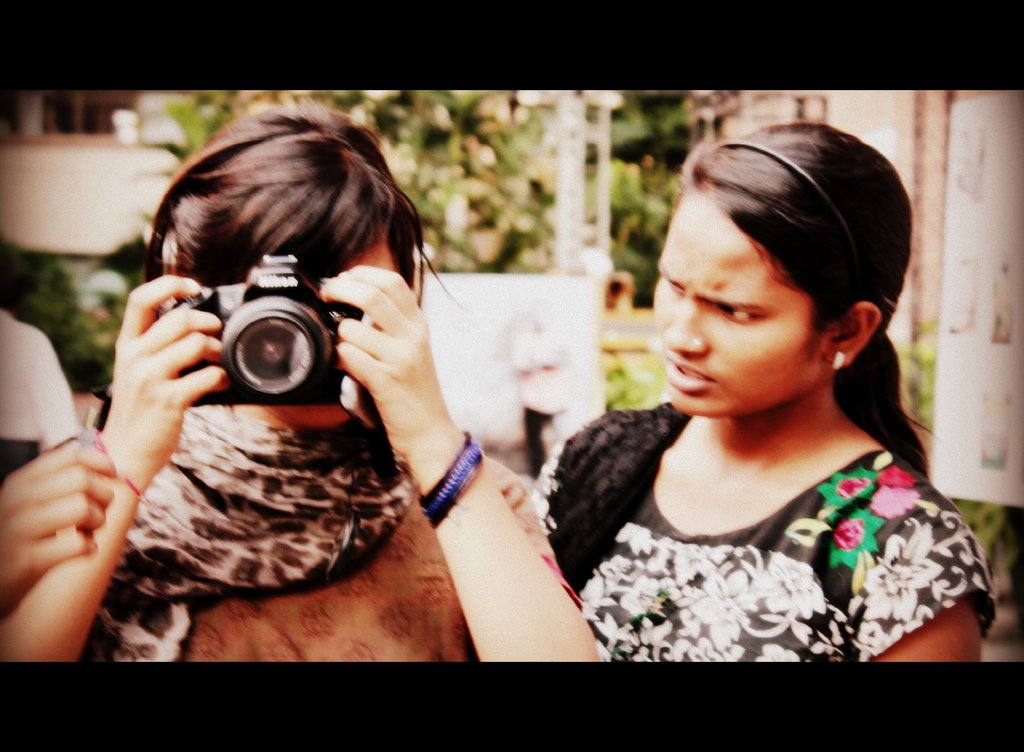
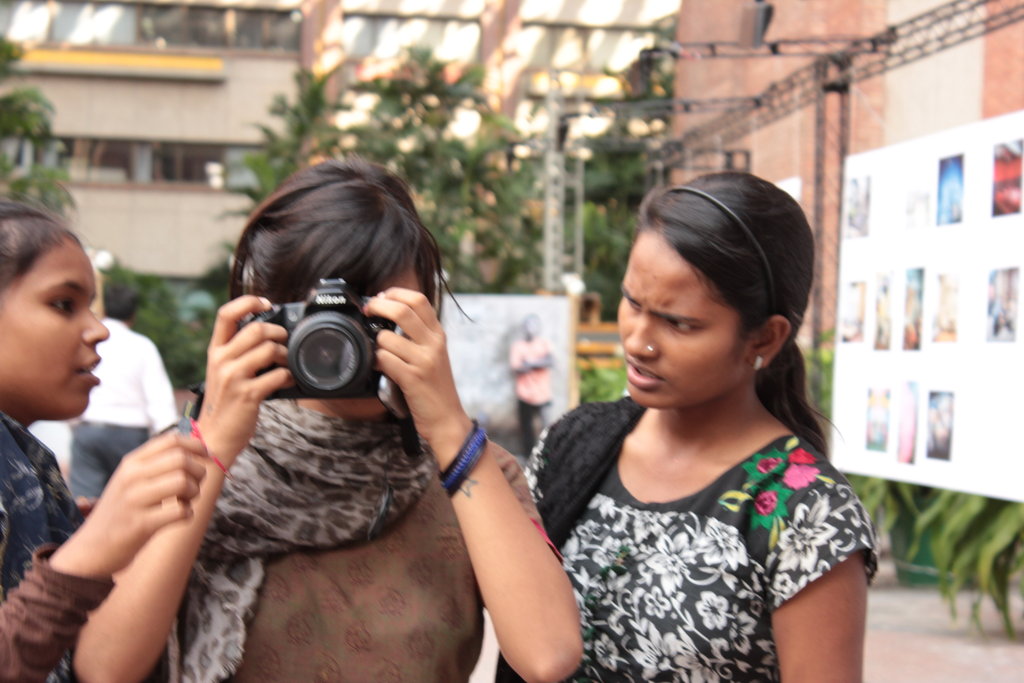
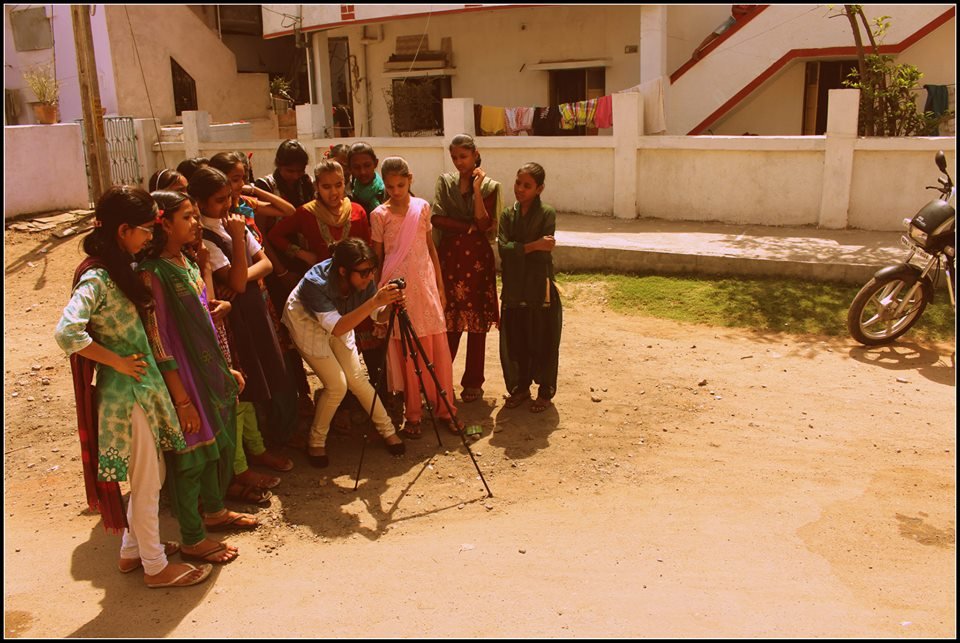
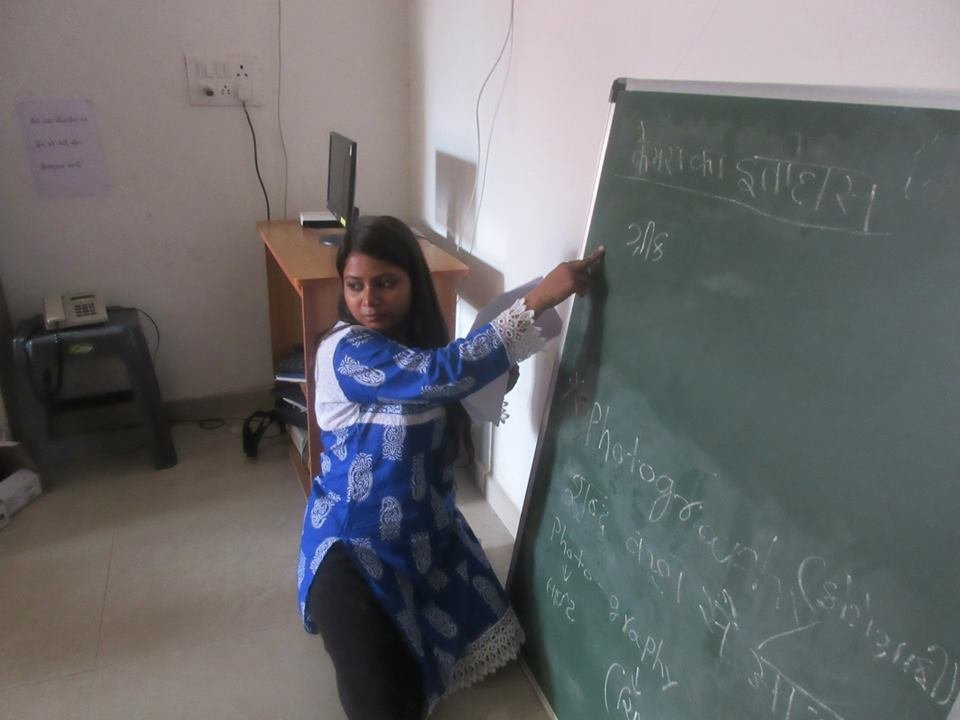
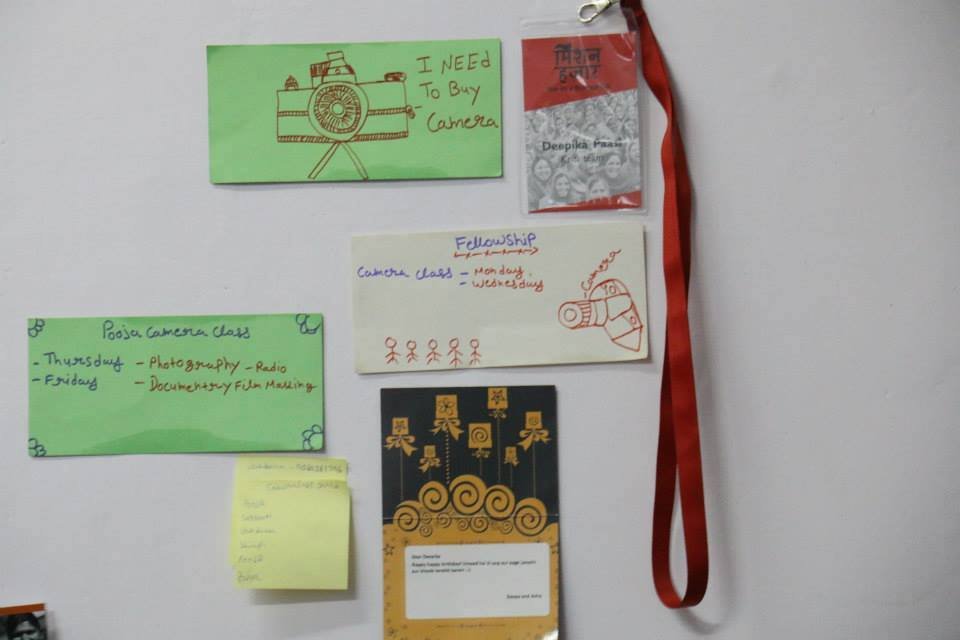
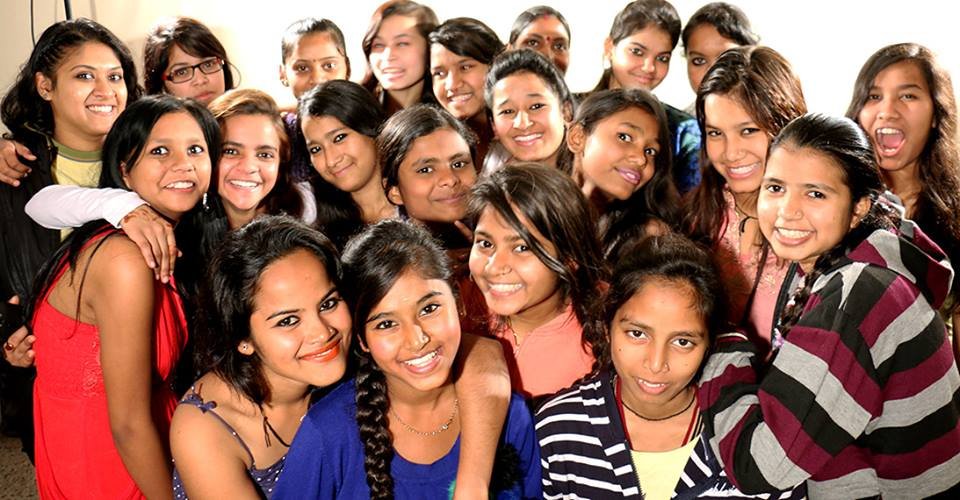
Feminist Approach to Technology (FAT) has entered its crucial third phase of the project on Early and Forced Marriage (EFM). A group of 30 girls who are a part of this project have taken a step further and decided to understand this social phenomenon in a critical way and what makes marriage so central to social existence. The girls have already taken basic and preliminary camera classes by our media trainer and consultant Ms. Pooja Pant, a renowned documentary filmmaker who also heads Voices of Women Media (VOW) in Kathmandu, Nepal. While making the photo stories as a part of the camera assignment, the girls wanted to delve into the concepts of patriarchy and how it engulfs the working of our whole society. They have already developed an understanding on these issues, along with an understanding of feminism, women’s rights, sexual and reproductive health and rights, as part of the Tech Center (Technical Center) course at FAT. As their next step involves bringing awareness in the community through creative use of technology (by making a film on EFM), they have decided to get newer perspectives on the topic.
Engaging with the community will be an essential part of the screening of the movie that is set to be made, and it will be followed by a ‘charcha’ (discussion) which will involve discussions with various groups of the community, including young and married people, parents, youth groups, peers and elders. These discussions will involve talking about various topics linked to EFM. Of the many issues that we are going to be dealing with, the first that we engaged with was violence. Since violence is one of the overarching issues that are persistent in most of the institutions in our society, marriage being one of them, it becomes very important to speak as survivors rather than victims when addressing this issue. This is because within the larger paradigm of feminist intervention, it is crucial to emancipate rather than victimize, to talk about the experience rather than brush it under the carpet. Thus, in order to build and prepare the girls for upcoming discussions on sensitive topics, it was essential to involve the girls in an exposure trip to develop a vocabulary and means to speak out as ‘survivors’ and not as ‘victims’.
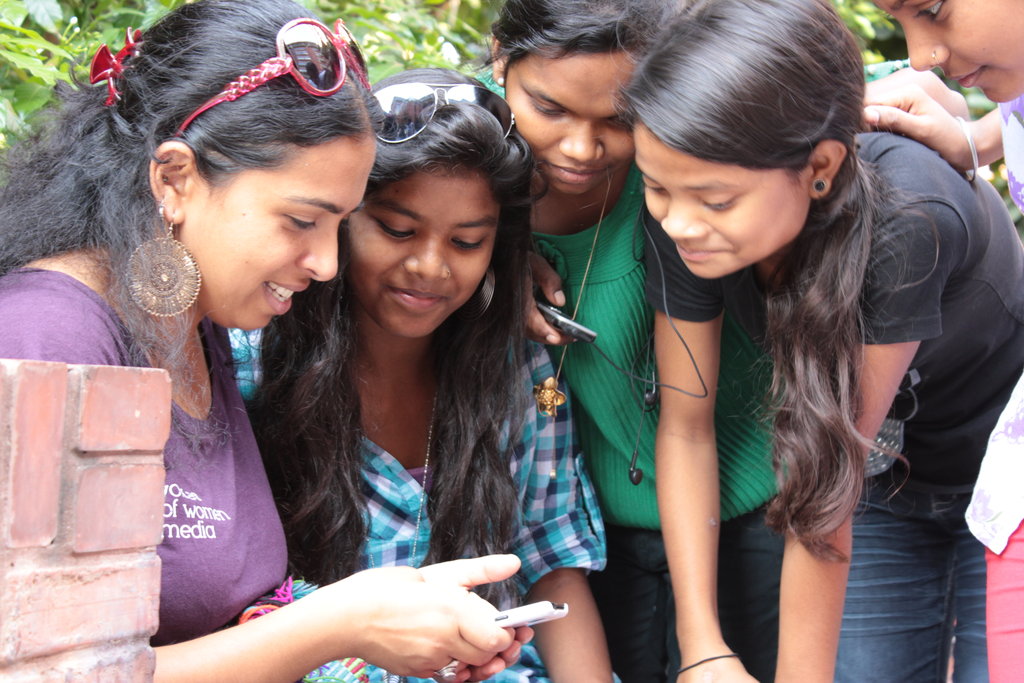
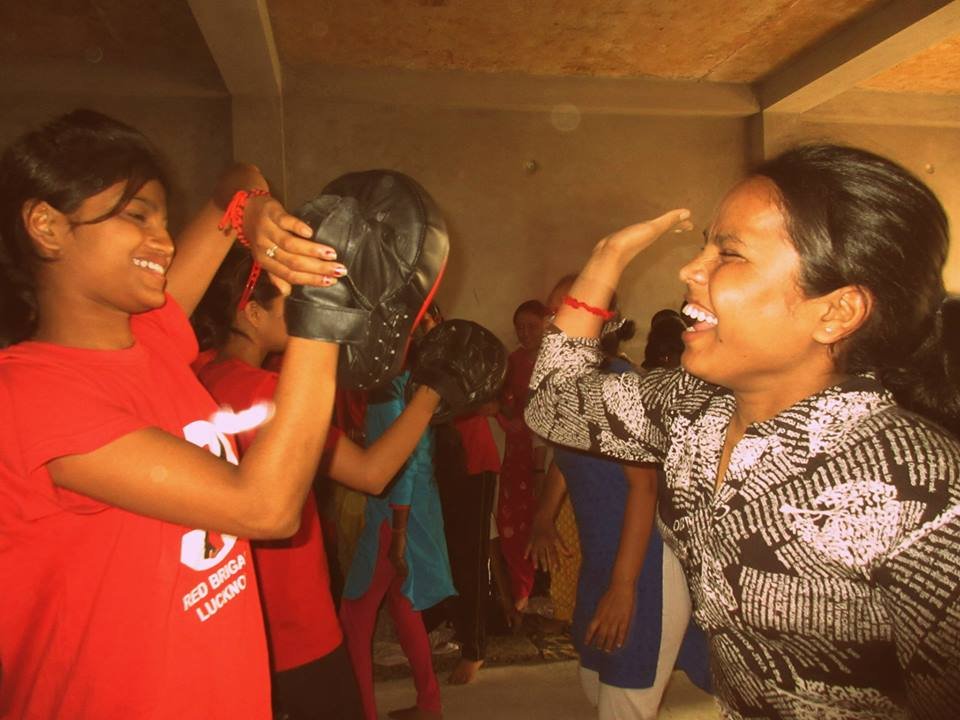
An exposure trip was recently organized for the girls as a part of the project to Lucknow in Uttar Pradesh (North India). There was a desire to meet an organization that works on combating violence. In this regard, we came across Red Brigade, an organization that works on combating sexual violence with a focus on empowering women through self defense education. This fit in perfectly with FAT’s needs as in the past we have realized that sexual violence is something that the girls and communities are dealing with on a regular basis. This trip was a great success in terms of the exchanging of ideas and sharing about the feminist struggles between young women of both the organizations. While both FAT and Red Brigade differed in their areas of work and programmatic interventions, what united us was the fact that both of us were working towards women’s empowerment by fighting deep-rooted patriarchal structures. The collective fight in this valuable exchange was very useful in building solidarities among all of us.
It’s commendable how a change of place and environment can bring about such a huge progress in the girls. One could witness a change in almost every sphere—starting from clothing, food intake, interactions with other girls, participation in all activities to behavioral changes in individuals. For a few girls, it was a life-changing experience as many of them had never travelled alone, let alone in a train. We were a group of 26 girls (along with team FAT) travelling together and that itself was a never-felt before experience for many of us. The girls who had faced restrictions in everyday mobility of coming to the Tech Center had now seen the outside world for the first time. For the ones whose interactions were limited to just family and a few friends, they got to interact with people from different states with varied contextual realities. This exposure trip was an important landmark in the project in terms of bringing some substantial changes in the participating girls as well as some of them who have taken up the challenge to fight forces that tries to make them submissive.
Continuing the substantial and transformative changes, regular workshops and discussions on various social issues have been made an integral part of this project. These workshops are being conducted by our team member Shivani Gupta, Programme Associate at FAT. They are on various issues starting from gender, feminism and patriarchy to politics of love in a heteronormative society, family as a patriarchal institution and politics of consent, choice and agency. The workshops have been extremely helpful in creating a healthy and safe culture of sharing personal stories, narrative and struggles. There was a lot of reluctance in even accepting family as a patriarchal setup initially but the common stories that have come up exemplified for it. Gradually, the harsh realities of patriarchy are unfolding more as the workshop continues to progress.
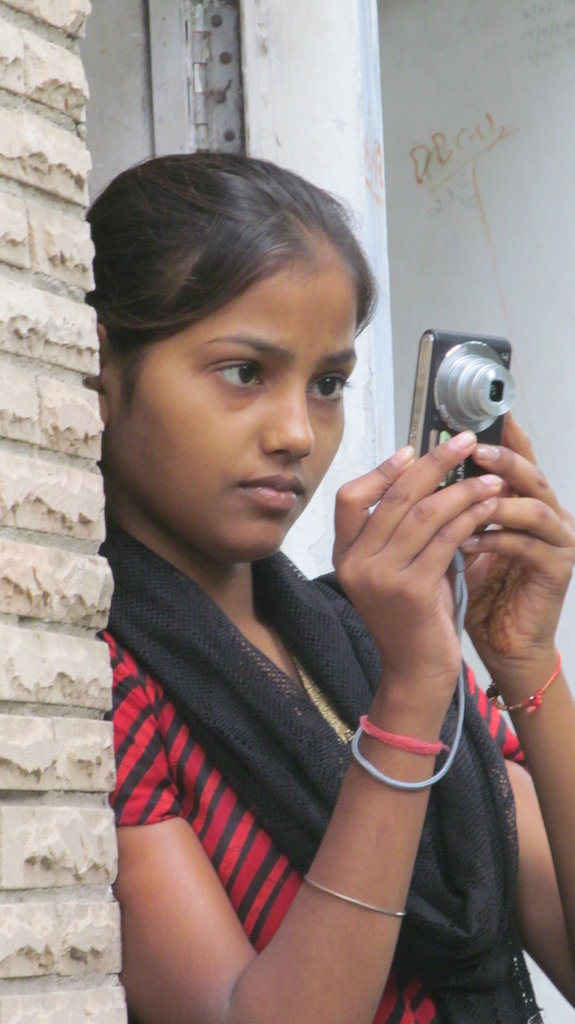
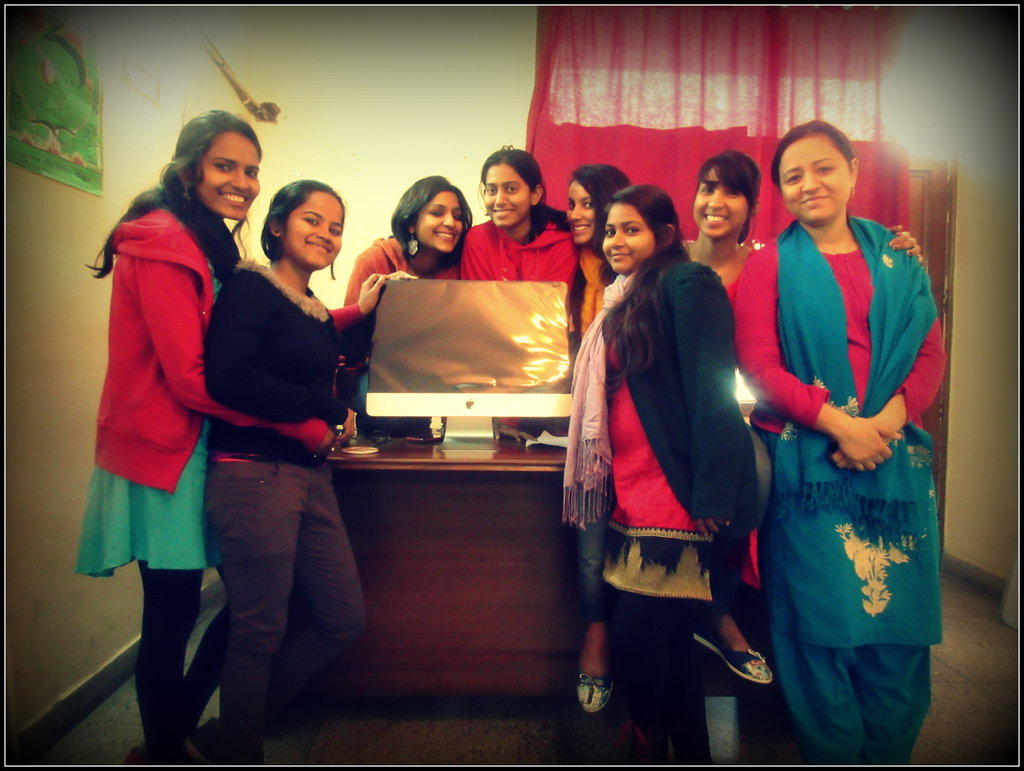
As mentioned in the last report, two of our Tech Center alumni, Deepika and Renu, are working with us in this project in the capacity of interns, assisting and training the girls in photography and filmmaking. The participating girls have been working on creating photo stories by trying to capture all social issues through the medium of photography under the training and guidance of the EFM interns. Deepika and Renu are also doing the documentation of each workshop that is conducted by Shivani. While the EFM interns are training the girls in technical skills, they are themselves getting trained to use DSLR and editing software on iMac by an external resource person.
Deepika and Renu, as EFM interns, have had the brilliant opportunity of expanding their learning curve by becoming independent photographers and video trainers. They were engaged in another project of FAT that is working on the replication of the Tech Center in Gujarat by partnering with an organization in Vadodara city, Sahiyar Stree Sangathan. Their journey from being students at the Tech Center to becoming independent trainers who conducted workshops outside Delhi has been a challenging, yet an incredible one.
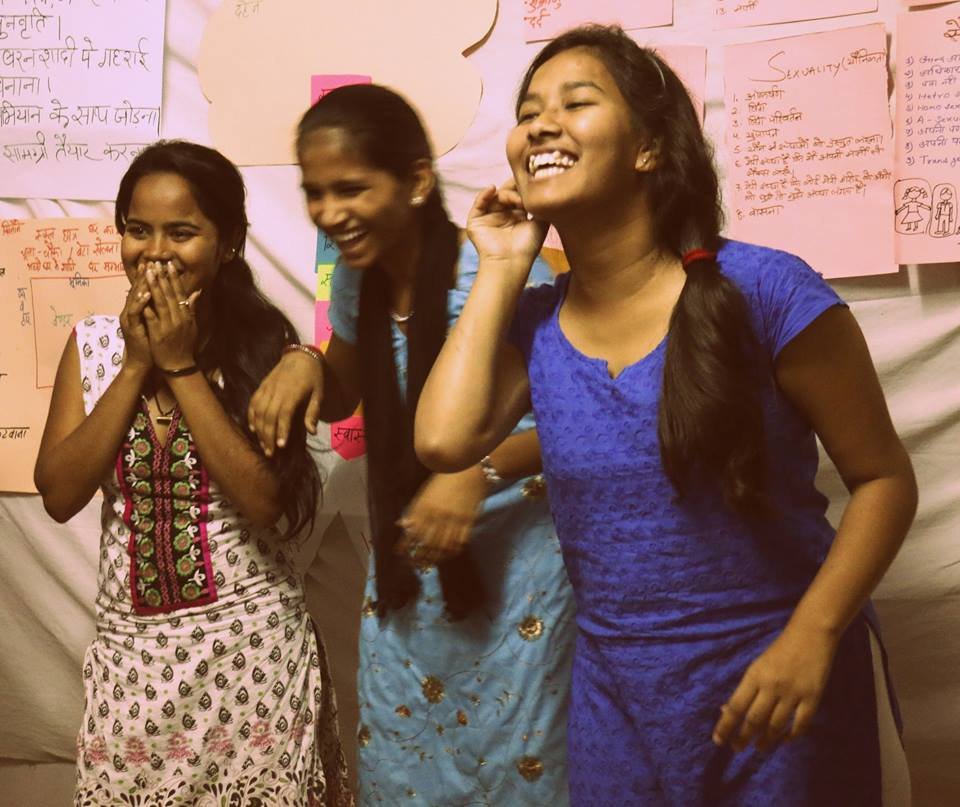
While the preparations for making the movie are in full swing, a workshop for outlining the issues to be raised in the online and offline campaign was conducted by Ms. Nandini Rao, an external resource person whose expertise lies in the area of gender training. A women’s rights activist herself, the girls thoroughly enjoyed interacting with her and brainstorming on several campaign ideas. Four key components linked to EFM emerged during this workshop, namely health, education, sexuality and labour. The purpose of this workshop was to make a blueprint of our entry into the communities with this issue, picking and identifying tools for the upcoming campaign and building various perspectives on EFM. This three-day workshop consisted of activities and exercises that were aimed at building conceptual clarity and using that knowledge to build various materials for the campaigns such as posters, slogans, cartoon strips, songs, play etc.
With so much happening and FAT booming with activities, the girls couldn’t be more excited and prepared to join the collective fight against early and forced marriage. We are thankful to all our supporters and every individual donor who has helped in making the struggle easier for us. We are confident of being impactful in our intervention and look forward to telling you more about our activities in the coming months. Thank you once again for all your support and help!
By Risha Samanta | Program Trainee (Technical Center)
By Shivani Gupta | Shivani Gupta
Project reports on GlobalGiving are posted directly to globalgiving.org by Project Leaders as they are completed, generally every 3-4 months. To protect the integrity of these documents, GlobalGiving does not alter them; therefore you may find some language or formatting issues.
If you donate to this project or have donated to this project, you can receive an email when this project posts a report. You can also subscribe for reports without donating.