By Jean Amabile | Deputy Director
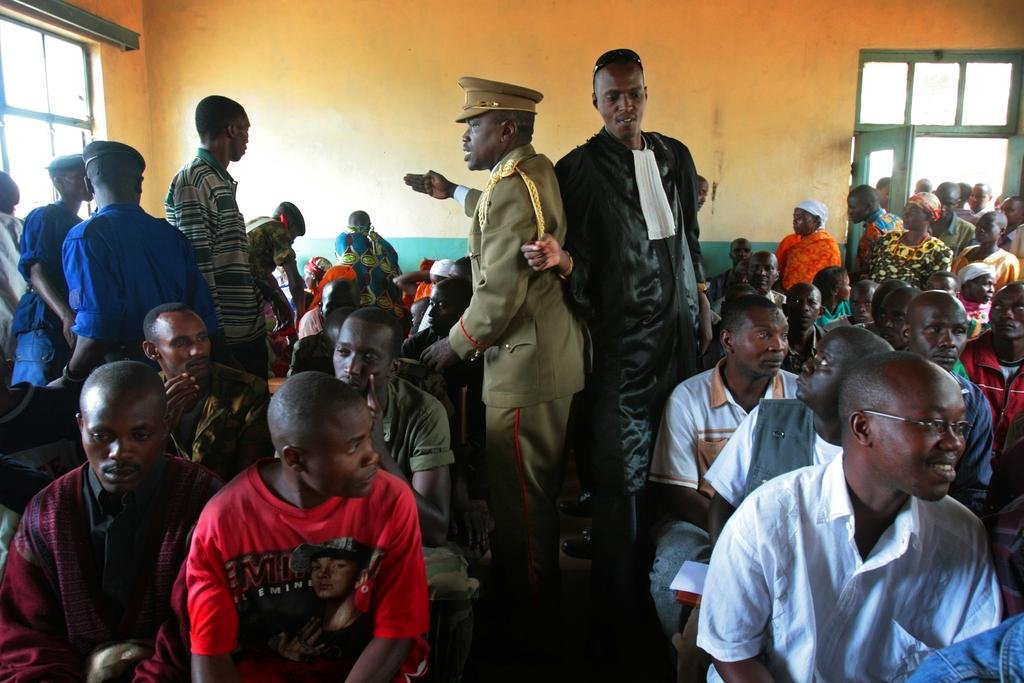
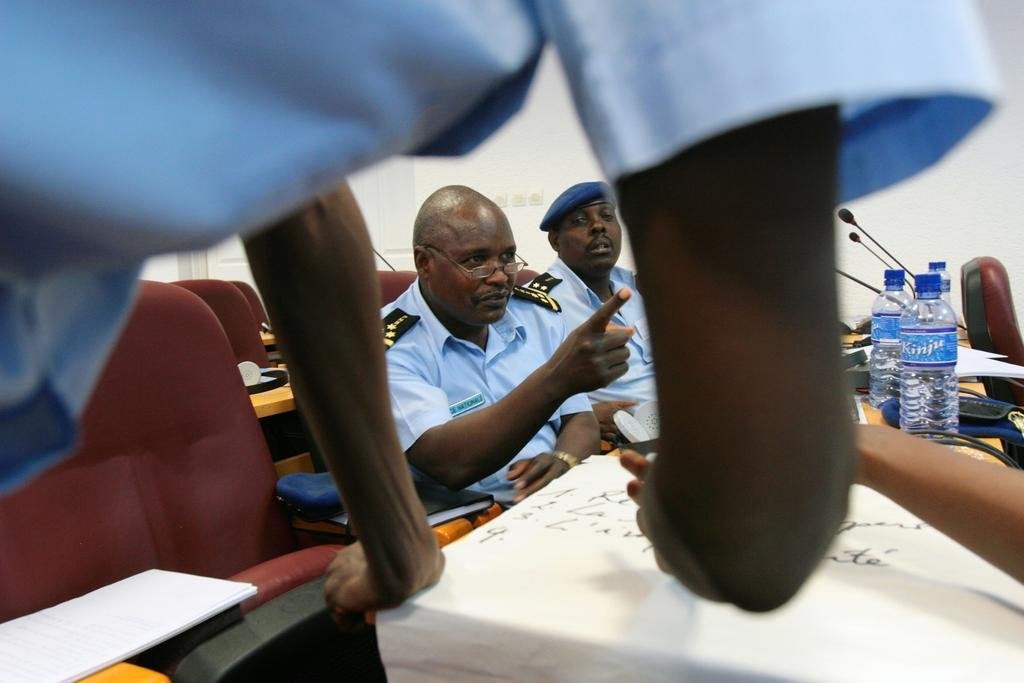
I arrived at International Bridges to Justice in November of 2007 to fill the role of Deputy Director. Prior to working at IBJ, I was a public defender in San Francisco for twenty-two years. I had met the founder of IBJ, Karen Tse, in 1992 when we were colleagues in the SFPD office. After gaining experience as a defender, Karen moved on to a career as an international human rights attorney. She founded IBJ in 2001.When I began working at IBJ, the organization had already developed an expertise in training attorneys and developing systemic solutions to implementing criminal laws in Asia. Preparatory work had already been completed to expand IBJ’s programs into Burundi and Rwanda, and one of my first assignments was to organize the first training of defenders, judges, police, prosecutors and members of civil society in Burundi. Contemporaneously, IBJ had plans to follow up work in Rwanda by launching a rights awareness campaign in that country.
Rwanda and Burundi are inextricably bound by ethnicity and a shared history of colonialism. Violence in those countries escalated into genocidal civil wars that ravaged the societies, their governments and their legal systems. Hutus are the majority population in both countries. Historically, the Tutsi have held the minority and ruling power. Originally a monarchy, by the turn of the 20th century the European colonial powers were gobbling up these two countries as a part of their African land grabs. At the close of the 19th century Germany annexed both independent Kingdoms along with Tanzania. This area, known as the Great Lakes region of Africa, was renamed German East Africa. During the First World War, Belgium conquered the area from its vantage point in the Belgian Congo. With the German defeat at the end of World War I, the area then became known as the Belgian Occupied East African Territories. The League of Nations officially granted Belgium control over the occupied lands in 1924 and the area was named Ruanda-Urundi. With the demise of the League of Nations in 1945, the countries became a United Nations trust territory with the goal that they would transition towards independent rule. That independence did not actually happen until July 1, 1962.
During Belgian’s rule, their strategy of governance was to control the two predominant groups through a policy of ethnic divisiveness. The Belgians introduced identity cards that required the ethnic identification of either Hutu or Tutsi. To further control the population, the much more populace Hutu were subordinated to the dominion of the Tutsi minority through Tutsi preferences for advanced education, jobs and employment. The Tutsi were also in control of the military. When independence was finally proclaimed the two countries of Rwanda and Burundi were recognized, neither country was prepared for governance.
Burundi began a thirty-year reign of Tutsi military dictators. The seeds for ethnic tension, sown by the Belgians, grew into years of ethnic violence. In 1972, 1988, and 1993 the Tutsi controlled government engaged in campaigns of ethnic cleansing against Hutu civilians. The first campaign resulted in the death of 500,000 Hutu. Democratic elections in 1993 resulted in the victory of a Hutu dominated party, the Front for Democracy in Burundi. The democratically elected Hutu president, Melchior Ndadaye was assassinated with months of the election and a new round of genocidal killings of Hutu ensued.
Rwanda’s history ran a parallel course, but on a reverse route. At the time of independence it was the majority Hutu population that gained control of the government. A series of ethnic cleansings by the Hutu against the Tutsi erupted at similar intervals to the Burundi unrest. In 1963 an anti-Tutsi backlash by the Hutu government resulted in the killing of 14,000. With each wave of violence in Burundi, Hutu refugees fled into neighboring Rwanda. Meanwhile Rwanda refugees were forming guerilla movements from the safety of Uganda. These Tutsi guerillas founded a military band, the Rwandan Patriotic Front, dedicated to returning to Rwanda and claiming the country back from the Hutu. By 1993 a cease fire was signed between the Hutu government and the Tutsi RPF rebels. The cease fire - known as the Arusha accords- called for a power sharing between the Hutu and Tutsis. With the eruption into Civil War of Burundi, the tentative Arusha cease fire crumbled. On April 6, 1994 the two Hutu presidents of Burundi and Rwanda were assassinated together when their plane was shot down. This incident sparked the internecine genocidal killing that resulted in the slaughter of 800,000 Tutsis and Hutu moderates in four months. The genocidal killing caught the attention of a world that watched in disbelief but failed to stop the killing. The Tutsi guerillas finally took control back and set in motion a Diaspora of Hutu who fled to neighboring countries to avoid punishment for their genocide.
Since that time, despite substantial international assistance and political reforms, Rwanda continued to struggle to foster growth and reconciliation. Part of this is due to the fact that Rwandan stability is undoubtedly dependent upon stability in Burundi, and instability had reigned in Burundi until 2003 when a cease fire was negotiated and a period of relative peace occurred.
I say relative peace because our training program was almost cancelled when a rebel group located just outside the Burundi capital of Bujumbura began shelling the city two weeks before our scheduled departure. By the time we arrived in Bujumbura on May 15, 2008 the shelling had stopped and the city was once again enjoying a period of relative calm. I hoped it would last.
IBJ began planning the Burundi training program in earnest in February of 2008. It was my responsibility to adapt our work in China and Vietnam to this training. I was being assisted by a young Zimbabwean attorney, Marlon Zakeyo. Marlon had worked as an intern for IBJ for two years, during which time he had been building relationships with legal organizations in Africa.
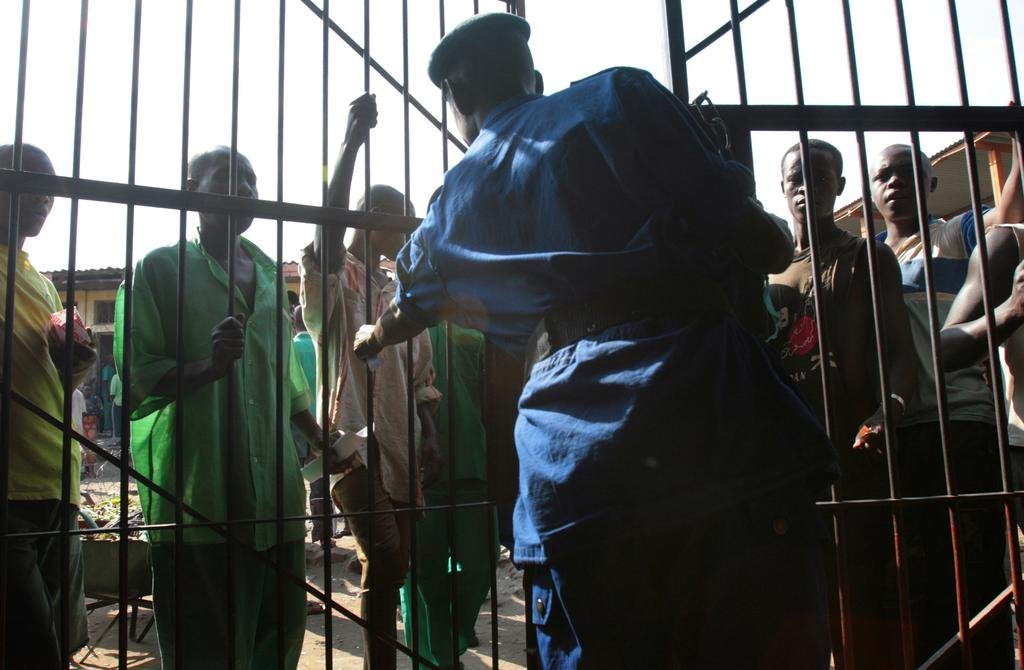
IBJ had already formed a strong partnership in Burundi with a local NGO, APRODH, the Association for the Protection of Human Rights and Detained Persons. The organization was founded by Mr. Pierre Mbonimpa, known throughout Burundi for his unwavering dedication to the protection of the rights of prisoners in his country. A former prisoner and victim of torture himself, Mr Mbonimpa had fearlessly campaigned against state-sanctioned torture in his strife torn country for over a decade. Despite laws prohibiting torture and other human rights violations, such abuses were still rampant in the country’s overcrowded prisons.
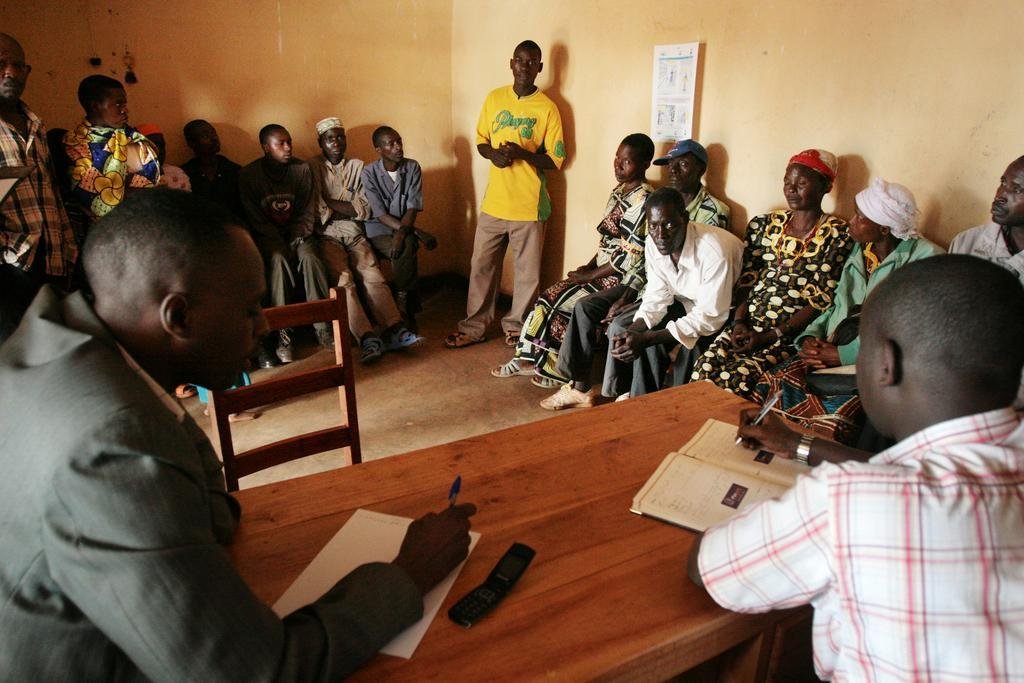
In 2006, IBJ began working together with Pierre Mbonimpa to strengthen Burundi’s criminal justice system. We initiated a rights awareness campaign with the distribution of a poster in Kirundi, the tribal language of the country, illustrating fundamental rights of the accused to be free from torture and to have access to an attorney. The poster campaign was almost too successful. 10,000 posters were printed, but after distributing 7,000 of the posters, APRODH stopped the distribution because they were inundated with many more requests for help than they could handle. It was time to take the next step and build a viable legal system, capable of providing basic legal representation to the thousands of ordinary prisoners waiting for representation and access to a courtroom.
Preparing an in-country training requires understanding of the culture, history and the legal system of a country. I knew the history of the Rwanda genocide, but Burundi’s history had not been as well-documented. A crash course in Burundi history made me realize that this training was going to be much more than just a legal training. IBJ was taking on the much bigger challenge of attempting to work within a legal system virtually collapsed from years of war.
In modern adversarial courtrooms the rules of engagement are clearly defined and chivalrous. But in a post-conflict country the adversarial lines in the courtroom could reflect the history of mistrust and violence. Our main challenge was in designing a training program that would harmoniously bring adversaries in the Burundi criminal justice system together and give them advice on how to reform their system and heal their countries’ open wounds.
To further complicate things, my entire body of experience was within an English speaking, common law system, while the Burundi legal system was a Francophone civil law system. Our final hurdle was working with our small grant from the UN Against Torture that just about covered the travel costs to Geneva, but no more. So the first obvious priority was to find a French-speaking attorney interested in volunteering to work with IBJ.
I knew no French attorneys, had no budget to hire a French trainer, and spoke no French, but saying no to this challenge was not an option. So I forged ahead.
After Marlon vigorously searched through IBJ’s resumes, we found a French criminal defender who was interested in IBJ’s work. We called him and within a week we were meeting our trainer. Mehdi Benbouzid, a French criminal defender with extensive experience training lawyers, students and police, has an invested interest in Africa and a commitment to human rights. He also had the necessary amount of francophone civil law expertise, as he had a Law degree and a Masters in Law from Université Jean Moulin in Lyon. He had been actively practicing as a criminal defender for twelve years, all the while teaching and lecturing on criminal law. He had lectured on war crimes and crimes against human rights. He had recently completed work with the International Red Cross in Syria and Jordan as a field coordinator/team leader, interviewing suspected terrorists held in Jordan and providing human rights assessments in Syria. He was perfect.
When Mehdi first arrived I was not aware of the extent of his qualifications, I was just relieved that he spoke French. His first meeting with IBJ confirmed his commitment to see the project through to the end. He would eventually help design the training, prepare the training materials, and be the primary trainer, all pro bono. We got down to work and began to brainstorm on how to design a cross-cultural four day training that would speak to the needs of the various participants with whom we would be working. We held a series of work sessions over the next three months.
Practically speaking, we didn’t know what to expect. Neither Mehdi nor I had been to Burundi. Even though Mehdi was familiar with the framework for their antiquated French Civil Procedure Codes, we didn’t know what the actual practice of law would be like.
Karen’s experiences working in China, Cambodia and Vietnam suggested that the starting point for rebuilding and healing was to get people to engage in identifying the values that motivated them to enter their professions in the first place. Taking it beyond a basis of fundamental skill building, our training would start with each group identifying the highest values they associated with their profession. As we planned, we decided that it was critical that the various groups articulate their hopes and dreams for their system. We also prioritized creating exercises that would sensitize the participants to the particular difficulties and each other’s perspectives. Finally, to get people to come for all four days we had to include a measure of humility well integrated with lots of humor and fun. If, at the very least, we could help create feelings of respect and trust among the group, we would have achieved a lot.
Then, the week before our trip, we experienced a minor catastrophe. Mehdi wasn’t going to be able to get a visa for the Rwanda portion of the trip because the French had severed their diplomatic relations with Rwanda. I had already left for Burundi to handle the pre-training logistics when I heard the news. To my relief, I learned that Mehdi was tenacious. He parked himself in the visa office and managed to get the visa issued two hours before closing time on Friday. On Sunday he boarded his flight to Bujumbura.
Project reports on GlobalGiving are posted directly to globalgiving.org by Project Leaders as they are completed, generally every 3-4 months. To protect the integrity of these documents, GlobalGiving does not alter them; therefore you may find some language or formatting issues.
If you donate to this project or have donated to this project, you can receive an email when this project posts a report. You can also subscribe for reports without donating.