By Marco De Pietro | Coordinator Programs
The children in Milan also appear to have experienced significant positive changes. These improvements were particularly marked in terms of strengthened academic skills and enhanced educational well-being, as well as greater social competencies and emotional self-efficacy. Notable improvements were also observed in their relationships with their parents and in the level of trust they placed in institutions.In contrast, the poverty index, which measures social dimensions of deprivation, shows a significant improvement, while the index related to educational attainment records a more modest increase. Finally, substantial improvements were also observed in the development of civic awareness and the adoption of healthy daily habits, resulting in an overall enhancement of the health and well-being of the beneficiary children.
In the case of the children and young people in Naples as in Genoa, the findings present a more mixed picture. On the one hand, positive results were observed in relation to academic skills, educational well-being, the ability to understand, manage and express emotions, socio-emotional competencies, self-confidence, and the reduction of deviant behaviours.On the other hand, trust in public institutions, particularly the armed forces and school teachers, remains very low. Finally, the social poverty index stands at particularly low levels, most likely as a consequence of mobility restrictions and the resulting inability to engage in social activities and maintain interpersonal relationships.
Testimony from a father in Naples:
“Because of the financial difficulties I have faced due to insecure employment, I have always felt guilty for not being able to give my children the opportunity to pursue their passions. Seeing my daughter’s dedication and the progress she has made filled my heart with joy. I hope that my little girl can continue along this path and achieve her dreams and build her future.”
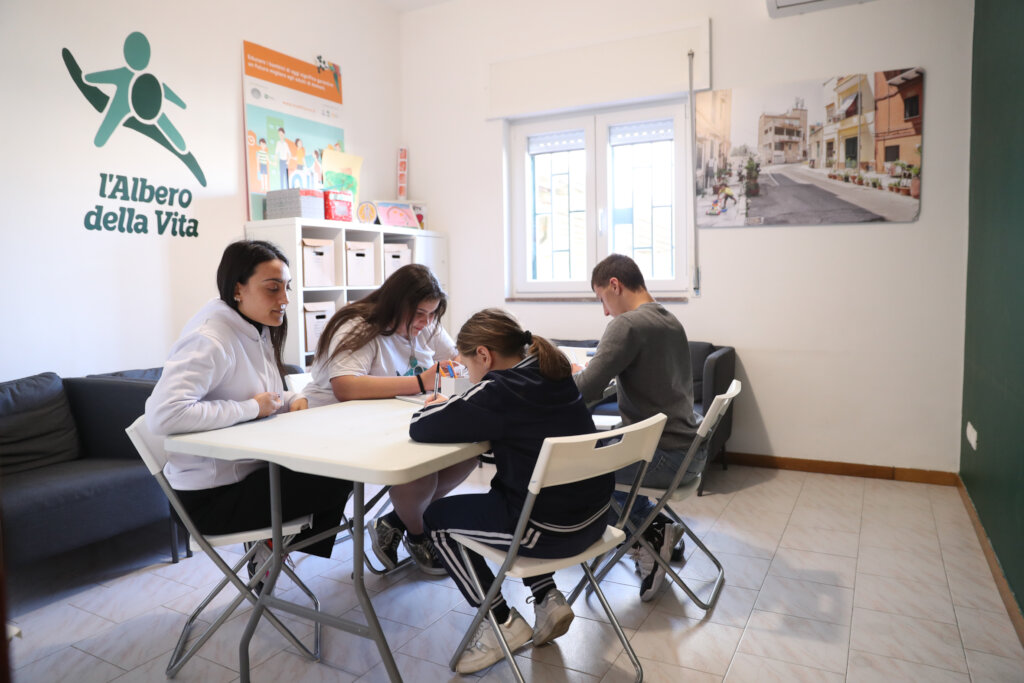
L. (7 years old) initially displayed significant difficulties in social interaction and school learning. She appeared very quiet and fearful, with a withdrawn attitude and minimal participation, as though every new situation could potentially pose a threat. Her family situation is marked by severe social hardship and material poverty, including housing difficulties. The family consists of three children and very young parents, both of whom are unemployed.
In such a context, the stability provided by an after-school educational program can make a real difference, not by “solving” the family’s circumstances, but by offering a developmental pathway supported by trusted adult role models and a peer group that is welcoming and non-judgmental.
Links:
Project reports on GlobalGiving are posted directly to globalgiving.org by Project Leaders as they are completed, generally every 3-4 months. To protect the integrity of these documents, GlobalGiving does not alter them; therefore you may find some language or formatting issues.
If you donate to this project or have donated to this project, you can receive an email when this project posts a report. You can also subscribe for reports without donating.


Support this important cause by creating a personalized fundraising page.
Start a Fundraiser