By Aleta | Comms Team
“Elders are always telling us not to do this and not to do that, especially with sex and marriage. But we need to know how to protect and take care of ourselves.” - Moe, age 16, Shan State
Over the past couple of years, girls have increasingly expressed interest in learning more about sexual health. Political and economic realities are putting girls under a lot of pressure to make hard decisions about relationships, marriage, and pregnancy. With backslides in the health sector and dwindling services from international agencies, we decided to explore the possibility of expanding our role in girls' lives to better support girls in these decisions.
By talking to girls regularly, we gather insights into their concerns—inaccurate information, desires not to burden their parents, and social norms constraining open discussions. Girls have told us that group discussion on these topics is ineffective because of the shame of speaking in front of others.
In response, we designed and carried out a one-on-one sexual and reproductive health engagement series for adolescent girls and young women. Using what we learned during the pandemic when we carried out thousands of phone calls to girls to check in on them, we developed a three-part phone-based series of structured learning discussions.
Our Response:
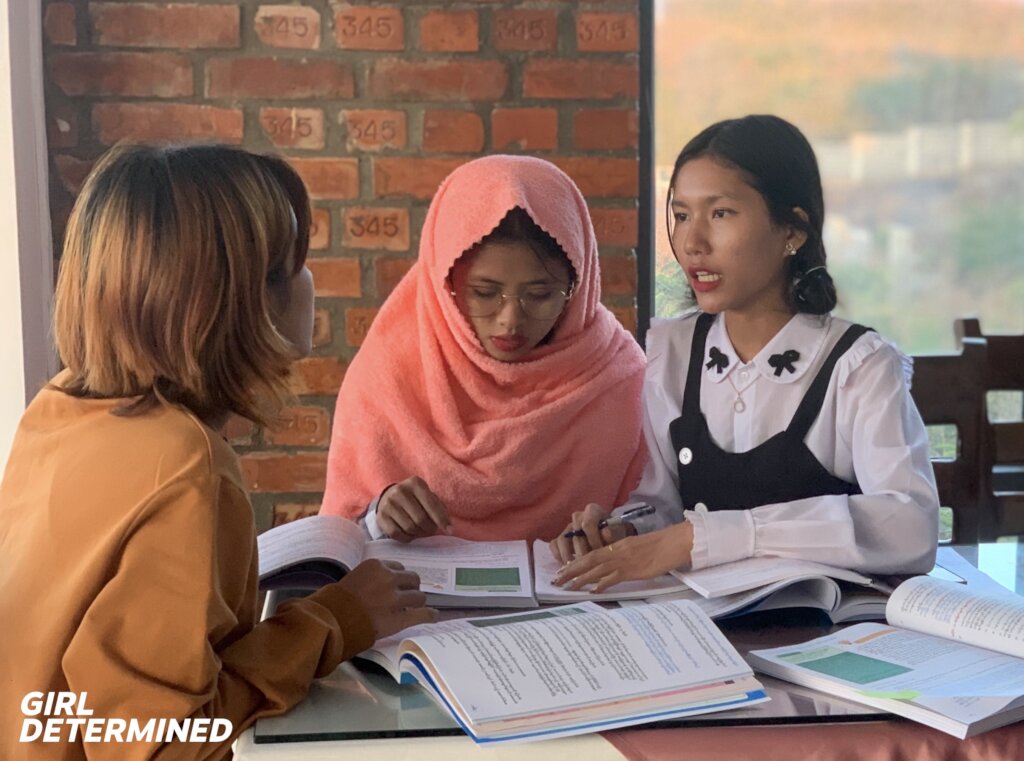
Twenty young women already trained as community facilitators and coaches gathered and worked with skilled reproductive health educators from Marie Stopes International for one week. We made sure they had good knowledge, could use vocabulary effectively, and would be able to talk with peers on this topic matter without embarrassment. The young women divided amongst themselves a list of girls to call according to shared language/dialect so that we could engage girls in multiple local languages.
Building on their experiences and introductory interviews with girls in their early and middle teens, we developed scripts for three structured learning phone calls.
For eight months, these 20 young women callers carried out at least 2,500 sessions with 882 girls and young women between ages 12-21. Callers phoned first to make contact and introduce the learning series, and from there each girl received three additional phone calls lasting between 30 min - 1 hour. Most weeks, callers also joined together in a digital meeting to discuss their experiences and clarify any content.
We had to get creative in developing the call scripts, finding methods that would be effective without the use of visual aids or group play. So we landed on the use of true/false and myth-busting questions, along with storytelling and role play as key methods.
"The first call I received was kind of a shock to me, some time had passed since I last attended a [Girl Determined] Circles session. This topic is not openly talked about in my community. In Circles, we learned about puberty, but I didn't dare ask questions with other girls around… During the phone call, my sister [the caller] explained clearly about the menstrual cycle and we talked about romantic relationships and having a family. It kind of felt like she was a friend talking to me during these sessions." - Nu Pan, age 17, Kachin State
What We Learned:
To understand the impact of this learning series, we looked at our internal process and, importantly, we looked at girls' feedback on how they liked and learned from it.
Challenges in implementation were mostly general issues like poor phone signal or lacking Internet connection to log call data. There was some skepticism from parents who answered our calls because we could only reach girls through their parents' phones. The number of the reached dropped over the series since some phone numbers became inactive or girls moved away leaving no forwarding phone number. There were also a handful of girls who just said that it was too embarrassing for them or that this information was somehow not pertinent since they were not currently married.
When asked about their experience, girls reported positive changes, accurate retention of the content covered, and a sense of fondness and trust with the caller. They liked the one-on-one format of phone calls. And quite a few girls said that they shared new learnings with other girls around them and with family members.
“I learned what to expect with my menstrual period. I now know that we can wash our hair, we can eat tea leaf salad and sour snacks, we can cook rice, and that it’s ok for girls to walk near boys during our period. I explained to my friends that we can do what we want during our periods, freely. It won’t harm us.” – Hnin, age 16, Yangon Region
"I used to think I had to call my boyfriend all the time, and that he should call me a lot, too. In this way, we believed we had some control over each other. But now, because of this phone call series, my boyfriend and I talk about mutual understanding and trusting each other. Now it feels like we have more honesty and openness." - Thi Thi, age 19, Mandalay Region
In addition to learning practical health information, girls said that the calls helped reduce their shame when talking about their bodies and their futures. Some girls found the discussion about equality in a healthy relationship and a sense of shared responsibility for pregnancy to be particularly helpful.
--------------
Thank you for reading about our initiative on sexual and reproductive outreach to girls and young women in this moment of ongoing crises. We want you to know that your support is making an impact and we are grateful for your continued support and solidarity.
Project reports on GlobalGiving are posted directly to globalgiving.org by Project Leaders as they are completed, generally every 3-4 months. To protect the integrity of these documents, GlobalGiving does not alter them; therefore you may find some language or formatting issues.
If you donate to this project or have donated to this project, you can receive an email when this project posts a report. You can also subscribe for reports without donating.



Support this important cause by creating a personalized fundraising page.
Start a Fundraiser