Project Report
| Aug 1, 2012
Project Report - July 31, 2012
By Djondo Sikalangwe | Project Training Coordinator
The Copperbelt Rural Livelihood Enhancement Support Project (CRLESP) has been operating in the four districts (Masaiti, Mpongwe, Kalululshi, and Luanshya) of the Copperbelt since October 2010. Its target is 6,210 direct project families who will enhance their livelihood through integrated agricultural production, enterprise development, promoting human health, water and sanitation.Heifer International being the lead implementing organization has partnered with the National Food and Nutrition Commission (NFNC) and Village Water Zambia (VWZ) as a strategy to achieving a holistic sustainable community development.
The project has worked closely with government partners from Ministries of Community Development, Mother & Child Health (MCDMCH) and Agriculture & Livestock (MAL). These have also been providing training and monitoring project activities. To enhance the partnership and project ownership by participants, review and planning meetings are held monthly at community level.
To date the project has reached 2937 families through various interventions; provision of livestock 140, vegetable production 120, human nutrition 120, agro forestry 82, water and sanitation activities 2495.
Photos to come
![Share on Twitter]()
![Share on Facebook]()
Apr 29, 2012
Project Update - Apr 2012
By Djondo Sikalangwe | Project Training Coordinator
![Mercy Mwananyanda]()
Mercy Mwananyanda
Our Hope is Here
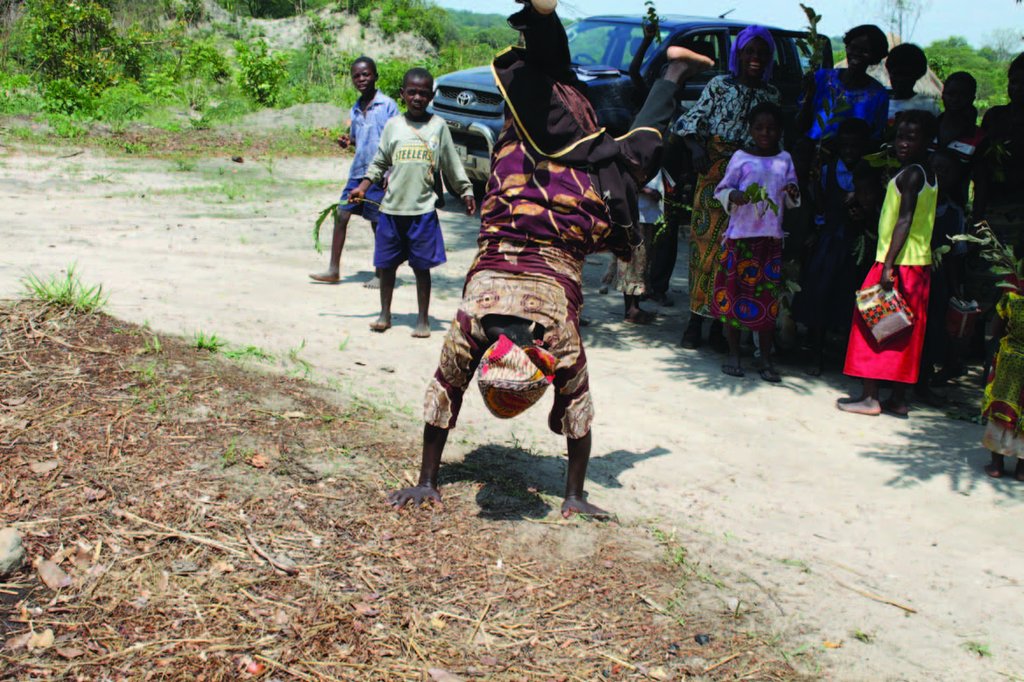
Mercy Mwananyanda is a young mother with extraordinary abilities. As quiet as she is, no one would guess that when she gets excited, she begins somersaulting. On September 19, 2011, in the Kamisenga Dairy Cattle project area, the atmosphere was filled with ululations and dancing. Women and children were carried away with excitement because the long awaited dairy cattle had arrived. The entire community was hit by a wave of extraordinary excitement. One woman in particular–Mrs.Mercy Mwananyanda–amazed everyone with her gymnastics. She swung into action with ease and without embarrassment. She tossed herself in the air and did a number of somersaults. Everyone stopped what they were doing just to catch a glimpse at this rare feat.
“Mercy, why did you do that?” I asked. She replied with a broad smile, “You see, I am very, very excited my problems are over! I know that many people may not understand me. We have suffered for too long, and nobody has shown us respect in this village. But now my family status has changed for the better because of these animals Heifer and Elanco have bought us,” answered Mercy. For a while I was speechless, and I thought of asking Mercy’s husband, Humphrey, about the display some would consider embarrassing. Humphrey did not mince his words: “You see, Ba Sikalangwe, that is the only way we can say thank you for these gifts of livestock. We will not be the same because our status in the village has changed now and forever. We have been waiting for these animals for many years, and therefore nothing is really embarrassing about what my wife has done. I am very happy for her,” Humphrey said with a smile of satisfaction on his face.
![Mercy doing a somersault]()
Mercy doing a somersault
![Share on Twitter]()
![Share on Facebook]()
Jan 31, 2012
Project Update Jan 2012
By Marc Bunn | Project Leader
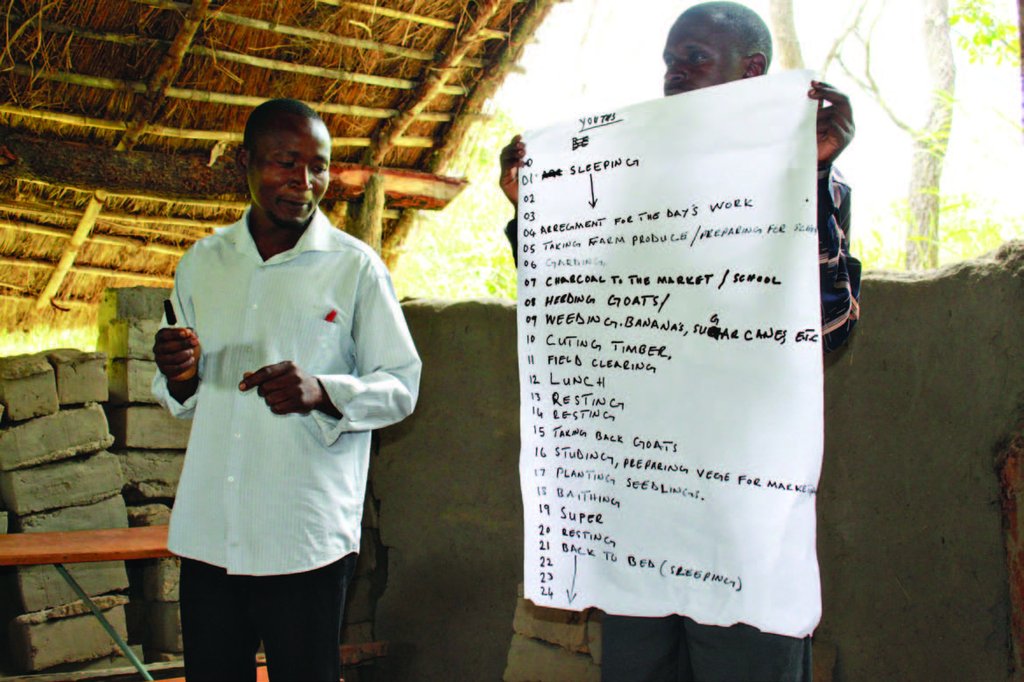
![Gender and Family Training at Kamisenga project]()
Gender and Family Training at Kamisenga project
All four of the project sites established project committees, including marketing and finance, natural resources, social, animal health and works. Farmers worked in teams during the construction of livestock structures, which was facilitated by the project’s works committee. Project members who did not have the physical capacity to build their own animal structures were helped by the working teams, with guidance on specifications from the works committee.
Four environmental health technicians drawn from the four project communities were oriented in the water and sanitation approaches to be employed in the project by Village Water Zambia. The project also established livestock insurance funds in each of the four communities.
Project Story: Hygiene Intervention Wins Praise
Nchiinga, a man from the Kutaizya Women’s Club in Kalulushi District, said:
"Surely, I could not believe my eyes what I saw today at our toilet. I worked in the police force in the Northern Rhodesia Government for more than 40 years, and toilets in the camp were regularly inspected by the senior police officers at our homes. Failure to observe or maintain hygiene would attract severe punishment. Here, where we stay in the villages now, nobody cares where they dump dirt. For the first time, my wife put a bucket of water and soap for washing hands after using the toilet; I am impressed. Thank you for the trainings on hygiene. Though I am unable to attend lessons, this hygiene training is a breakthrough in good health. Talk about it more."
Links:
![Share on Twitter]()
![Share on Facebook]()