By Joe Figel | Project co-leader
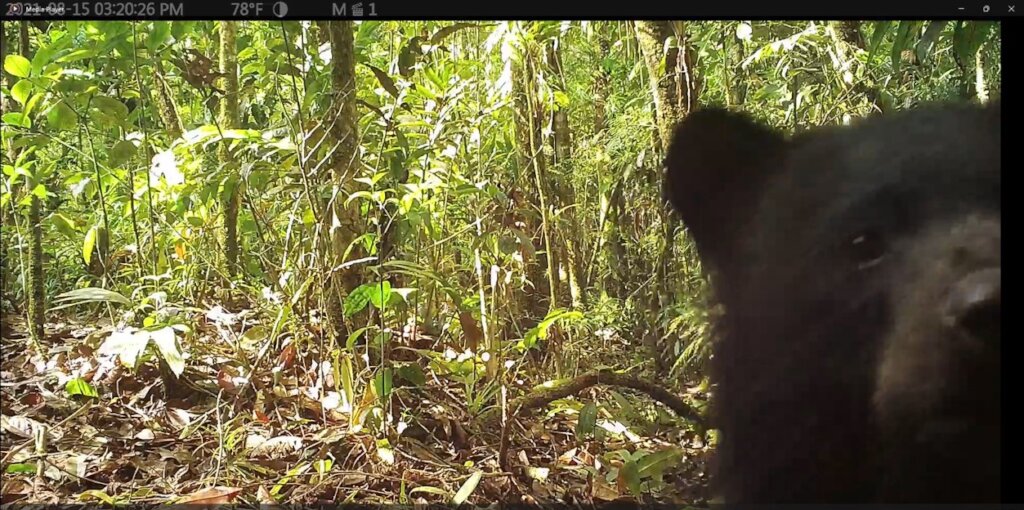
Most recently, our work has shifted from the field to the office as we recently prepared and submitted a scientific manuscript about the threats of gold mines to spectacled bears in the Serranía de San Lucas (San Lucas). We focus on spectacled bears because they are one of the most threatened large mammals in Latin America. In Colombia, spectacled bear research exhibits considerable geographic bias, with most in-situ studies occurring in a few national parks.
There are no published studies about the spectacled bear population in San Lucas where nearly 20% of the species’ range is overlapped by gold mining concessions. Although some of these concessions are currently inactive, they are still subject to exploration activities, which attracts human migration and settlement in previously forested areas. The infrastructure network accompanying these mines poses serious threats to bears in the form of habitat loss, human-wildlife conflict risk, and bioaccumulation of toxic substances.
Our spectacled bear records (n=24) reinforce the biological significance of San Lucas. However, the establishment of new mining operations, expansion of existing concessions, and projected intensification of gold extraction pose significant barriers for conservation in the region.
Our next steps involve analysis of the data from the remaining threatened wildlife for publication and dissemination to wider audiences.
Español: Recientemente, nuestro trabajo ha pasado del campo a la oficina debido a quepreparamos y presentamos un manuscrito científico sobre las amenazas de las minas de oro a los osos de anteojos en la Serranía de San Lucas (San Lucas). Nos enfocamos en los osos porque son uno de los grandes mamíferos más amenazados en América Latina. En Colombia, la investigación sobre el oso exhibe un considerable sesgo geográfico, ya que la mayoría de los estudios in situ se han llevado a cabo en unos pocos parques nacionales.
No hay estudios publicados sobre la población de osos en San Lucas, donde ~ 20% del área de distribución de la especie se superpone con concesiones mineras de oro. Aunque algunas de estas concesiones están actualmente inactivas, todavía están sujetas a actividades de exploración, lo que atrae la migración humana y el asentamiento en áreas previamente boscosas. La red de infraestructura que acompaña a estas minas plantea serias amenazas para los osos a través de la pérdida de hábitat, riesgo de conflicto entre humanos y vida silvestre y bioacumulación de sustancias tóxicas.
Nuestros registros de osos (n=24) resaltan la importancia biológica de San Lucas. Sin embargo, el establecimiento de nuevas operaciones mineras, la expansión de las concesiones existentes y la intensificación proyectada de la extracción de oro plantean barreras significativas para la conservación en la región.
Nuestros próximos pasos involucran el análisis de los datos de la vida silvestre amenazada restante para su publicación y difusión a audiencias más amplias.
Links:
Project reports on GlobalGiving are posted directly to globalgiving.org by Project Leaders as they are completed, generally every 3-4 months. To protect the integrity of these documents, GlobalGiving does not alter them; therefore you may find some language or formatting issues.
If you donate to this project or have donated to this project, you can receive an email when this project posts a report. You can also subscribe for reports without donating.