By Monica Kinyua | Project coordinator in Kenya
This report is being sent to 25 friends who have donated $1,424 to help our organization, Children Peace Initiative Kenya (CPIK), build resiliency to climate change among pastoralists in Northwest Kenya. Many of you also supported our earlier appeal on the same issue in 2022. Thank you!
As we have explained in previous reports, drought (made worse by climate change) triggers conflict among pastoralists because it forces them to take their cows into land that has traditionally been used by others.
This has been our main concern as peace-builders and the reason why we decided to explore the connection between climate and cows. But we are now finding that the problem is much worse than cattle raids, as we hope to show in this report. Climate change threatens the very foundations of pastoral life and is already changing human behavior.
Thanks to your donations we are getting the story from those most affected – the herders themselves. Their story is frightening.
*
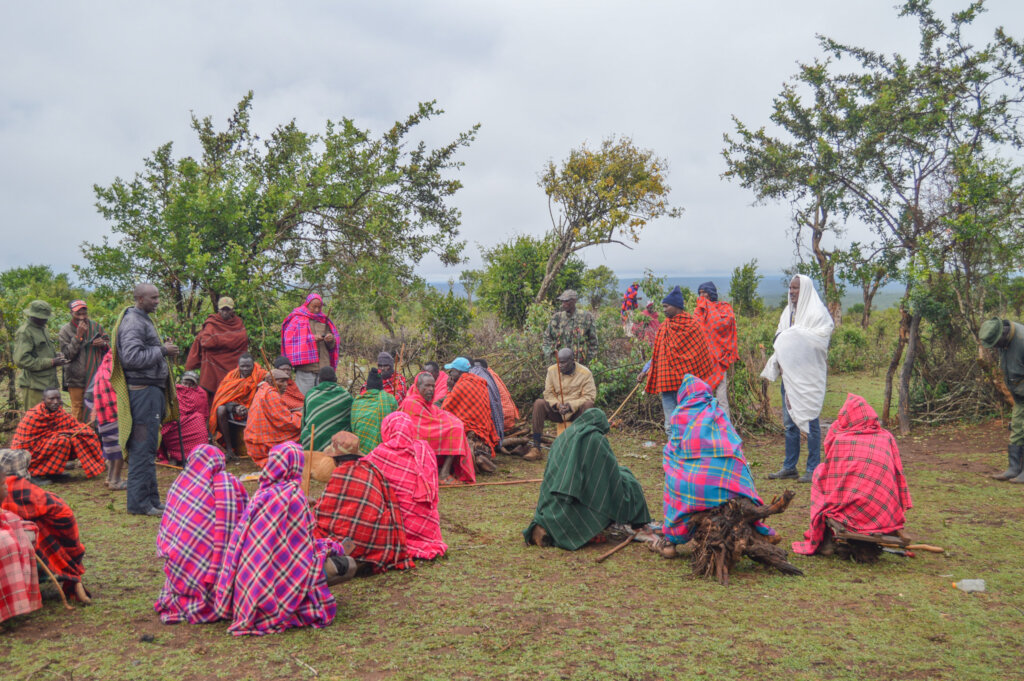
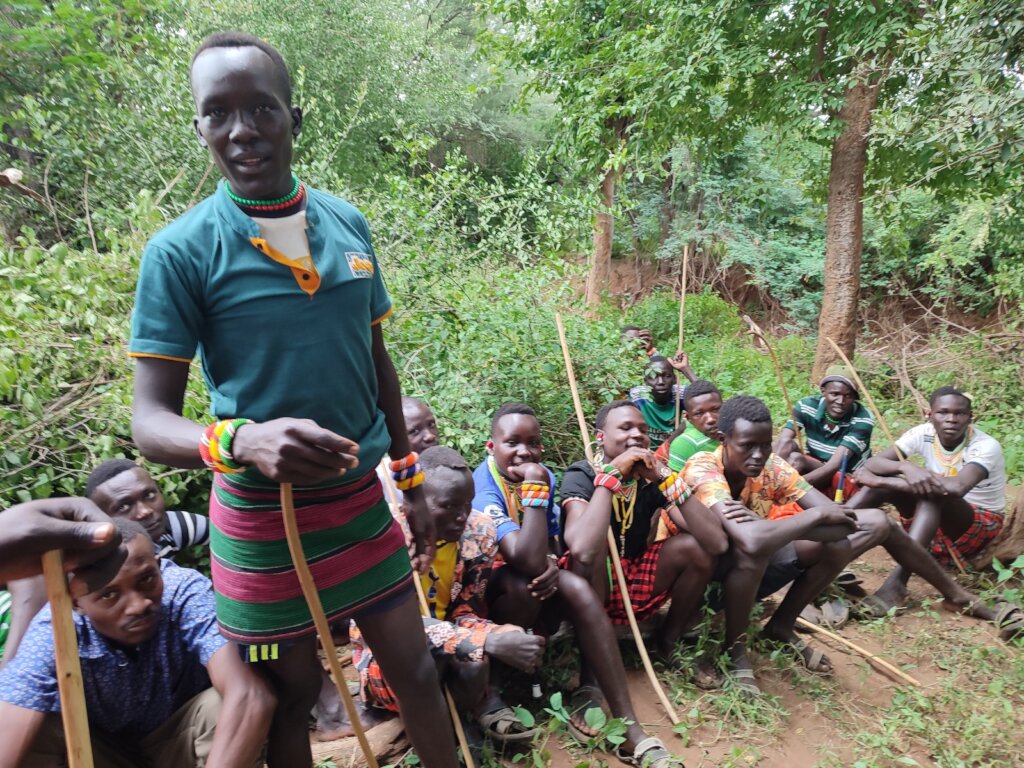
We used donations from our first 2022 appeal to organize two 3-day meetings for herders from the Pokot and Samburu tribes, on both sides of the tribal divide. We called these meetings “Fora Peace Outreach” and wanted to hear directly from herders, whose voice was rarely heard.
Over 300 warriors attended and used the fora camps to share experiences. It helped them realize that they were facing the same enemy in drought. They also agreed to share a corridor of rich arable land that was lying unused because of fighting.
Sadly, fighting erupted across Samburu County in 2023 and put an end to this promising initiative. It also became impossible for CPIK to work in safety. As a result, we took our model of peace-building to Baringo County, another highly strategic area, to work with the Pokot tribe and Ilchamus tribes. We are grateful to our German donor WFD for making this possible.
During 2023 and 2024 we organized peace camps for Ilchamus and Pokot children. But we did not forget about climate and in the summer of 2024 we launched this second appeal on GlobalGiving to hold peace outreach fora for the Ilchamus and Pokot. We were helped by Olivia, our 2024 Peace Fellow from AP, who described the camps in her blogs and also donated to the appeal. We are grateful to her and to AP, which put up $4,000 for the fora.
*
Altogether in 2024 CPIK organized peace outreach fora for over 200 warrior/herders in four frontline villages that have known tension in recent years: Kechi and Narukumo on the Pokot side, and Sirata and Kiserian on the Ilchamus. The main difference with 2022 was that the two tribes met separately. CPIK had been well known to the Pokot and Samburu after a decade of peace work. Here in Baringo we were all still feeling our way.
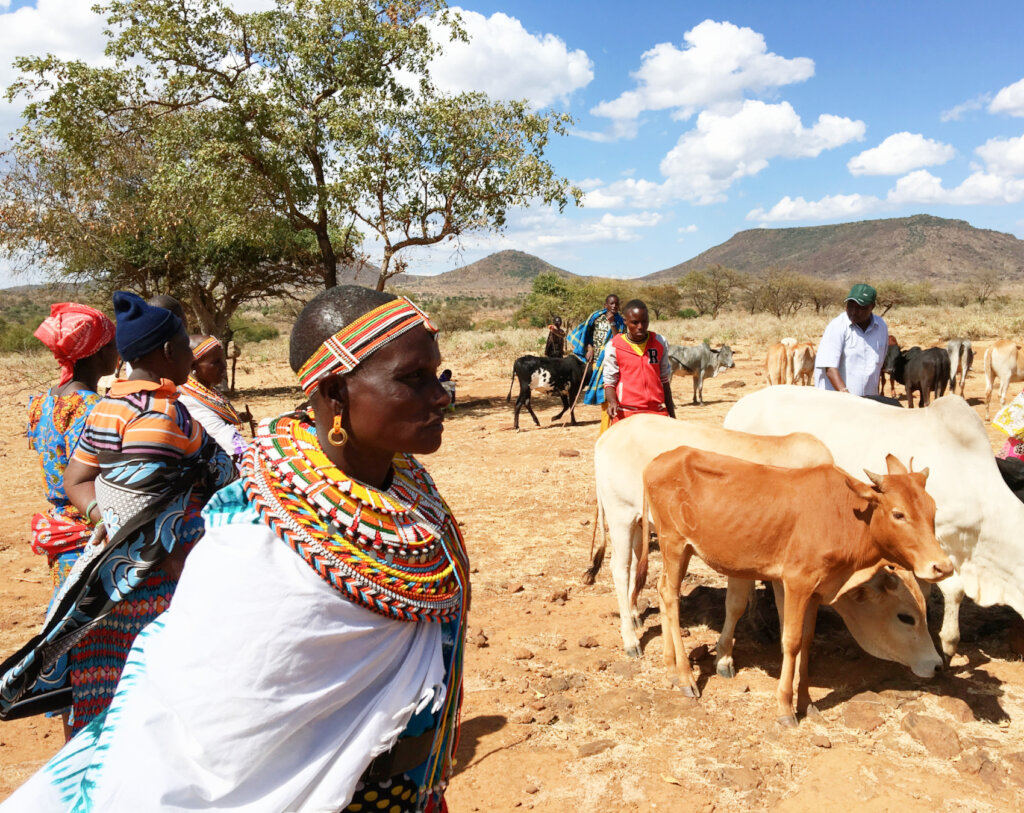
The fora gave us fascinating insights about the disastrous impact of drought, as seen through the eyes of the herders.
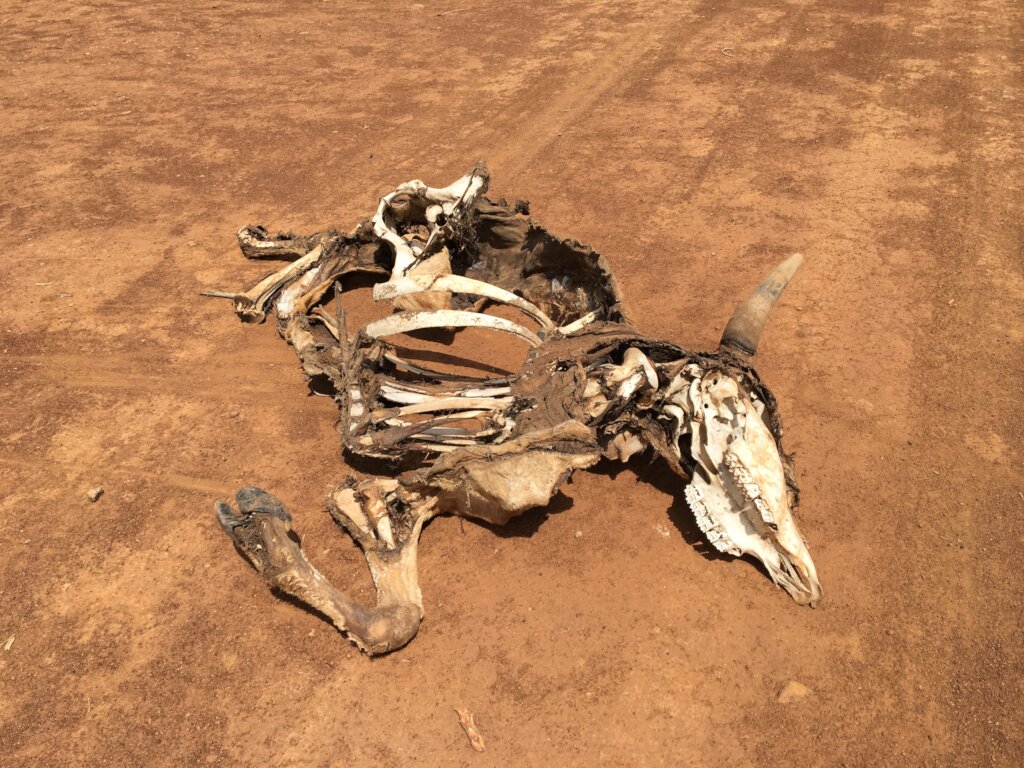
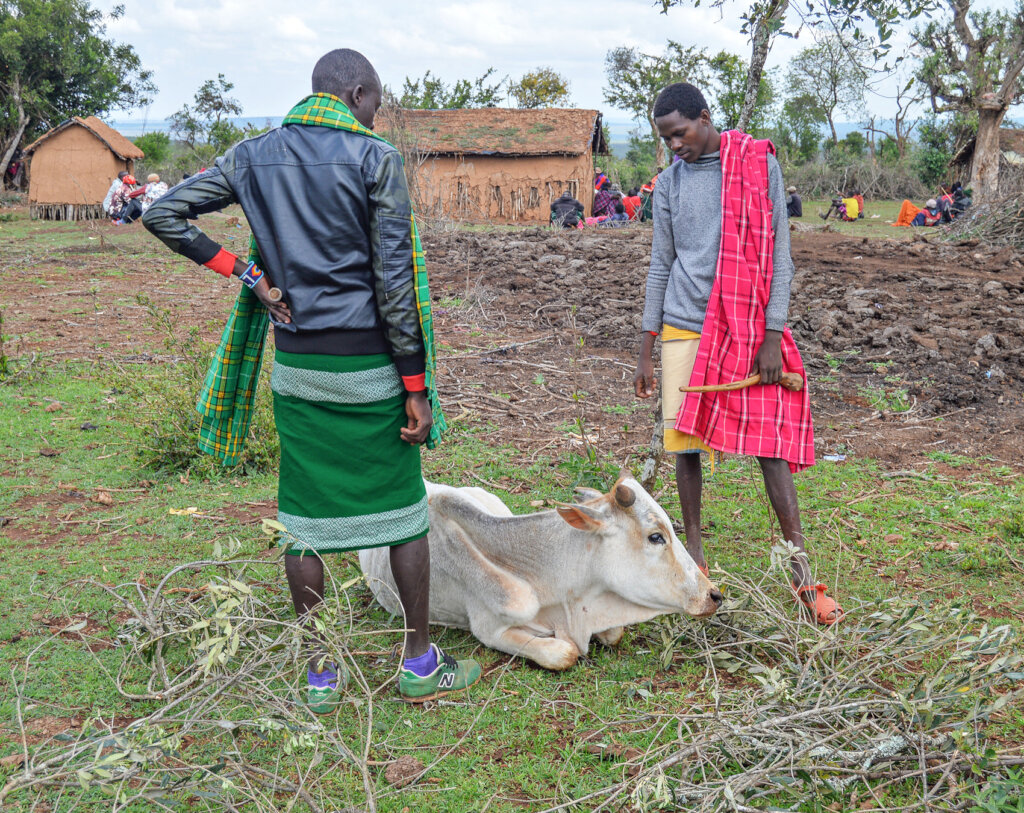
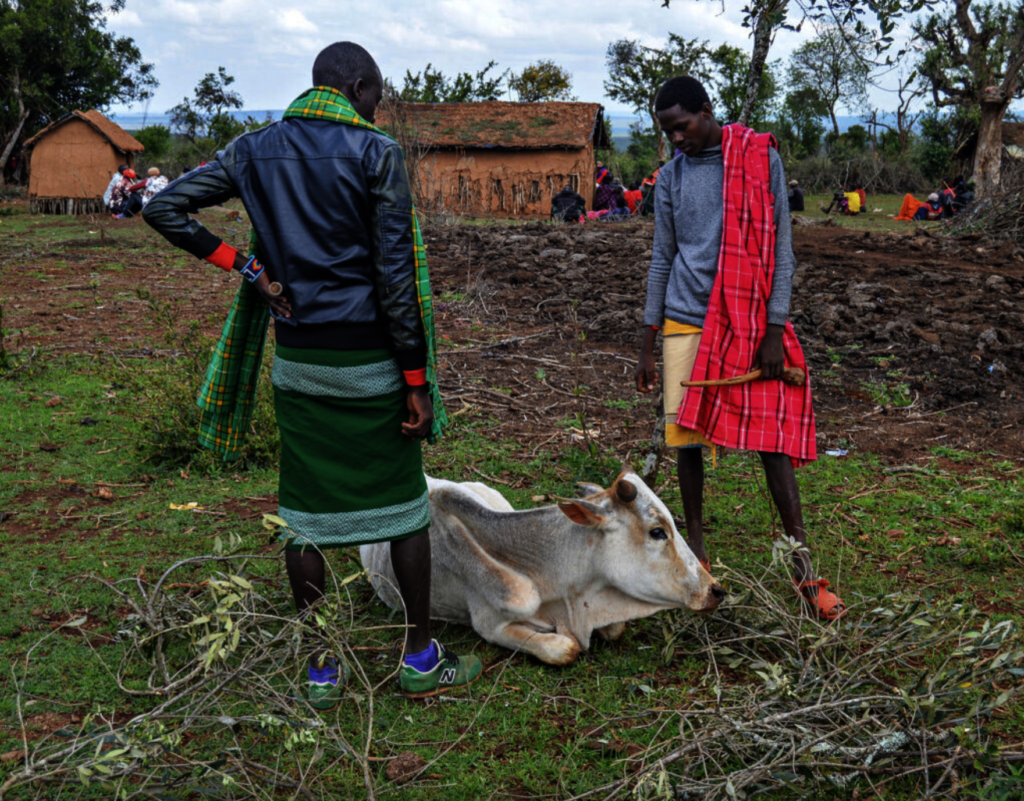
We heard that the changing weather patterns were destroying the environment, killing animals and changing human behavior. Most cows give birth at least ten times during their lives, but the rate was falling fast because cows were dying younger and producing fewer calves. Instead of mating with two heifers in a day, as they used to, bulls were so tired from their long trek that it only happened every few days. Herders were seeing more miscarriages, and cows were producing less milk. One casualty - the traditional mixture of blood and milk that has long been a staple food for pastoralists.
The crisis was changing human behavior in other ways. In one example, the construction of traditional houses was slowing because drought was killing off star grass, which is used in making thatches. Climate change was also thought to be one of the reasons for the serious flooding of Lake Baringo, which had displaced hundreds of Ilchamus families.
Even the heavens seemed to be taking note: the warriors reported that the movement of the sun and moon, which had allowed them to predict rains, appeared to have changed. Nor were they seeing the birds that had appeared before rains.
*
As well as laying out the problem, these eight fora camps in 2024 and 2025 have led to collaboration between area chiefs, who exercise great authority in the herder communities. This will benefit the environment and peace.
The fora are declared open by chiefs and as more chiefs get involved they are starting to view the fora as a way to reduce cattle raiding. Under one agreement, negotiated at a fora, visiting Pokot herders will carry letters from their chiefs stating the village they come from, their family, the number of cows in their herd and number of people herding the cows when they move into Ilchamus land. The Ilchamus chiefs have permission to turn away any herders from other areas.
By monitoring the movement of cattle and herders in this way they hope to prevent raiding. Elders and leaders who attended the peace outreach fora applauded this agreement because it extended their authority over herders in far-off villages where raiders originate.
This agreement would only succeed if chiefs could communicate, and this became easier when the telecommunication giant Safaricom installed new cell towers on the Pokot side which has suffered from terrible phone service. Here was another example of how peace will benefit the Pokot, who are widely viewed as aggressors by the other tribes and regularly denounced by the media. We take their enthusiastic participation in our peace outreach fora as another sign that they were looking for a peaceful approach.
The Pokot also benefited from a new government policy to recruit tribal herders into the National Police Reserve (NPR). As peacebuilders we dislike any measure that hands out guns to former warriors. But we can see that both sides are becoming more confident from knowing that they would be protected by their own police. The NPR has even suggested setting up secure camps near Lake Baringo for people who were displaced by the flooding.
*
None of this is easy. Resentment between the tribes goes back many years and it only takes a spark to light a fire. We were forced to cut short a “holiday exchange” for Pokot and Ilchamus children in July last year after a raid by Pokot in the area left two Ilchamus dead. Recent weeks have also seen several raids in the Tiaty corridor between the Pokot and Tugen tribes. We have not yet worked with the Tugen, but we have done a survey and found that the enrolment of children in schools is low. We would like to do more with this tribe.
At the same time, we can also see that our peacebuilding is starting to unite communities in Baringo County, as it did in Samburu County before 2023. We are also pleased to see other NGOs and INGOs moving back into eastern Baringo like World Vision, Interpeace, Midrift Hurinet and Action Aid Kenya which have traditionally viewed these areas as insecure. This new development indicates that the peace and security situation in the region has improved – with your help.
This newer work with climate is also reinforcing our traditional model, which brings children together from different tribes and starts to build friendships between whole communities. A village chief whose children have participated in a peace camp is more likely to accept a call from a chief from the other side and permit that chief’s cattle to graze on his tribe’s land.
One thing is clear: from now on climate will be integrated into our peacebuilding. One of our future goals is to help herders reduce their dependency on cows, which would also ease pressure on the environment. Pushed by drought, many herders are already turning to farming. We are also advising them to consider practical steps like harvesting and storing grass during the rainy season for use when their pastures are parched instead of taking their herds on the road.
All of this began in 2022 with an idea, an appeal on GlobalGiving, and an innovative start-up. It’s an example of how small donations can jumpstart a process that will eventually lead to social change – with a nudge from NGOs that listen to community leaders.
With thanks and appreciation.
Monica and the CPI team in Kenya
Project reports on GlobalGiving are posted directly to globalgiving.org by Project Leaders as they are completed, generally every 3-4 months. To protect the integrity of these documents, GlobalGiving does not alter them; therefore you may find some language or formatting issues.
If you donate to this project or have donated to this project, you can receive an email when this project posts a report. You can also subscribe for reports without donating.



Support this important cause by creating a personalized fundraising page.
Start a Fundraiser