Clean water for 1 new person every 10 seconds

by World Vision
Clean water for 1 new person every 10 seconds

Project Report | Sep 17, 2018
Global Water - Semiannual report

By Bernadette Martin | Corporate Engagement Manager

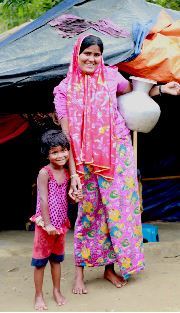
Nur and her daughter
In alignment with the U.N. Sustainable Development Goal 6 (SDG 6), World Vision’s WASH programming strategically focuses on universal and equitable WASH access. World Vision and our partners are committed to positively impacting the lives of millions through life-saving WASH services.
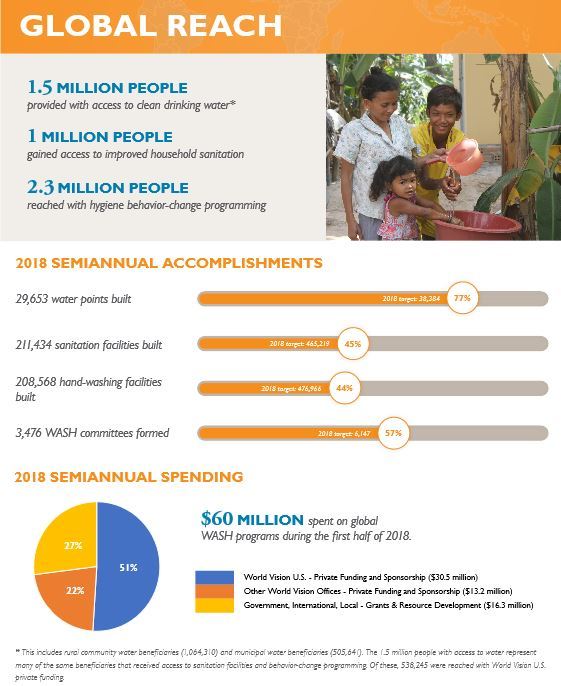
Fiscal year 2018 is a milestone year for the World Vision Global WASH Program. With this semiannual report, we reached the midpoint of our five-year commitment of serving 20 million people with water by 2020. We are thrilled and humbled to share we now have reached 10.4 million people with clean water since September 2015, including 1.5 million during the first half of FY18. This achievement was made possible because of your support.
 
Through our partnership, we helped provide communities in rural populations with sustainable water points, including hand pumps, mechanized solar-powered water systems, and spring protection systems. This approach was used to reach a total of 9.1 million people in 40 countries.
In response to our call to reach the most vulnerable, World Vision also is reaching many people in fragile states by rehabilitating municipal water systems. Since 2016, we reached 1.3 million people with municipal water in the Middle East region (see global achievements and municipal outcomes on Page 3).
As we enter into this next phase of our five-year goal, we also will work to deepen the impact of our sanitation and hygiene work. The preliminary results of our multicountry evaluation performed by the University of North Carolina Water Institute indicated the need for improved sanitation, hygiene, and microbial water quality at the household level, in schools, and in healthcare facilities.
Already, we are working to improve sanitation and hygiene programming. World Vision is increasing the capacity of our teams to conduct effective behavior change, including working with faith-based leaders and training children to serve as positive change agents in communities. Through our collaboration with Sesame Workshop, we continue to expand the WASH UP! program in more schools across 11 countries, and behavior-change efforts such as Community-Led Total Sanitation. As a result, 9,608 villages were certified as Open Defecation Free since 2015.
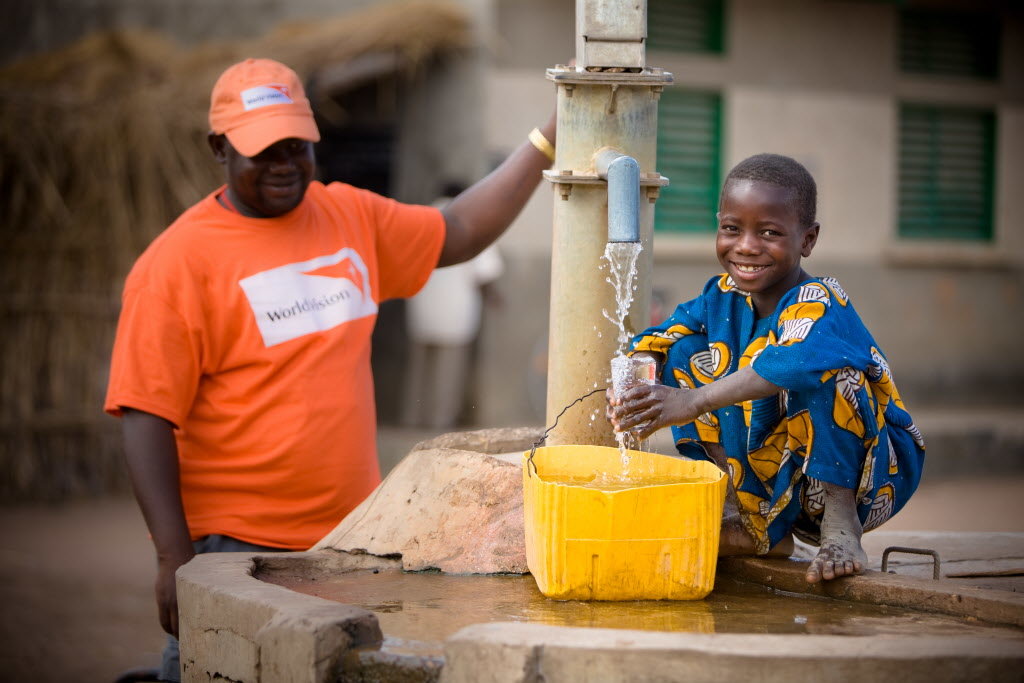
We celebrate these achievements, and for being on track to reach our 2030 goal of 50 million people. We do, however, realize our work is far from being done and is only possible with additional support. Our goal is audacious and requires partnering with communities, governments, the international development sector. Together, we will work to maintain our current rate of reaching one new person with clean water every 10 seconds (3.1 million people annually).
Through our Global WASH Program, we continue to work to bring quality, innovative, and adaptive programs, sharing what we learn along the way. World Vision will seek additional, and strengthen existing, partnerships to improve impact in our WASH programs. These strategies have proven to be effective, and have helped us achieve this milestone over the last 2.5 years. They also will help propel us toward reaching our 2030 goal.
As we work together, with everyone doing their part, we can achieve a world where everyone has access to clean water and safe sanitation and hygiene. Thank you for taking this journey with us.


IMPACT STORY: Dignity for Mothers

Of all her worries since escaping the violence in Myanmar, Nur (pictured left) is thankful that she no longer fears being sexually harassed while collecting water for her children.

Nur lives in a refugee camp in Bangladesh, and would walk 30 to 40 minutes just to collect water from a canal. She always went with a group of women for fear of being sexually assaulted. Some 5,617 cases of gender-based violence have been reported in

the refugee camps in Bangladesh since August 2017, according to a recent Inter-sector Coordination Group report. The risk of assault increased at night because of insufficient lighting in the refugee camps.

If Nur collected water during the day, she had to take her children, ages 2 and 7, with her on the long walk in the hot sun. Her husband could not stay with them because he had to line up for food and other relief items being distributed in the camp. “There have been stories of children being kidnapped, so I couldn’t leave them alone in our tent,” said Nur. “I didn’t mind if I had to keep going back to get more water, as long as I was sure that my children were safe.” Sadly, the contaminated canal water made Nur’s whole family sick. Her children, and her husband often suffered from diarrhea.

Now with clean water just a stone’s throw away from their tent, Nur is at peace. She doesn’t have to worry about her children contracting waterborne diseases, or for their personal safety. “This water pump means a lot to me and my neighbors,” she shared, referring to the deep tube well that World Vision, in partnership with UNICEF, installed near her tent. It is one of 54 deep tube wells that provide clean, safe water to 54,000 refugees.

Nur’s daughter, Jannat, 7, likes the new well, too. “Now I can drink as much water as I want without having to walk far with my mother to get more. I have more time to play and I don’t have to walk in the hot sun.” Jannat even helps her mother by collecting water with her own small bucket.

To help more families, World Vision recently received a $1.7 million grant from UNICEF to install 56 additional wells and construct 1,850 latrines, as well as safe bathing spaces for women and girls. The one-year project will benefit 1.2 million people in the refugee camps and surrounding communities in Bangladesh.


Share on Twitter Share on Facebook

Jun 20, 2018
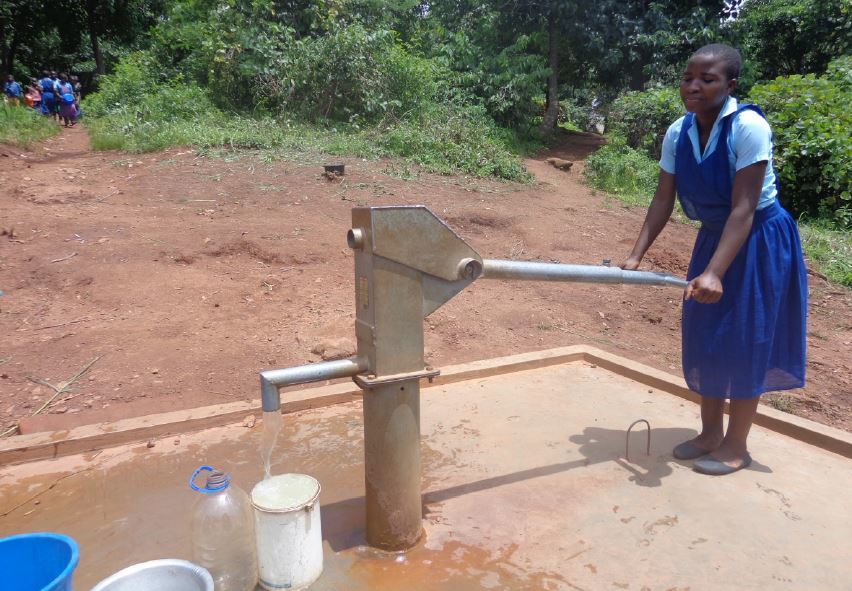
Clean Water Sends Children Back To School

By Paul Nkhata | Donor Liaison, World Vision Malawi

Mar 29, 2018
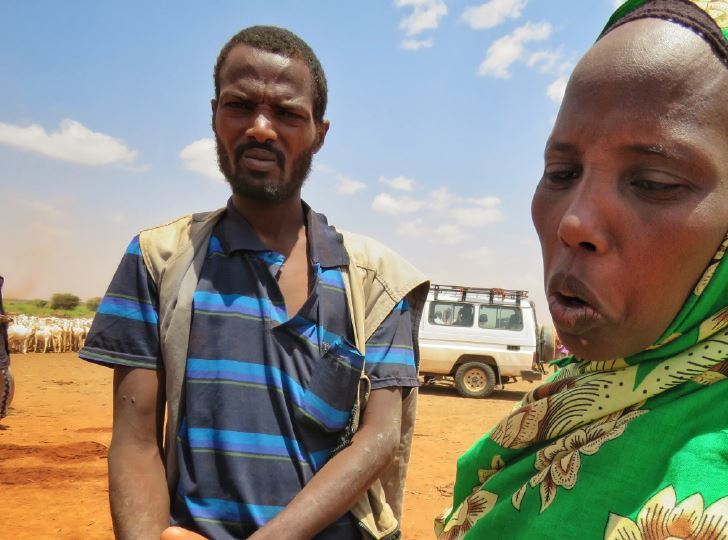
A Place of Hope in the Dry Land

By Justus Koech | Donor Liaison, World Vision Kenya

About Project Reports

Project reports on GlobalGiving are posted directly to globalgiving.org by Project Leaders as they are completed, generally every 3-4 months. To protect the integrity of these documents, GlobalGiving does not alter them; therefore you may find some language or formatting issues.

If you donate to this project or have donated to this project, you can receive an email when this project posts a report. You can also subscribe for reports without donating.

Sign up for updates

Organization Information

World Vision

Location: Federal Way, WA - USA
Website:
World Vision
Bernadette Martin
Project Leader:
Bernadette Martin
Federal Way , WA United States

Funded Project!

Combined with other sources of funding, this project raised enough money to fund the outlined activities and is no longer accepting donations.
   

Still want to help?

Find another project in Kenya or in Physical Health that needs your help.
Find a Project

Learn more about GlobalGiving

Teenage Science Students
Vetting +
Due Diligence

Snorkeler
Our
Impact

Woman Holding a Gift Card
Give
Gift Cards

Young Girl with a Bicycle
GlobalGiving
Guarantee

Get incredible stories, promotions, and matching offers in your inbox

WARNING: Javascript is currently disabled or is not available in your browser. GlobalGiving makes extensive use of Javascript and will not function properly with Javascript disabled. Please enable Javascript and refresh this page.