By Sheila Havard | Children of Bududa International Coordinator
Returning to Bududa after an absence of many months is always a joyous occasion for the regular volunteers. Much is familiar: the dust or the mud, depending on the season, the guesthouse with its fabulous view of the surrounding mountains, and the welcoming hug of Justine, our House Director.
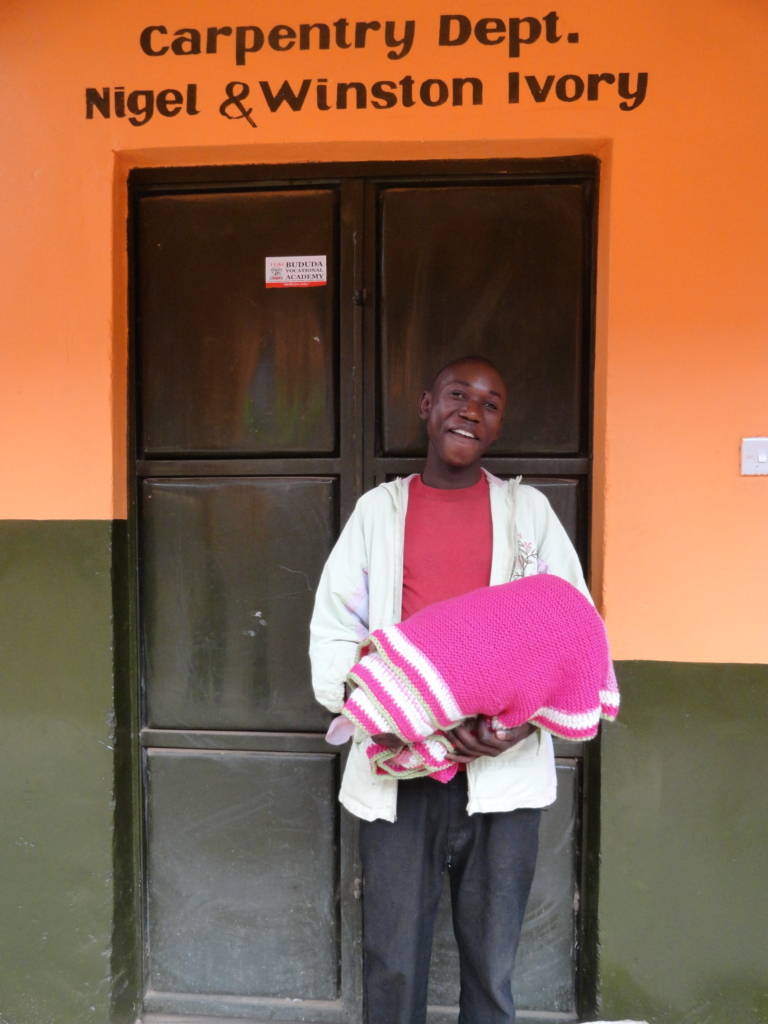
But there are always surprises in store, good ones and bad ones. A sullen teenager in the program has metamorphosed into a charming young man. See the photo of Kuloba Ivan, the proud recipient of a new blanket. Ivan is now studying at the Bududa Vocational Academy. Undaunted by the fact that he did not yet have the mandatory pair of shoes, he attended school on the first day wearing a borrowed pair! On the other hand, to our consternation, we find that a pitifully sad looking youngster has been evicted from a temporary home and is being housed by yet another reluctant caregiver.
This article will give some idea of the multitude of problems over which Western volunteers and Bududa staff scratch their heads. One frequent issue is the unstable home life of many of our orphans and needy children. In addition, home visits sometimes reveal not just abject poverty but also abusive parents. Furthermore, in an area of tiny smallholdings, on which peasants scratch out a meagre living, land is a vital commodity and the frequent land disputes complicate matters. In all such seemingly intractable issues, the Western volunteers would be completely at sea for an answer were it not for the insightful advice of our Bududa staff, especially Social Worker Nanzala Martha and Program Director Namyeka Grace, who make sense of the cultural context for us.
Some concrete examples illustrate these dilemmas: Musosi John was a young primary school student when I first got to know him over 10 years ago. His mother was mentally deficient and his father drank. Luckily, he obtained caring sponsors. For the first time somebody paid attention to him. He was even fitted out with a brand-new outfit. The Children of Bududa program followed up on him over the years and he has now graduated from the program.
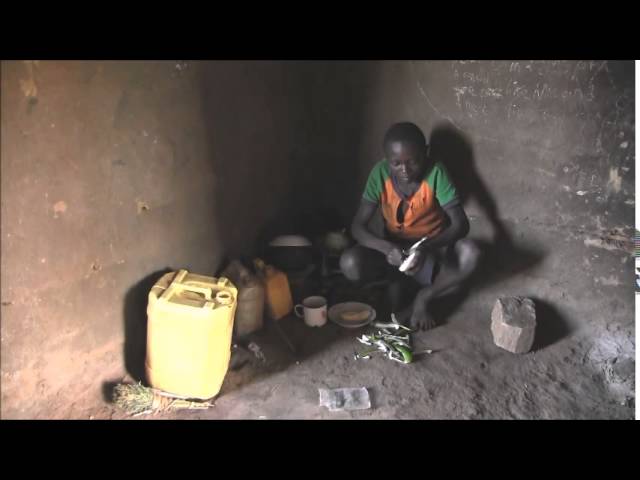
Being shunted around from household to household is unfortunately the common lot of many of our orphans and needy children. Such was the fate of Wakabona Wilson. At the beginning of this year, he was living with an 82-year-old granny on the hillside, who can hardly walk. She felt overwhelmed by the responsibility and did not have enough food for both of them. The sponsor was appealed to and was kind-hearted enough to provide the funds for Wilson to attend boarding school. We manage to send a number of our children to boarding schools. These schools vary enormously in academic quality and fees charged, but all provide the students with supervision and a regular schedule, as well as a Spartan lifestyle – cornmeal porridge three times a day and three-tiered bunks are the norm. A boarding school provides a better learning environment than a small crowded home, where students contend with the distractions of other siblings and assigned chores and have only a smoky paraffin “candle” by way of light.
Of course we ensure that we investigate the wishes of the potential boarding student before making a decision. That too can be difficult as local kids have been brought up to be obedient and submissive. It is hard for an adult in a position of authority to draw them out. What real feelings are hidden behind the downcast eyes and few mumbled words? Although sometimes a little gentle persuasion is in order, boarding school is often an option that is eagerly accepted by our children; for one thing it is a means of escaping from the drudgery of household and farm chores.
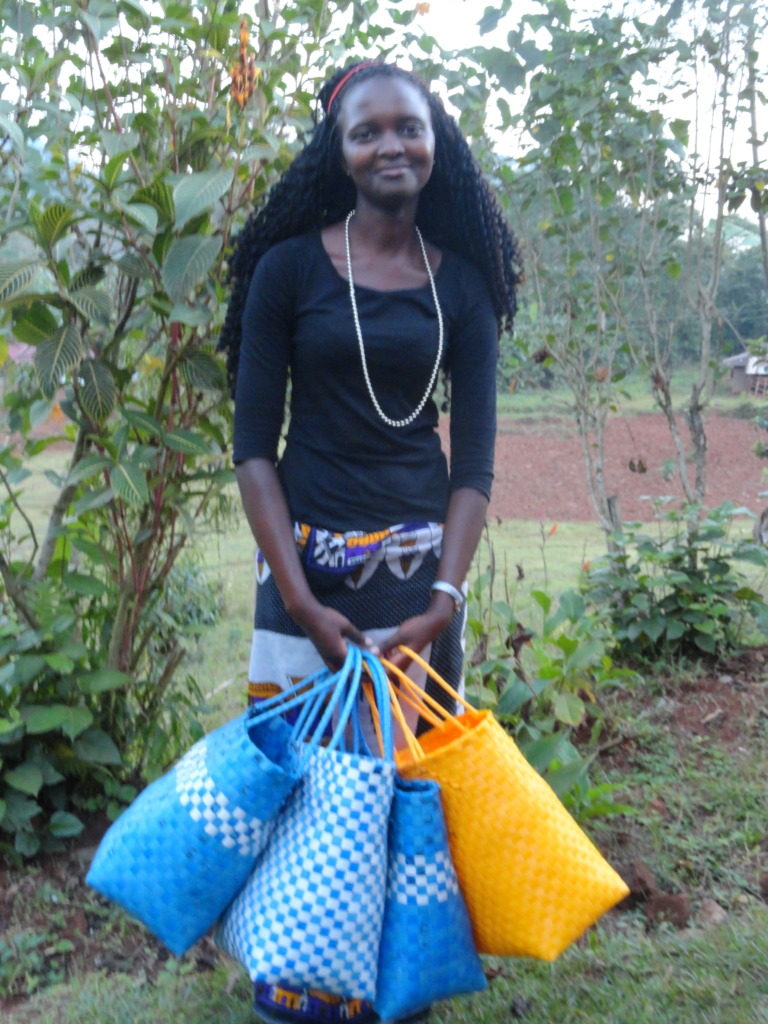
Kimono Harriet (see photo) was lucky enough to go to boarding school. With the help of the program she has pulled herself up by her boot strings and started a small business selling baskets. It is always rewarding to see such initiative.
If the home situation is untenable, it is sometimes possible to find an alternative caregiver. This provides the child with a more settled home environment, but sometimes creates new problems. Careful monitoring by program staff is essential to ensure that the new and the existing children in the family are treated equally. On occasion the new caregiver will complain that the allowance paid to board and feed the foster child is insufficient. There has even been a case of abuse in a foster home and the young girl in question was removed from this unsatisfactory accommodation and placed in a boarding school. According to the latest news, she is doing well there.
Kutosi Isaac has the benefit of a stable home environment. His problems reside elsewhere. When I first got to know this cheerful youngster, he was living entirely alone in a tumbledown hut to which he had no legal title. In fact his brothers also had a claim to the house and “wrangles” took place between them and Isaac. Western well-wishers pooled funds to build him a brand-new home. Isaac is now a proud home owner, who keeps his dwelling tidy and has even decorated it with CD tapes dangling from the ceiling. However, his neighbours encroach on the tiny parcel of land on which he tries to grow crops to support himself. The program has brought in the local authorities to mediate but there are still disputes. To ensure that he gets enough to eat, the program regularly provides him with cornmeal and sometimes beans.
Isaac would like to pass his Primary 7 examinations and graduate from elementary school, and Bududa Learning Centre Assistant Director Kimberly Beebe is spending many an evening on the guesthouse terrace tutoring him in the subjects he needs to master. His disadvantaged background has hitherto held him back at school, but he is nevertheless an eager pupil.
These then are some of the problems Children of Bududa staff and volunteers find themselves confronting. Some solutions are as simple and relatively inexpensive as supplying additional food; others may entail lengthy negotiations with multiple parties and even the involvement of the local authorities, not to mention considerable expense and hence an appeal for supplementary funding. In all cases it is the needs of the child in question that are paramount. But the rewards come as we see children grow up, progress from primary to secondary school, or perhaps enter and graduate from the Bududa Vocational Academy, and become established in life with a marketable skill.
Links:
Project reports on GlobalGiving are posted directly to globalgiving.org by Project Leaders as they are completed, generally every 3-4 months. To protect the integrity of these documents, GlobalGiving does not alter them; therefore you may find some language or formatting issues.
If you donate to this project or have donated to this project, you can receive an email when this project posts a report. You can also subscribe for reports without donating.