By Cindy Streett | Board of Directors Chair
More than 25 years ago, a group of people in Durham had a vision. They wanted to create a place where families with children who were experiencing homelessness could find shelter and resources to help them regain their independence. On February 1, 1989, that group succeeded in opening the doors of Genesis Home to families in need.
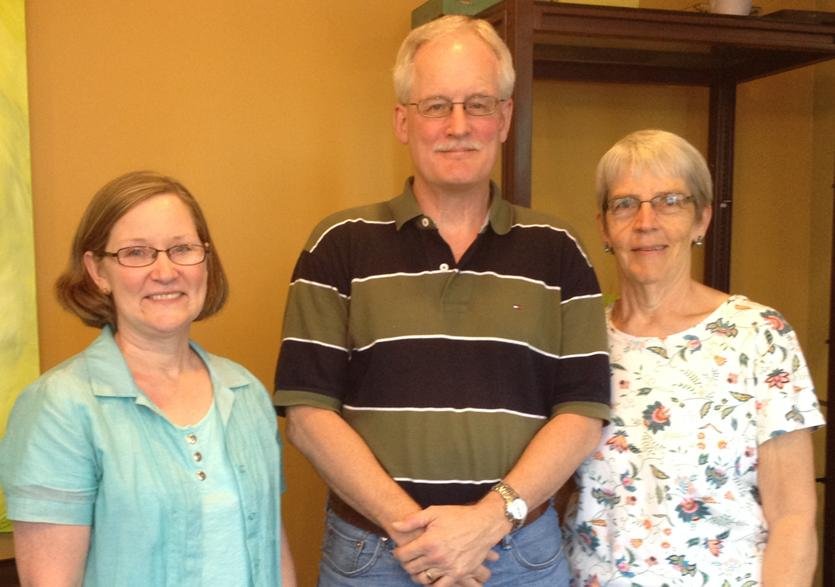
I had the opportunity to sit down with two people from that original group who also served on the first Board of Directors: Bob Jackson, an IT manager in the Department of Sociology at Duke University, and Nancy Rosebaugh, a nurse practitioner at Croasdaile Village. The following is an excerpt of our conversation as they shared their memories of Genesis Home’s beginnings and their thoughts on our progress throughout the past 25 years.
Cindy: You both were there from the beginning, and I think you had a lot to do with getting Genesis Home started.
Nancy: There was a whole group of people. It was a constantly evolving and growing group of folks who were interested and committed.
Cindy: What made you decide that we needed a family-oriented site?
Nancy: I worked for the Durham Presbyterian Council, which was a consortium of all the Presbyterian churches in Durham that wanted to do ministry together. I would receive people who came in asking for whatever kind of help they needed. I encountered people who were moving to Durham for work because they heard it was a great place to live and there were jobs. There were also people who were very poor—chronically poor—who had to leave wherever they had lived. They came to us for help, but there was nothing we could do for a family with children who had no place to stay.
I couldn’t sleep at night thinking about how to help these folks. We started talking about it at First Presbyterian and the Council, then we took it to Durham Congregations in Action (DCIA) with the help of Joe Harvard who was the minister of First Presbyterian at the time. That was my motivation: I was trying to figure out how I could sleep at night.
Bob: In the mid ‘80s, Watts Street Baptist Church had set up an overnight women’s shelter that functioned for about four years. We’d go downtown every night and pick up whoever was outside the courthouse. That could be two, three, four, five women. We’d bring them back, give them a meal and a place to take a shower, and they’d sleep overnight there. Then the next morning, we’d take them back downtown. In the course of doing this, we became very aware that families were being affected by homelessness as well. Bob McClernon (the pastor at Watts Street Baptist Church) made me aware of what DCIA was doing with the committee for a family shelter. I joined their group and started meeting with them.
Nancy: I do remember [that getting the house donated to us] was the catalyst. Everybody said, “You could’ve done this from scratch and spent less money.” But I’m not sure we could’ve raised the money for a “from scratch” project. We got the house and the land donated…people mobilized and gave money to complete the facility and start the program. It was really a hand-to-mouth existence. We moved the house without having all the money to pay the house mover. Every time we reached a place where we had no more money, we started another process of reaching out. We went to the United Way, and we were accepted as a member organization. We went to the Self Help Credit Union for a construction loan. Throughout each of these steps, we had to develop our structure as an organization with a little more sophistication. We had to apply for nonprofit status and set up a board of directors and bylaws and find a financial auditor —all the things that an organization needs to survive. Before the house was donated, we were just a committee that kept meeting and saying, “What can we do?”
Bob: At first DCIA was ]our umbrella organization. At a certain point, I think we felt it was important for our project to go out on its own. None of us had done this kind of work before. We were just figuring it out as we went along.
Cindy: How many families were able to stay at Genesis Home at the beginning?
Bob: It was 4 or 5, depending on how many people were in each family.
Nancy: I remember the first night that Barry Greever (Genesis Home’s first executive director) was staying in the home with the residents. Arabella Meadows-Rogers (a Board member at the time) went to the grocery store and came back with supplies to cook supper and breakfast—what a leap of faith!
Cindy: Do you recall any of the families or any stories of families who were residents back then?
Bob: One story I remember that was very poignant is from the year I was president of the board. There was a family who had experienced a SIDS death while at Genesis Home. That was a very sad occasion. It was just very difficult to go through. Maybe 15 years later, I was over at the house for a volunteer event, and there was a young woman there to volunteer. She was a teenager—probably 16 or 17. She said, “My sister died in that corner room.” She was a member of that family. I remember her pointing to the room and telling me that.
Cindy: Fifteen families can be housed at a time now. We’re always full. If we have one moving out, we have another one ready to move in. I’m curious to know—was it always full back then, or did you ever have any open slots?
Bob: There were openings at times, but it stayed mostly full. I remember a couple of instances when we had families where there was some issue with a husband, and he had to be sent out of the house but the rest of the family remained. He might have been a drug user or there were issues that had arisen during their stay. I can remember some of those guys would set up a tent in the woods beside the house and actually stay there.
Cindy: When you first started this 25+ years ago, did you think that it would go for 25 years? What were your expectations?
Nancy: I certainly hoped that it would. I don’t imagine homelessness will ever be gone. One great thing about working on this project was that nobody ever said, “Why do we need that?” Everyone appreciated that it was something that was needed, desperately needed, and they wanted to be part of it.
Cindy: Is there anything you would like to say to all the donors, volunteers, and staff who have helped over the last 25 years to make Genesis Home what it is?
Nancy: Thank you for making our dream come true! There’s no better investment than in the future of children and their families.
Bob: Keep the faith. I’m just amazed that Genesis Home has lasted this long and remained healthy and such an integral part of the community.
Cindy: Thank you both for your contributions. There wouldn’t be a Genesis Home without you. I know there were many other people so when I say thank you, I’m saying it to everyone who was involved. There’s a lot more work to do. It isn’t over.
Nancy: That is how it goes in this business. We’re grateful for the folks who come after us and pick up whatever needs doing next.
Bob: The work is never done.
Project reports on GlobalGiving are posted directly to globalgiving.org by Project Leaders as they are completed, generally every 3-4 months. To protect the integrity of these documents, GlobalGiving does not alter them; therefore you may find some language or formatting issues.
If you donate to this project or have donated to this project, you can receive an email when this project posts a report. You can also subscribe for reports without donating.