By Sandra Dubpernell | Central Puget Sound MMSN Co-Coordinator
Historic Orca Calf Remains are New Display for the Langley Whale Center
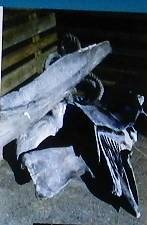
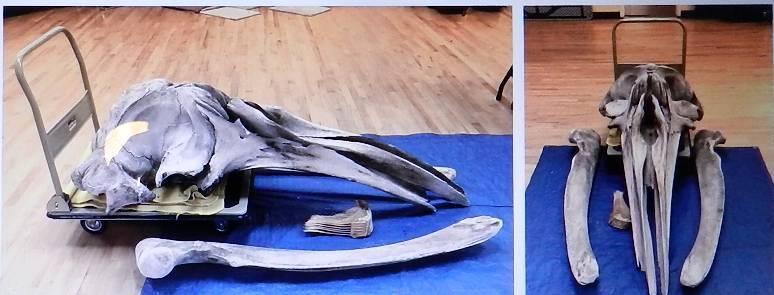
There was a very special addition to our Langley Whale Center last month- the partial skull of an orca calf. What makes this skull so special to all orca lovers on the island is its history.
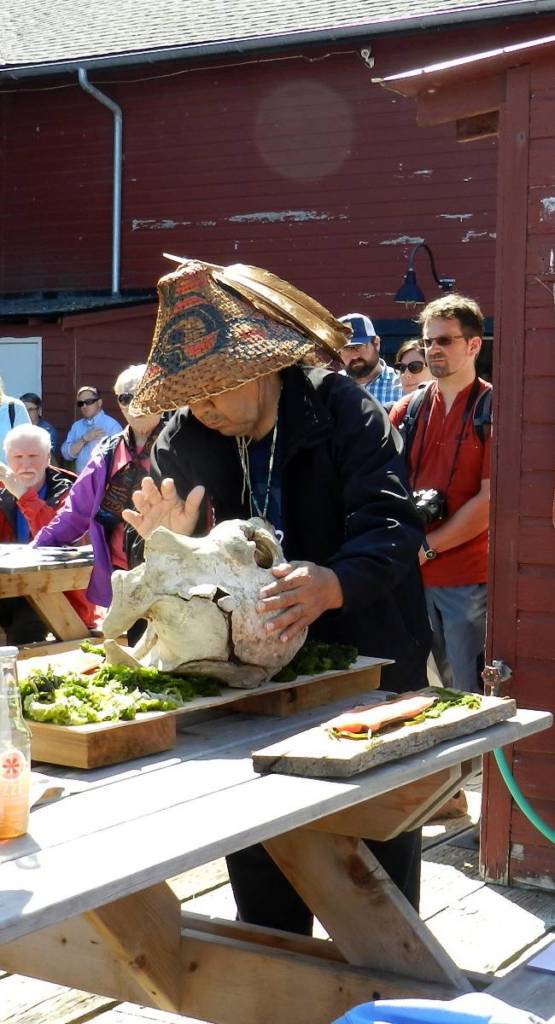
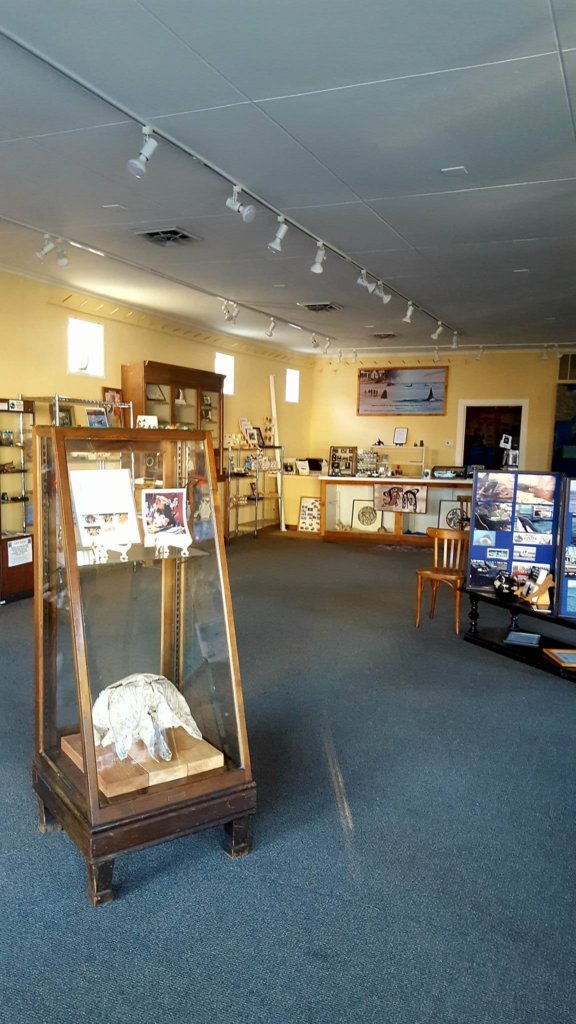
On August 8, 1970 entire families of orca were herded into Penn Cove by men intending to capture young calves for the marine park industry. During the brutal capture procedure several calves died. Their bodies were slit open, filled with rocks and sunk, hoping they would never be found. But months after the capture a partial skull of one of the calves washed up on the beach close to the capture site and was collected and stored by a Coupeville resident. This skull was donated to Orca Network, via a volunteer related to the person who found it, and it now is part of our NOAA Fisheries registered marine mammal specimen collection. After reconstruction by experts at the Burke Museum in Seattle, the skull was blessed during a healing ceremony on Penn Cove by Samish Tribal Elders for whom the orca is an integral part of their heritage. The orca calf skull, or remains, is now on display in a glass case in the Langley Whale Center with information about the Penn Cove orca captures, and will be surrounded by a dried seaweed wreath per instructions from the Samish Elders, to keep it connected to the ocean world.
This new display is very timely, as our Langley Whale Center just moved to a larger building in early October, so we have 500 additional square feet of display space! Along with the orca calf skull, there will be two other fine new additions to the Whale Center now that we have moved to a larger venue: a 6 foot long gray whale skull and a 10 foot long fin whale skull are on their way.
Thanks to your generous donations, the Langley Whale Center is quickly becoming a first class little museum and education center for marine mammals and is attracting thousands of visitors each year, educating them about the work being done by the Central Puget Sound Marine Mammal Stranding Network and Orca Network's other programs.
Harbor Porpoise Problems Continue
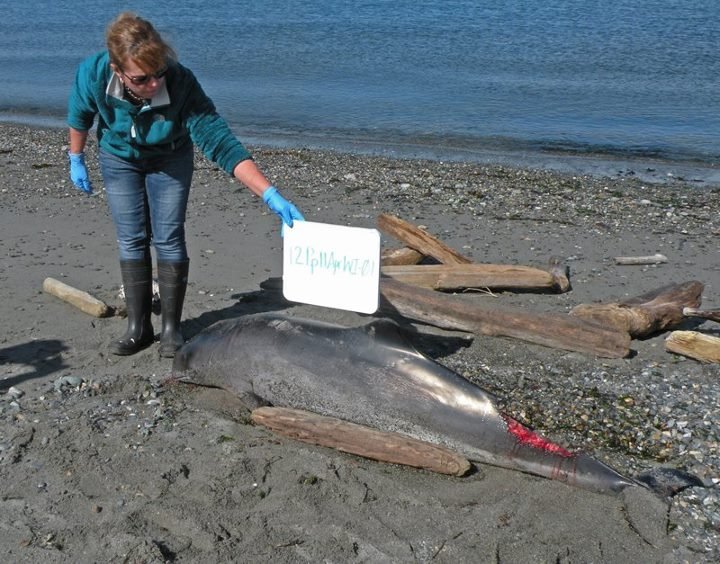
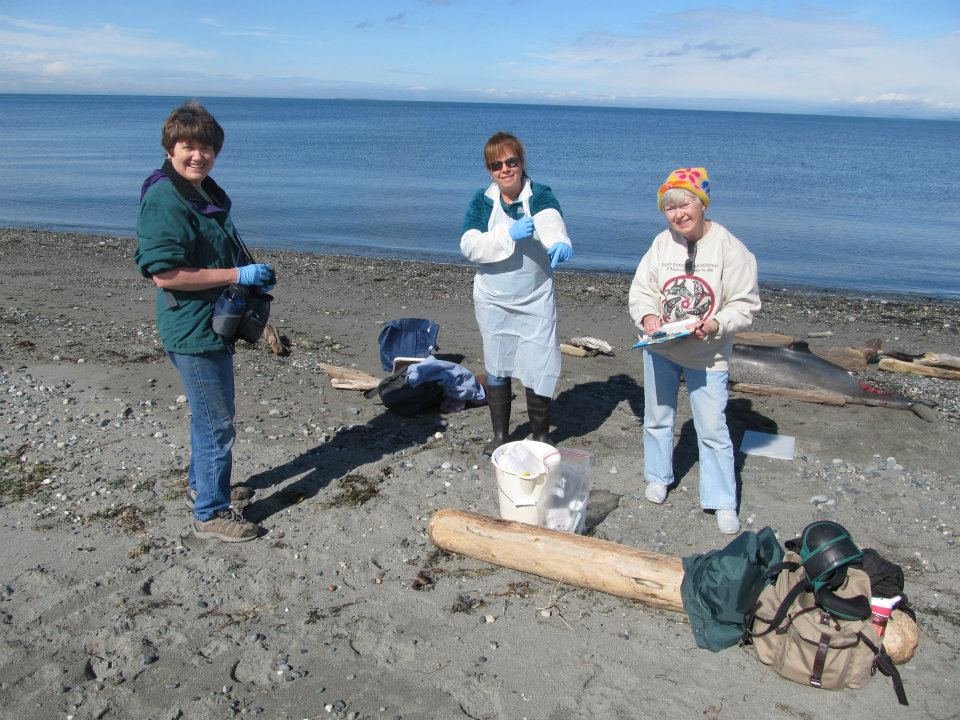
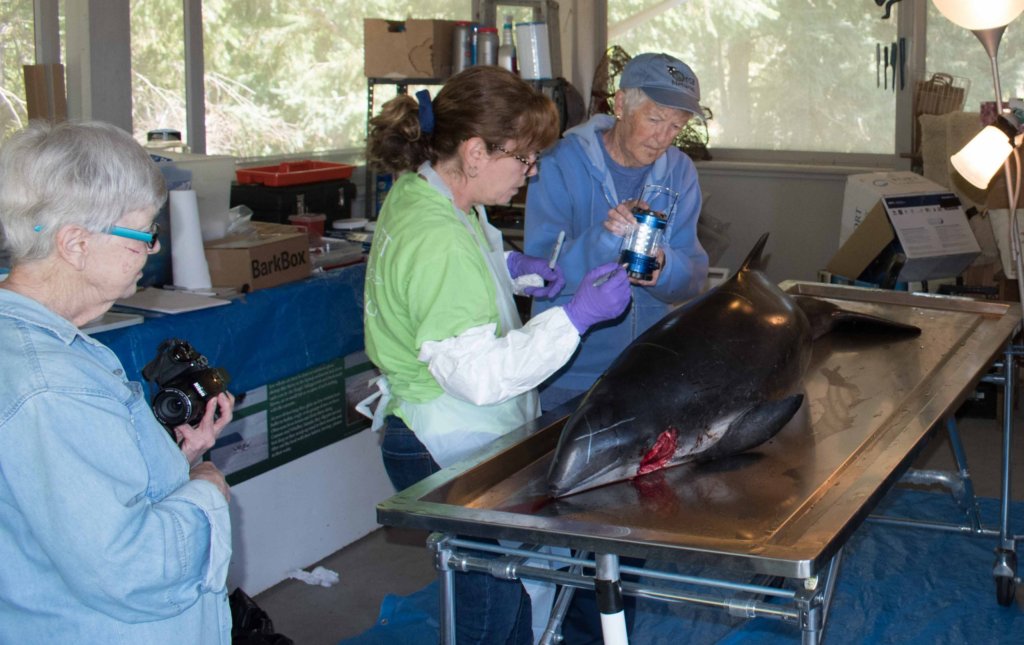
Four recent necropsies of harbor porpoises have revealed infections, from possibly previously unknown organisms. One porpoise, in addition to exhibiting signs of gill net entanglement, was diagnosed with a protozoal infection, mostly consistent with toxoplasmosis. Additional testing is needed to further characterize the protozoan. Toxoplasmosis can infect humans and is found in uncooked meat, contaminated water and in cat feces (recall the warnings about being careful when cleaning out cat litter pans).
A second porpoise died of an unidentified lung infection, plus had an infestation of nematodes (worms found in raw fish), and also many parasitic liver flukes.
Two other porpoises exhibited a fungal infection believed to be caused by a member of the mucormycetes group – molds that live in the soil in decaying matter. They can cause infection through breathing in of their spores or entry through a break in the skin of both humans and marine mammals.
Tissue samples have been sent to several laboratories for further, more specific, identification of the mold with no success. Our veterinarian, Dr. Stephanie Norman is in the process of obtaining a CITES* permit for submission of samples to a marine mammal Microbiologist expert in the UK for further identification. It is suspected that this mold may be a new species.
Many thanks for your generous donations that help us to obtain more information on what is causing these ever increasing illnesses in our beloved harbor porpoises in Puget Sound. The information learned from Harbor porpoise necropsies is also of importance to the health of endangered Southern Resident orcas in our region, one of NOAA's "Species in the Spotlight" (the most critically endangered species in the country). In fact, one of the recent orca deaths was contributed to the same fungal infection found in several porpoises we have necropsied. So continuing to investigate the health of porpoises will ultimately reveal key insights into the health of our endangered orcas as well.
* Convention of International Trade in Endangered Species
Links:
Project reports on GlobalGiving are posted directly to globalgiving.org by Project Leaders as they are completed, generally every 3-4 months. To protect the integrity of these documents, GlobalGiving does not alter them; therefore you may find some language or formatting issues.
If you donate to this project or have donated to this project, you can receive an email when this project posts a report. You can also subscribe for reports without donating.