By Sandra Dubpernell & Susan Berta | Stranding Network Coordinators
Christmas came early to Orca Network's Langley Whale Center on Whidbey Island, WA!
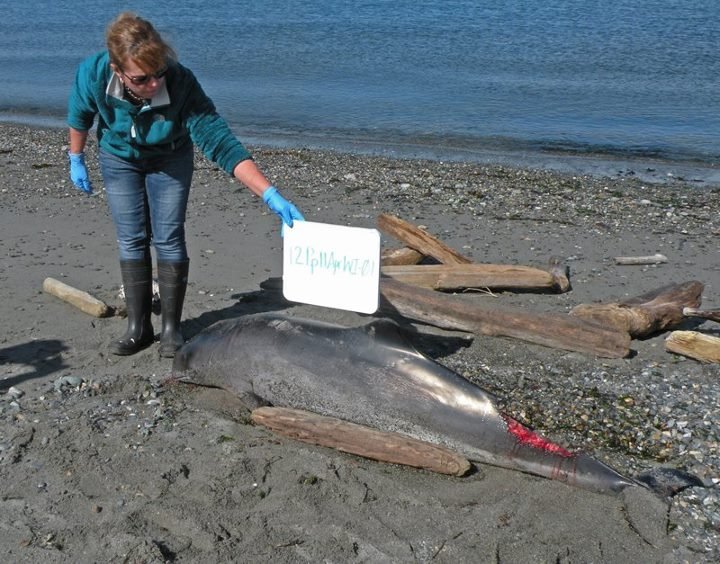
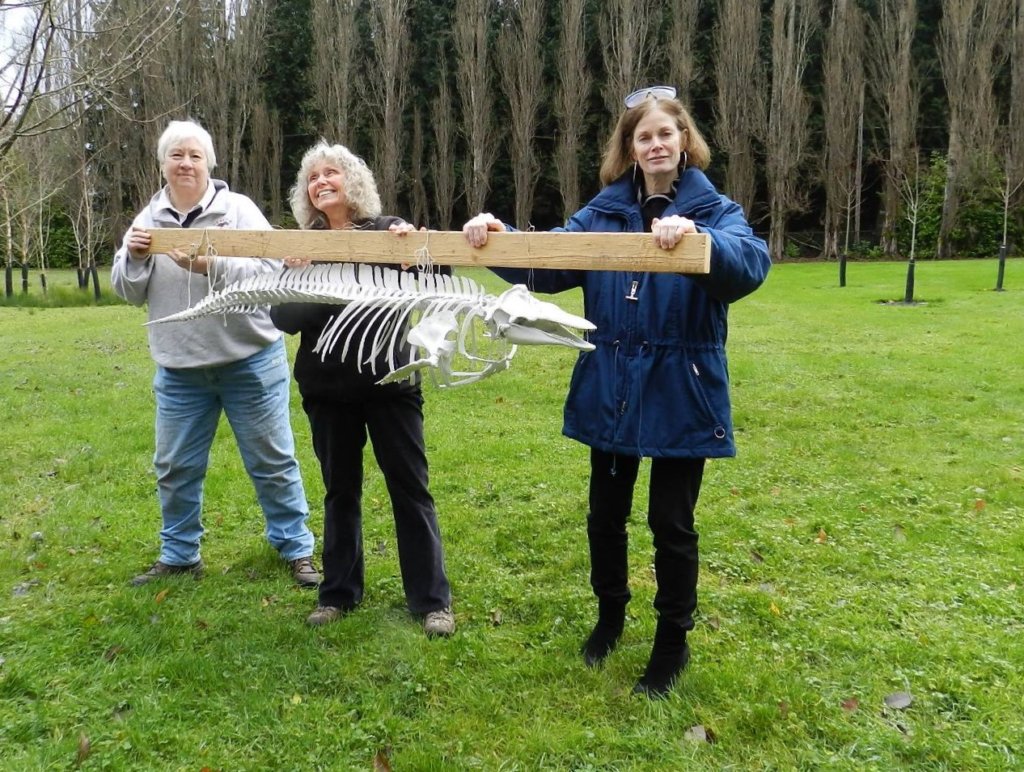
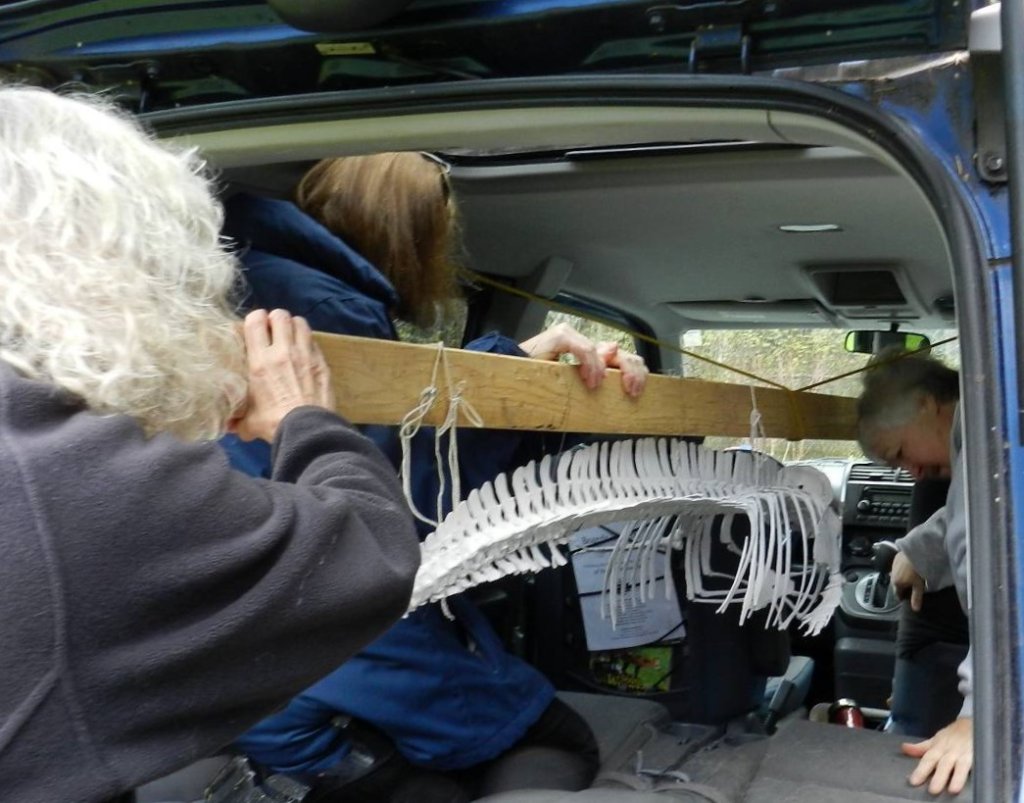
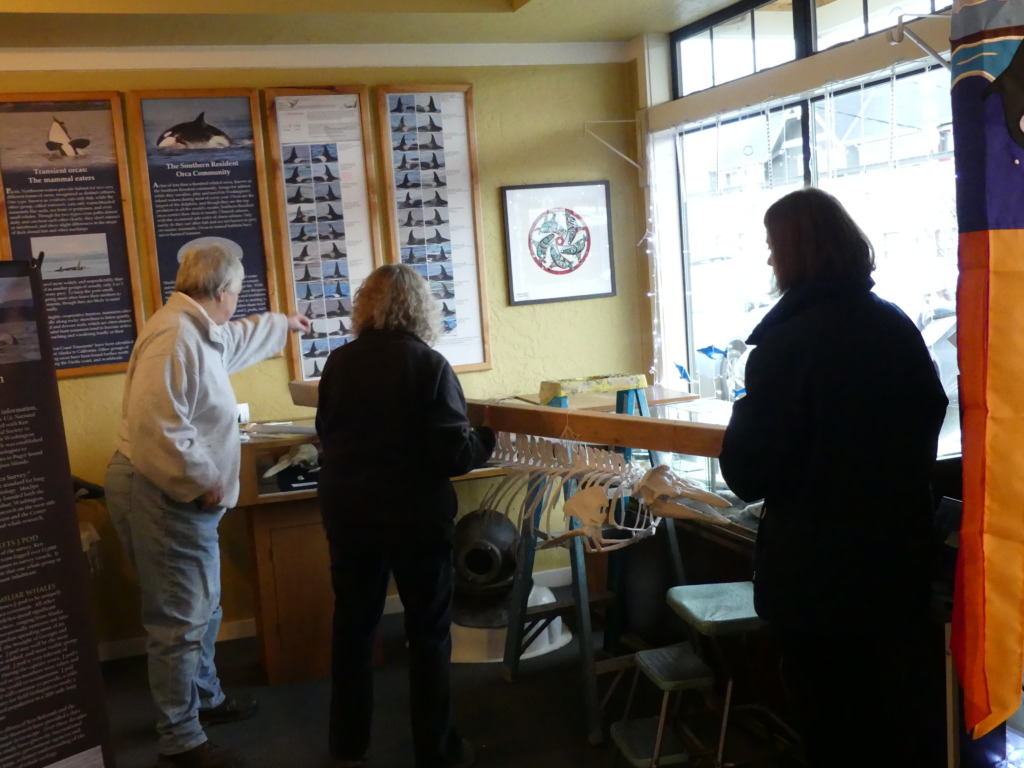
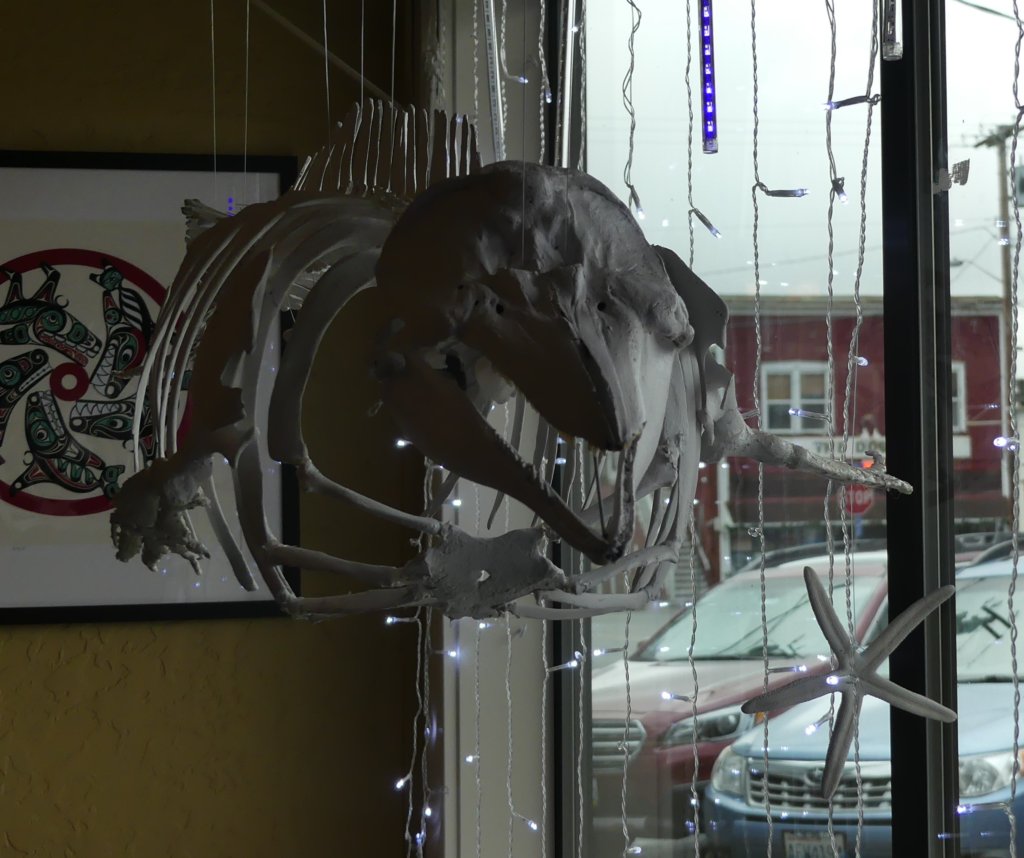
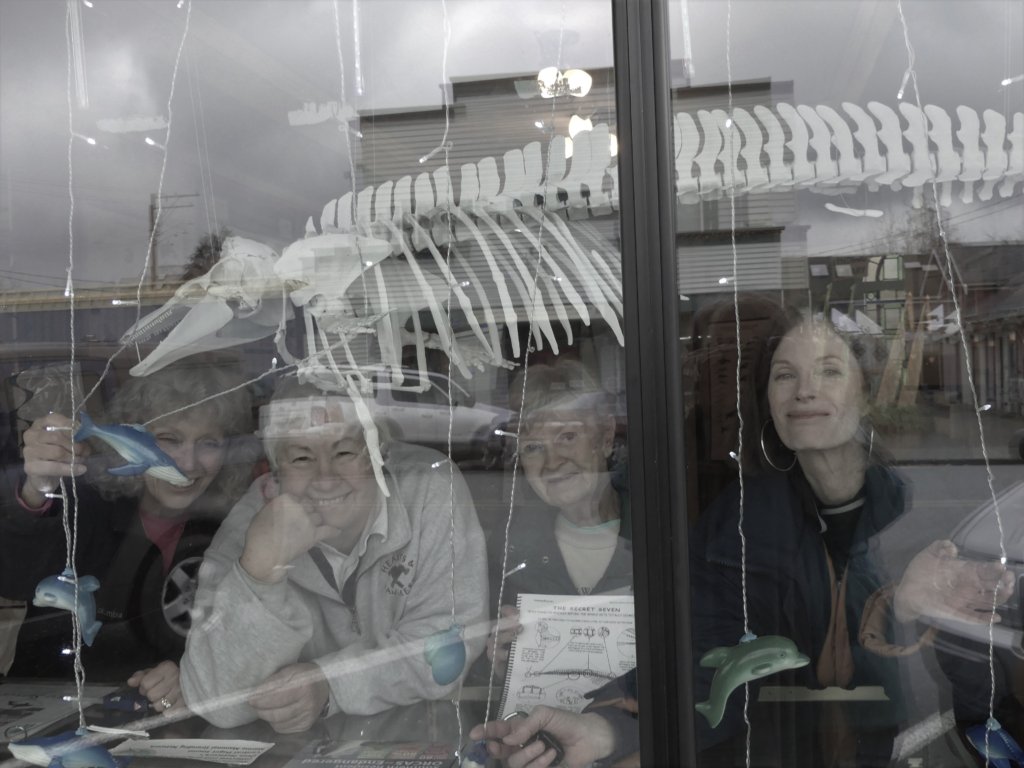
On December 5th, our first full marine mammal skeletal display, "Maxine," a Harbor porpoise who had stranded on Maxwelton Beach near Langley, was installed as a permenant educational exhibit at the Whale Center.
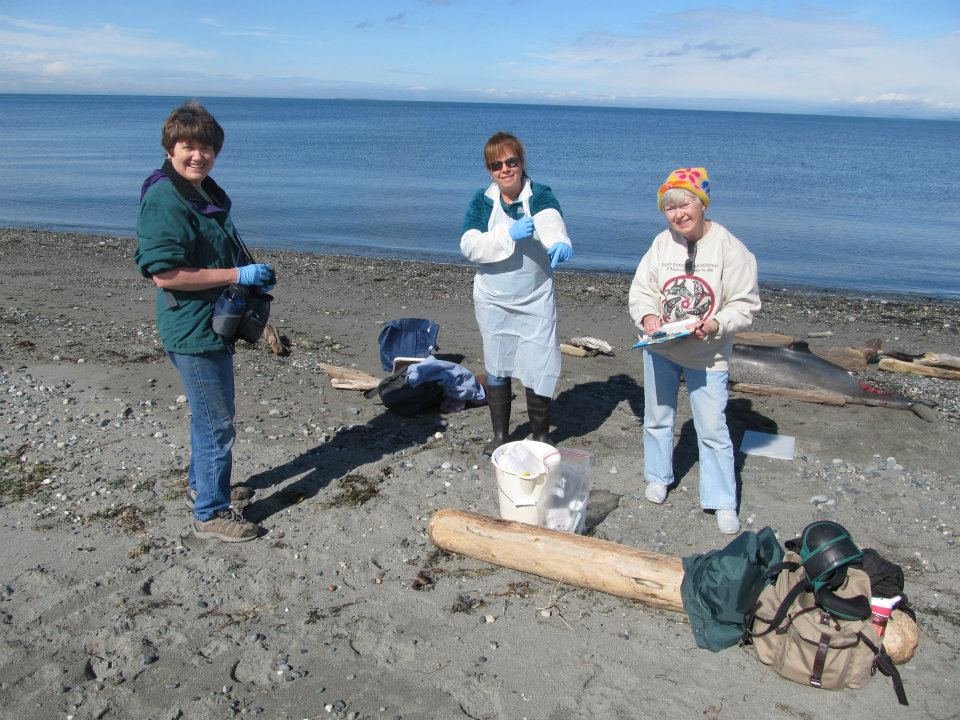
This was possible because of many volunteers from the Central Puget Sound Marine Mammal Stranding Network, the Burke Museum and their beetle colony (for cleaning her bones), Dave Parent DVM and Cathy Robinson PA-C (for providing workshop space for the skeletal crew to reassemble Maxine), our CPSMMSN "skeleton crew" and stranding response/necropsy team, and Marine Mammal Vet Dr. Stephanie Norman and DVM/Pathologist Barry Rickman for their amazing work on the necropsy and pathology workup on this porpoise after she stranded on Maxwelton Beach. They have published a scientific poster and are working on publishing a paper about this case, as they discovered she died from B cell Lymphoma, something very rare to be found in Harbor Porpoise in the Salish Sea.
Though any marine mammal death is sad, through the work of the Central Puget Sound Marine Mammal Stranding Network and Langley Whale Center volunteers, this porpoise's death has at least resulted in furthering what we know about the health of the Salish Sea and its inhabitants. The story of how she died, and the exhibit with her skeleton will educate thousands of people about Harbor porpoise and marine mammal diseases in the Salish Sea.
If you are in the Whidbey Island, WA area, stop by the Langley Whale Center at 115 Anthes, to meet Maxine and learn about all the marine mammals of the Salish Sea. Along with information about Orcas and Gray whales, you will find many bone specimens, baleen, teeth, and pelts from marine mammals to help educate the public about our ocean's health. These were collected and prepared by our dedicated volunteers at the Central Puget Sound Marine Mammal Stranding Network, and provide hands on learning experiences at the Whale Center as well as through community and school outreach and education by Stranding Network and Orca Network volunteers.
Thanks to your support, the Central Puget Sound Marine Mammal Stranding Network can continue to respond and investigate marine mammal strandings in our corner of the Salish Sea, and to educate the public about marine mammals and the healhty habitats they need to survive.
Links:
Project reports on GlobalGiving are posted directly to globalgiving.org by Project Leaders as they are completed, generally every 3-4 months. To protect the integrity of these documents, GlobalGiving does not alter them; therefore you may find some language or formatting issues.
If you donate to this project or have donated to this project, you can receive an email when this project posts a report. You can also subscribe for reports without donating.