By Susan Berta | Project Coordinator
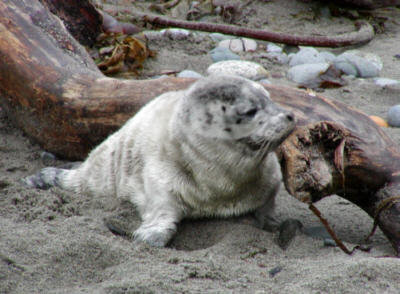
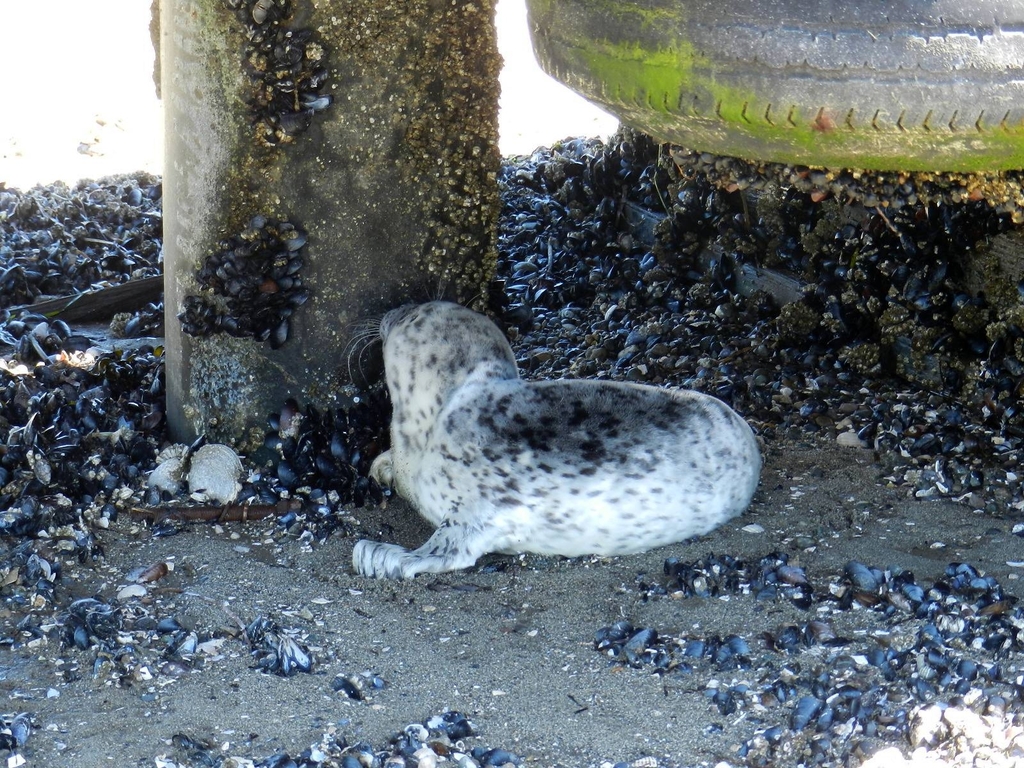
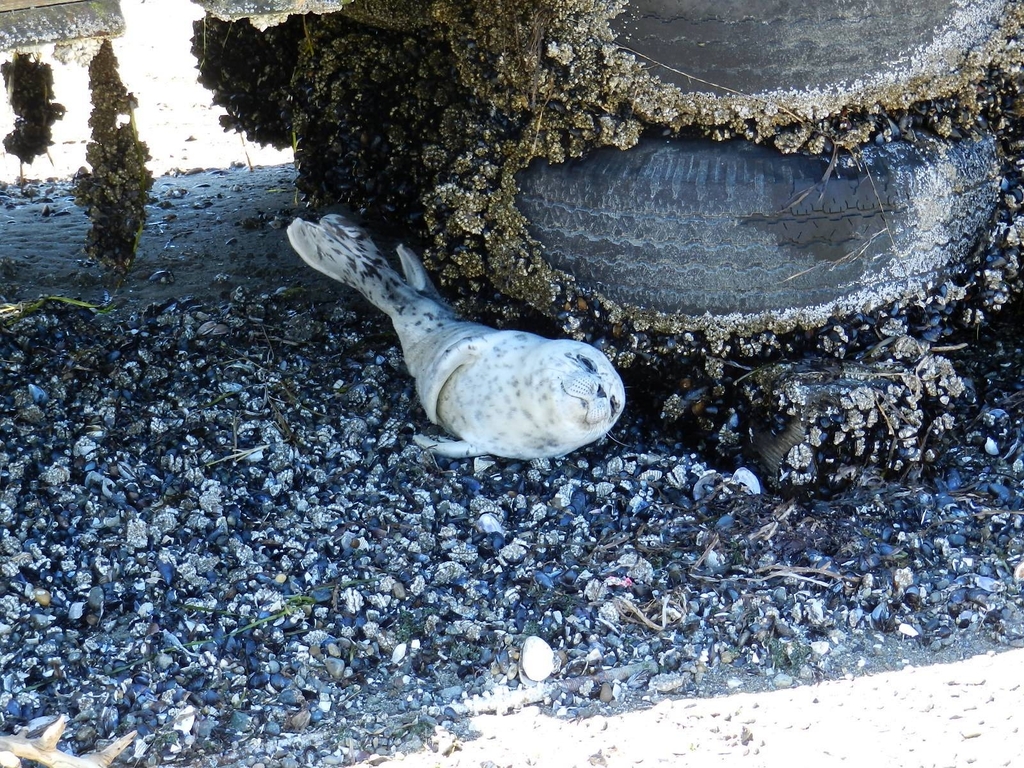
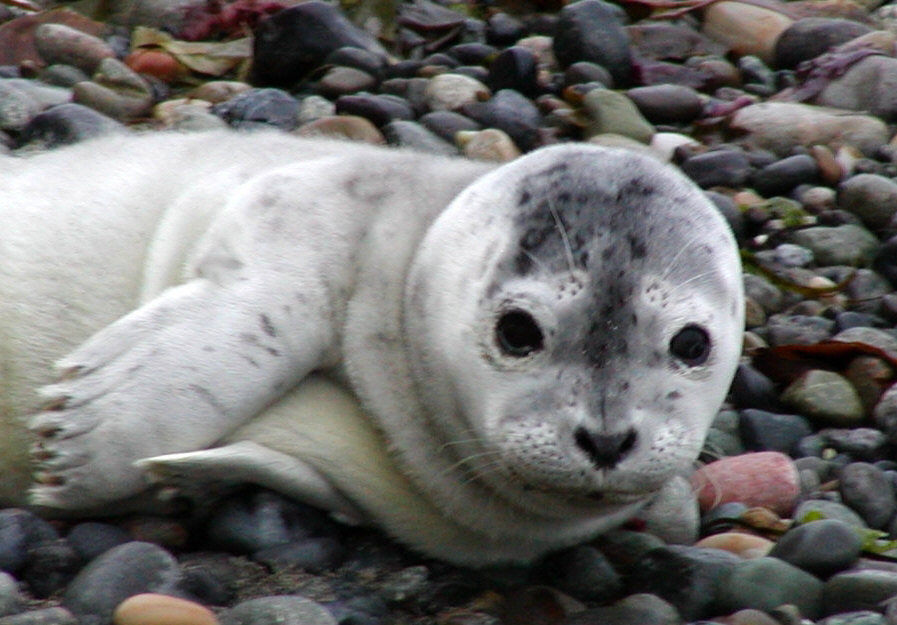
Summer is the busy season for our Central Puget Sound Marine Mammal Stranding Network, and this year has been no exception! We have been busy fielding calls about Harbor seals nearly every day, as this is the "pupping" season when Harbor seal pups are born. Mom often leaves her pup on a beach unattended while she goes off in search of food, and this provides the pup a chance to rest and warm up on the beach while mom is gone. Unfortunately, this happens at a time when our beaches are full of humans who flock to our many miles of beaches to rest and warm up, as well.
Many well-intentioned but uninformed citizens want to help what might appear to be an abandoned, helpless little seal pup on the beach, but when humans interfere, the ending is rarely good for the pup. Pups have not yet developed a scare response to humans, but their mothers have. So if people are crowding around a pup on the beach, the mom won't come back for it until they are gone. People often think the pup needs to be fed or have water poured on it, but the best and only thing to do if you see a seal pup on the beach is to LEAVE IT ALONE and leave the area so mom will come back.
Good information can be found in NOAA Fisheries great publication "Sharing the Shore with Harbor Seal Pups" - if you live in Washington State or other coastal states where seals are found, we encourage you to read and share this information. One of the most important functions of our Stranding Network is to educate the public about marine mammals, and what to do if you find a live or dead stranded marine mammal on the beach. We have developed a Rack Card about seal pups that is distributed through our volunteers, at events, and at our Langley Whale Center, and we have several educational displays to help educate the public about seal pups.
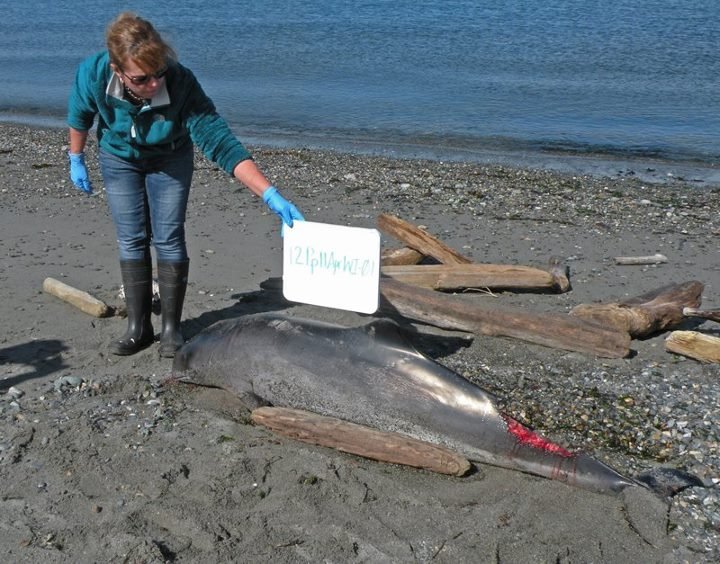
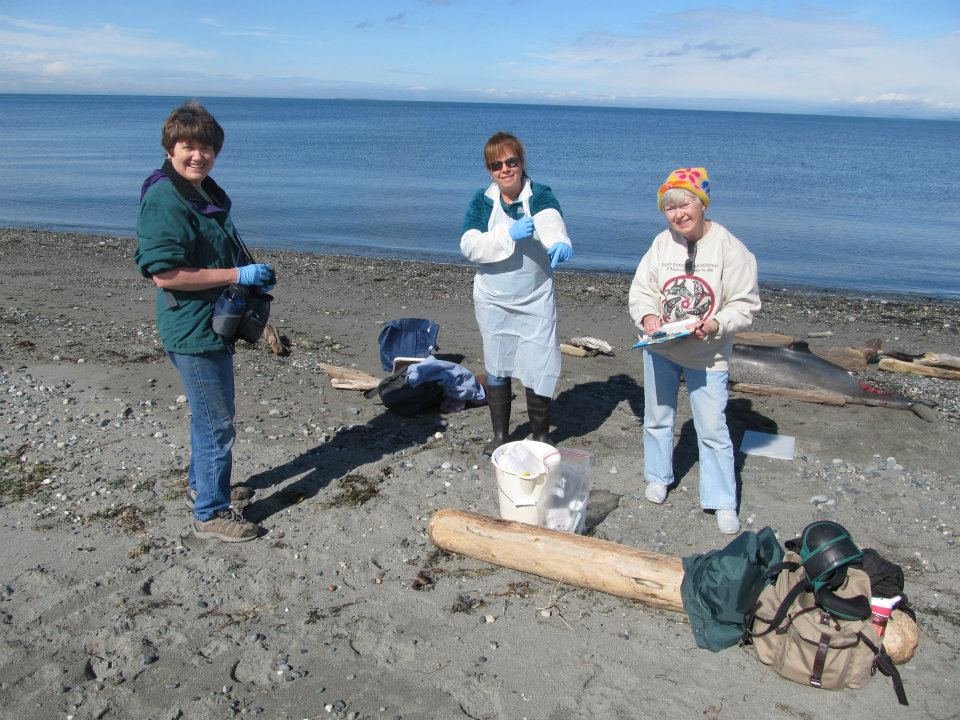
The Central Puget Sound Marine Mammal Stranding Network has also been responding to a larger than usual number of Harbor Porpoise this year as well - so far nine have been reported and/or responded to in our stranding region. In recent years the entire region has seen an increase in the number of Harbor porpoise deaths, and researchers are now saying the increase is due to the increase in the population of Harbor porpoise - so that is GOOD news!
Good news or bad, the Central Puget Sound Marine Mammal Stranding Network is here to help the public learn about our marine mammals, and to investigate marine mammal strandings to provide information that helps researchers and agencies understand the health of our ocean ecosystems and their inhabitants. Without your support, we would not exist - our heartfelt thanks goes to each and every one of you who donates to this important Orca Network project!
Links:
Project reports on GlobalGiving are posted directly to globalgiving.org by Project Leaders as they are completed, generally every 3-4 months. To protect the integrity of these documents, GlobalGiving does not alter them; therefore you may find some language or formatting issues.
If you donate to this project or have donated to this project, you can receive an email when this project posts a report. You can also subscribe for reports without donating.