By Susan Berta | Project Leader, CPSMMSN/Orca Network
The Central Puget Sound Marine Mammal Stranding Network responds to marine mammal strandings in Island, Skagit, and N. Snohomish counties, and investigates dead stranded marine mammals to determine cause of death whenever possible. We have had to prioritize which animals are necropsied due to funding cuts, but thanks to your donations, we have been able to conduct necropsies on important species such as porpoise and whales.
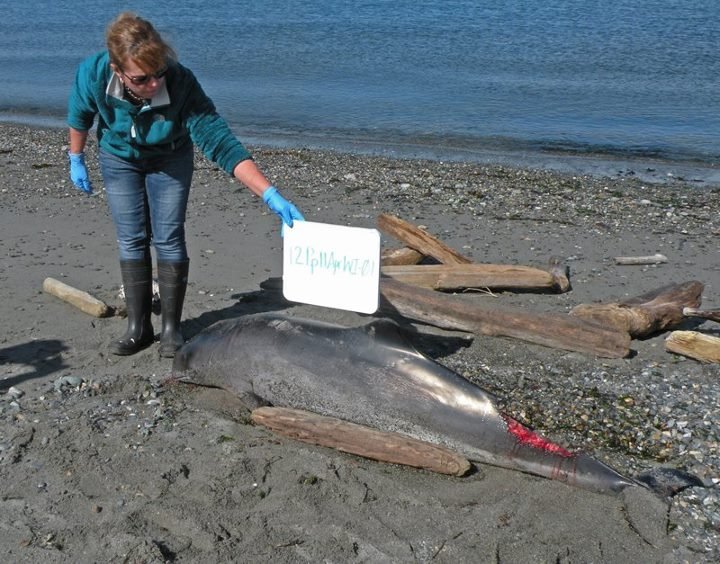
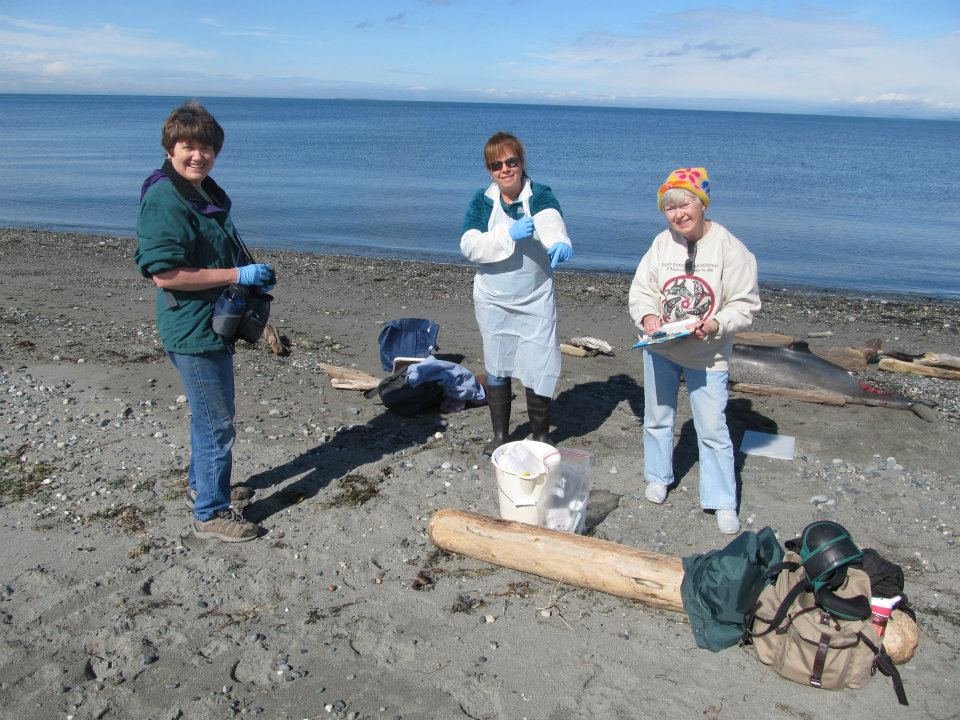
On November 1st we picked up a dead Harbor porpoise that had been found on a south Whidbey Island, WA, beach the evening before. It was a large female (5.5' long and 150 pounds).
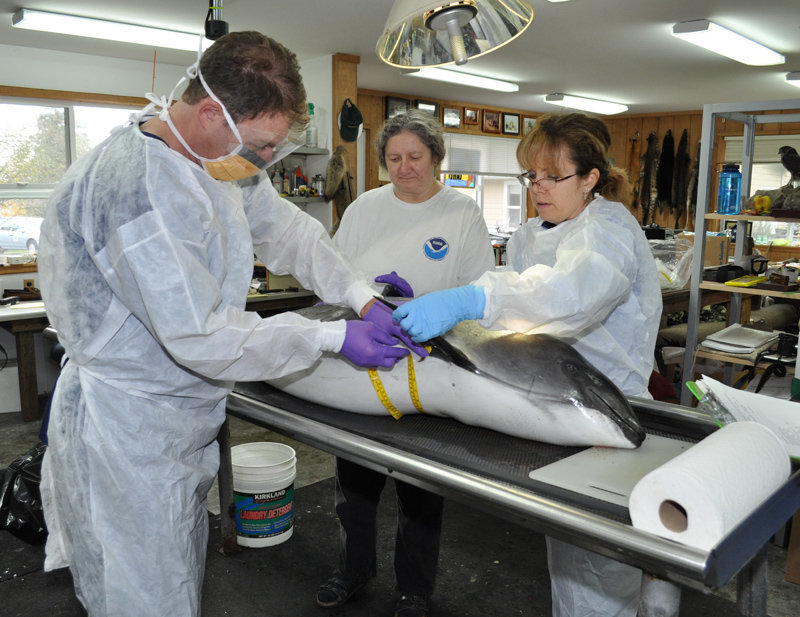
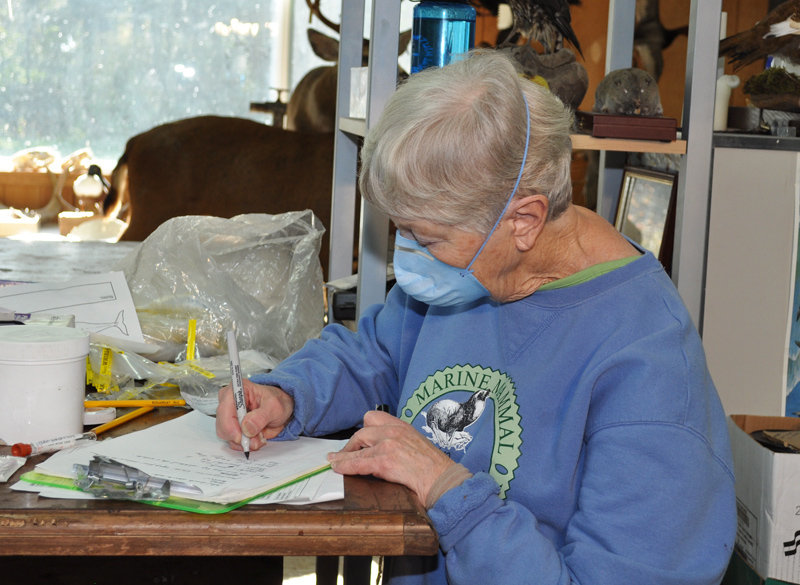
On November 3rd members of the Central Puget Sound Marine Mammal Stranding Network conducted a necropsy on the porpoise, under the leadership of our Marine Mammal Veterinarian, Stephanie Norman, DVM, Ms, PhD, and Veterinarian Pathologist Barry Rickman.
Her teeth were significantly worn down, a sign that this was an older porpoise. She was pregnant, with a tiny, precious 6.5 cm fetus in her womb.
The porpoise hadn't eaten for several days, and had many swollen lymph nodes, and some of her organs, such as her lungs, appeared abnormal. Samples of all organs were collected and are being sent off to labs for testing. Barry Rickman was able to look at some of the samples immediately after the necropsy, and found what appears to be some form of Lymphoma. We have never seen this in any of the porpoise we have investigated in the past, so are sending out more samples for further testing to learn more about the health of this porpoise. Since this is an unusual case for the NW Region, Stephanie and Barry will be writing up a report on the case once we get results from all the tests, and hope to present the case at the upcoming Salish Sea Ecosystem Conference.
Each case our stranding network is able to investigate provides important information about our marine mammals and their habitat. What we learn from each porpoise case also provides data that can be applied to the recovery of endangered Southern Resident orcas. The skeleton of this Harbor Porpoise was saved and will be cleaned and re-articulated in the near future, to provide an educational display so people can learn more about Harbor porpoise.
Thanks to your donations, we are able to continue responding to stranded marine mammals, and investigating their deaths, to learn more about the health of our oceans and all who depend upon them, including us.
Links:
Project reports on GlobalGiving are posted directly to globalgiving.org by Project Leaders as they are completed, generally every 3-4 months. To protect the integrity of these documents, GlobalGiving does not alter them; therefore you may find some language or formatting issues.
If you donate to this project or have donated to this project, you can receive an email when this project posts a report. You can also subscribe for reports without donating.