By Susan Berta | Project Leader, CPSMMSN/Orca Network
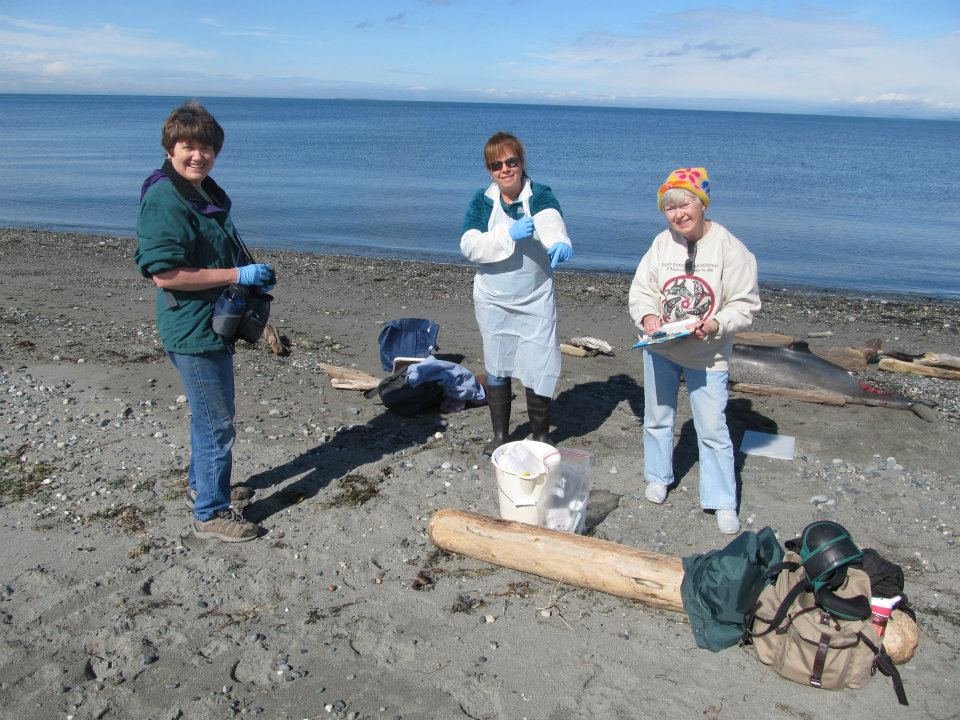
Thanks to our GlobalGiving donors, the Central Puget Sound Marine Mammal Stranding Network has been able to continue the good work we do in Washington State.
The national Prescott Marine Mammal Stranding and Health Grant Program has been cut from the federal budget, leaving Marine Mammal Stranding Networks across the country with no funding, while the need for stranding response has increased due to the effects of climate change, increased shipping and boat traffic, increased human interaction, and the spread of diseases and effects of toxic pollutants in our marine waters.
But because of your support, the Central Puget Sound Marine Mammal Stranding Network has been able to continue to respond to the calls we receive, and assist scientists and researchers in their work by supplying samples and specimens from dead stranded animals, so some good can come out of the unfortunate ending of a marine mammal's life.
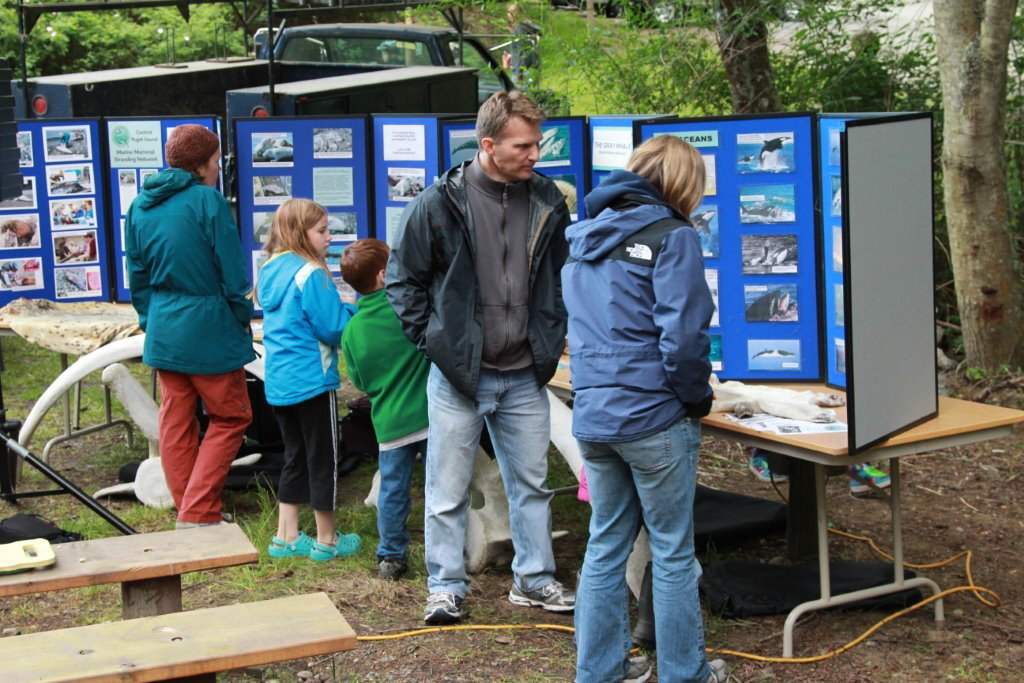
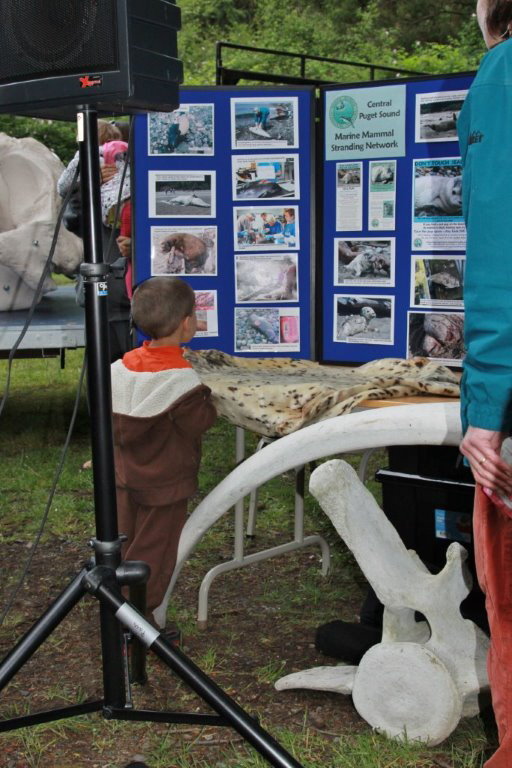
For this report we are featuring our BIGGEST accomplishment yet - shipping an ENTIRE Gray whale skeleton across the country from Washington State to the Smithsonian Institute's Marine Mammal Collection Center in Maryland!
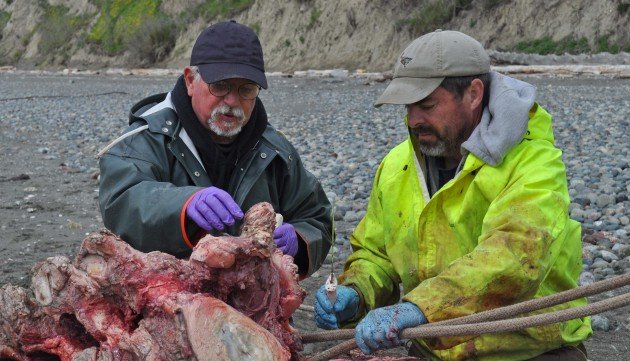
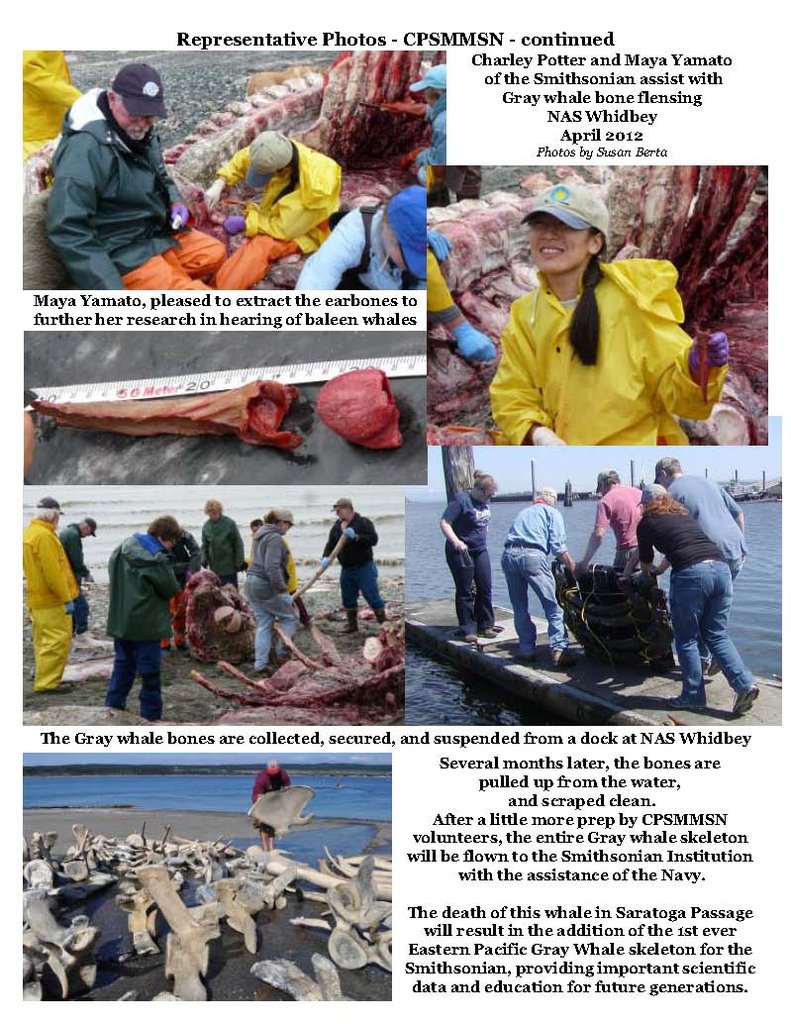
Under the direction of Matt Klope from the CPSMMSN, and with support from NAS Whidbey Island, we were able to tow our last dead Gray whale to NAS Whidbey for necropsy by CPSMMSN, Cascadia Research, and WA Dept. of Fish and Wildlife staff. After the initial necropsy, CPSMMSN volunteers and NAS Whidbey Island volunteers continued to flense the flesh off all the bones, collect them and place them into large barrels that were hung off a dock at the NAS Whidbey Island Seaplane base. There, small marine critters like crabs fed on the last of the flesh, cleaning the bones over a period of months. The bones were then pulled up and scraped and cleaned by volunteers, then packed up into crates and shipped onboard a C-130 on a Military Training Logistics flight from NAS Whidbey Island to Andrews Airforce Base in Maryland, where the whale skeleton was picked up by the Smithsonian and transported to their Marine Mammal Collection Building.
During the bone flensing process, we were honored to have Charley Potter and Maya Yamato of the Smithsonian fly out to Whidbey Island to assist us. Maya is conducting groundbreaking research on baleen whales' hearing - and she was able to extract the inner ear bones of this whale to assist with her research. It was a wonderful experience for our staff and volunteers to work alongside these researchers, and they were ecstatic to finally receive a Pacific Gray whale for their collection. Take a look at the link below to the article and more photos of this project from the Smithsonian magazine.
It is partnerships like this, and the ability to conduct research and provide further knowledge and education as a result of a marine mammal stranding, that is at the heart of what we do. The more we and others can learn about how marine mammals live, and why they die, the more we can help preserve and protect marine mammal populations for future generations.
Links:
Project reports on GlobalGiving are posted directly to globalgiving.org by Project Leaders as they are completed, generally every 3-4 months. To protect the integrity of these documents, GlobalGiving does not alter them; therefore you may find some language or formatting issues.
If you donate to this project or have donated to this project, you can receive an email when this project posts a report. You can also subscribe for reports without donating.