By Sandra Dubpernell | Central PugetSound Marine Mammal Stranding Network
Central Puget Sound Marine Mammal Stranding 2018 Report
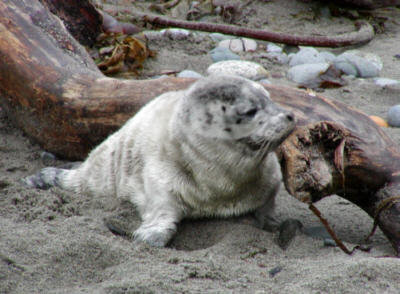
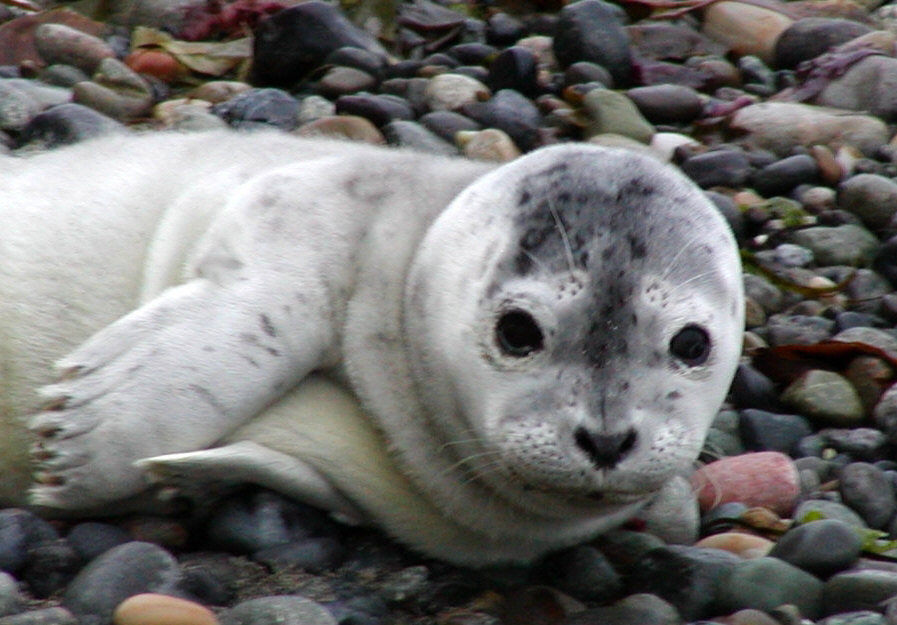
The Central Puget Sound Marine Mammal Stranding Network had a busy year despite reports of harbor seals being down by almost 27% from last year’s count of 209. However, the total number of reports this year was actually close to the average of the last five years. Seals are very mobile and come and go as they please, so this was no surprise - and since we have had an increase in the presence of Transient (mammal eating) orcas in our region in recent years, this likely is affecting the seal population as well.
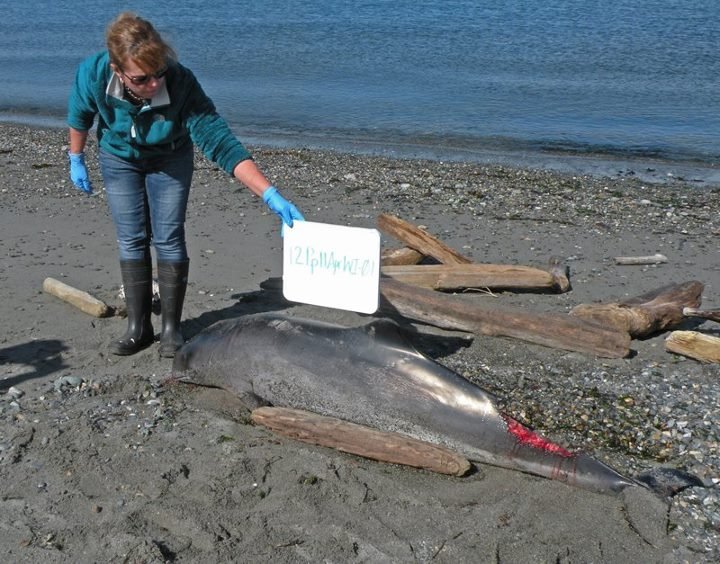
From the chart accompanying this report you can see an increase in the number of calls of elephant seals and gray whales. Actually, many of these calls were duplicates about the same animal. We had a gray whale wash up dead on West Beach, Whidbey Island in April. The necropsy showed that it died of malnutrition and heavy external and internal parasitism. Frequent follow up reports were made by our stranding network observers who were tracking the timing and stages of decomposition several times per week. Unfortunately the research was terminated before it was completed by the high tides that took the carcass out to sea.
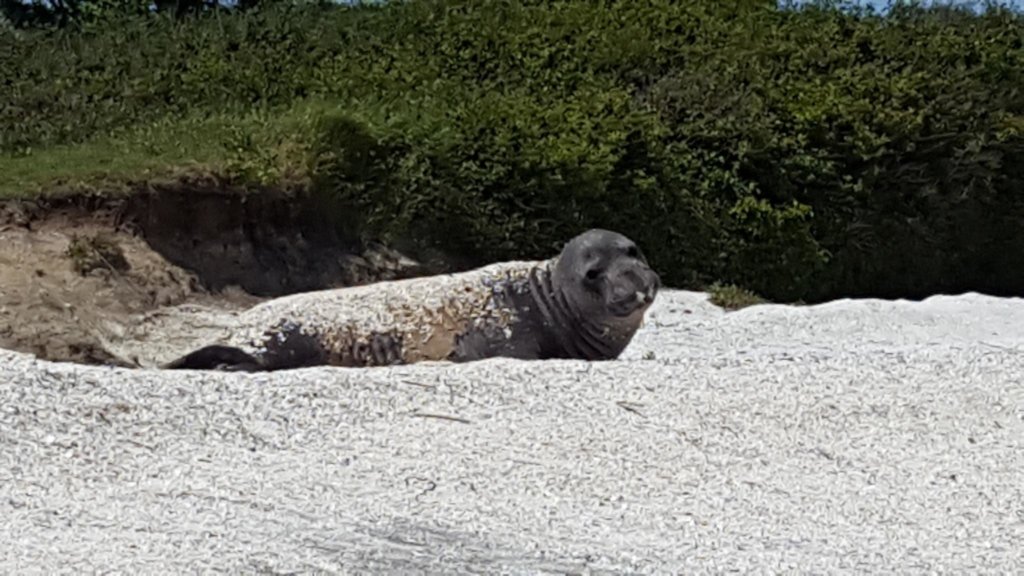
There were few calls on molting elephant seals this year. The majority of calls received were from concerned residents and volunteers about our two elephant seal pups born on Whidbey. Elsie Mae, the female born in March of 2018, left her birthplace and swam about 70 miles to the San Juan Islands where she has been hanging out. She was tagged so her identification is absolute.
Ellison, the young male elephant seal born on Whidbey Island in March of 2015, has spent most of his time on a tiny nearby island where he is monitored by the local residents. He disappeared for several weeks and those “adoptive parents” became very concerned. There has been a rash of illegal shootings of California sea lions in Puget Sound this year, possibly because some folks think they eat too many salmon. Elephant seals do not eat salmon, but it would be quite difficult to tell the difference between an elephant seal and a California sea lion swimming in the water. Elephant seals eat deepwater invertebrates and fish, ratfish, rockfish, squid and octopus. Also they are capable of staying at sea anywhere in the temperate ocean for months at a time. Fortunately, after a few weeks Ellison returned to the island that he shares with a group of harbor seals. One resident monitor described Ellison, who will soon be a full-sized adult male, as “looking like a trident submarine that had been beached”. We hope to tag Ellison sometime early next year so he can be tracked when he leaves home.
Most of the reports of live whales go to our Orca Network Whale Sighting Network. However, we added a new category on the chart this year for 4 reports of sperm whales nearby. It is always exciting to have new species show up.
Included in the “other” category, not charted, were reports of several river otters, which are prevalent on our islands, but not marine mammals. Also, an unknown container which turned out to be a portion of a floating dock, a 6-gilled shark, a mola mola, a walrus (no way), and an exciting find uncovered by an 8 month old yellow lab puppy. The artifact was identified by experts at the Burke Museum in Seattle as a mammoth tooth dating from the last ice age 13,000 years ago. Whidbey Island was formed by “glacial dump” as the ice receded, leaving many interesting finds as the ice melted.
And we don’t even have to dig for them.
Thanks for your support in keeping our Marine Mammal Stranding Network afloat!
Links:
Project reports on GlobalGiving are posted directly to globalgiving.org by Project Leaders as they are completed, generally every 3-4 months. To protect the integrity of these documents, GlobalGiving does not alter them; therefore you may find some language or formatting issues.
If you donate to this project or have donated to this project, you can receive an email when this project posts a report. You can also subscribe for reports without donating.