By Sandra Dubpernell | Central Puget Sound MMSN Coordinator
ELLIE HAS DONE IT AGAIN!
Ellie is the Northern elephant seal that we’ve told you about before. She has come to a local beach for many years to go through her annual molt. Then three years ago on March 18, 2015 she gave birth to a male pup we named Ellison. Ellison has also returned several times to the island since then and hangs out for a few days at a time with a bunch of harbor seals on the opposite side of the island as his mother's favorite haulout. He is now three years old and is just beginning to get his elongated nose, although he still has a few years to go before he develops the huge body and big proboscis of a mature male.
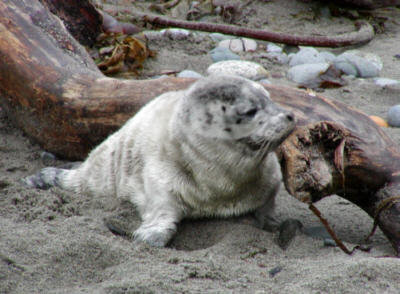
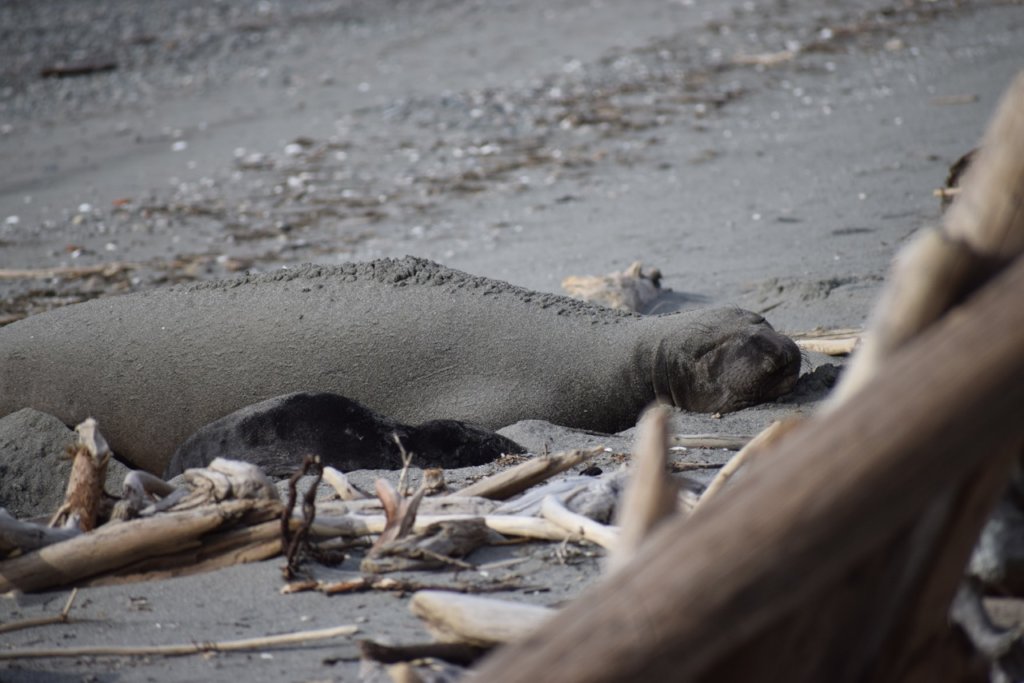
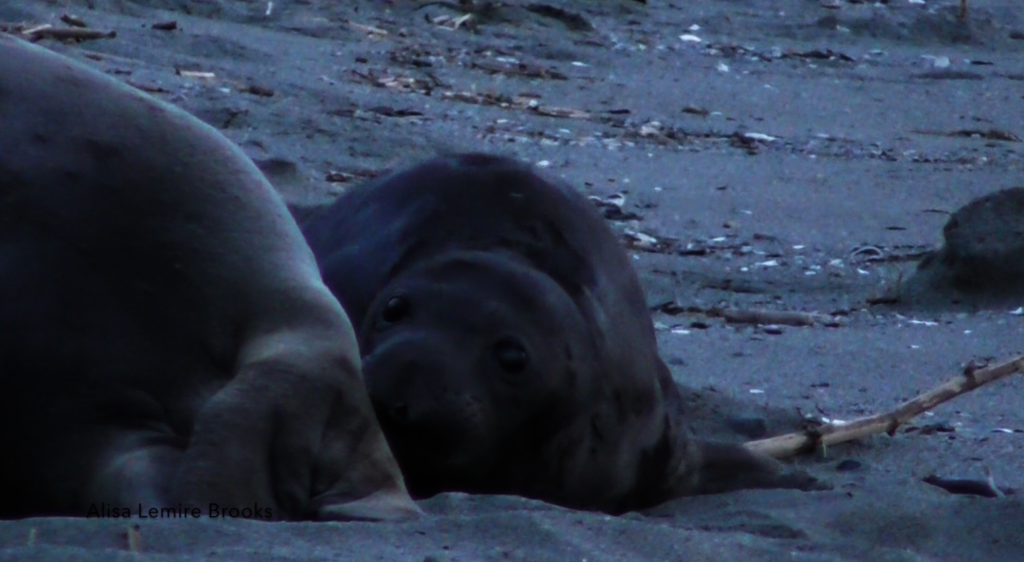
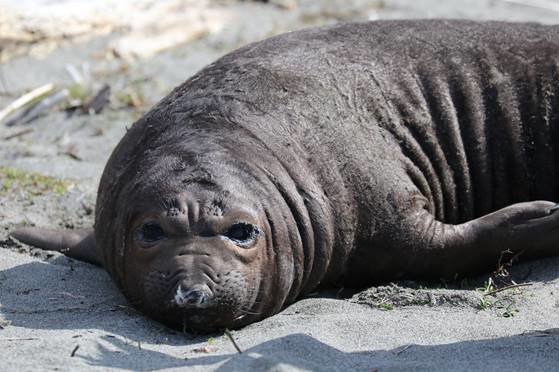
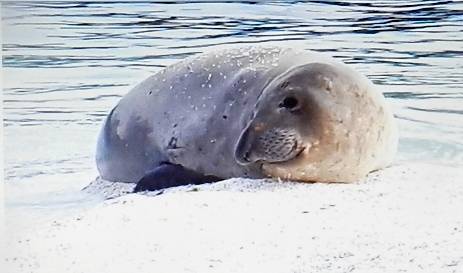
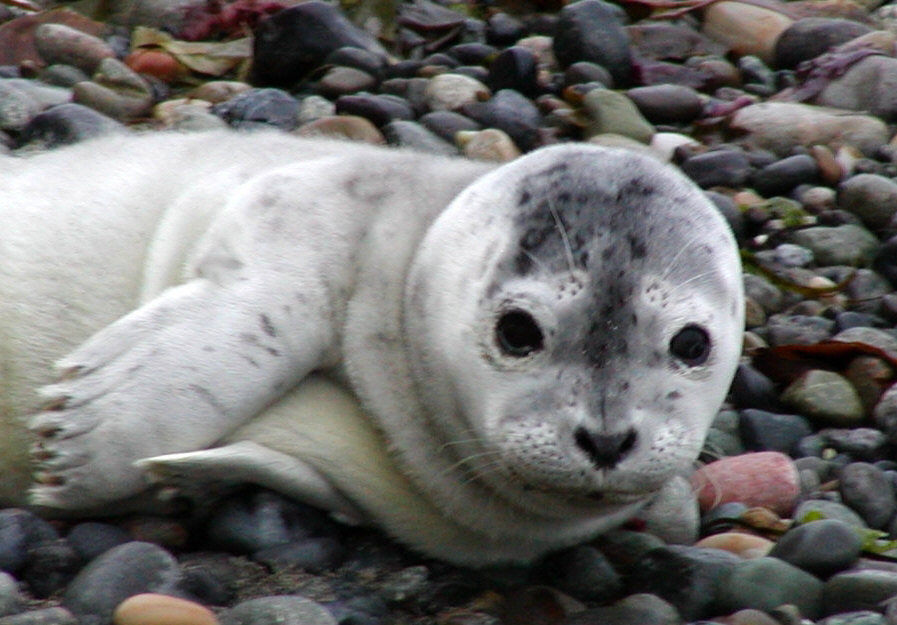
This year on March 10, Ellie gave birth to another little black pup. This one is a female we named Elsie May. Ellie nursed her pup for about four weeks and then went back out to sea leaving her very fat, healthy little girl to fend for herself (see photos included in this report of the pup at just two days old, one week old, and four weeks old; as well as Alisa Lemire Brooks' wonderful video of the pup at about one week old).
Elsie May will remain here for a few more weeks living on her fat reserve until she has learned to forage for herself and has slimmed down to a streamlined elephant seal shape before she also goes out to sea.
Elephant seals are quite rare on Whidbey, although we do get a few here resting during their annual molt. But Ellie is the first Elephant seal that we know of who has been giving birth to new pups on Whidbey Island, and it is so exciting to now witness her second pup born here!
There are some tagging possibilities being investigated by WA Dept. of Fish and Wildlife (attaching a small ID tag to the webbing of the flipper). If tagged, the animals can be tracked to discover where they go when they leave our island, providing valuable data about habitat use and changes in range for these marine mammals who are fairly new to our region.
DECEASED/STRANDED GRAY WHALE
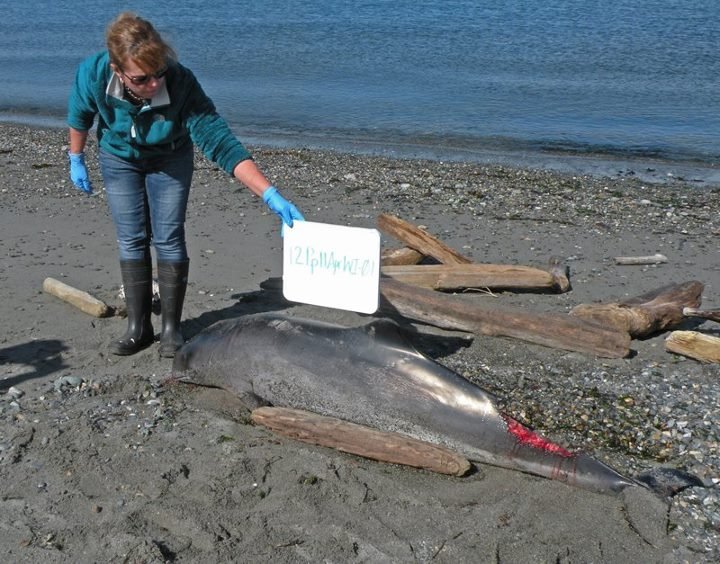
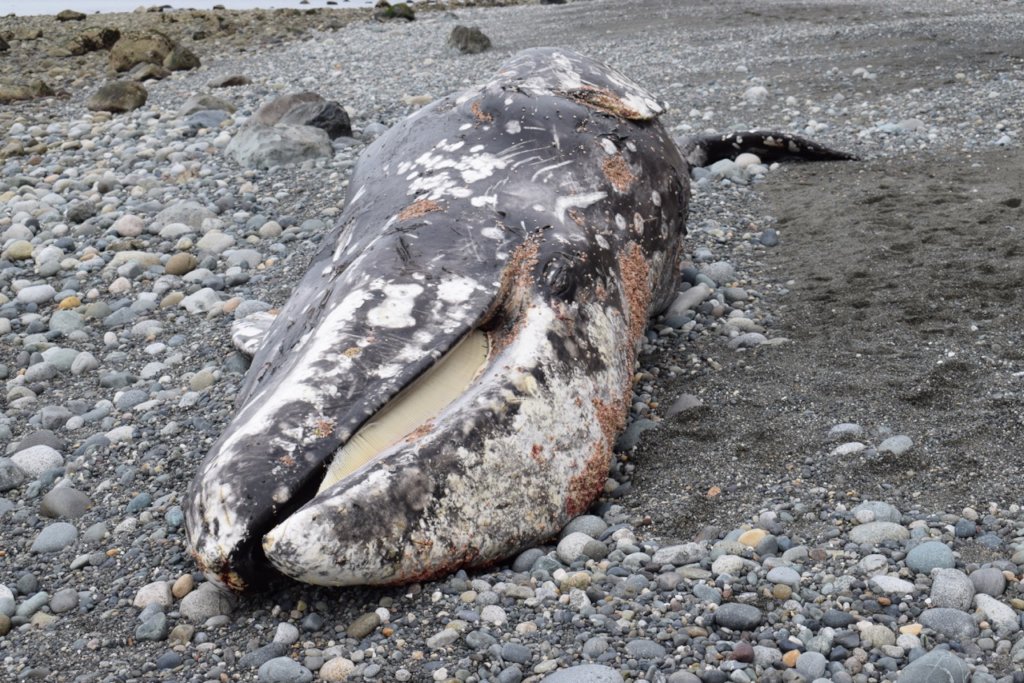
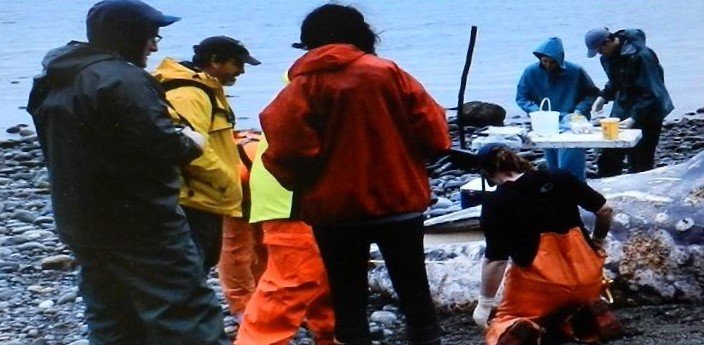
On April 3rd, a dead gray whale was reported washed up on a local beach.
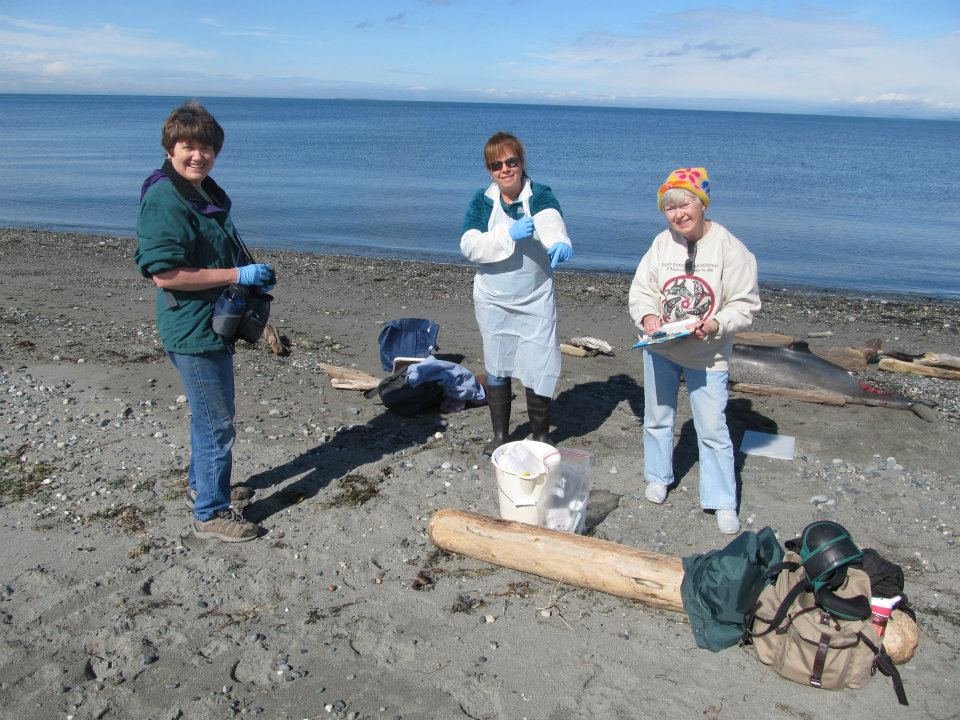
A necropsy was performed by researchers from Cascadia Research Collective (our regional large whale experts), assisted by WA Dept. of Fish and Wildlife, and members of Central Puget Sound Marine Mammal Stranding Network and other volunteers. The whale was a juvenile female who was in poor nutritional condition with only wood debris in her stomach, internal parasites and skin heavily infested with whale lice. The preliminary cause of death was attributed to starvation. Tests on the tissues collected may give us more information as to why this little female died.
Since 2002, when we became an official Stranding Network, there have been ten gray whales that died in our response area. Two were not examined, six others died of malnutrition and two from severe trauma caused most likely by ship strike.
The majority of these animals, both male and female of all ages from juvenile to adult, washed up during the spring months, which would be when they are migrating north to their rich feeding grounds in the Bering and Chukchi Seas of Alaska. Gray whales feed in the cold waters all summer before starting in late November/December on their 5000-6000 mile southward migration to the warm mating and birthing lagoons of Baja Mexico. They remain there for a few months, not feeding, until they make the long return trip back to the northern seas. Some whales may not have sufficiently “filled the tank” before migrating south and desperate to find food on their way north turn right at the Strait of San de Fuca along the Olympic Peninsula and travel approximately 100 miles to our inland sea. We do have some prolific ghost shrimp beds (food favored by gray whales, and discovered by a community of about a dozen grays who come in each year to feed) on the eastside of Whidbey, but it appears that these whales don't know about them, or die before finding them.
Thus is the cycle of life and death, and the joys and sorrows experienced by our CPSMMSN staff and volunteers. Most of the work we do and strandings we respond to are not stories with happy endings. However, the data we collect, the results of testing the samples taken, and examination of each lost marine mammal gives us insight into the health of the Salish Sea and all who live in it. This knowledge can be used by researchers and resource managers to better care for our ocean, and understand the changes we are seeing.
We are thankful this month for the story of Ellie and her second pup, and to have something fun to share with you, along with the sadder stories and important work we do to investigate the reasons behind marine mammal deaths.
Your support is important to us, to help us continue to learn about the marine mammals of the Salish Sea, and the health of the ocean we all depend on.
Links:
Project reports on GlobalGiving are posted directly to globalgiving.org by Project Leaders as they are completed, generally every 3-4 months. To protect the integrity of these documents, GlobalGiving does not alter them; therefore you may find some language or formatting issues.
If you donate to this project or have donated to this project, you can receive an email when this project posts a report. You can also subscribe for reports without donating.