By Olga Zhuravskaya (Yushina) | Olga Zhuravskaya
written by Polina Sanayeva (transleted by Olga Lavut)
Just recently, at the age of 10, officially autistic boy Daniel spoke for the first time in a way that everyone around him understood. And around Danya were his mother, his speech therapist, and the teachers of the resource classroom. They heard the word “catfish” and realized that everything in this world was not in vain.
Until that moment, only his mother understood Danya’s speech. Because he pronounced only the vowel sounds. All kinds of commissions branded the child as mentally retarded, end of story. And speech therapists very convincingly explained why he would NEVER speak. And the only prospect for education was a correctional school, where the students spend the first quarter of the academic year learning to pack their backpacks.
When Danya was 7, though, Ekaterina and Yana were selecting the most “severe” kids for their “prep class” at the Center for Psychological, Medical and Social Support for Children and Adolescents on Kashenkin Lug. And they enrolled Daniel – one of the hopeless children. They spent a year preparing the children for inclusive education. For 1st grade, Danya started attending a regular school – school No 1465 – together with the other students from the “prep class”. The Center for Autism Problems implemented an inclusive education project there.
Inclusive education is a process of developing basic education that implies accessibility of education for everyone by adapting to different needs of all children, thus giving access to education to children with special needs. (from a Russian Wikipedia article) In other words, inclusion is when children with special needs go to regular, general education school, instead of being heaped together in special isolated education and treatment institutions. For the last 30 years, the popular belief in our country has been that inclusion is something impossible and unnecessary. (Harmful and dangerous).
And now, Daniel has not only completed 2nd grade – note this - a regular 2nd grade! – without any Cs (and in mathematics, he’s ahead of the curriculum), but has also started pronouncing sounds that his vocal apparatus is not suited for. And this happened not only because all this time he has been having sessions with a very persistent speech therapist, but also because HE REALLY WANTED to speak. Because this is something his environment demanded. And people with autism are really responsive to their environment. And the environment is favorable, they remain open to the world for longer periods. And they go “out” more and more rarely.
So, at the age of 7 Danya not only did not speak. He also had no so-called “academic behavior” – he ran around the school, did whatever he wanted, did not always react to admonition, and, all-in-all, behaved extremely socially immature. (Which in our system of education is equal to mental retardation: intellect is measured in social maturity. If a child is capable of asking permission to go to the restroom and can raise his or her hand before answering – then he or she is ready for school!). Moreover, he had no alternative means of communication that could help him interact with the people around him. He did not really strive to interact, though – his mother was quite enough for him. Autists do not really understand why they need to communicate with anyone…
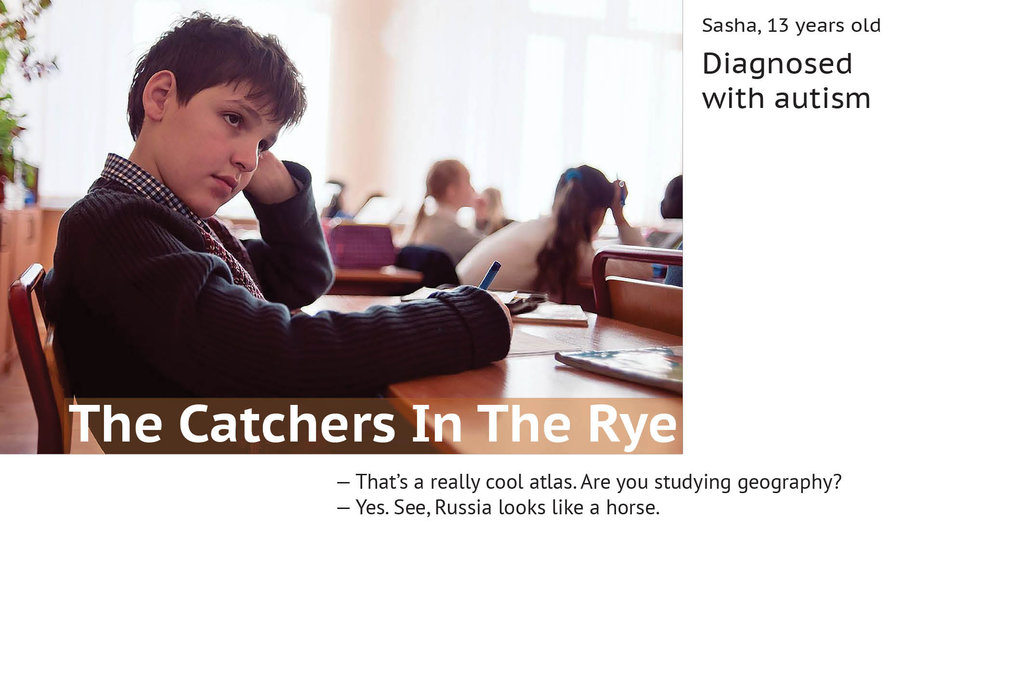
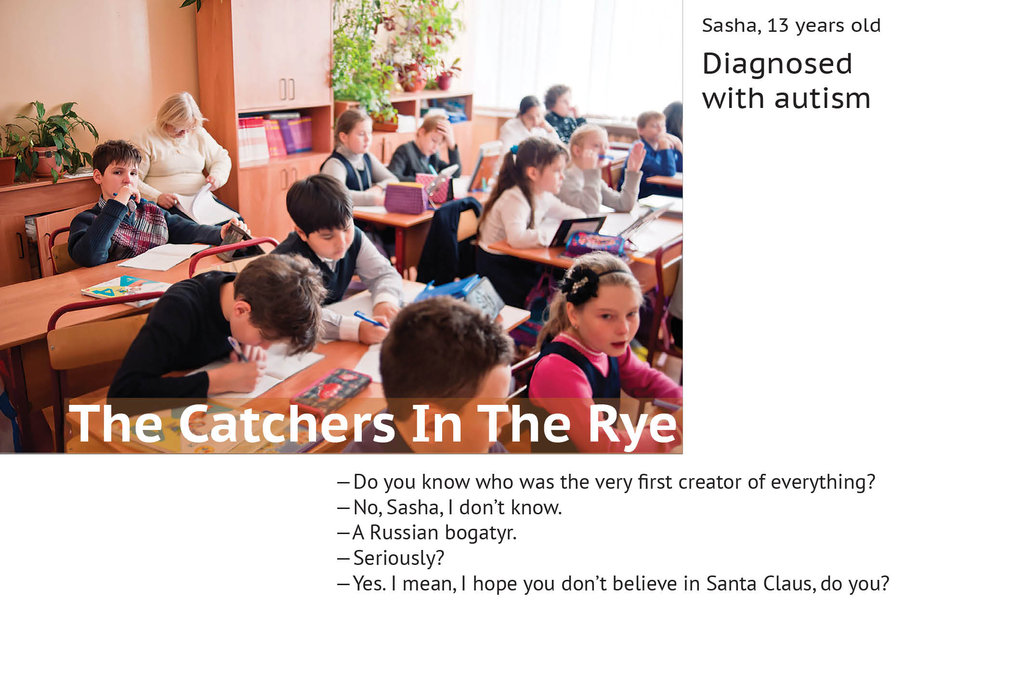
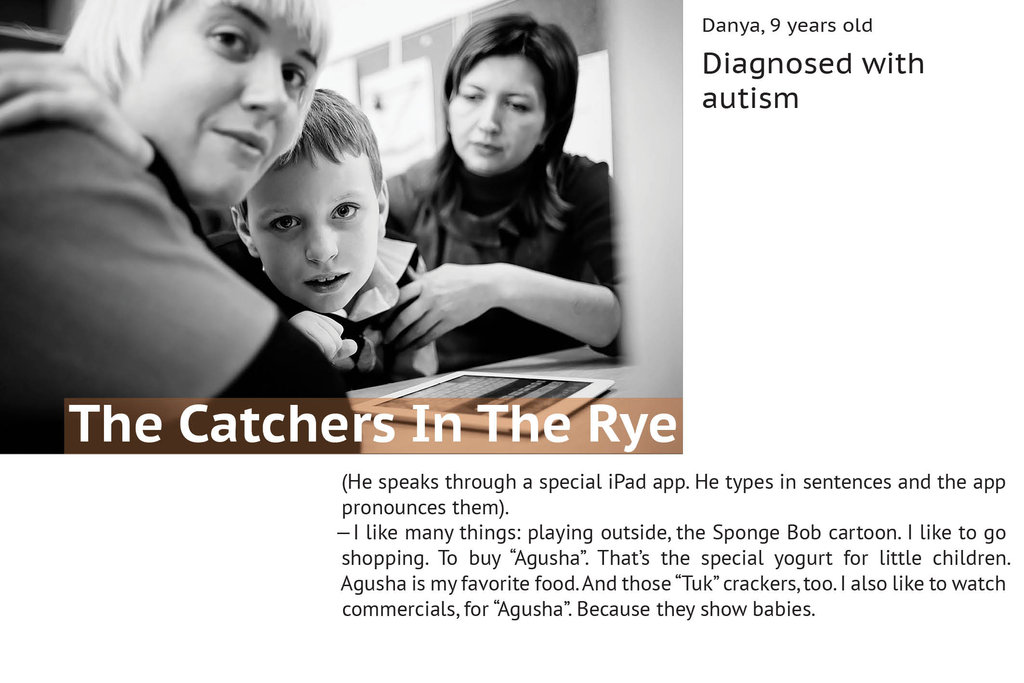
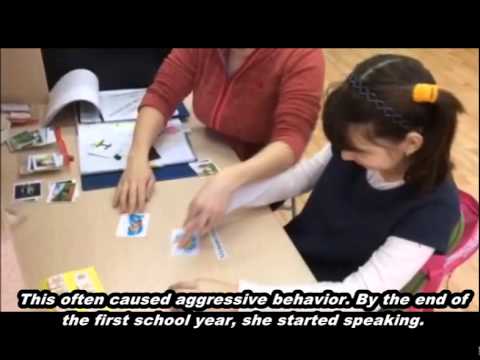
In the inclusion project, he was taught to use pictures, first, and then the tablet. PECS – the picture exchange communication system – is an autist’s communicative crutch. It immediately increased Danya’s social capabilities, and this was followed by a desire to communicate. And his learning capabilities also increased greatly, of course. Some time later it turned out that Danya really has a knack for everything that has to do with computers, smartphones, and software. There was actually fear that he would hack some strategic website. He was taught to not run around school like mad anymore and to not walk out of the classroom in the middle of a lesson. Danya got used to sitting behind a desk, interacting with teachers and classmates, and he even sometimes comes out to the blackboard to answer a teacher’s question.
When it became obvious that the child can read well and reacts to written speech, the teachers started further developing this skill. And they discovered a high nonverbal intellect – that is, in the subjects that do not require the use of spoken language, Danya can easily master the level of school curriculum. So the teachers concentrated on making sure the lack of speech does not affect the development of language, nationality, and the forming of vocabulary. They actively developed internal speech, and were saving (and saved!) communicative functions. In short, a person is learning, receiving a proper education, and the lack of speech does not impede that process in any way.
Danya started reading, writing compositions, and answering questions to demonstrate comprehension of the read text. The teachers and parents sighed with relief and relaxed. Not in the sense that they stopped working on developing his skills – on the contrary! They just decided that Solodkov will probably become the first non-verbal autist ever to be accepted into a college. There are many in America in Europe, but in our country Danya could have become the first. But now he is no longer non-verbal.
In parallel with the educational process, in the resource room where the special children spend most of their time, speech therapist Anastasia was working with Danya. She did not contest the doctors’ conclusions about the extent of defectiveness of his vocal apparatus, she just kept working, day after day. She put on her latex glove, reached into his mouth to show him how to fold his tongue and how to move it correctly – almost the same way a fitness instructor “positions” a leg or arm to make sure an exercise is performed correctly. The speech therapist immediately saw that Danya is very smart, and helped him establish correct motor habits, set his breathing and sounds – each individual sound… one by one.
And still, in addition to the efforts of teachers, parents, and the speech therapist, there is another, very important, and perhaps the major factor – at school Danya realized that the world is showing an interest in him. And is offering him friendship.
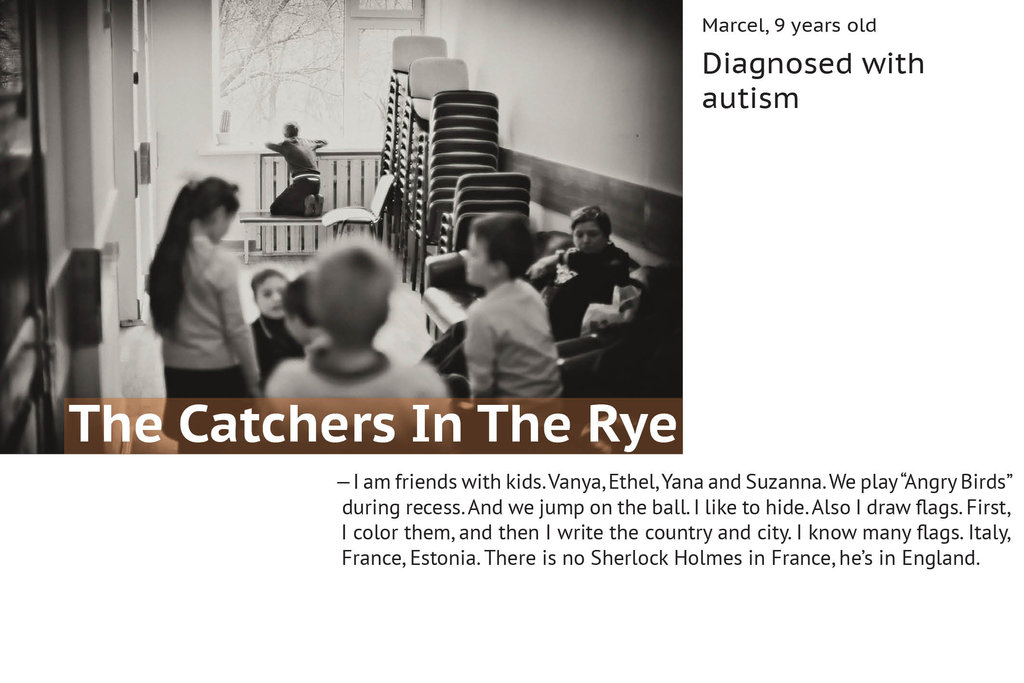
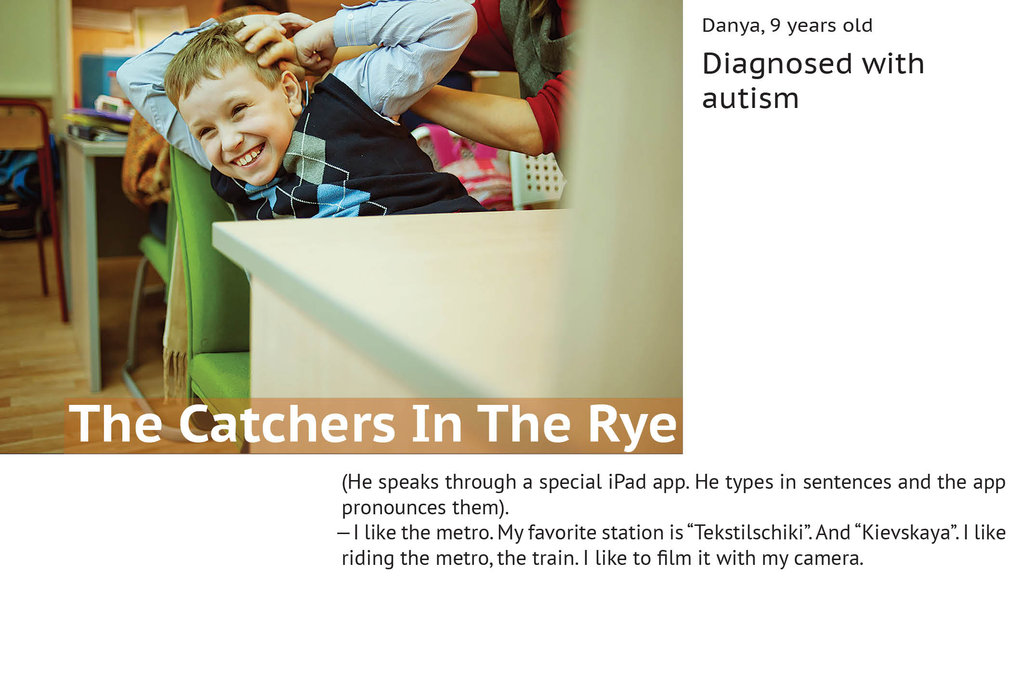
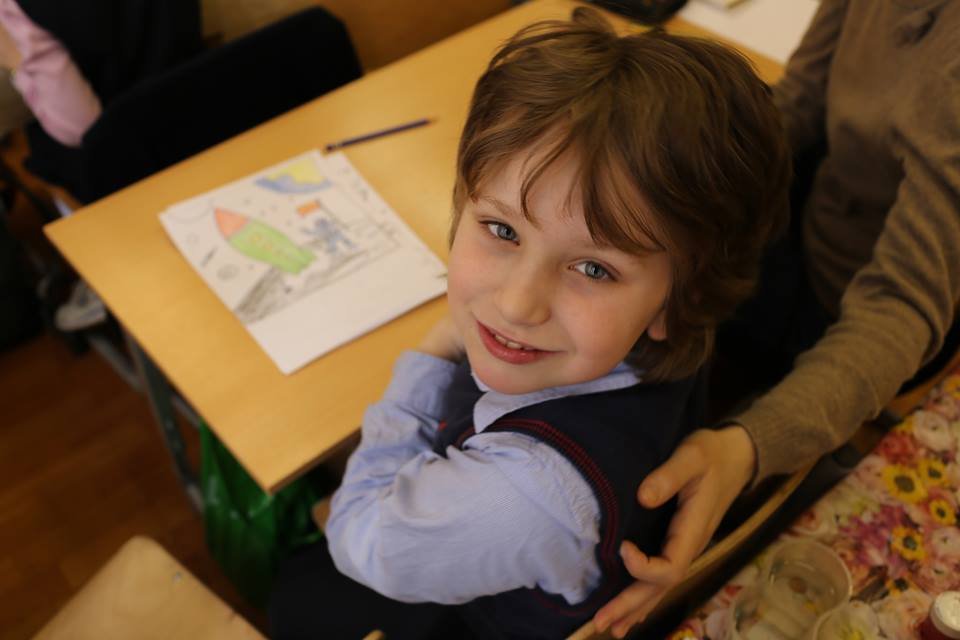
When he came to first grade, the other children accepted it as a matter of course. They also came to school for the first time, after all. And they saw that the teachers and all the adults are treating the special child as their equal classmate, and, naturally, started treating him with respect and kindness. Now Danya has friends, communication, and community…
- Mental retardation is a very inaccurate, vague term – says behavioral psychologist Yulia Presnyakova, coordinator of the inclusion project as school No 1465. – After all, mental retardation implies a slow, but linear development. But the development of an autistic child is fragmentary: some functions develop very quickly, while others can lag significantly. This is why our education process leans on a child’s strong sides and slowly pulls the weak ones forward…. We never know what a child will respond to, or what area is he or she truly talented in. But we know that it’s “never say never” with these children; that they are full of surprises. And we keep working.
- Children with autism do care about what others think about them. They need friendship. They understand that they are different from everyone else, but they have no need for self-lenience, - says Christina, Danya’s mother. – Danya, for example, likes to write text messages, and I think he has realized that his lack of speech is a significant barrier on the way to communicating with his peers. So he strained and… The potential of autists has not been studied yet. Just like the nature of autism itself. But it has turned out, again, that inclusion inquires so much from them, and sets such natural problems for them that are impossible to model in an isolated environment. And very often they turn out to be very capable of solving these problems.
And can you imagine what would have happened if Danya went to the school where they spend a whole quarter learning to pack their backpacks? And how many Danyas like this one are still in that school?
The inclusive education project requires annual financing and, for now, need constant support from individuals and organizations. The project also needs material help, which you can deliver personally.
Thank you for considering to help our project.
Project reports on GlobalGiving are posted directly to globalgiving.org by Project Leaders as they are completed, generally every 3-4 months. To protect the integrity of these documents, GlobalGiving does not alter them; therefore you may find some language or formatting issues.
If you donate to this project or have donated to this project, you can receive an email when this project posts a report. You can also subscribe for reports without donating.