By olga zhuravskaya, tatiyana scripko | project leader
Inclusion: a step forward.
Today schools have enough reasons to work with kids with special academic needs, but little of schools dare to.
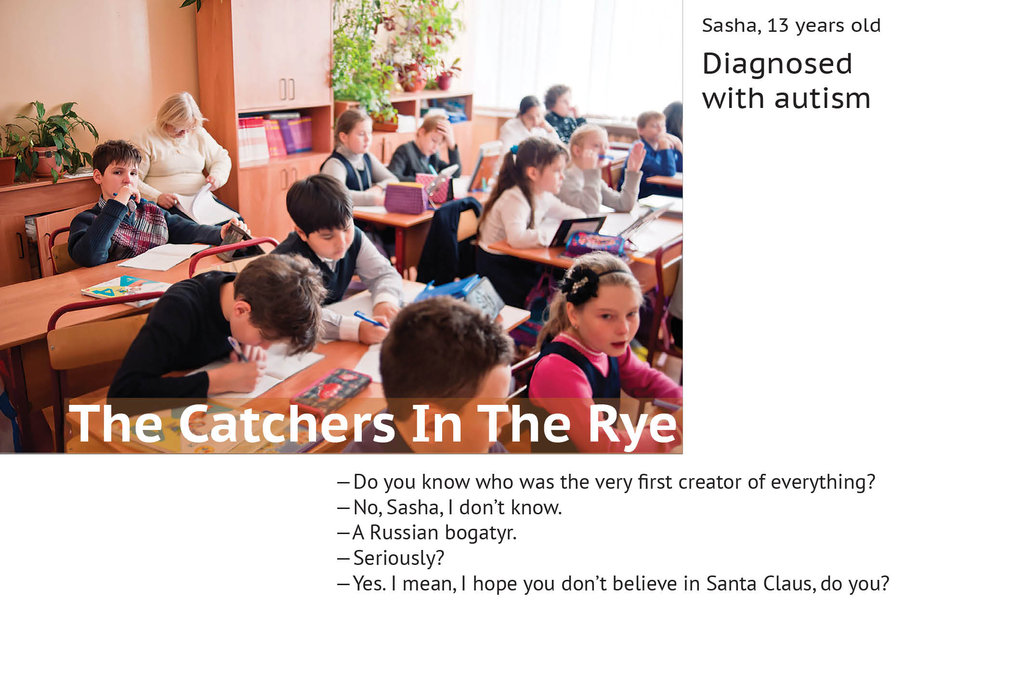
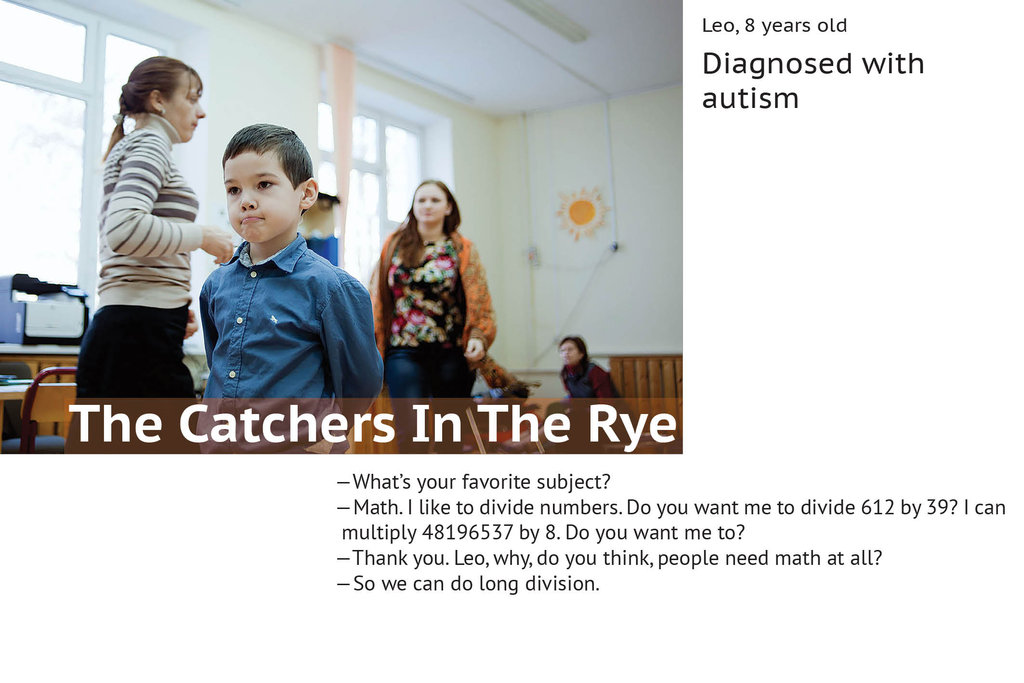
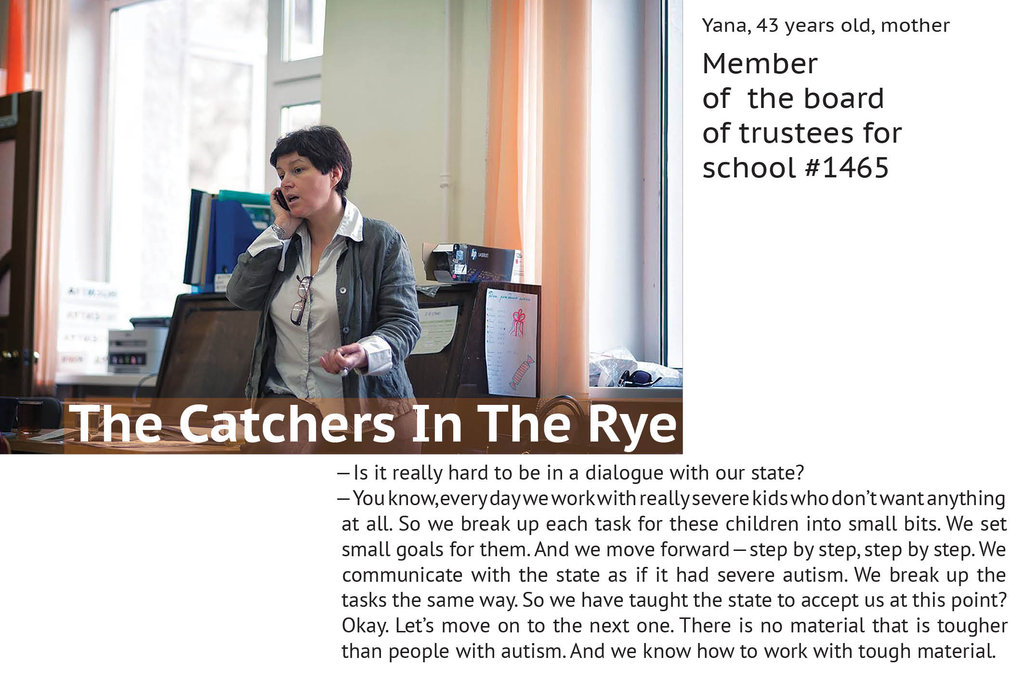
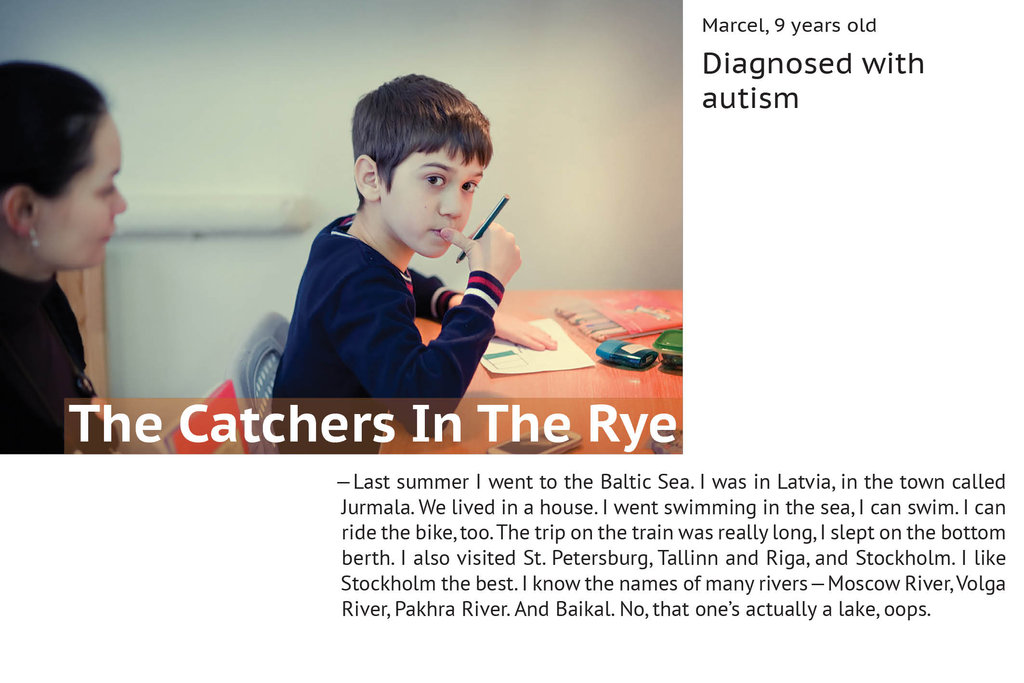
Moscow school No.1465 is a host for the unique inclusion project of including autistic kids into mainstream education.
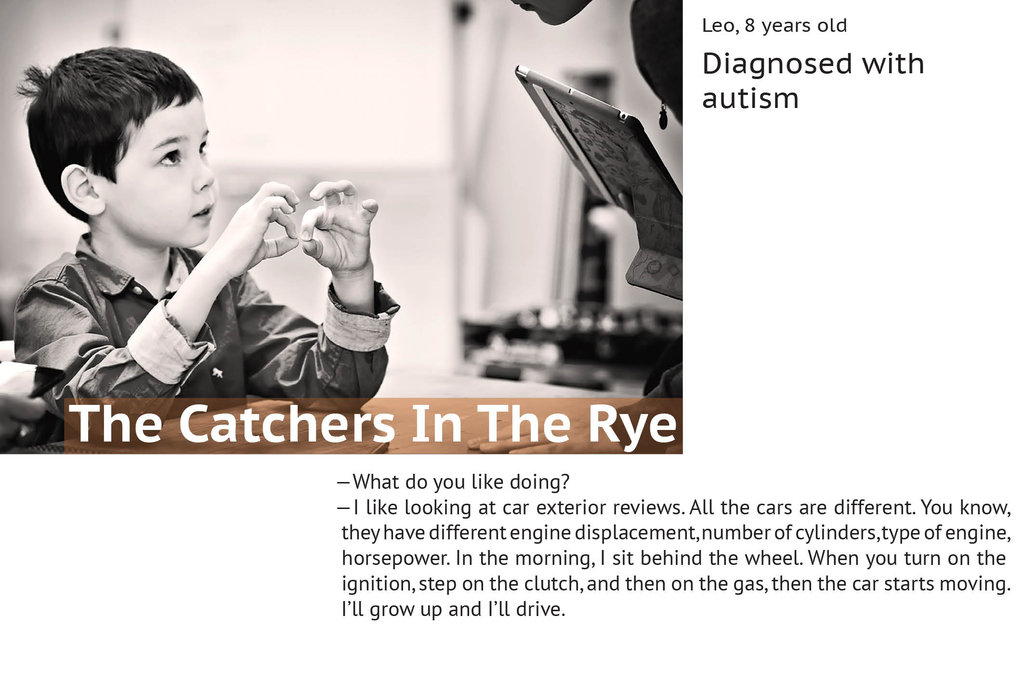
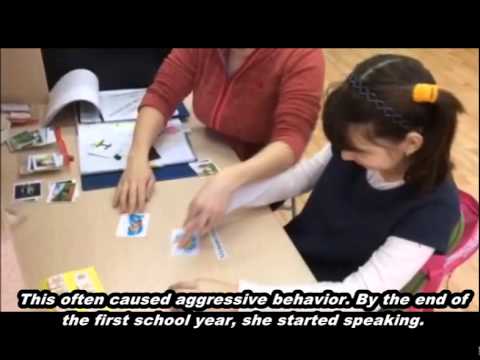
The result of this innovation is the considerable progress of the included kids (academic achievements and social adaptation of non-verbal children) and also an incredible strive of parents and professionals to duplicate this experience into other schools.
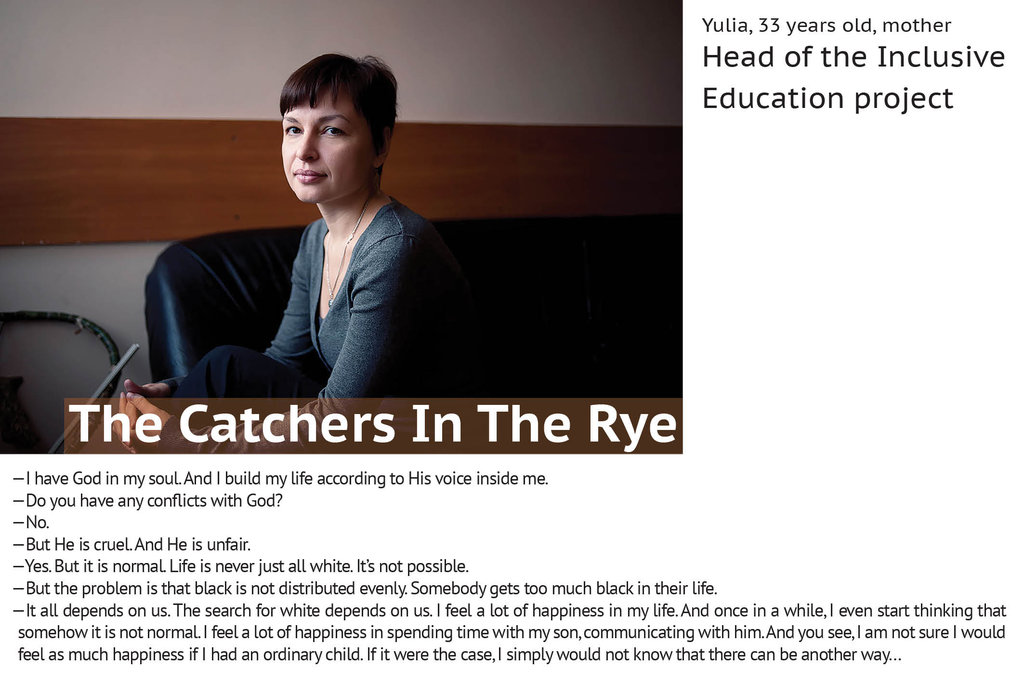
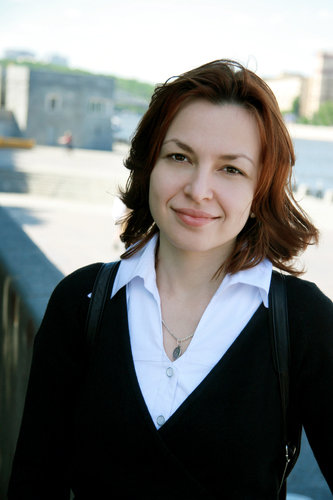
We discussed problems connected to this complex work with the conductor of inclusion in school No.1465, behavior analyst Julia Presnyakova.
- For many years you have been the conductor of inclusion in a school No.1465. What do you think of the institutions that regulate inclusion? Is there an improvement in regulative institutions?
- Inclusion is a new process for our educational system. Though we received substantial legal basis beforehand, making our work legitimate, the basis is far from perfect, and its certain parts put significant limitations on inclusive education.
Regulative institutions bring us extra troubles: we need to comply with Federal Standards and their vision of inclusion and at the same maintain our primary level and goals.
- So, despite the evident global progress of the inclusion educational process, some parts of law regulations are missing; it does not help?
- Exactly. On the paper everything it looks nice: there is a Law; there is a Federal Standard, schools are accepting kids with special academic needs, schools seek the opportunity to provide them with the tutor and other specialists.
At the same time, there is a difference between Federal Standards and Sanitary Regulations regarding including special kids in general education class.
Also, though schools can provide personnel for individual support, no one knows who should train this personnel and who should pay for them either.
The fact is that both methodical and legal regulation must support practice in the first place is a little bit ignored.
As there was no system established initially to regulate something like our project, this regulative system is being created right now as we speak, simultaneously with the process of inclusion; the real kids are being included into the mainstream education.
The complications arising during this practice put forward the necessity for change, for new legal acts and methodical data.
For instance, the lack of progress evaluation in adjusted educational programs had only got governmental interest when we discovered a vast legal and methodical gap in this area.
- Klaus Wedel, a well-known British scientist, and researcher of educational inclusion noted three levels of rigidity were impeding inclusion: the overall rigidity of state educational system, school level rigidity, and class level rigidity.
On which level would you say the rigidity is the most obstructive? What can you tell us about your experience?
- Six years ago we experienced school level rigidity, despite the cordiality of school administration. Now the overall rigidity is prevailing. We face the barriers on the fundamental levels of the educational system.
- How does school level rigidity show itself? What was it in your case?
- Despite formal approval and a necessary warrant for inclusion, we faced multiplying hidden and apparent barriers.
We managed to bring the kids to physical training class only after a series of multistep negotiations. The presence of the tutor often perceived by regular classroom teachers as an inspection of their work.
It is hard to make people understand tutor’s role, functions, and goals. Only the real-life experience shows that a child with no verbal communication and little control of vocal and motor stereotypy, not only CAN but SHOULD be among other kids because this is the only this way he can learn to control himself and get the necessary skills.
Also, it is hard for people to understand that a child with deficits will take only the amount of information he can intake.
It is a cornerstone principle of inclusion, which states that academic competence cannot be the primary criteria for inclusion in general education. There is a dominance of classical notion of school as a source of academic skills. It is not seen as a field for building multiple finest social competences.
- Given what you say, one can conclude that despite the declared inclusion, there is no understanding of inclusion itself in the first place? What do school administrators and teachers think about inclusion: what is it and who is it for?
- Unfortunately, many schools think that inclusion is a separate class of segregated kids with mild disabilities, taught by a speech therapist. Sometimes they join the class with tutor always by their side. Their academic competence complies with the general educational program, and if they cannot grasp it - too bad, “they need to change the type of school - regular lessons and communication in general education class are beyond their abilities.”
The question “why do we, humans, need inclusion?” is more complicated. Many are sure that inclusion is just a trendy idea, which soon will make a turn back to more formal special classes.
- So, there is no mass awareness that inclusion is a right of every child?
- Unfortunately, there is no correct understanding of inclusion yet.
It is true that existing system is not adapted to inclusive education. The schools, which started including kids lack resources.
Changes will take some time for sure. However, everything begins with a definition. Inclusive education is a unique approach to the organization of the school.
Inclusion - is the possibility to include a child into social life to the extent currently necessary to him, the least traumatizing way for him and those around him - on his terms.
We are sure that it is the only way a child will obtain and maintain each new social experience he gathered.
Project reports on GlobalGiving are posted directly to globalgiving.org by Project Leaders as they are completed, generally every 3-4 months. To protect the integrity of these documents, GlobalGiving does not alter them; therefore you may find some language or formatting issues.
If you donate to this project or have donated to this project, you can receive an email when this project posts a report. You can also subscribe for reports without donating.