By Dr. Jill Pruetz | Project Leader
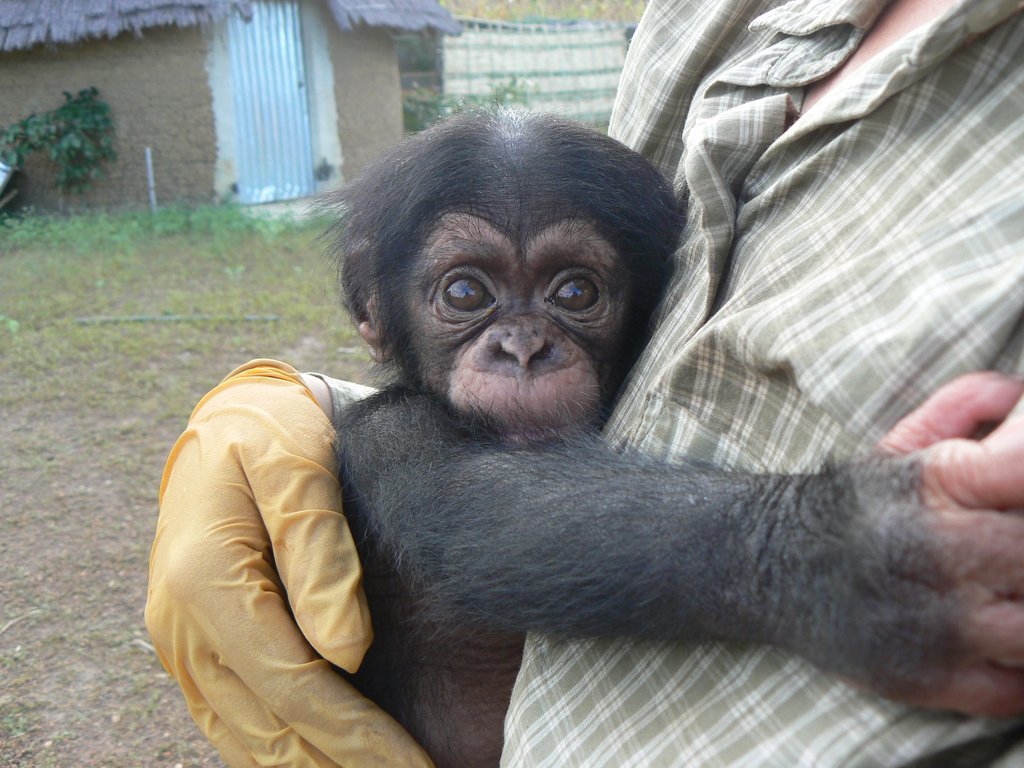
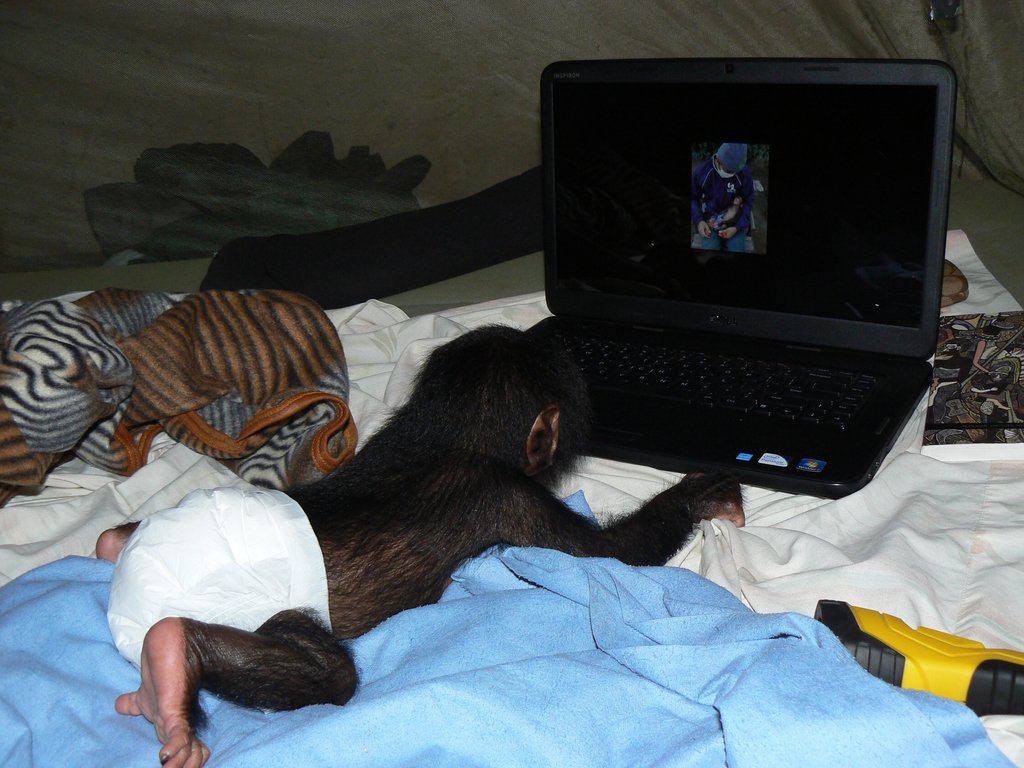
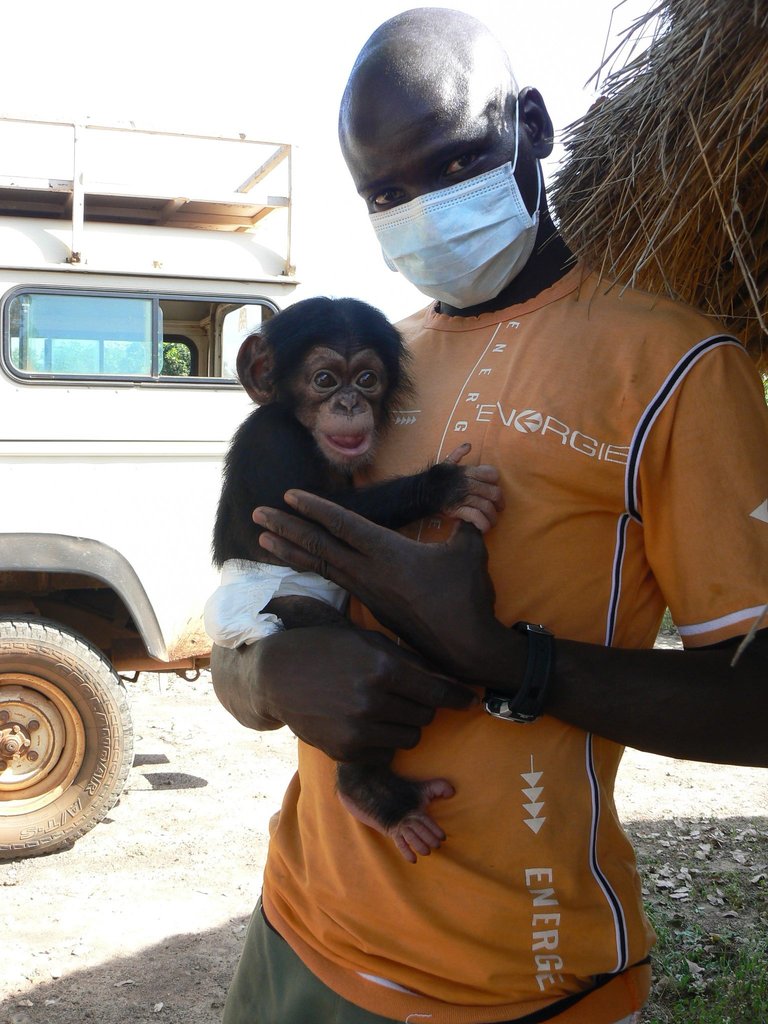
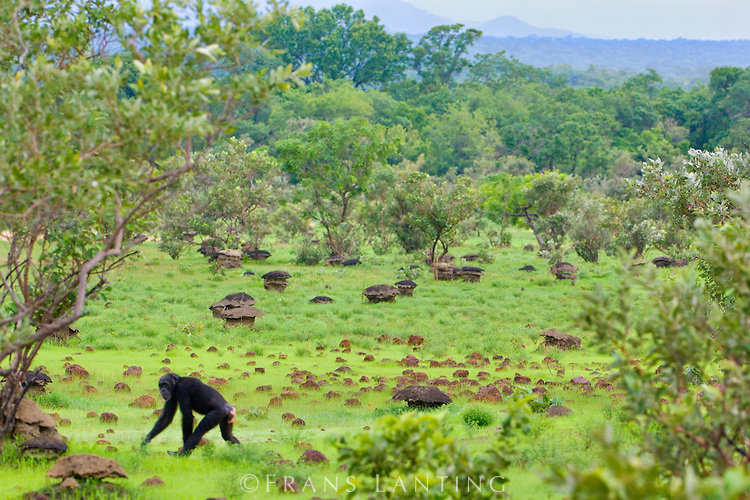
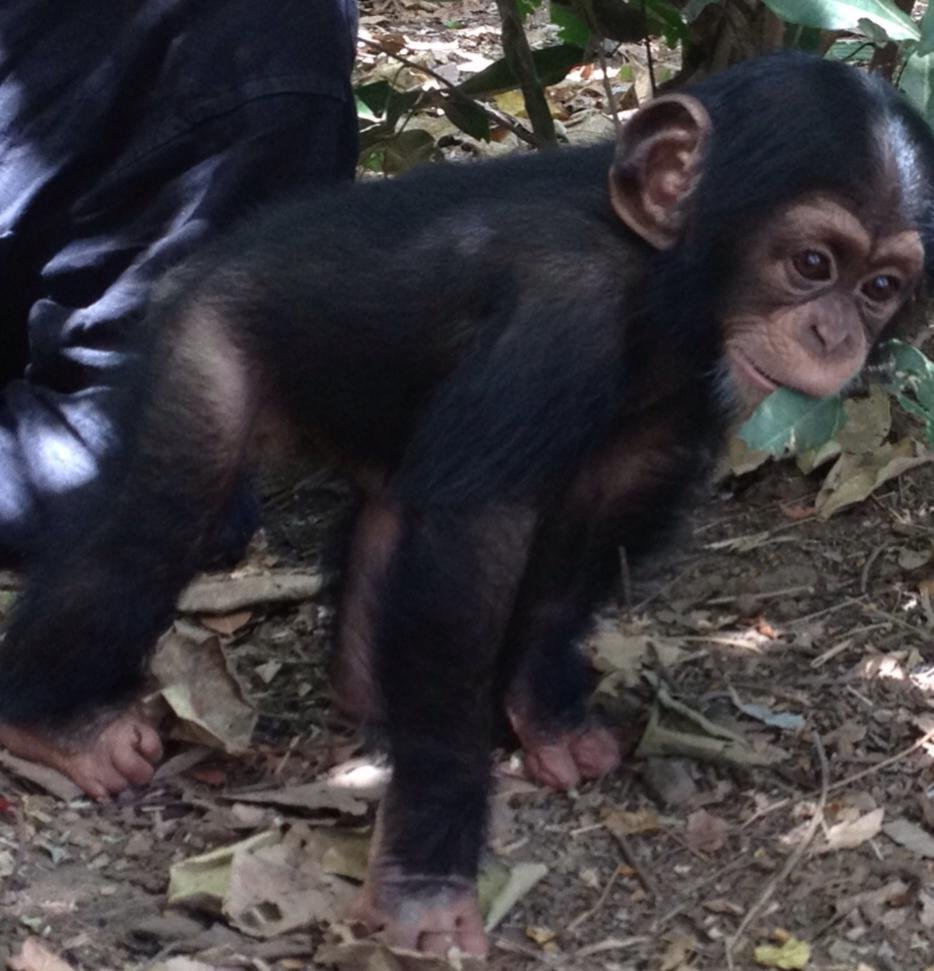
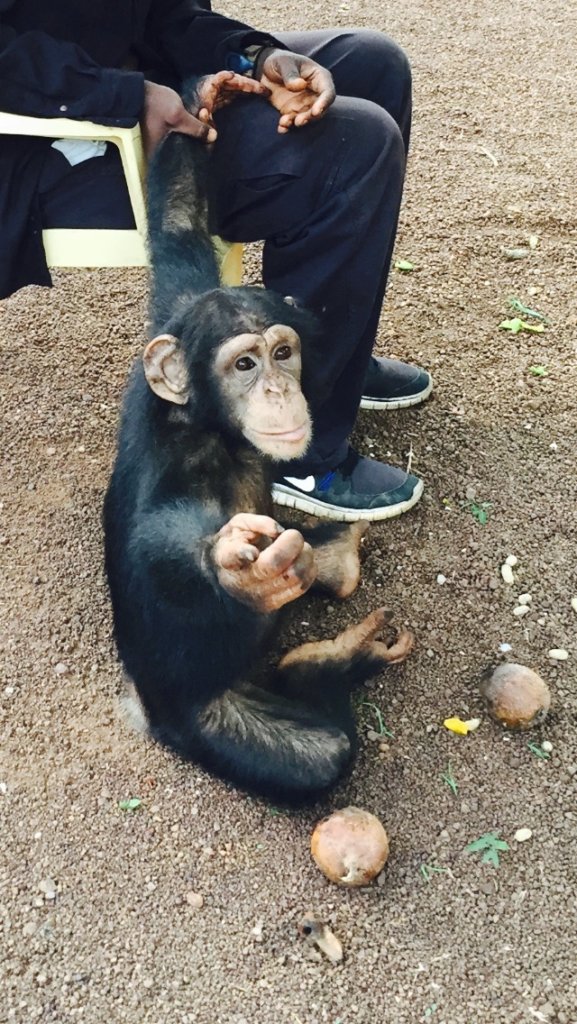
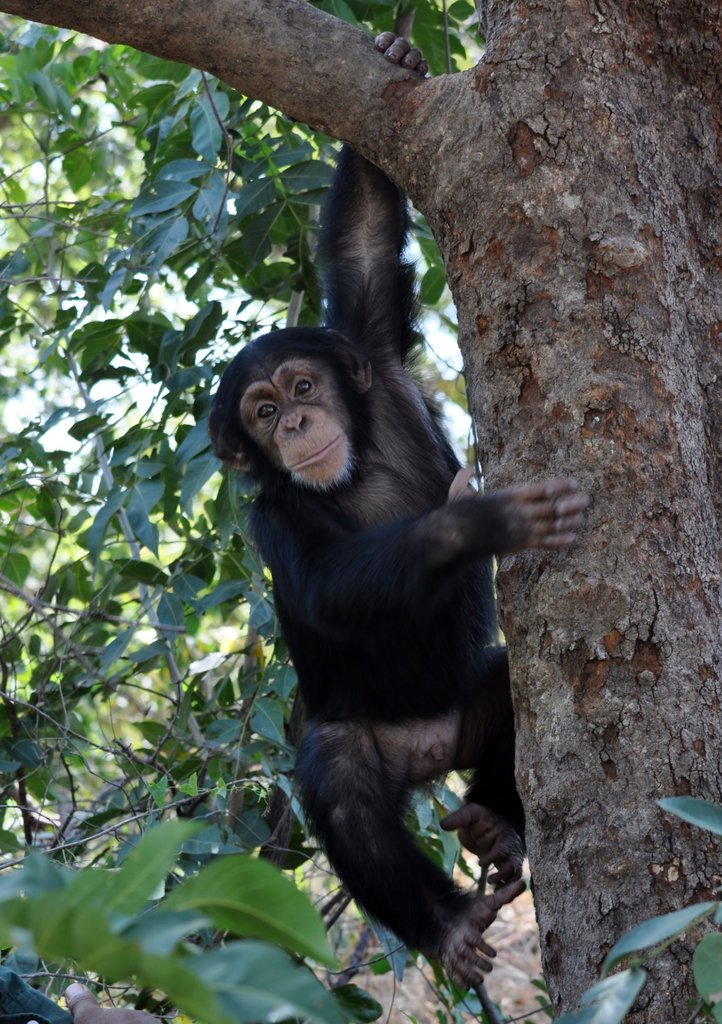
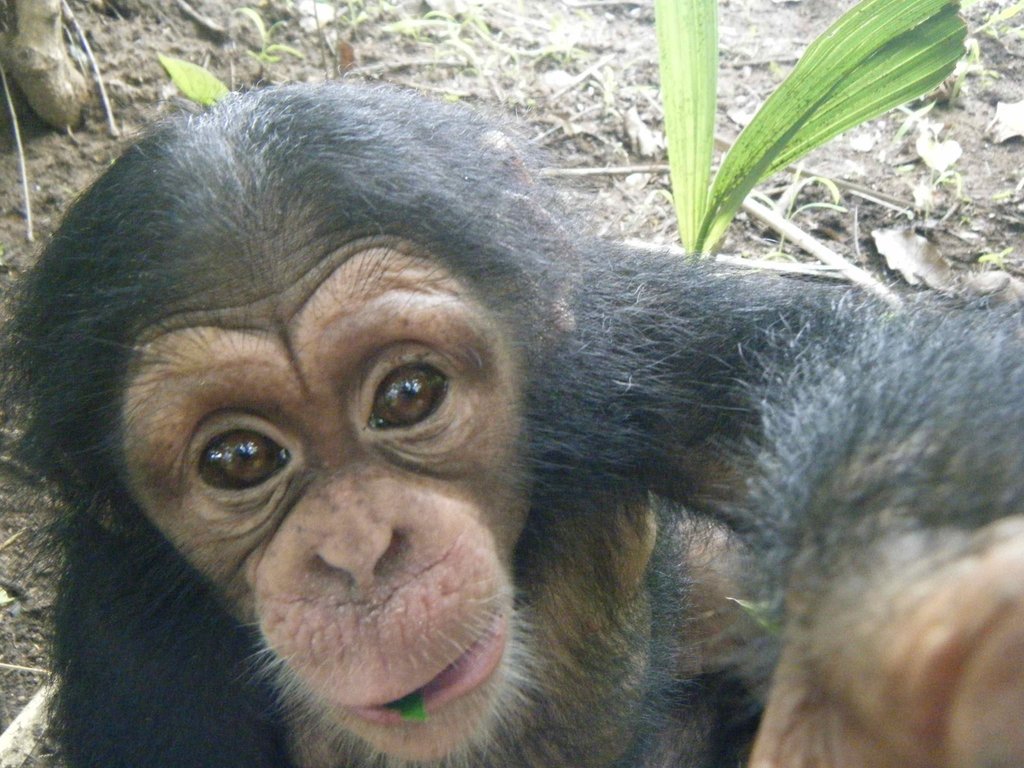
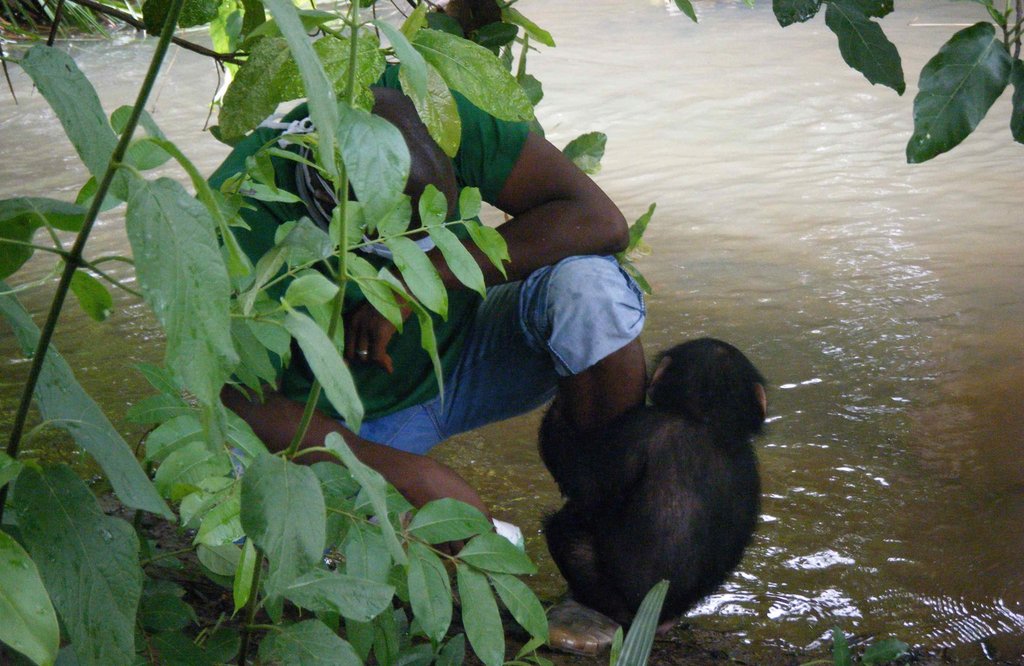
Good news on Toto's progress - he is still growing rapidly! He weighs almost 40 pounds now and is not yet two years old! He has been going out "en brousse" (into the wild) about twice a week to learn more about the environment into which he was born and to familiarize him with chimpanzee wild foods. He will be two years old in August, and this is the time around which we've scheduled our decision as to Toto's future.
After two years of age, it is possible for a young chimpanzee to live on foods other than milk. This means that, theoretically, Toto could go back to the group that he was born into - the Fongoli community of chimpanzees, the study group habituated to the presence of observers beginning in the year 2001 and continuing until today.
However, Toto would still need to be carried, protected and given food in some cases where it is too difficult for a young chimp to get access to a certain food. The hard-husked shells of the Baobab fruit, for example prevent young chimpanzees from accessing the fruit pulp, but this is a very important food source for chimps in Senegal. Even though Toto's older sister Aimee had been weaned when their mother Tia died, she was not yet big enough to reliably and efficiently process baobab fruits, and other chimps in the group shared theirs with her, especially the older adult males. Even though Toto is very big for his age (3 or 4 times larger than a wild chimp of the same age!), he would not be strong enough to access some foods, and he would need to learn many, many techniques when it comes to foraging for food on his own.
Another obstacle to releasing Toto into the wild concerns the influx of many more people into southeastern Senegal as part of the current "gold rush". Toto has much less fear of humans than even the best-habituated Fongoli study group chimpanzees, and this could be problematic for him. People coming to Senegal to look for gold do not necessarily have the same taboos against hunting and eating apes that the Senegalese have. Finally, in considering Toto's fate, we must consider most prominently the fate of the chimpanzee social group that he would be introduced to. We have consistently kept Toto as isolated as possible from humans other than a few caretakers. It is crucial to ensure that Toto would not introduce any diseases or illnesses to a wild chimpanzeee group that he contracted from living in close proximity to humans, as chimpanzees can acquire many of the same illnesses as humans, but they do not have the same immunity to them as we do.
With these obstacles in mind, especially the influx of people into Senegal as part of the gold rush, we have also come up with different options for Toto. These could include keeping him in a semi-captive situation such as you find with chimpanzee, gorilla and bonobo sanctuaries in various places in Africa. He will definitely be introduced to other chimpanzees, as this is perhaps the most important part of a chimpanzee's life (being social) after their basic needs have been met. We hope to be able to reveal our plan for Toto by the end of this year and start working to make it a reality. Currently, he is still living in Kedougou, under the care of Janis Carter and with his two "fathers", Ousmane and Pelel.
Without a doubt, Toto is a very confident as well as a strong and precocious young chimp - he did not go through the trauma that other ape orphans usually go through when they are brought into a captive situation. Toto was simply retrieved by humans he knew after his mother died and no other chimpanzees found him. We are all very intrigued to see how Toto's confidence translates into a social situation with other chimpanzees! Stay tuned for future updates!
Project reports on GlobalGiving are posted directly to globalgiving.org by Project Leaders as they are completed, generally every 3-4 months. To protect the integrity of these documents, GlobalGiving does not alter them; therefore you may find some language or formatting issues.
If you donate to this project or have donated to this project, you can receive an email when this project posts a report. You can also subscribe for reports without donating.