By Sonya R | Communications Manager
From July to September 2026, Alif Laila Book Bus Society’s Camel Library Initiative reached 7,200 child participations through eight mobile libraries, bringing books, storytelling, creative activities and climate education to communities where learning resources remain scarce.
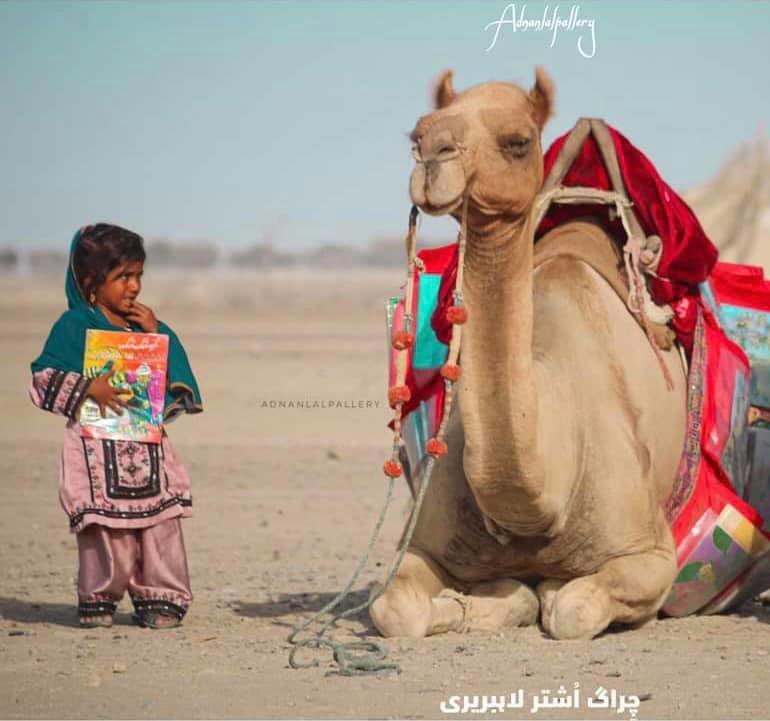
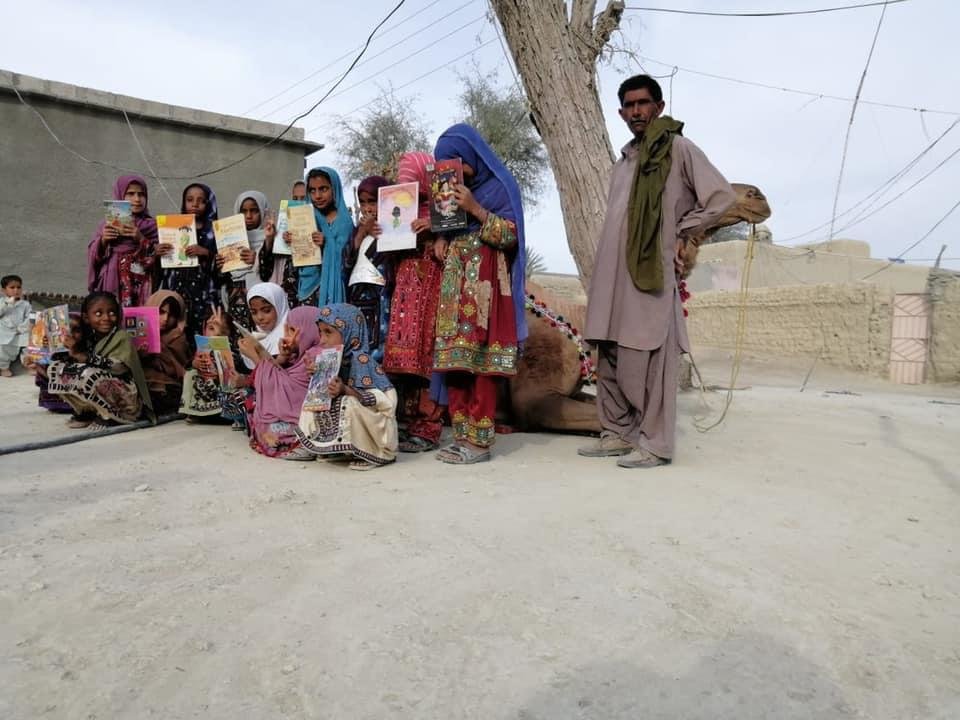
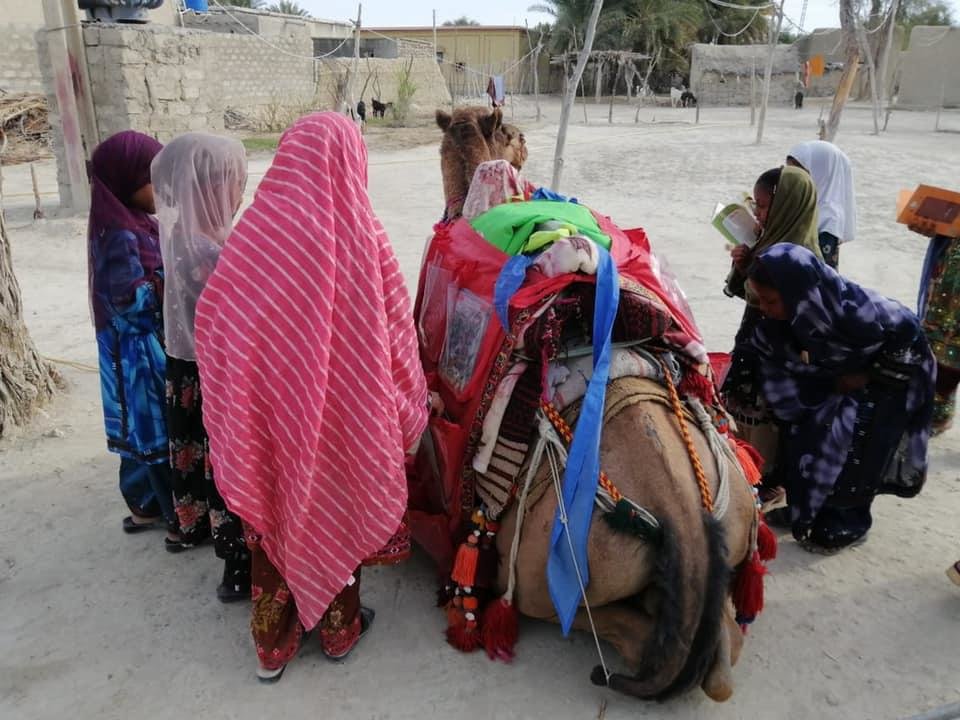
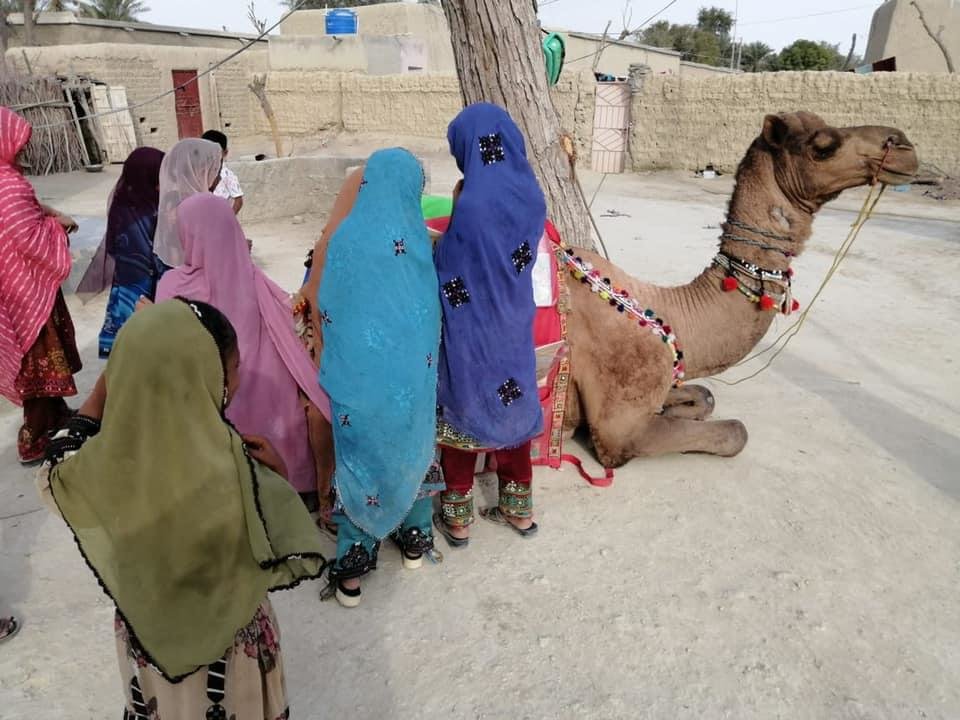
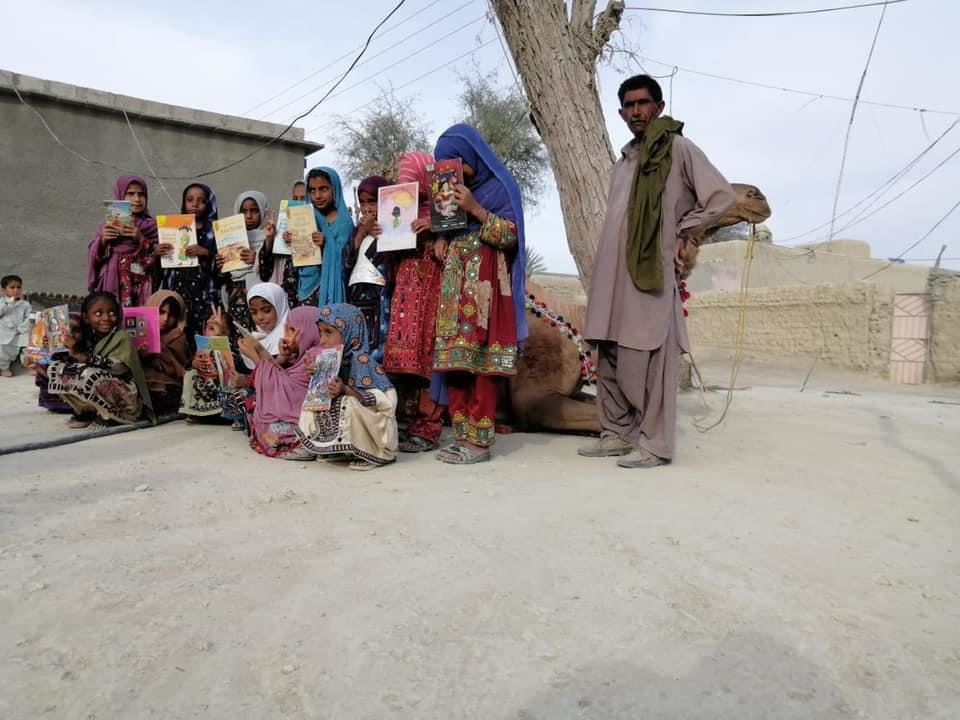
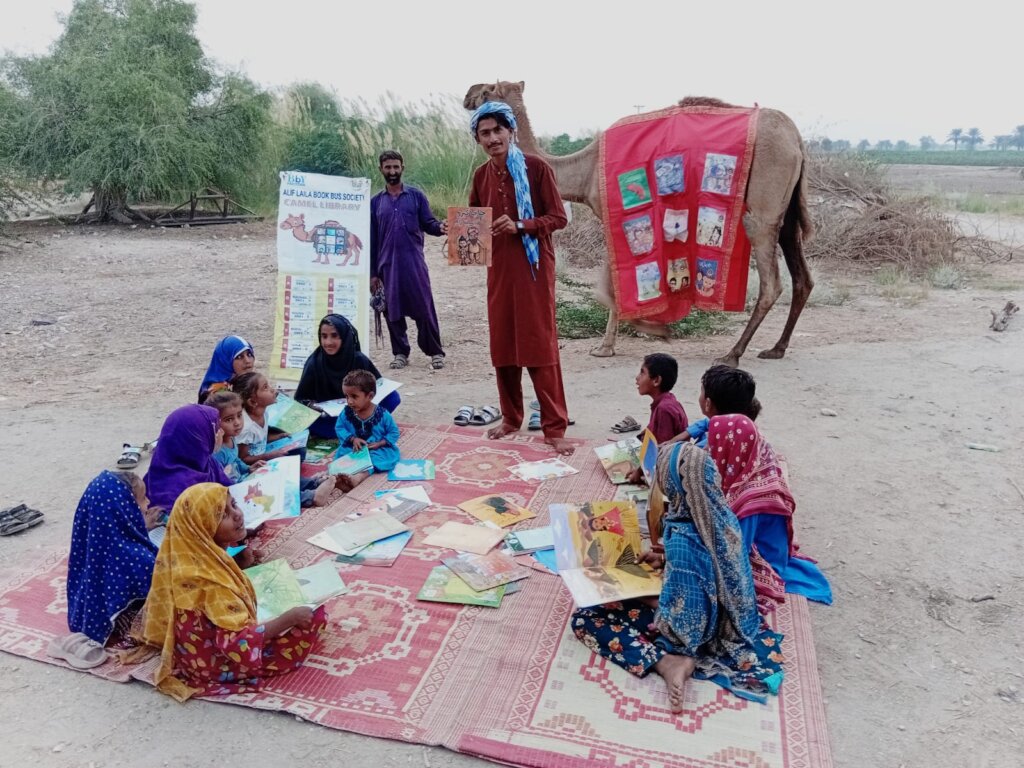
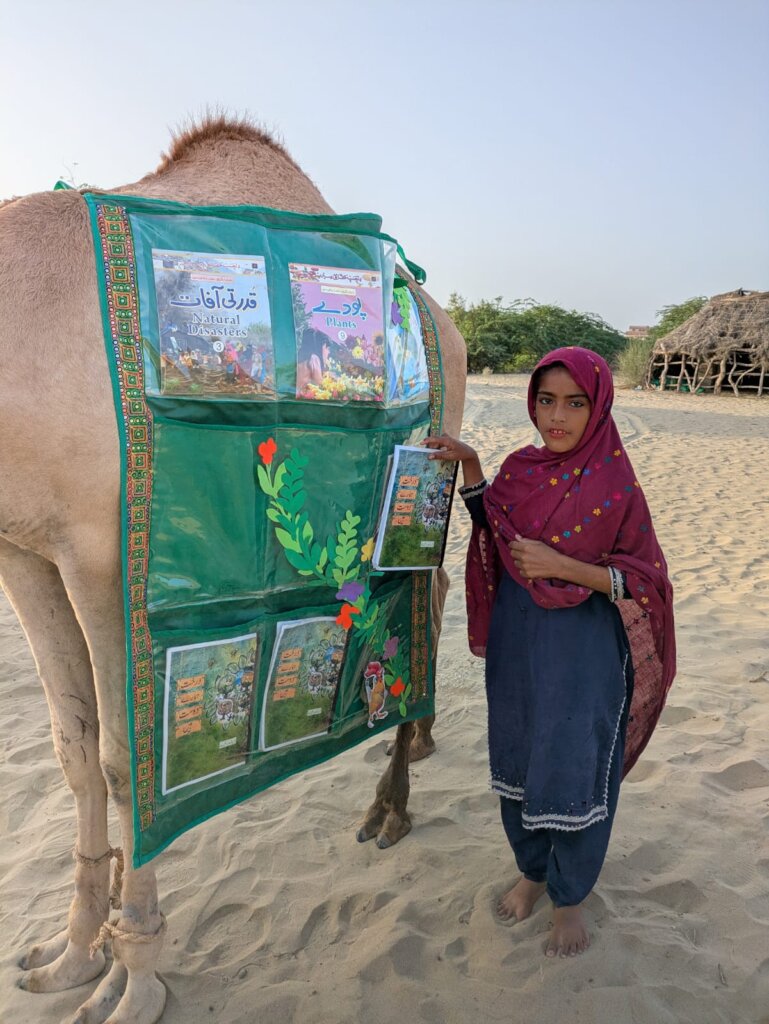
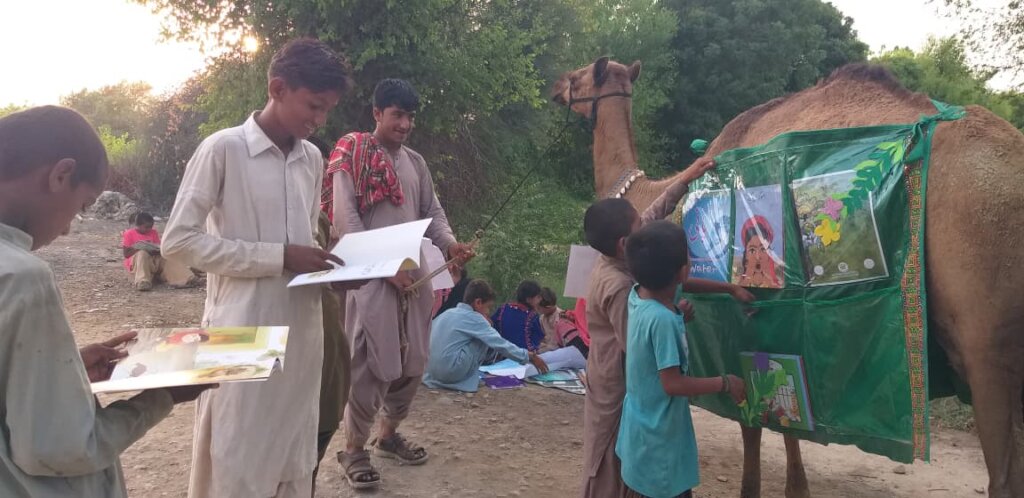
In the remote villages of Pakistan, a library does not always have four walls, shelves or even a building. Sometimes, it arrives on the back of a camel, carrying something that can be difficult to find in an underserved community: a collection of books, an opportunity to learn, and the promise of an afternoon filled with stories.
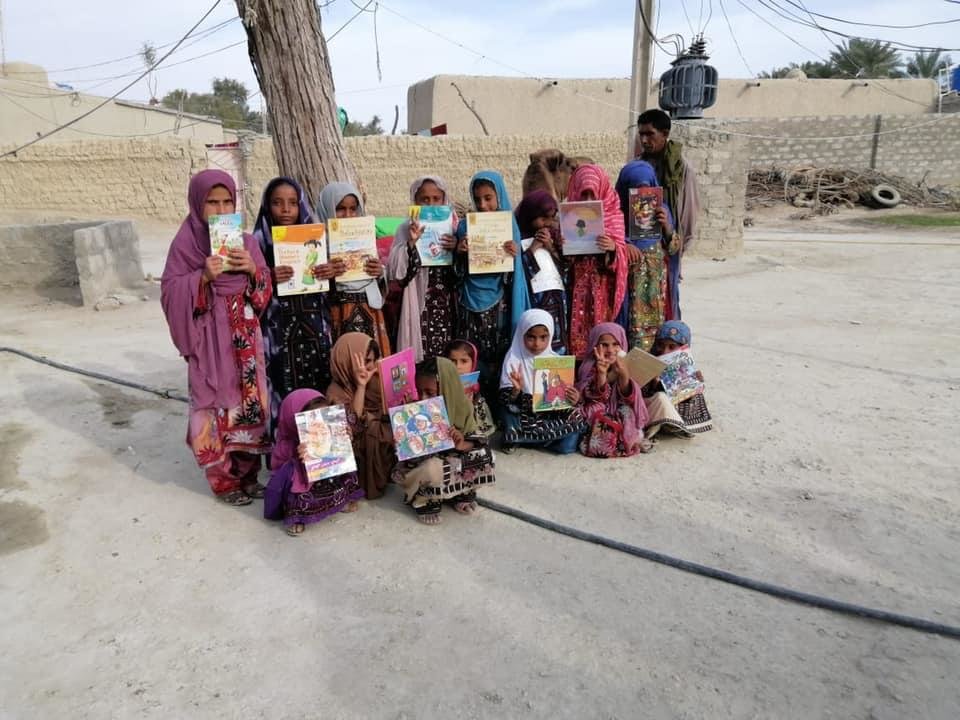
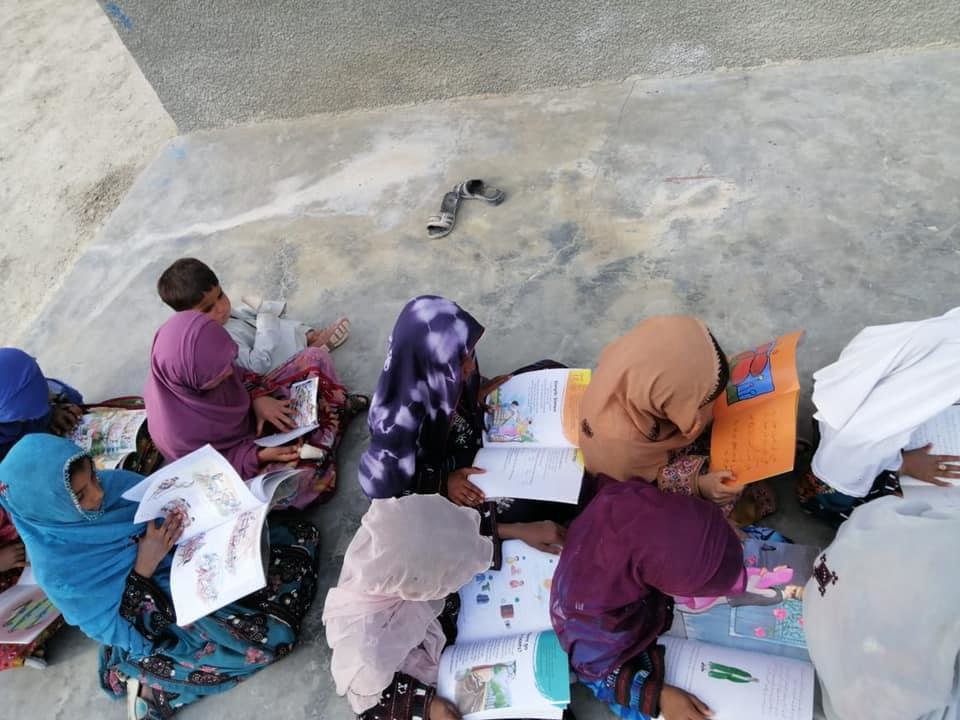
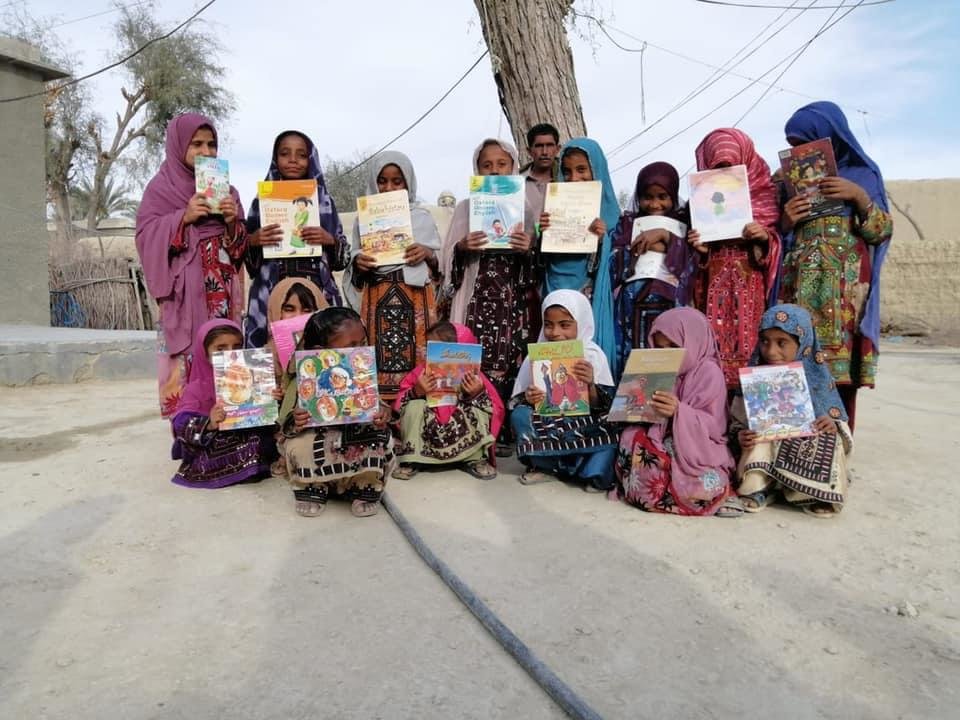
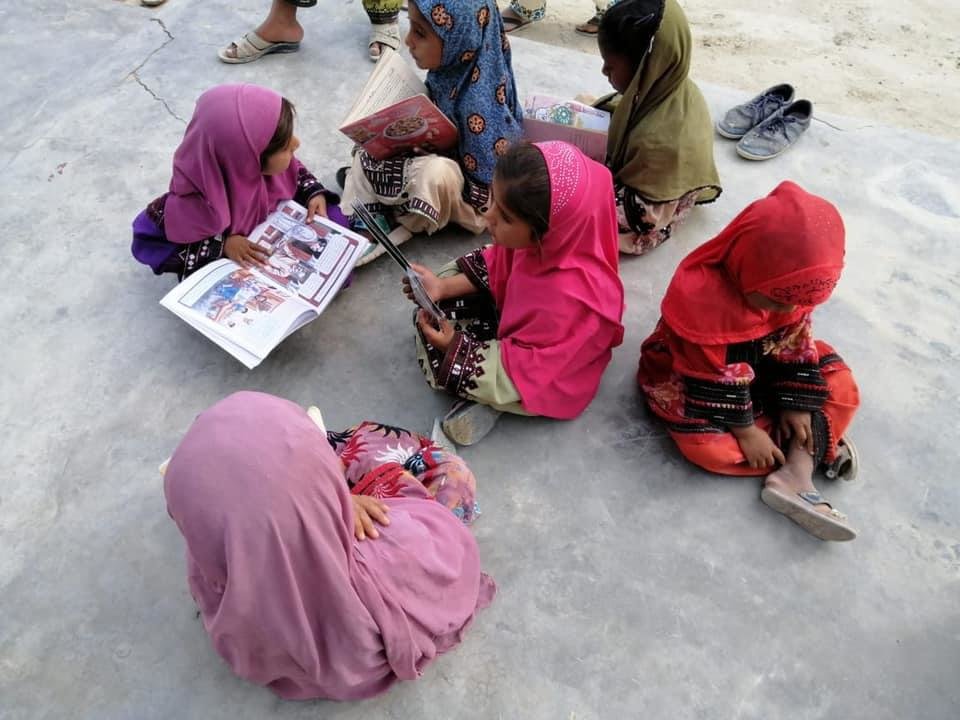
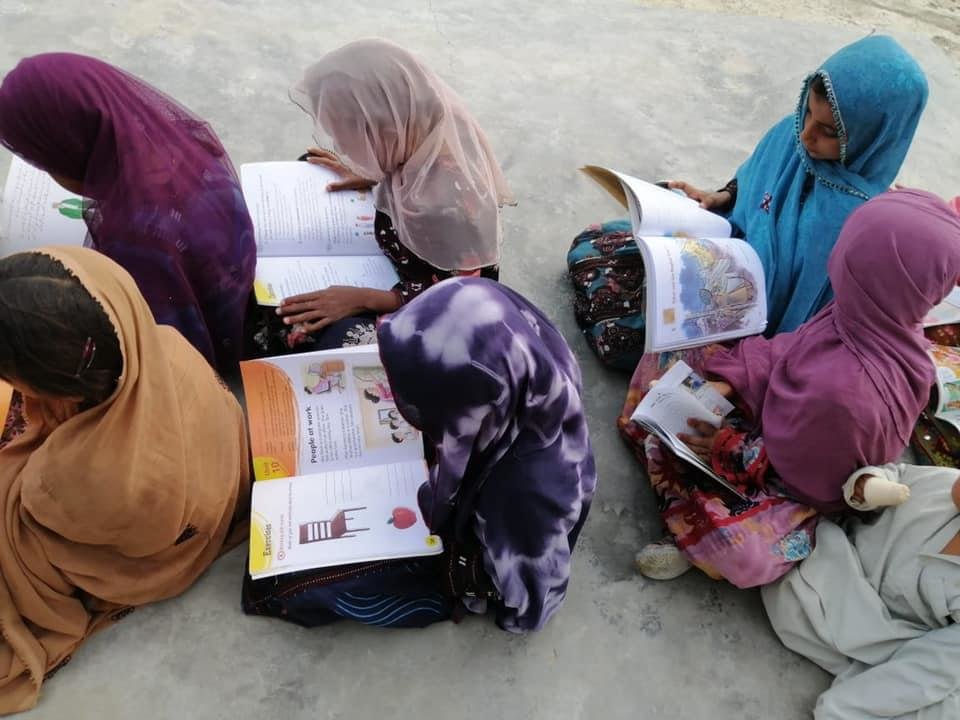
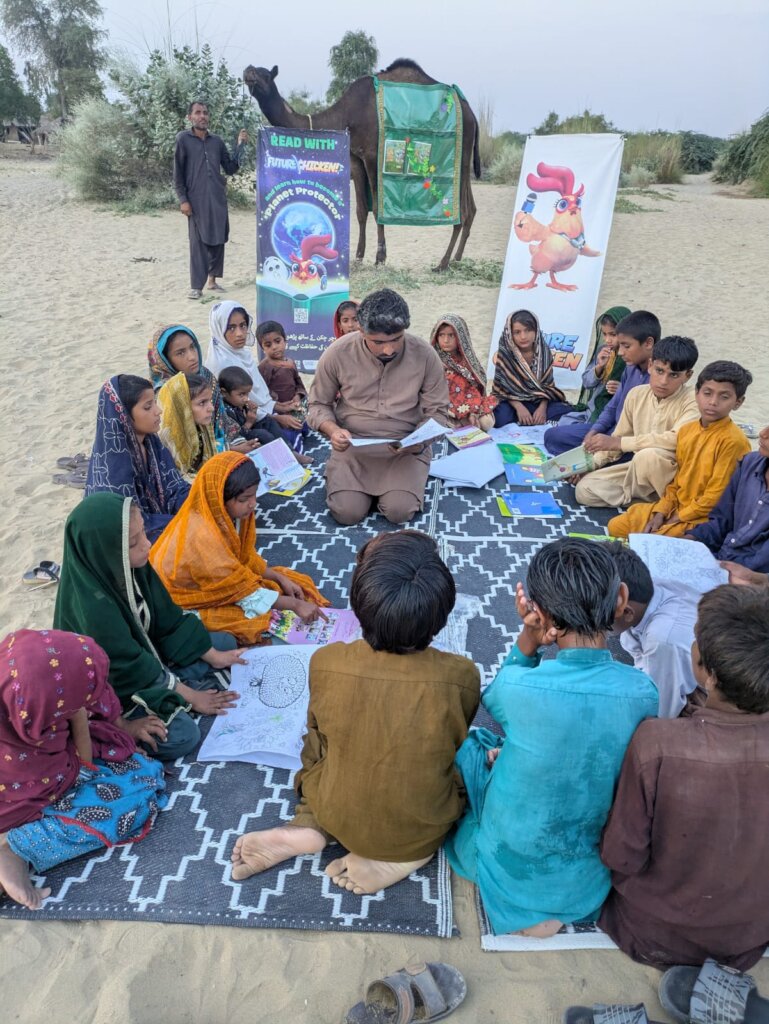
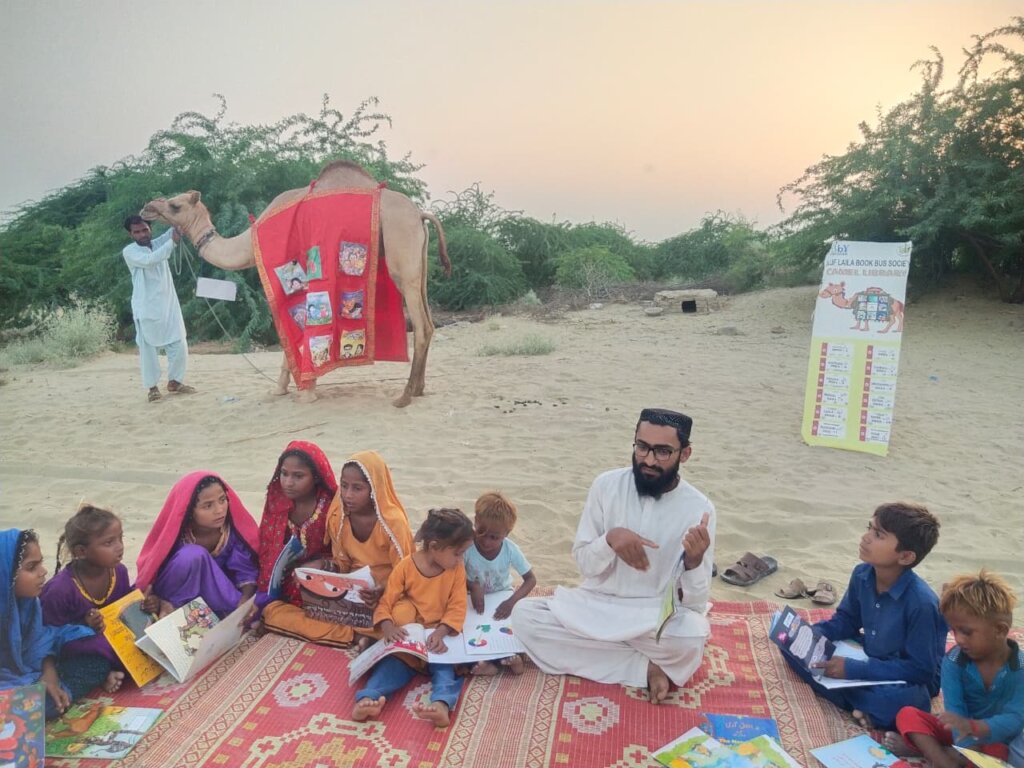
For children who have limited access to reading materials and educational opportunities, the arrival of a Camel Library can be a highlight of the week. They gather around the books, listen to stories, share their thoughts and discover characters and places beyond the boundaries of their everyday lives. Some arrive eager to read. Others come for the storytelling, the drawing and the chance to learn alongside their friends.
Throughout July, August and September 2026, Alif Laila Book Bus Society’s Camel Library Initiative continued to bring these experiences to children across remote communities in Pakistan. Eight libraries, named Nayab, Amal, Sukoon, Khushi, Mashal, Afzaal, Raunaq and Roshan, maintained their regular visits, recording a combined 7,200 child participations over the quarter.
Behind that number are thousands of opportunities for children to encounter a new story, exercise their imagination, develop their reading skills and experience learning as something enjoyable and accessible.
A library that comes to the children
Access to books can be a significant barrier for children growing up in underserved rural communities. Where libraries and educational resources are limited, a mobile library can make a meaningful difference by bringing learning directly to the places where children live.
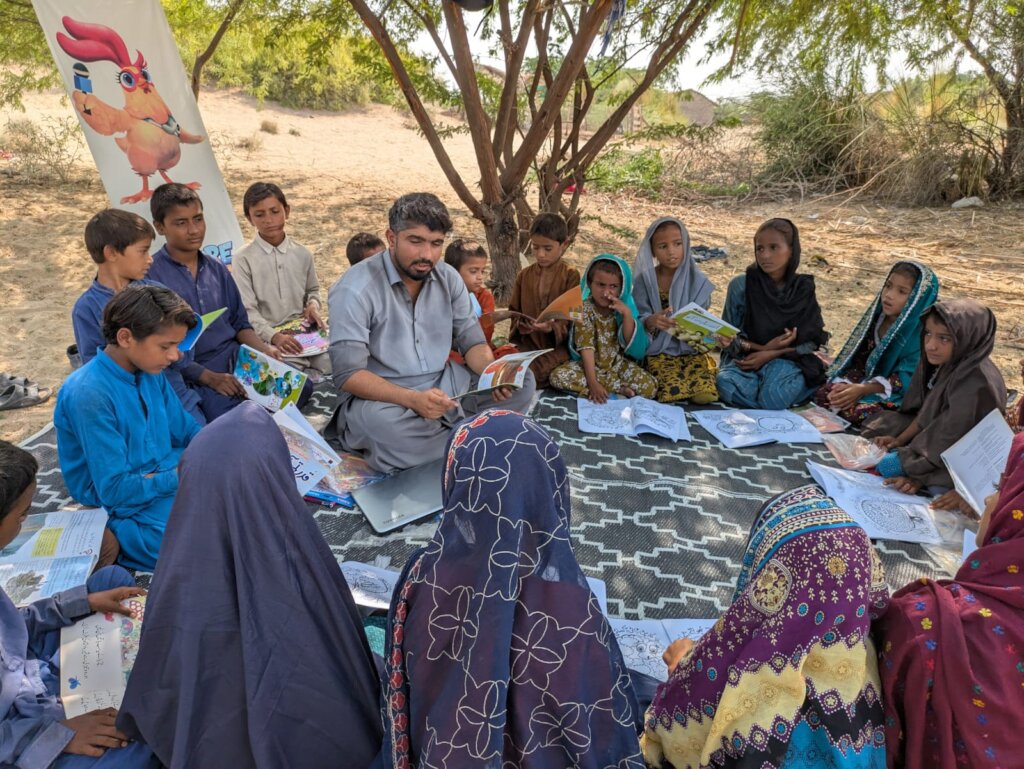
The Camel Library Initiative does more than distribute books. Its visits create opportunities for storytelling, discussion, art, drawing and interactive activities that encourage children to express themselves and explore new ideas. Regular sessions help nurture reading habits, build confidence and make learning a shared community experience.
The programme's reach remained remarkably steady throughout the reporting period, with participation increasing month by month. The eight libraries recorded 2,378 child participations in July, 2,389 in August and 2,433 in September.
Sukoon recorded the highest quarterly attendance, with 1,052 participations, closely followed by Roshan with 1,046 and Raunaq with 1,011. Amal reached 986, Mashal 935, Khushi 847, Nayab 798 and Afzaal 525.
These figures represent monthly attendance rather than unique individuals, meaning children who attended in more than one month are counted again. Together, they reflect the programme's continued ability to bring children back to reading and learning activities.
Nayab's attendance rose from 233 in July to 305 in September, an increase of approximately 31 per cent. The trend offers an encouraging indication of growing participation at the library, while the gradual decline recorded at Mashal, from 324 to 295, provides a useful area for the team to monitor and explore in the coming quarter.
Afzaal operates on a session-based model, welcoming groups of approximately 18 to 25 children per session during the reporting period. This approach allows the programme to create more focused opportunities for participation and interaction.
Girls finding their place among the pages
One of the most encouraging findings this quarter was the participation of girls.
Across the seven Camel Libraries that record attendance by gender, 4,008 girls and 2,667 boys took part in activities. Girls accounted for approximately 60 per cent of the recorded participation at these libraries.
In communities where educational opportunities may be constrained by distance, household responsibilities and limited resources, regular access to books and learning activities can be particularly valuable for girls. The figures demonstrate that girls are not simply attending the libraries; they are a substantial part of the programme's readership and learning community.
For the Camel Library team, sustaining this participation means continuing to provide welcoming spaces where girls can read, ask questions, join discussions and explore their interests.
The children who bring the stories to life
Numbers help measure the programme's reach, but the children's experiences reveal what its work looks like on the ground.
Nine-year-old Zakya is so excited about the library that she hurries to join whenever it visits. Her enthusiasm captures the anticipation that can surround a regular library session: the possibility of a new book, another story and another chance to learn.
At the Nayab Camel Library, 12-year-old Mahid brings his friends along and enjoys reading with them. His habit of inviting others reflects the social nature of the initiative, where reading becomes something children can share rather than an activity they pursue alone.
Eleven-year-old Farah, a member of the Amal Camel Library, particularly enjoys fairy tales and their characters. Through these stories, children encounter unfamiliar worlds, imagine different possibilities and engage with characters whose experiences can spark questions and conversations.
For 10-year-old Saim, the experience does not end when a session is over. He retells the stories he discovers at the library to his younger siblings and friends, extending their reach beyond the children who attended that day.
Twelve-year-old Noreen regularly participates in storytelling sessions and group discussions, while eight-year-old Ashnoor, an active member of the Roshan Camel Library, encourages other children to join the reading activities. At the Raunaq Camel Library, 13-year-old Saba's growing love of books has inspired her family.
Together, these accounts illustrate how a mobile library can become part of a child's everyday life. A story heard during one visit can be retold at home, shared with a friend or remembered long after the session has ended. Reading can move from an organised activity to a habit that children carry into their families and communities.
Taking climate education to the children
This quarter also saw the introduction of a specialised learning focus through two Climate Camel Libraries, one operating in Sindh and the other in Balochistan.
Running during August and September, these libraries devoted their activities to climate change and environmental awareness. Their purpose was to help children understand the subject and begin exploring how environmental changes relate to the world around them.
Climate education is especially relevant for children growing up in communities that may experience environmental pressures at close quarters. Introducing these ideas through accessible, child-friendly learning activities creates an opportunity to build understanding early and encourage curiosity about the natural environment.
Each Climate Camel Library reached approximately 1,000 children, according to programme estimates. Their reception during the quarter marked an encouraging development in the initiative's work, extending its educational focus beyond literacy to include environmental awareness.
The specialised libraries also reflect an important principle behind the programme: learning should respond to children's lives and the questions they encounter in the world around them. Books and storytelling can provide an entry point for discussing complex subjects in ways that children can understand and explore.
A community effort, sustained by support
The Camel Libraries depend not only on the books they carry but also on the communities that welcome them. Families and community members have encouraged children to attend regularly and participate in activities, helping establish the libraries as a familiar part of village life.
That community involvement matters. When children are encouraged to read, share stories and explore creative activities, the benefits can extend beyond a single session. Parents and siblings become part of the experience as children bring home what they have learned, while friendships formed around books can encourage children to keep returning.
The initiative's work also involves navigating practical challenges. Extreme weather occasionally disrupts travel schedules and outdoor sessions, while rough terrain and transportation difficulties can make some villages harder to reach. Financial pressures on households can affect attendance, and limited programme resources constrain opportunities to expand book collections and learning materials.
These challenges underline the importance of sustained support. Keeping a mobile library operating requires more than transporting books; it requires the resources to maintain regular visits, replenish reading materials and provide children with engaging learning experiences throughout the year.
More stories, more opportunities
Over the coming quarter, the Camel Library Initiative plans to maintain regular visits to the villages it currently serves while expanding opportunities for creative learning. Priorities include introducing more art and craft activities, growing book collections, organising reading festivals and storytelling events, and strengthening partnerships and sponsorships.
The programme also hopes to involve more parents and volunteers, reinforcing the community relationships that help sustain its work.
Each of these steps builds on a simple idea: children deserve opportunities to read, imagine, ask questions and learn, regardless of where they live or the resources available to their families.
During the July–September quarter, eight Camel Libraries continued to make that idea a reality, recording 7,200 child participations and creating opportunities for children to engage with books, stories, creative activities and new ideas. The two Climate Camel Libraries extended this work to environmental education, reaching approximately 2,000 children combined.
For Zakya, Mahid, Farah, Saim, Noreen, Ashnoor, Saba and the many other children who gather around the libraries, the experience begins with something wonderfully simple: a visit, a book and a story worth sharing.
With continued support from donors and partners, Alif Laila Book Bus Society can sustain these visits, expand access to reading materials and bring more learning opportunities to communities that need them.
Sometimes, opening a world of possibilities begins with a library arriving in a village. And sometimes, that library arrives on a camel.
Project reports on GlobalGiving are posted directly to globalgiving.org by Project Leaders as they are completed, generally every 3-4 months. To protect the integrity of these documents, GlobalGiving does not alter them; therefore you may find some language or formatting issues.
If you donate to this project or have donated to this project, you can receive an email when this project posts a report. You can also subscribe for reports without donating.


Support this important cause by creating a personalized fundraising page.
Start a Fundraiser