By Astère Muyango | IBJ Burundi Legal Fellow and Country Manager
In Burundi's capital city of Bujumbura, IBJ is making steady progress advancing the cause for humane Juvenile Justice.
After carrying out rights awareness campaigns in Bujumbura's central Mpimba prison, IBJ identified at least 150 cases of prisoners or pretrial detainees who were only children at the time of their arrests. While informing prisoners of their rights under the criminal procedure and penal laws of Burundi, it became glaringly obvious that, for a great many of these young detainees, their very captivity is in stark violation of the country's laws.
IBJ Burundi has long observed that the legal safeguards for juveniles spelled out in Burundi's domestic laws are not respected by all criminal justice system institutions. Young people accused of crime are, for the most part, subject to the same harsh treatment that adults convicted of crime face. This failure of the system to differentiate between adults and minors directly conflicts with articles 28, 29, and 30 of Burundi's penal code.
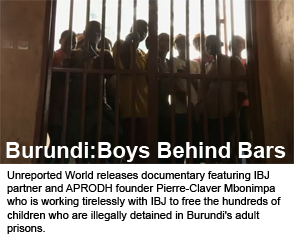
This systematic violation of law takes place in prisons across Burundi, as the linked video, the documentary entitled "Burundi: Boys Behind Bars," makes painfully clear. The age of criminal culpability in Burundi is fifteen, yet one need only look in the faces of these children to see that their incarceration violates this condition.
IBJ has seen that this failure to take the special needs of juveniles into consideration exists throughout every stage of the criminal process in Burundi. In the past, there had been no separate procedures for minors accused of crimes. The treatment of young people, at the hands of a system that willfully ignores their age, follows from the initial stage of arrest to court, and on to prison.
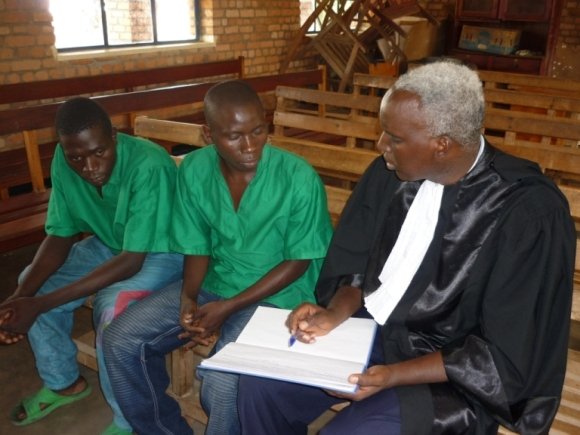
Starting in June of this year, IBJ has challenged the status quo of juvenile injustice in Burundi. After high-level meetings with the presidents of the High Courts of Bujumbura and the state prosecuting authorities, it was agreed that special closed courtroom hearings of juvenile cases would be established in the capital city.
Separated from adult cases, accusations against juveniles can be heard in the proper context, and any sanctions -- should charges be proved -- can be tempered in light of the age of the accused. In addition to producing more age-appropriate outcomes, the special tribunals are held in closed sessions, to protect the identities of minors accused of crime.
The collaborative solution to juvenile incarceration that IBJ is implementing in Bujumbura is meant to be a model for other jurisdictions in Burundi. By identifying this gap between the laws on the books and the way those laws were playing out in practice, IBJ is on its way to delivering a lasting impact on Juvenile Justice in Burundi. By bringing together the people charged with carrying out these laws, IBJ is improving access to justice for young people in Burundi.
Links:
Project reports on GlobalGiving are posted directly to globalgiving.org by Project Leaders as they are completed, generally every 3-4 months. To protect the integrity of these documents, GlobalGiving does not alter them; therefore you may find some language or formatting issues.
If you donate to this project or have donated to this project, you can receive an email when this project posts a report. You can also subscribe for reports without donating.