By Joshua Reed | Intern Dreams Can Be
FIGHT FOR PEACE SPORTS AND EDUCATION CENTRE NARRATIVE REPORT JANUARY THROUGH SEPTEMBER 2007
Fight for Peace (FFP) offers practical alternatives for children and youths to get away from involvement in crime and drug trafficking through inclusion in boxing and other martial arts, education, access to the formal work market, the promotion of a culture of peace and building youth leaders for the future. The project was established in July 2000 and is open to both males and females between the ages of 7 and 25 years old that live within the Complexo da Maré.
IN ORDER TO OFFER PRACTICAL OPPERTUN ITIES FOR CHILDREN AND YOUNG PEOPLE, FFP COMNINES THE FOLLOWING 5 INTERRELATED COMPONENTS:
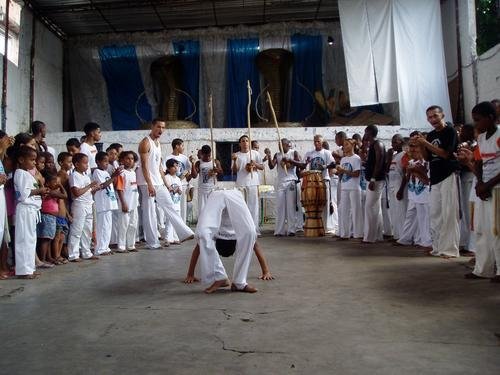
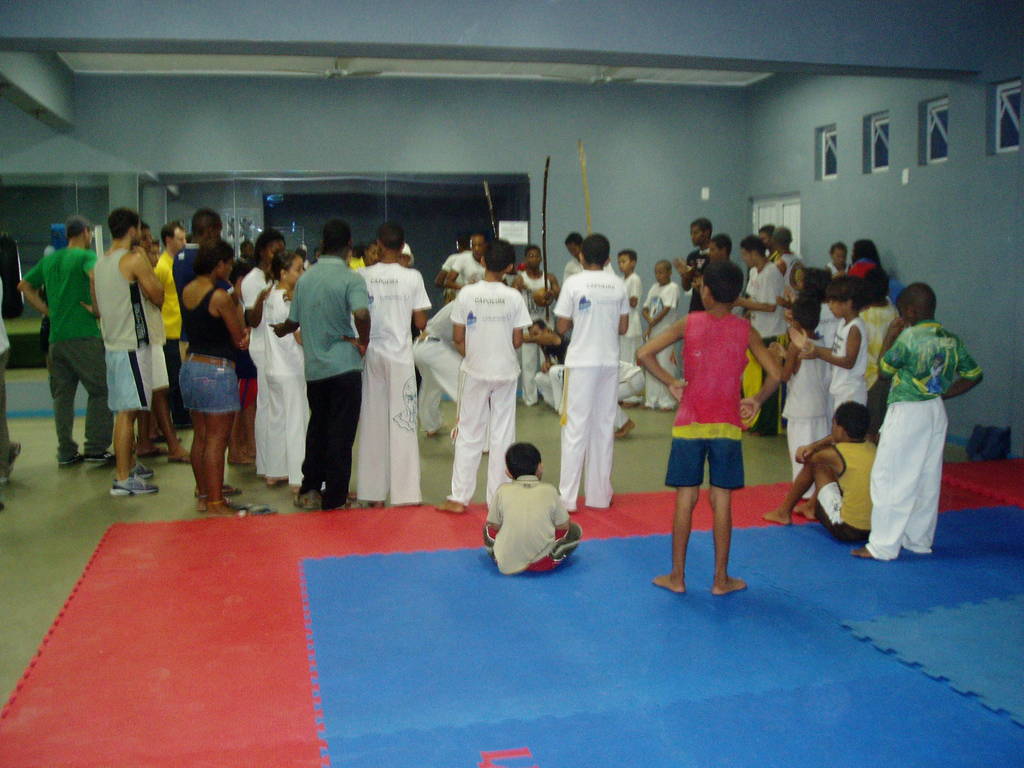
1 – SPORTS AS A LIFESTYLE: “IM A BOXER NOT A CRIMINAL” Boxing, wrestling and capoeira training are offered by the project, transforming youth aggression into positive energy through teamwork, self-confidence, healthy competition and a respect for rules.
2007 Between January – September 2007, a total of 811 children and young people were participating weekly in boxing, capoeira and wrestling training and citizenships, computer classes and TELESALA.
FFP promotes project beneficiaries, which includes volunteers and paid apprentices within the project, who assist the project’s coaches while being trained as future boxing, wrestling and capoeira coaches. Project beneficiaries are also being trained on a volunteer basis to assist pedagogical staff during citizenship classes.
In 2007, the following project beneficiaries were trained on a volunteer basis as assistants to the boxing coach (Nilton), wrestling coach (Anderson), capoeira coach (Alessandra and Rudival), citizenship classes (Andressa), and the computer teacher (Ruan, Ronierison e Daniel).
FFP boxing, wrestling and capoeira teams continued to take part in competitions and tournaments throughout 2007. Notable results included:
• Boxing competition in São Paulo FORJA dos CAMPEÕES tournament, organized by the Boxing League of the State of São Paulo. Jeferson (semi finalist), Paulo Ricardo (lost in the first round) e Benjamin (finalist).
• A visit to the project by Acelino de Freitas, aka Popó, Brazil’s former four time world super featherweight and lightweight World Champion
• FFP promotes two community boxing shows in Complexo da Mare favela
• Roberto wins the Golden Gloves tournament – Brazil’s second biggest open class tournament after the nationals. Roberto also made the final of the Sao Paulo Championships in September.
• Luta Livre (wrestling) competition - Copa da Amizade. The athletes Luana, Rafael Fernandes, Rodrigo Mendes, Woshigton Militão e Anderson Horst won the competition.
• Luta Livre (wrestling) competition - Copa Ilha Jequitiá Olímpica e Submission. The athetes Luana, Thais, Rodrigo Mendes, Woshigton Militão, Anderson Horst, Alex Almeida, Anderson Rodrigues. Rafael Fernandes and Carlos Augusto won the competition.
2 - EDUCATION FOR THE FUTURE Through education, young people expand their horizons, develop skills and abilities and increase their chances of entering the job market. The project partners with local schools to re-integrate school-age youth, and also houses Viva Rio’s TELESALA project which offers primary and secondary school education to teenagers and young adults.
2007 Through the TELESALA program, teenagers who had previously dropped out of the school system and have been unable to matriculate again are able to finish their primary level education.
Thanks to Juniper 32 young people between 16-25 years of age have taken part in a daily TELESALA primary level education course during 2007 at the FFP Centre. Exam results will be available in December 2007.
3 - SOCIAL ACTION; PROMOTOING A CULTURE OF PEACE Non-violence is an intrinsic part of the project. In addition to the sports training, classes are held to educate project members in citizenship and non-violence conflict resolution. Project youth join discussions on topics including sex-education, family, work, human rights, culture and violence. While also learning that they cannot instigate, participate or encourage violence. The social team accompanies and evaluates each young person in the project: their school performance, family, and economic situation. The project’s youth-workers also conduct periodic family visits and organize meetings with the parents and guardians. Other activities promoted by the social team include the screening of films and cultural visits within the city.
2007 Between January and September 2007, citizenship classes have been held daily for all 541 members of the Fight for Peace project.
Notable courses and events in this area included:
• Social visit to the theater to watch the play “O Pequenino Grão de Areia” by “Azuka Produções”.
• Course for youth in the citizenship classes: “Prevention of pregnancy and sexually transmitted diseases, in partnership with the Program “Ana e Maria” (Anna and Mary), a Viva Rio project that offers support and health care for adolescents that are pregnant or have babies up to the age of 2 years old, including both boys and girls.
• Social visit: cultural walk in the city centre to visit some of Rio’s historical monuments.
• Guest speaker for the citizenship classes: “Prevention of violence against women” in partnership with the NGO CAMTRA (Casa da Mulher Trabalhadora).
• Social visit: Santa Teresa, a Rio’s historical neighbor. Cinema to see the film “Mestre Bimba, a Capoeira Iluminada.
• Social visit: Panamerican games – wrestling competitions; and para-panamerican games to see Clodoaldo Silva win the gold medal.
• Environmental Course including visits to Botanical Garden and Black Stone Park, a conservation area protected by the State Institute of Forestry.
• Theatre presentation about social inclusion in partnership with NGO “Escola de Gente” – event in commemoration of two year anniversary party for the FFP building.
4- ACCESS TO THE LABOR MARKET In areas where there is easy access to money through illegal activities, an important means of preventing youth involvement in crime and the drug trade is to offer them financial alternatives, including the opportunity to enter the formal job market. Fight for Peace partners with private companies, public institutions and non-governmental organizations to provide training and skills building for project youth. The project also offers in house computer classes to help beneficiaries prepare for the formal job market and promote digital inclusion and communication.
2007 Notable courses and events in this area included:
• 60 youth attended the program “Guia Cívico” (preparing youth to work during the Pan American Games): FFP offers the Centre’s classrooms to SENASP (Secretaria Nacional de Segurança Pública / National Secretary for Public Security) to host two classes for this course.
• Juniper funding has also aided the hiring of a fulltime IT teacher and a young FFP beneficiary is assisting as a teaching assistant. Courses started in March 2006 with the projects new computer lab and since then 80 children and youth have completed intermediary level computer courses. Between February and September 2007, 116 students have completed computer courses in word, excel, windows and over 240 accesses to the internet per week free of charge.
5 – YOUTH FOR THE FUTURE Fight for peace encourages members to improve the society in which they live, by assuming leadership roles. Members are also invited to take an active role in overall project co-ordination, through the Youth Council. During 2006 the youth Council has met monthly and participated in all the projects group staff meetings.
(The above methodology is used in order that young people in high-risk environments are able to respond to all of the risk factors they face that have been identified as common in encouraging them to join the drug trade or becoming involved in crime . This means that the project is able to offer young people the correct tools (protection factors) to actively choose a different path . )
2007 Notable courses and events in this area included:
• Partnership with NGO Promundo: program “Jovens em Movimento” (“Youth in Movement”) to work with public policies.
OTHER NOTABLE EVENTS
• In March of 2007, Fight for Peace’s founder, Luke Dowdney, received the Sport for Good Award at the Laureus World Sports Awards in Barcelona for his work with Fight for Peace.
• Luke Dowdney with Marvin Hagler, former undisputed middleweight World Champion, at the Laureus awards in Barcelona
• At the end of 2006, Fight for Peace underwent an external evaluation carried out by CLAVES (Latin American Centre for the Study of Violence and Health) on behalf of UNDP (United Nations Development Programme); PAHO (Pan American Health Organisation); USP (University of Sao Paulo); and Brazilian Ministry for Health. Exerts from the concluding final report include:
“On concluding this evaluation research and taking into account the numerous complexities of any social intervention such as that carried out by Fight for Peace, we can confirm that this is a very successful project within a locality of extremely high socio-environmental stress [this refers to the non-state armed actors openly patrolling the community]. The project’s hypothesis, aims and activities join in an excellent synergy that lead them to reach proposed objectives and targets via their philosophy and practice.” pg137 “…as shown during this study, the Fight for Peace project demonstrates efficiency, quality and effectiveness in primary prevention of violence and criminality.” pg139 “...Among the many virtues that Fight for Peace has, we stress that, in our opinion, if taking into account the project’s specific scope, it can be replicated in any Community or Neighbourhood where armed violence exists and obtain success.” pg138
Links:
Project reports on GlobalGiving are posted directly to globalgiving.org by Project Leaders as they are completed, generally every 3-4 months. To protect the integrity of these documents, GlobalGiving does not alter them; therefore you may find some language or formatting issues.
If you donate to this project or have donated to this project, you can receive an email when this project posts a report. You can also subscribe for reports without donating.