By Jenna Hardina | Intel IESC Team Member
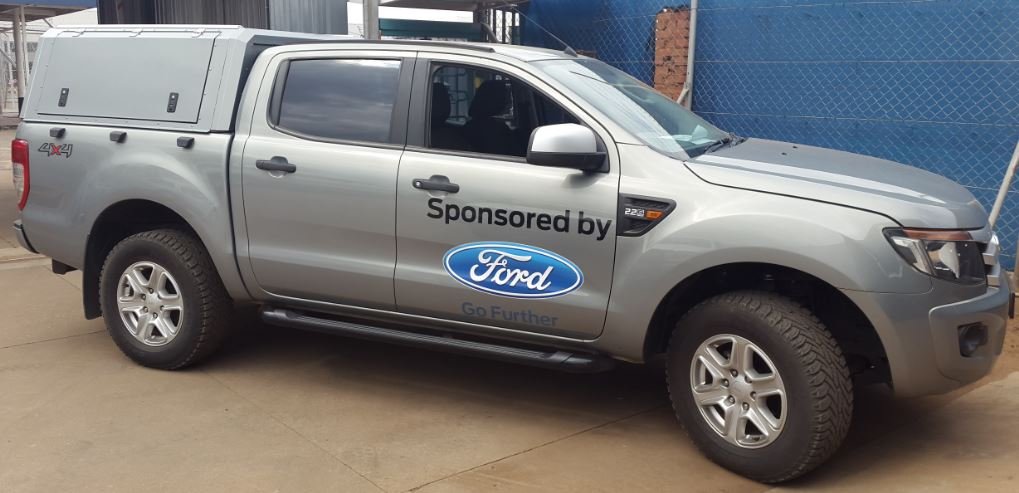
Intel Education Service Corps, or IESC, is an international service program that Intel has been sponsoring since 2009. IESC is a service opportunity for Intel employees to support customers of Intel technologies in developing countries. An IESC team spent time in South Africa recently where they piloted the use of two connected vehicles donated by Ford Motor Company to help World Vision achieve its mission – primarily helping in its commitment to transformational development and emergency relief.
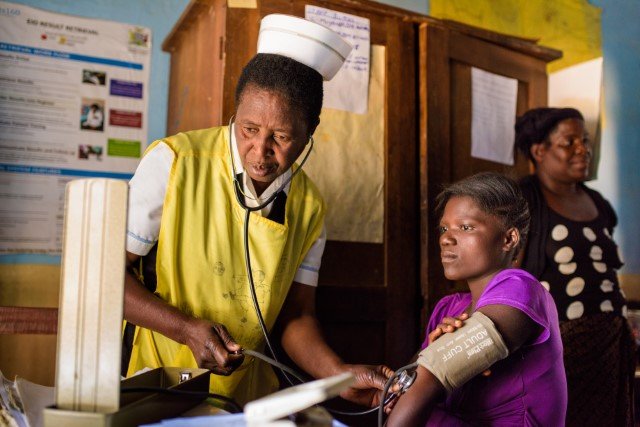
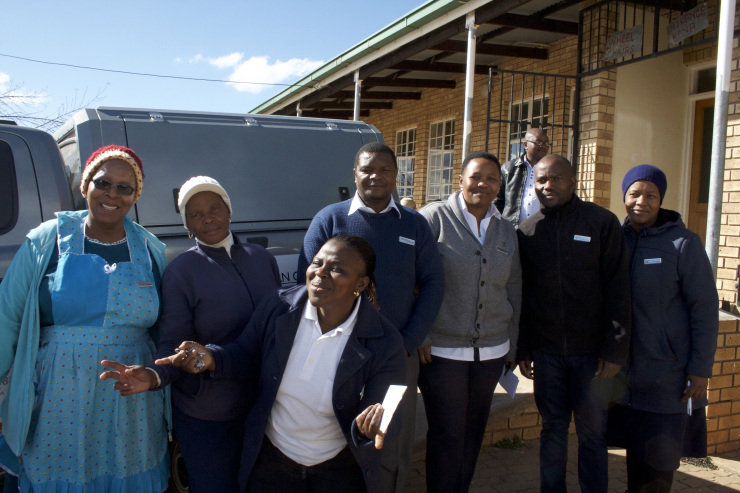
On one day of our trip, our team headed to a local clinic for observation. Each clinic in the area is managed by the Department of Health (DOH). The clinic sees about 120 patients a week, 25 of whom are children. It provides basic services such as HIV screening, TB treatment, and vaccinations. The only healthcare providers available are nurses, so if a patient requires care under a doctor they are referred to a hospital.
This clinic serves 5 nearby villages and again, access is a major challenge. The farthest of the 5 villages is about 35km away and requires the crossing of a river. If the area experiences heavy rain, this village cannot safely cross the river. In addition, public transportation can be costly. Patients typically travel to the clinic on foot, which can be difficult in the event of an illness.
Our team headed out for another, larger clinic next. We were able to see a great partnership at work between the Department of Health and World Vision. Unfortunately, the clinic does not have assigned vehicles. There is one for the entire region, but it is difficult to reserve it and unavailable on short notice. Since the Ford vehicle is equipped with a refrigerator, we packed up several vaccinations and medications and then drove to a grade school. This school has a hard time accessing clinics because of its location. Instead of trying to get the entire village to a clinic, we brought the clinic to them.
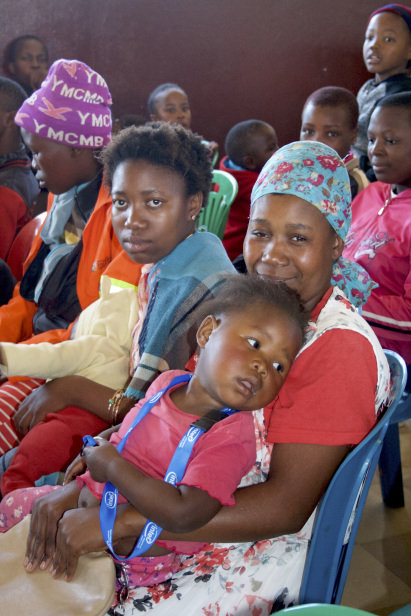
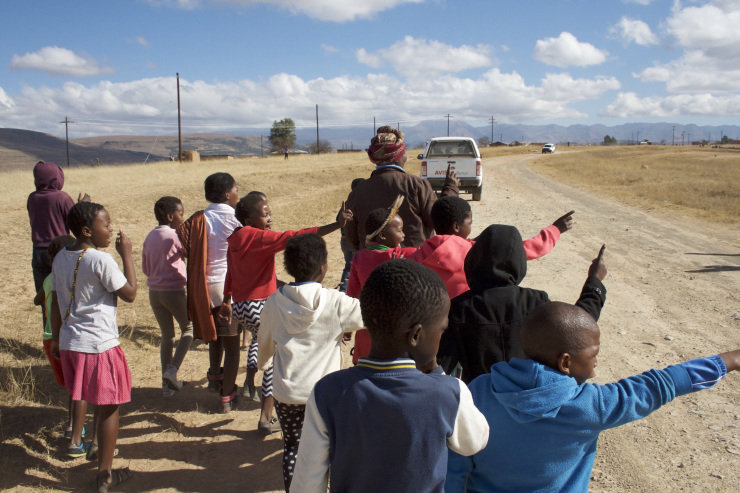
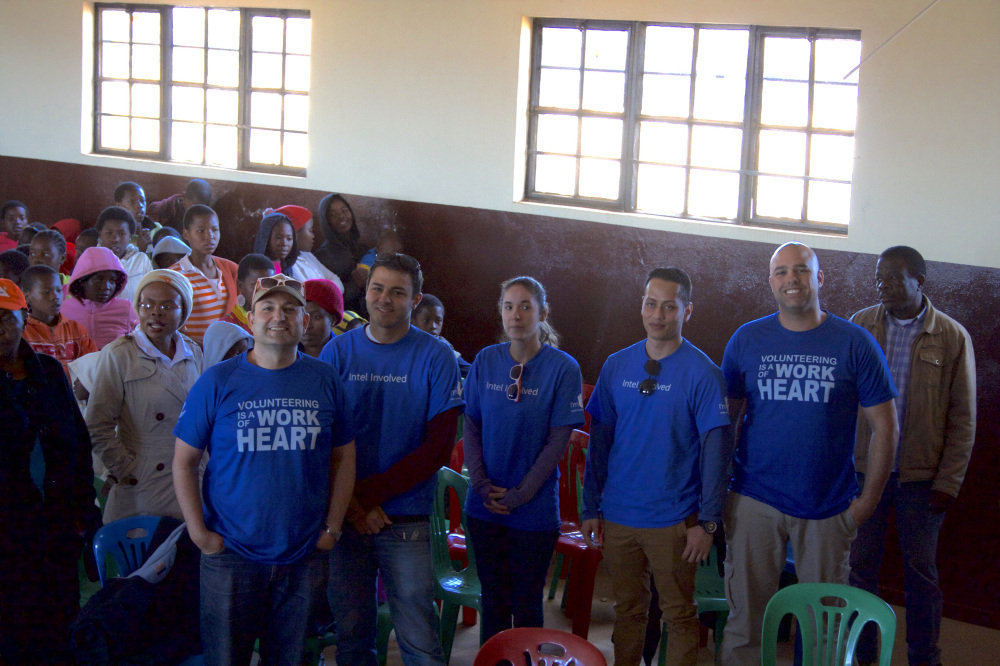
We were greeted by happy children on either side of our van, singing and dancing to welcome us. This was a really special moment, and we got out of the car to join them and walk the short remaining distance to the school. We went inside the school and sat down for a performance by the children. Our World Vision driver, Lucas, took the stage next to do an introduction. He introduced World Vision, the Intel team, and the Department of Health. He told the audience what services the DOH would be offering today and encouraged everyone to visit them for vaccinations and medications to keep the children healthy.
The school’s headmaster spoke next, saying that the children “were jumping because of the excitement”. He went on to say that “it’s too far to reach the clinic. We want to say thank you”. He has welcomed the presence of World Vision and the partnership with the DOH in order to better serve his students and the community at large. Finally, the ADP Manager, Sakhumzi, took the stage. She gave a very moving speech and said that “today, we are showing evidence of the power of partnerships”. The tight partnership between World Vision and the DOH allowed the administration of several vaccines and medications that otherwise would not have been accessible.
Links:
Project reports on GlobalGiving are posted directly to globalgiving.org by Project Leaders as they are completed, generally every 3-4 months. To protect the integrity of these documents, GlobalGiving does not alter them; therefore you may find some language or formatting issues.
If you donate to this project or have donated to this project, you can receive an email when this project posts a report. You can also subscribe for reports without donating.