By Life Blood Centre | Life Blood Centre
Nucleic acid Amplification Testing (NAT)
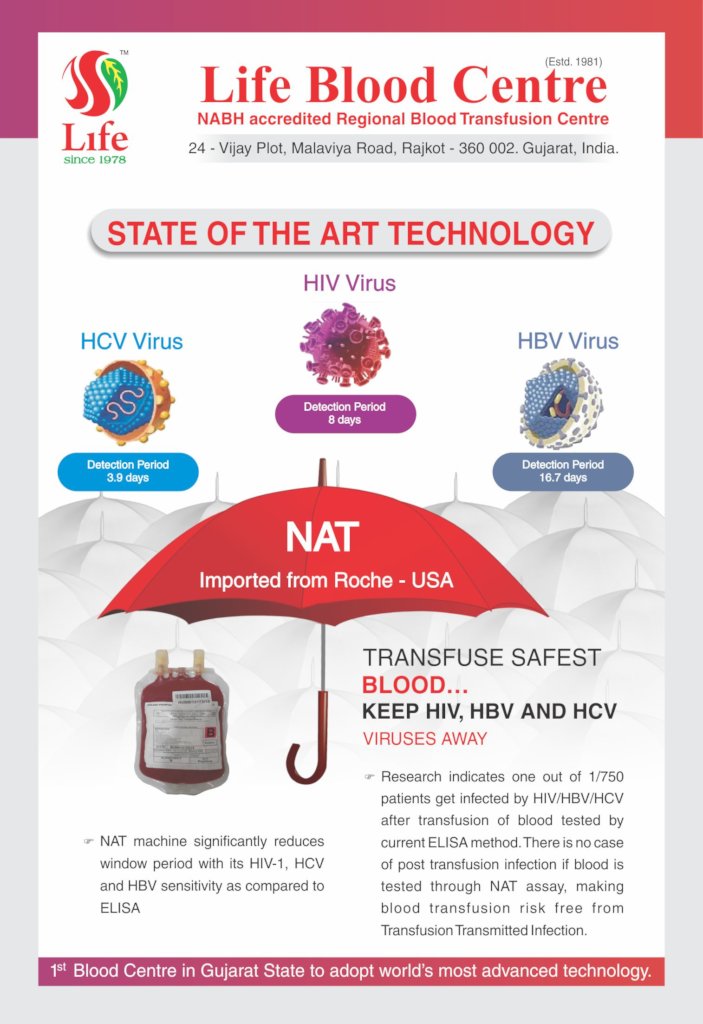
Nucleic acid Amplification Testing (NAT) is a molecular technique for screening blood donations to reduce the risk of transfusion transmitted infections in the recipients, thus providing an additional layer of blood safety. NAT is highly sensitive and specific for viral nucleic acids .It is based on amplification of targeted regions of viral ribonucleic acid (RNA) or deoxyribonucleic acid (DNA) and detects them earlier than the screening methods thus, narrowing the window period of HIV, HBV and HCV infections.
NAT has been in place in developed countries… USA, EUROPE since long, and has reduced the risk of all these infections by 95% to 53% as reported by various studies. NAT screening thus prove to be more beneficial where the seroprevalence of transfusion transmissible infectious agents is high, as is the case in most developing countries.
In India, mandatory blood screening for HBV, HIV and HCV is done by serological tests for HBsAg and antibodies to HIV 1/2 and HCV. The screened sero negative donations are still at risk for TTIs and thus, need for a sensitive screening test arises to decrease this residual risk which has been reduced significantly over the last tow to three decades in western countries where NAT has been implemented. NAT has been started in few centers in India (Life Blood Centre being the only one in Saurashtra), but it is not a mandatory screening test for TTIs as per drug and cosmetics act-1940. Major barriers in implementing routine NAT testing in India is its high cost and lack of technical expertise in most of the blood centers.
In India, various studies have been carried out, and NAT yield has been derived. NAT yield means a sample is nonreactive by regular screening methods (ELISA) but reactive by NAT. It has been shown by different studies, that NAT yield( NAT reactive but ELISA nonreactive) is 1 in 750 to 2972 donors tested.
NAT is a highly sensitive and advanced technique which has reduced period of HIV, HCV and HBV drastically as shown in the table. As basic quality assured blood transfusion system is already in place such as volunteer base for blood donation, provision of donor deferral, donor notification and counseling along with quality assured sensitive serological methods for testing TTIs, and at the same time looking to the high prevalence and incidence rate of infections in our country, time has come to implement NAT to transfuse the safest blood to the needy patients.
Technology focus :
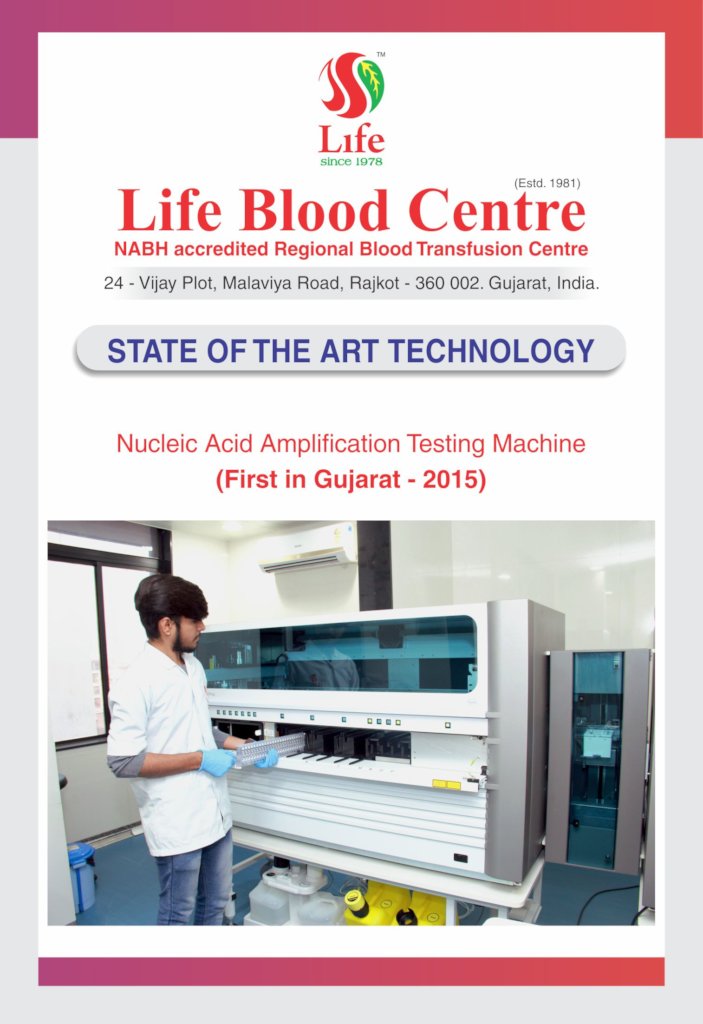
"Continuous up-gradation has been the motto of Life Blood Centre . The latest technology and equipments made it possible for the cetnre to process the blood as per the highest international standards in blood banking.
Life Blood Centre, Rajkot, Gujarat, Western India is the first blood centre to adopt NAT Technology in Gujarat State.
Project reports on GlobalGiving are posted directly to globalgiving.org by Project Leaders as they are completed, generally every 3-4 months. To protect the integrity of these documents, GlobalGiving does not alter them; therefore you may find some language or formatting issues.
If you donate to this project or have donated to this project, you can receive an email when this project posts a report. You can also subscribe for reports without donating.