By Tatiana Rehakova | Project Leader
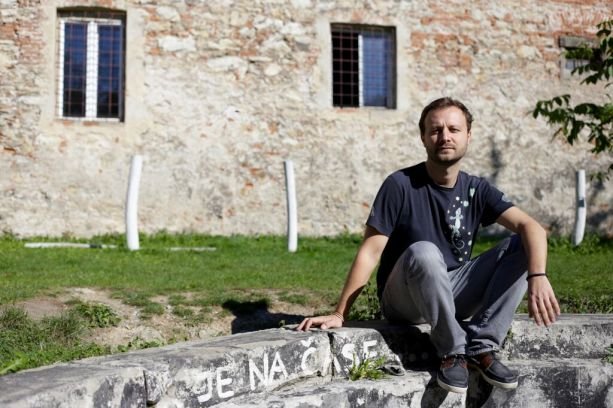
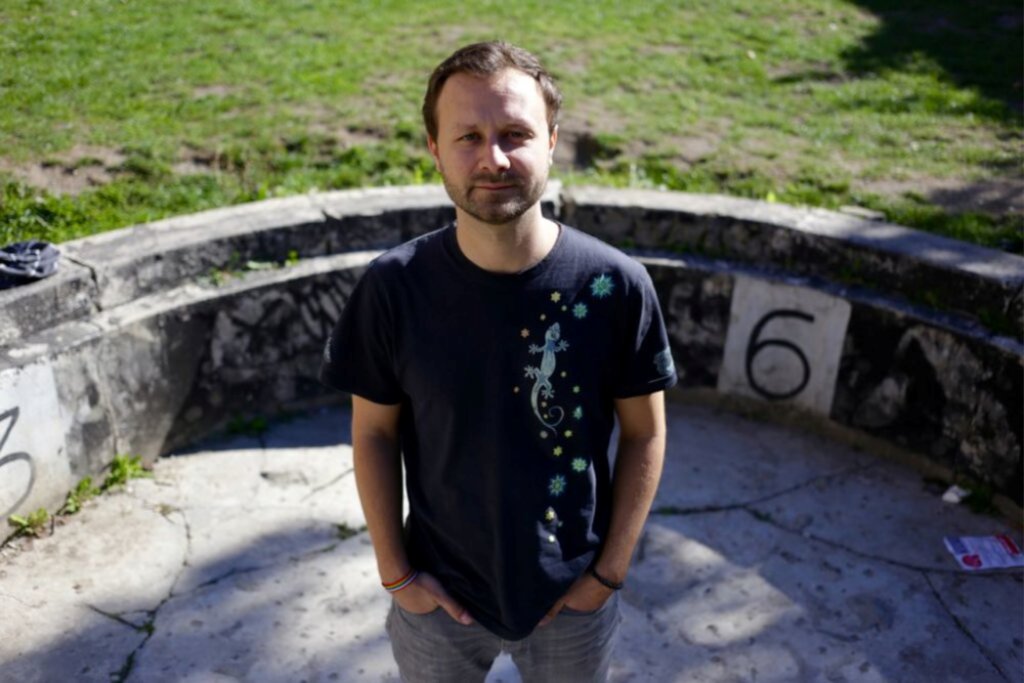
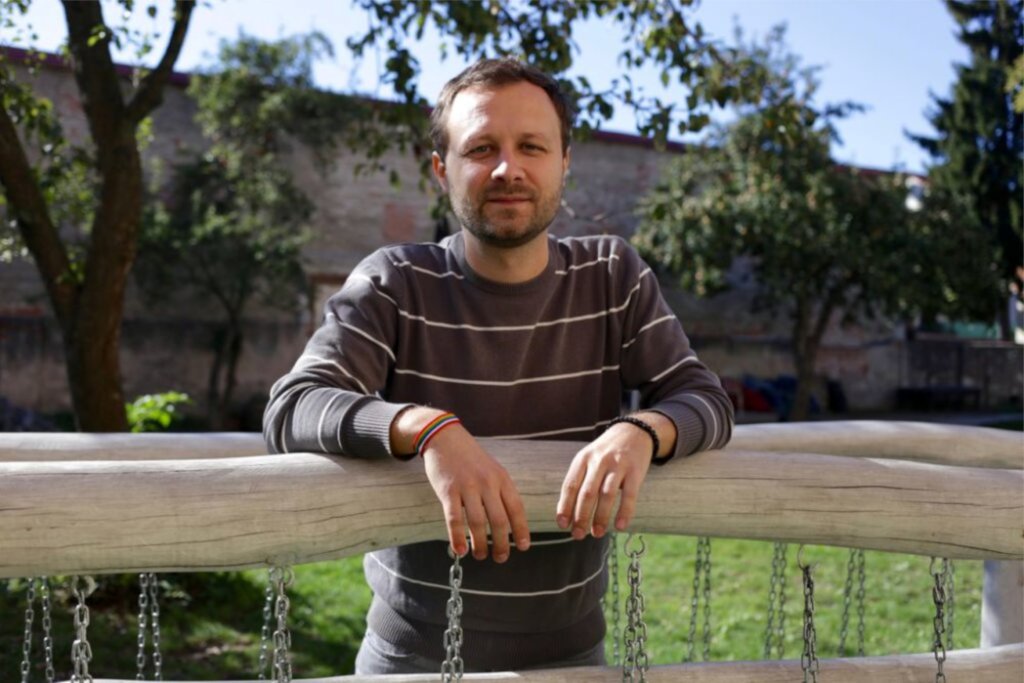
Milan identifies himself as a courageous and active person, someone who likes to overcome challenges. He has chosen to be a Living book because he likes to help people - especially those who belong to minorities and have faced similar prejudices as himself. As a part of the Living libraries project, he wants to change the attitudes of people. Milan’s answer to the question why people should care about minorities and help them is that “no one really knows when he or she will become a minority.”
Milan is not identified by only one profession. On the contrary, he engages in many activities, often at the same time. He studied English and philosophy, then the theory of theatre in Netherlands and Finland. Ever since finishing his university studies, he has been teaching. He also works as a translator, and you can meet him in a cultural space Záhrada in Banská Bystrica where he works as a literary adviser and a producer. He is also still active in theatre and is pursuing his doctorate degree in theatre studies.
On the outside, he is just an ordinary guy. However, he is also a living book.
He is a modest, intelligent person with a smile on his face. He does not stand out in the crowd, but he lives an interesting life. And he is not ashamed to admit that he does not belong to the heterosexual pool of people. He started to be engaged with the Living library project around the referendum for family period of time in Slovakia. “Hate, criticism and questioning of the normalcy of the LGBT community interfered with my daily life, so I decided to act.” Because until this moment, he was surrounded only with tolerant people, who hadn’t considered him as being “different”.
“It is similar to attacking a Roma person just for being Roma, or a blue-eyed people just for having blue eyes, which is absurd.”
He perceived the period around the referendum for family in a negative way, because he could relate to the fear of not being accepted and guilt felt by people: “homosexuality is not a factor based on which a person’s character should be judged”.
“Suddenly I had a feeling, that I am really affected by how people are talking about homosexuals, or about anybody who has a different sexual orientation other than heterosexual. I felt that it is my responsibility, but also something more than that. For me, living in a normal and open society means something different than facing insults and humiliation in discussion forums from anonym contributors, but also from our leaders.”
For him, being a part of the Living libraries project is an interesting experience and a great opportunity to open people’s eyes. It also means that he can react to different opinions and views. It is an opportunity for him to show the “readers” his daily life and fight against stereotypes.
He likes to attend the Living libraries events because of the experiences and atmosphere which he feels during the events. “During those 10 – 15 minutes, a person can witness a change of mind or attitude on such an intuitive level. It is interesting to see how the glances of people change – at first, they are evasive, then they show some compassion, after that understanding, and finally a smile.”
When asked, whether he feels that he is changing people’s attitudes, he answers: “Yes, I’ve had this feeling. I don’t know how this people will react in real life afterwards, but I have had a feeling that they have become more open, that they have really learned something about an authentic life of a gay person. I hope it helps to make a difference in future.”
The view of a teacher
His job as a teacher and his work with children has brought him a unique perspective on life. As a teacher, he always tried to explain his students that they should not disgrace anyone. He has not had any issues with colleagues or parents, though children had been cruel sometimes.
“Elementary school was hard, children had remarks. I have never lied about my orientation by saying that I am not gay. I always tried to turn it into something humorous. When children use word such as “fag” or queer, they think they make fun of the person. I tried to make them understand that it is an expression of a sexual orientation, nothing more and nothing less than that.”
The view of a traveller
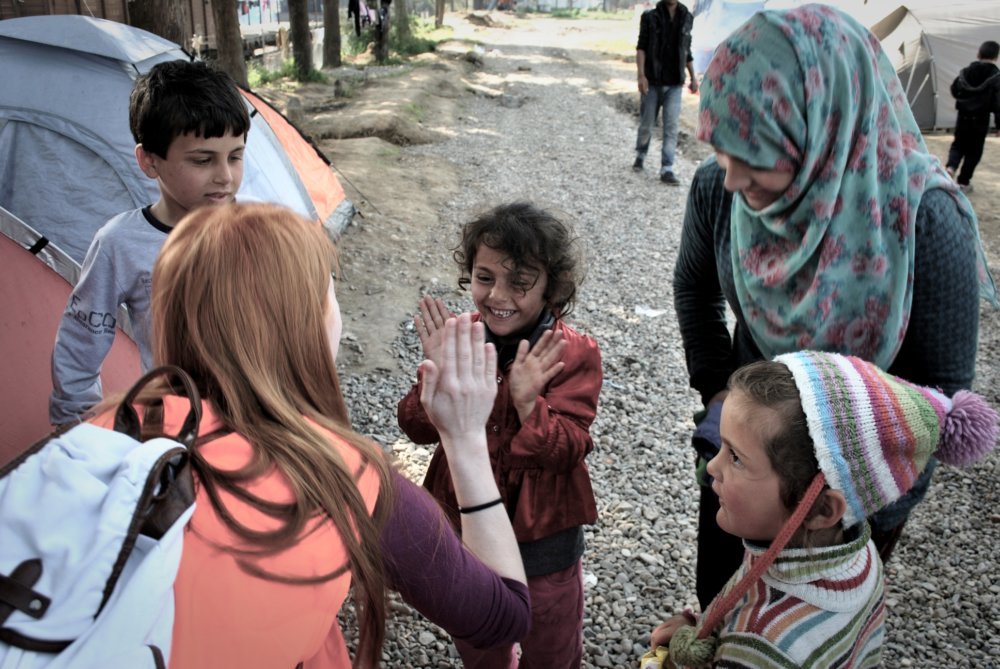
As a member of a minority and as a passionate traveller, he always stands up to other people in need and feels solidarity with refugees. The reason is simple, “it is because I like to travel a lot, and I get to know new countries. It is amazing that we have these opportunities to travel and migrate. It is a great advantage, but here, people want to build walls.”
He cannot imagine what would happen, if travelling was suddenly prohibited, or if the student exchanges and mobility programs were cancelled.
“Maybe people would then finally understand what they were fighting against.”
He says that his minority is different than others: “We are an invisible minority. It is different with foreigners; you can hear that they speak different languages and that they look differently. Often you cannot tell who belongs to the LGBT community just by looking at them. People with different sexuality have different jobs, they belong to all parts of society.”
People should not be quiet
“I am sad that people in Slovakia are quiet, that they avoid their responsibility to help the minorities and change the attitudes of others.”
Milan thinks that it is important to take the responsibility and not to stay quiet.
It is important to start the change locally – in everyone’s backyard. Although he admits, “I can imagine that a person remains quiet in a village or small city with 400 people”. He quickly adds that he himself cannot remain quiet, as it would make him feel as he is hiding something.
He argues that people should talk about minorities, that Living library is important. “I admit I don’t have time to change the attitude of every neo-Nazi or a homophobe. That is why I focus on people, who I think would understand what I have to say to them.” He thinks it is important to capture the right moment, but also avoid situations that can be dangerous.
According to Milan, political elites and media persons should be more active. “I condemn those about whom I know they are homosexuals, but who don’t speak about it, or are evasive in their answers. They need to realize that they have the media power. They should not be afraid of losing the support of few people. Really, it only takes a few statements in the media and the public perception would start to change. People would at least start to think about it.”
“You always have to stand up for minorities, because anyone can become a member of a minority. Just imagine that you are in a group of 10 people and you are the only one with a different opinion – just this small thing means that you are a minority. Anyone can become a minority in any kind of situation.”
A view for future – be more open and more perceptive
Everyone hopes for a better future, for a change in opinions and attitudes of people, for a tolerant world. “There are always plenty of steps and fights for human rights, but it is more of a marathon. The gays own the starting line, though.”
“Fear and societal pressure which teenagers face can do much harm. I know gays who are willing to lead a double life and lie about their orientation just because they fear rejection. It’s a paradox, since they fear to accept themselves.”
Situation can change as the time passes, and he believes that with the development of information sharing and communication, the change of attitudes and perception of people will follow. Milan likes to sort things out with discussion, that’s why he appreciates the Living library. He would to see the project growing closer to people and to become a part of cultural events.
“Everybody should be a Living book to express their feelings…this is not only about homosexuals, but also about other minorities.”
We parted ways with his statement “Live and let live!”
We would like to express our thanks to Milan and our appreciation of his courage and will to change attitudes and views of young people.
Project reports on GlobalGiving are posted directly to globalgiving.org by Project Leaders as they are completed, generally every 3-4 months. To protect the integrity of these documents, GlobalGiving does not alter them; therefore you may find some language or formatting issues.
If you donate to this project or have donated to this project, you can receive an email when this project posts a report. You can also subscribe for reports without donating.