By Tatiana Rehakova | Ms.
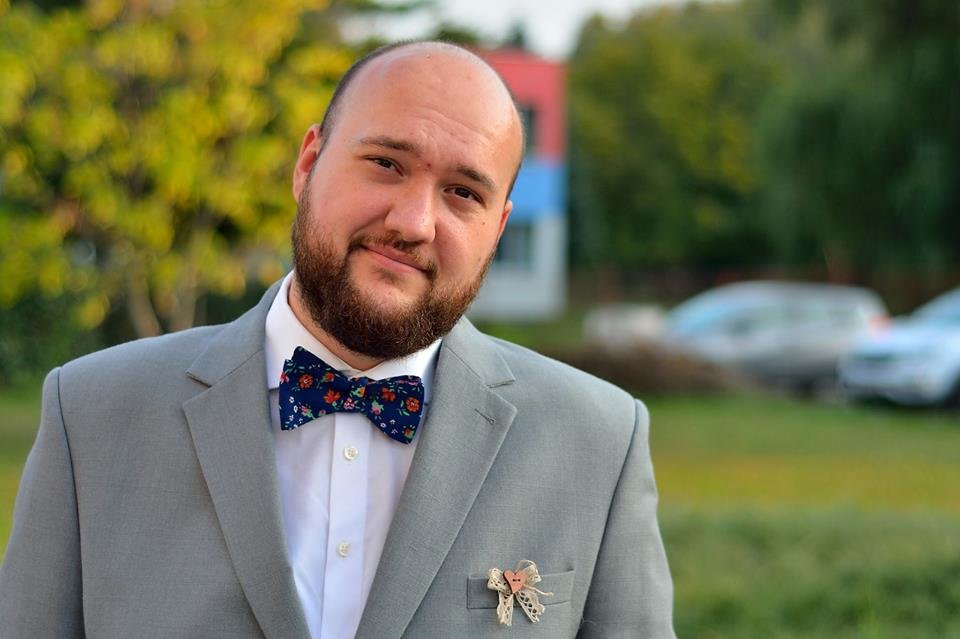
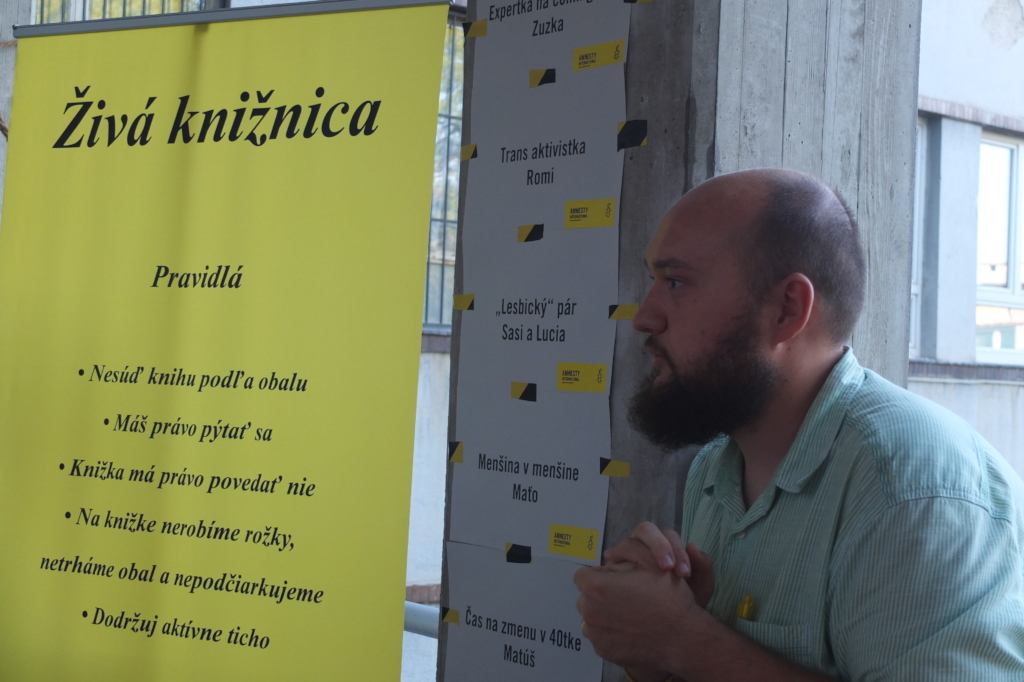
I am Martin Sýkora and I work for Amnesty International, where I am responsible, among other things, for organizing Living libraries. However, I have never thought I would become a Living book myself one day.
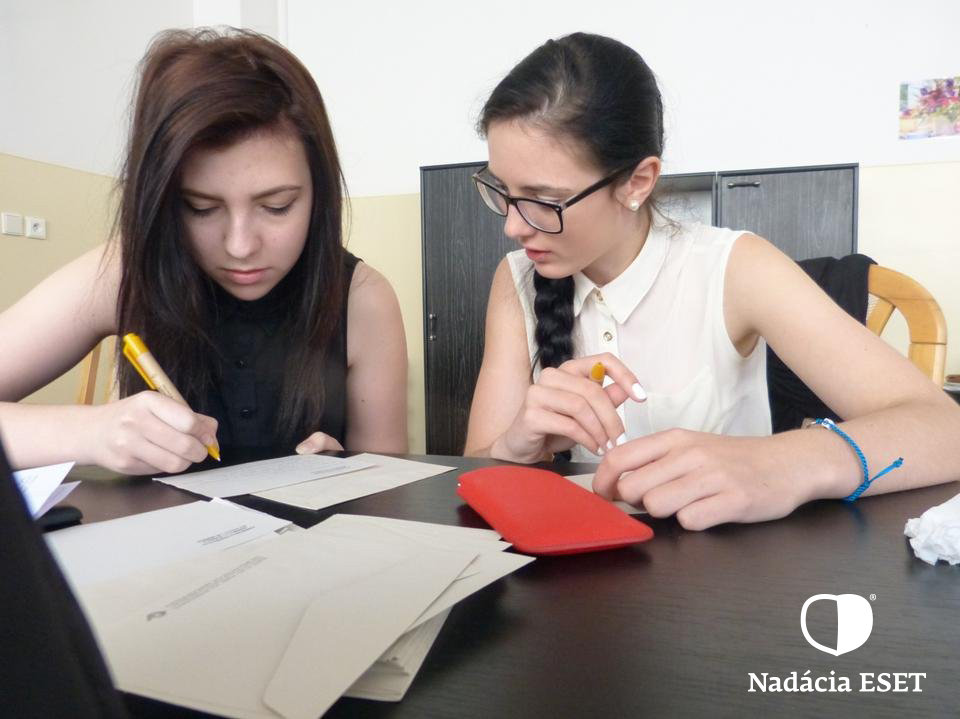
I was born to an ordinary family. I have a brother, a mother a father, and, for quite some years now, also a wife with whom we are expecting a daughter. I came across Amnesty International during my university years, and I was instantly mesmerized. To be able to do something for another human being just by writing a letter and expressing my solidarity with them was something amazing for me. Being a naturally lazy person that I am, the possibility to change something just with my signature was very appealing.
Little by little, I have become more involved with Amnesty. I started with Amnesty trademark activity – street activism - by collecting signatures for good cause on the ground. Later on, I became involved with human rights education through which I came across the concept of Living libraries. I have always been fascinated by the simplicity of the Living libraries. In essence, all it takes is to tell the story of your life. The Living books - people who are telling their stories, are always very interesting. In one day, you can meet a Roma guy who was beaten by the police, or a person left on the street with no place to go to, or a woman who fled Iran because of the fear of persecution. But the most important thing is that this method really works – the personal contact is irreplaceable. However, it never crossed my mind that I could become a living book myself – I have not been a part of any Slovak minority (if we don’t count the Club of unjustly hairless/bald).
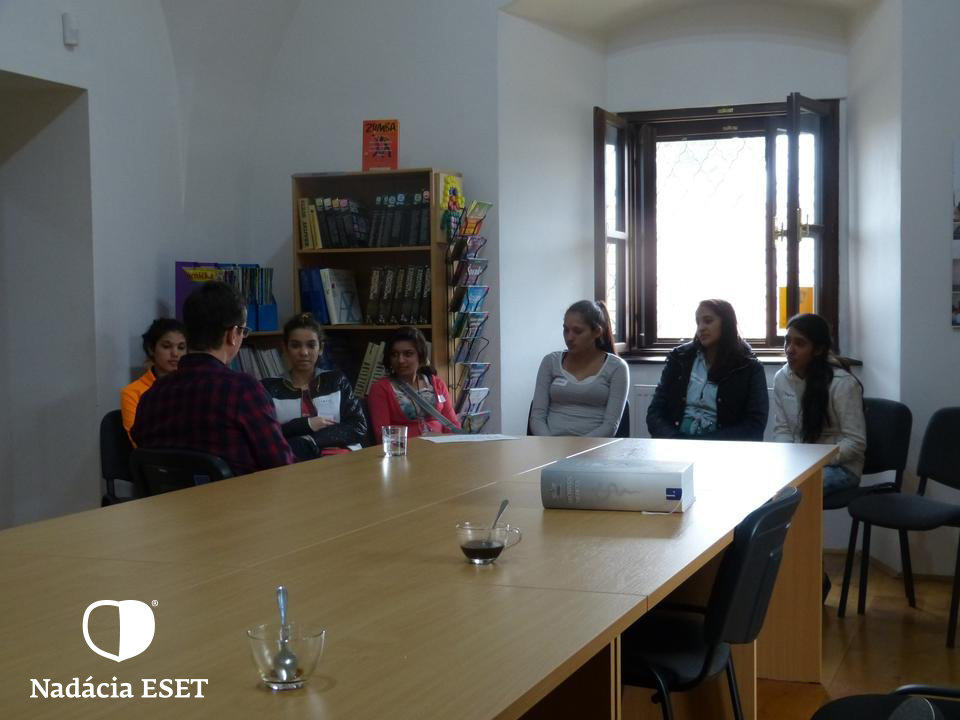
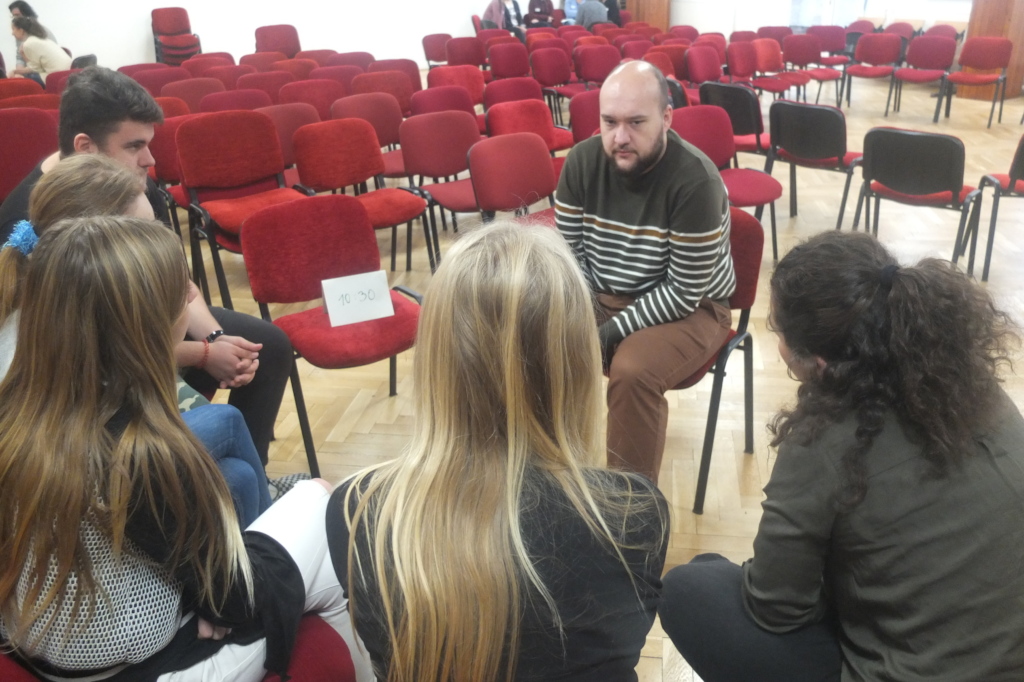
It all changed when my eye started to hurt two years ago in February. It was not a constant pain; I just felt discomfort when looking up and to the right. At first, I used the common tactics of “although it is hurting now, it will go away later” and “it is nothing to worry about”. Coincidentally, I was organizing a Living library in Bratislava at that time (pictured below). The pain at that moment was similar to having an itching spot on your body which you cannot reach. You have to think about it all the time, but you cannot do anything about it. This went on for a couple of days, after it escalated to a point where I could no longer see with the eye, so I finally decided to see an optometrist. Her examination showed nothing out of the ordinary, so she sent me to a hospital for another set of tests. I was still not worried at this point, I thought that I would just have some more tests, and I would still be able to attend a workshop in Prague to which I was supposed to go.
At hospital, they told me my eye nerve was inflamed and that they had to keep me there for couple of more tests. Because I had absolutely no idea what that meant, I was still quite alright with it. It even had a positive side, because I had the room with a TV just for myself. (Not that I could watch it because of my eye, but I was happy just to have it). Later in the afternoon I asked the doctor what having an eye nerve inflamed means. He spilled it to me without any kind of introduction or easing in: “Usually it is one of the first symptoms of Multiple sclerosis.” He probably noticed that I immediately lost all my color, and my voice started to shake, so he added that this might not be always the case. I thought something like: “OK, I have lived for 26 years and that’s all”. I did not have any idea what a sclerosis is, not to mention what a multiple sclerosis is. So I did what each and every rational human being does these days. I googled it. And of course, what I read was not very encouraging.
I will never forget that weekend in the hospital. My family had only partially succeeded in persuading me that it would not be sclerosis, that it could be something else and I should wait for the results of the MRI. Although I tried to believe them, inside I knew that it would prove to be multiple sclerosis. So I waited for the MRI results, which confirmed the diagnosis with almost 100% certainty.
The second test I had to undergo was lumbar puncture. It was something which I was truly afraid of, because it means having a huge needle stuck in your back which takes the samples of your cerebrospinal fluid. It does not look like a very pleasant activity, but I realized it was not so bad. The biggest advantage of this procedure (at least for me), is that you have to lay in bed for 24 hours. And I can totally enjoy laying in bed. In the end, my sclerosis was confirmed and I had to jump on the treatment. Sclerosis cannot be cured, but it is treatable, and the treatment can slow down the progress of the illness.
Multiple sclerosis is an autoimmune illness during which the immunity of a person turns against its own body. Multiple means that there are multiple deposits in brain located anywhere without any kind of order. The illness demonstrates itself according to which deposit activates. The symptoms can vary – such as the inflammation of the eye nerve, or having a tingling sensation in arms.
Of course, my life did a complete turn-around. First half turn meant just to come into terms with this news and accept it, which took a couple of months. Next step was to confine it to my family and friends, who took it amazingly well and were not digesting the fact that I was ill too long. This attitude helped me the most. The last thing I had to get used to was the treatment. For me it means that I have to inject myself three times a week, but because I am a person who can find pleasure in stereotypes, this is not the worst thing that could happen to me. Probably the worst thing about the treatment is the smell of the disinfection, which I came to hate from the bottom of my heart.
Before I could choose the type of the treatment (I could chose one out of three and my knowledge about each of them is pretty much the same as my knowledge of a quantum physic), the doctor asked me if I was an optimist or a pessimist. It stroked me as unusual, but I told her some joke to show her my happy soul. When I got my medication, I read the accompanying information and among the side effects was (apart from everything else), also suicide attempts. I knew right away why it mattered that I was an optimist. And, for a very strange reason, it still makes me laugh, because I have never seen the same side effect in other medication. Lucky for me, I have not experienced this side effect. However, it is pretty common that if I take my meds just before going to bed, I am trembling the whole night, which results into fever in the morning. It feels as if I had experienced a small flu during the night. I have to admit though, I would enjoy these side effects more if I was still at elementary school.
Then the other half turn of my life followed. My life turned back to normal. I learned that I could still live with this illness. Even though I don’t know what will come in next month, year, or two years. But who else knows? And it has its advantages. For example, I can make fun of myself and the famous saying “yeah it’s because of my sclerosis” suddenly has different meaning if I am the one telling it.
I have decided to become a Living book to show others that we can live and work with an untreatable illness. During the “reading”, my favorite part is when I tell the “readers” that I have such illness. You cannot really tell it just from looking at me (everyone only notices my charm, intelligence and my vast modesty). Some of them are very surprised, but most of them don’t have any idea about what sclerosis means. But not seeing it right away is precisely the point of why I am doing it. I would like the people to be more emphatic to each other, because we never know what hides beneath our surface, whatever our façade is. If my story positively touches at least one person, I know I did not tell it in vain.
Project reports on GlobalGiving are posted directly to globalgiving.org by Project Leaders as they are completed, generally every 3-4 months. To protect the integrity of these documents, GlobalGiving does not alter them; therefore you may find some language or formatting issues.
If you donate to this project or have donated to this project, you can receive an email when this project posts a report. You can also subscribe for reports without donating.