Sustainable Coastal Communities and Ecosystems

Support costal communities

Summary

The International Volunteer Project is part of the SUCCESS Program which focuses on improving the well-being of coastal people and communities in Ecuador, Nicaragua and Tanzania. progress reportread updates from the field

How Donors Like You Helped

Thanks to donors like you, a total of $490 was raised for this project.

Received $490 from 8 donations from people like:

More Information About this Project

Project Needs and Beneficiaries

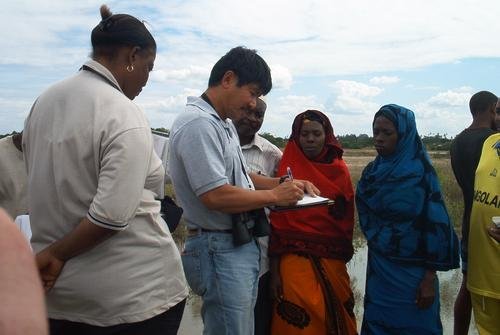
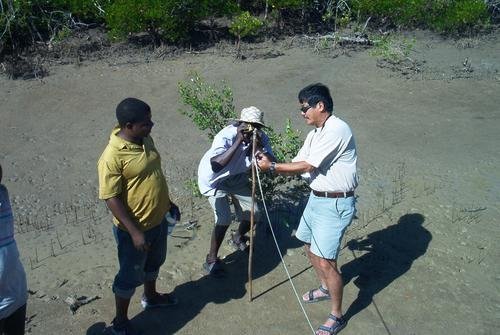
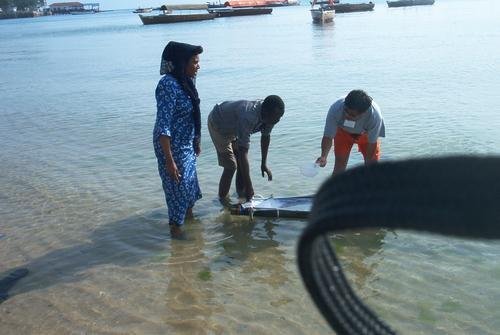
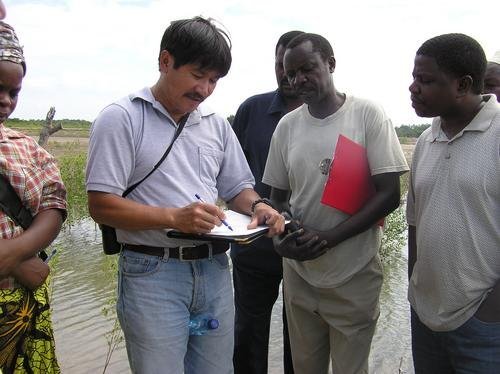
In many coastal developing countries, populations are dense along the coast and people depend on their marine resources for both food and livelihoods. Increases in coastal populations result in diminished quality and quantity of the resources and a diminished quality of life for coastal residents. SUCCESS volunteers will work with coastal communities in Tanzania to offer options for identifying alternative livelihoods and conserving their existing marine resources.

Activities

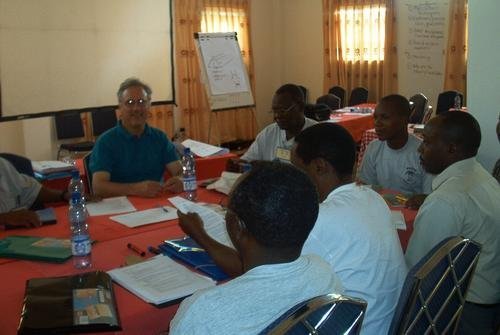
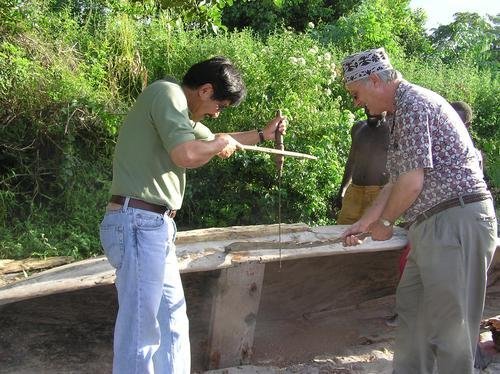
1. Extension services to local communities 2. Training of coastal managers, governments officials and others to serve as extension agents and reach more people 3. Training in business practices 4. Guidance on alternate livelihoods

Funding Information

Total Funding Received to Date: $490

Funding Information

This project is now in implementation and no longer available for funding. Received funds will be used to accomplish concrete objectives as indicated in the project's "Activities" section. Updates will be posted under the "Progress Report" tab as they become available.

Donors' contributions and pledges to this project totaled $490 .  The original project funding goal was $10,000.

Additional Documentation

This project has provided additional documentation in a PDF file (projdoc.pdf).

Resources

Why this Project is Important

Potential Long Term Impact

Simple, low-cost technical skills and know-how in alternative income generating livelihoods are assisting poor remote coastal communities which otherwise would not receive such assistance.

Project Message

“Mike and Edwin’s visit to Bagamoyo was very useful. The advice they offered the farmers was very practical and can be put to use immediately.”
- FLOWER Msuya, PHD, Seaweed farming expert U. of Dar es Salaam

Who is Running This Project

Contact

Kimberly Kaine
Global Program Coordinator
University of Rhode Island/CRC
220 South Ferry Road
Narragansett, Rhode Island 02882
United States
401-874-6823
Email:

Project Sponsor

GlobalGiving

Organization

Children of Guayaquil, Inc. Logo

Children of Guayaquil, Inc.
13304 Ridge Drive
Rockville, Maryland 20850
United States
240 888 9090
http://www.EcuadorOrphans.org

Where this Project is Located

Country

This project is located in Tanzania, United Republic ofTanzania, United Republic of and can also be found under EnvironmentEnvironment.

For more information about Tanzania, United Republic of, read the Human Development Report on Tanzania, United Republic of or the Wikipedia entry for Tanzania, United Republic of.

When this Project was Updated

Last Updated

This project was last updated on November 6, 2009.

Date Added to GlobalGiving

This project was added to the GlobalGiving project catalog on September 8, 2006

Latest Update from the Field

Update from Tanzania

By Kim Kaine - Project leader, October 22, 2008 11:41 AM

Jewelry-making empowers women and improves biodiversity in Zanzibar
“At the tradeshow we displayed the sample half- pearls to the Vice President of Tanzania and the Minister of Women and Youth. They have already placed their orders for pearls from the next
harvest!” Safia Hashim of Bweleo village, pearl farming entrepreneur

The room was silent and tense when Ali, a local fisherman opened the first oyster. When two well developed half-pearls were revealed, the room was filled with murmurs of satisfaction accompanied by triumphant smiles! After a year of devotedly experimenting with half-pearl or mabe production—a process that involves implanting plastic nucleus in a live oyster shell and waiting until the animal covers over the foreign object with nacre, creating a luminescent pearl—the participating individuals’ pride was obvious. Of the 28 implanted oysters, they harvested 50 mabes, 28 that were jewelry-quality and valued at around US $800. With the success of this small pilot, enthusiasm is high to replicate pearl farming with other groups and communities.

How did this mabe farming begin? Women on the Fumba Peninsula, Zanzibar, have always depended on oysters and other bivalves for their sustenance. However, uncontrolled harvesting had lead to a decline in stocks. The USAID-funded Sustainable Coastal Communities and Ecosystem (SUCCESS) Program saw this as an opportunity to build on the pioneering efforts of Drs. Narriman Jiddawe and Aviti Mmochi (SUCCESS Program Coordinator) in working with the women gleaners to both improve management of the bivalves by bringing back the stocks to healthy levels, and at the same time provide them with new ways to increase their income.

It started with SUCCESS working with a group of women and men from Bweleo village to produce simple jewelry from seashells. Until now, they had simply discarded the shells once they had removed the bivalve’s flesh for food. SUCCESS, however, trained the group to keep the shells and polish pieces of them to make necklaces, earrings, and bracelets. Over the past year, the most entrepreneurial individuals earned US $40-$50 per month from selling this shell jewelry. One woman, Rahma Mussa, has sold about 60 pieces and says, “I am saving my money to buy my own polishing machine and to build a house for my mother.”

The next step after this basic shell jewelry making was to train the women and men to cultivate mabe—an activity with the potential to increase their income even further, as best quality pearls sell for US$ 40-$50 dollars each. “Mabe farming has the opportunity to improve coastal livelihoods. It is not a full time job, but a high profit undertaking that we can do along with other income generating activities”, said Safia Hashim, a community leader and entrepreneur. Safia sees the jewelry making from shells and from mabe as having helped empower the women. “It is different from former days when only husbands worked to support the family. Today men and women share the responsibility of earning money. My husband even helped pay for my trip to the trade fairs in Mombasa and Nairobi, Kenya to sell my jewelry.” Safia, who is now building a house for her husband and six children, adds “Coastal community lives have greatly improved. Now we can afford better housing, education, food, clothing, and other necessities.”

Equally important to empowering women and providing additional income-generating options, these successful livelihood activities have increased villagers’ support of bivalve management. They now have four no-take zones, an associated co-management plan, and village bylaws. Empowered women are taking on local stewardship of the inter-tidal resources through community-based management and are committed to and motivated by the initial response to the jewelry sales and the first harvest of mabe pearls. The group has over one hundred additional oysters in the water, promising even higher future returns.

But, how does this all impact the marine environment? For one thing, evidence shows that small scale pearl farming, which usually relies on collecting wild adults, does not appear to cause any significant decrease in the wild stocks. When done on a larger scale, the move is made to instead collect spat. This has benefits to both the final product quality and to the environment. Why? Younger oysters produce better pearls. Pearl farms provide good cover or protection for the benthic community and fish. And lastly, as pearl farmers become more environmentally aware, they tend to reinforce no-fishing rules around the farms and become strong environmentalists.

Meanwhile, the entrepreneurial Safia, who has decided to start her own farm, has already collected sixteen oysters that she will implant. Perhaps it will be one of Safia’s harvested mabe that is sold to the vice president or minister!

Attachments:

Subscribe to Email Update Subscribe to "Updates from the Field" by E-Mail Subscribe to RSS Subscribe to RSS Feed

Was this report valuable...
vote divider
Loading...
Tell us why (your comments may be shared publicly).
Rules for Comments 
Comments