Researching, conserving, and enhancing culturally important plant resources in Portland, Oregon for Native American Indian traditions, feeding homeless, urban nature for youth and more.
Cities are often places built over traditional Indian gathering grounds, pioneer farms and orchards, and/or places where green spaces are for walking through but not interacting with. This project shows how even an urban environment can be an important source of foods, medicines, craft materials, and more for the local population. With good research, smart planning, and demonstration activities the project will show how ethnobotany is a tool for vesting people in the well-being of their city.
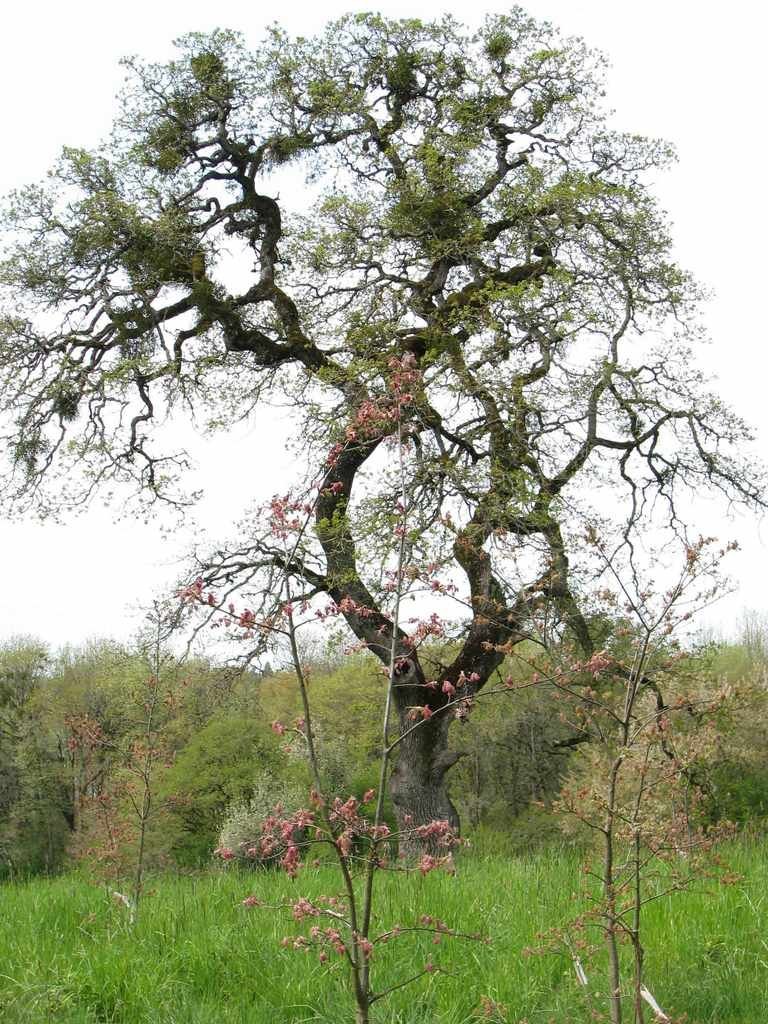
Initial focus is on identifying urban foraging resources and users to understand existing use patterns. This includes ancient oaks that predate pioneers all the way to contemporary fruit gleaners.
The project hopes to model to other cities the value of ethnobotanical resources to make urban centers more self-sufficient, resilient, and places where residents are intimately connected to plant resources.
This project has provided additional documentation in a PDF file (projdoc.pdf).