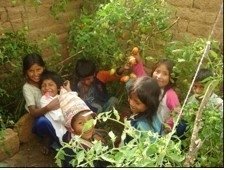
The project will build an animal farm at the Santiago community high school in Arampampa, Bolivia. Agricultural certification will improve nutrition, food security, job skills and local development.
The project will empower students and community members to manage small animal farming, produce meat, eggs and milk, and transform products like milk into cheese. The products are needed to improve malnourishment in the school children (about 50% are severely malnourished). The technical training will improve local economic development in an area where agriculture is the primary economic output by enhancing output and employability while ensuring increased food security at the family level.
1. Build an animal farm for agricultural certification that will help students get better jobs, improve nutrition and increase family economic output. 2. Implement a health curriculum to ensure students’ safety while working in proximity to animals.
Two hundred students and 400 community members receive agricultural training. The high school maintains the farm to grow the investment in animal stock. Students gain permanent skills and pass them on to exponentially improve conditions in Bolivia.
This project has provided additional documentation in a Microsoft Word file (projdoc.doc).