Lifeline Energy

Lifeline Energy is a non-profit social enterprise that provides sustainable information and education access to vulnerable populations. We achieve this by designing, manufacturing and distributing solar and wind-up media players and radios for classroom and group listening. Since 1999, we have distributed more than 500,000 power independent radios to provide on-demand access to information and education, mainly in sub-Saharan Africa. Over the years we have received numerous awards including the Tech Museum of Innovation Award, a World Bank Development Marketplace Award and an Index: Design to Improve Life Award. In addition, our founder and CEO Kristine Pearson was named one of TIME magazi...
Oct 31, 2012

Ensuring education through the Lifeplayer MP3

Lifeline Energy’s chief executive officer, Kristine Pearson visited community schools in Zambia this month. She’s convinced, now more than ever, that the Lifeplayer is urgently needed!

Read an excerpt from her Zambia Diary blog about the Lifeplayer’s importance for providing educational access, especially for difficult subjects:

With each school classroom I visit, I ask the children what they want to learn if they could learn anything. The most common responses of 8-13 year-olds surprised me.  These are kids whose only clothes may be the ones on their backs and may eat just one meal of maize porridge per day.  They may be orphaned, child labourers, or care givers to sick parents.  The top response was science; the second was mathematics. They said that science would help them to better understand mysteries and to learn how many things work.  Qualified teachers in science and math are scarce.
 
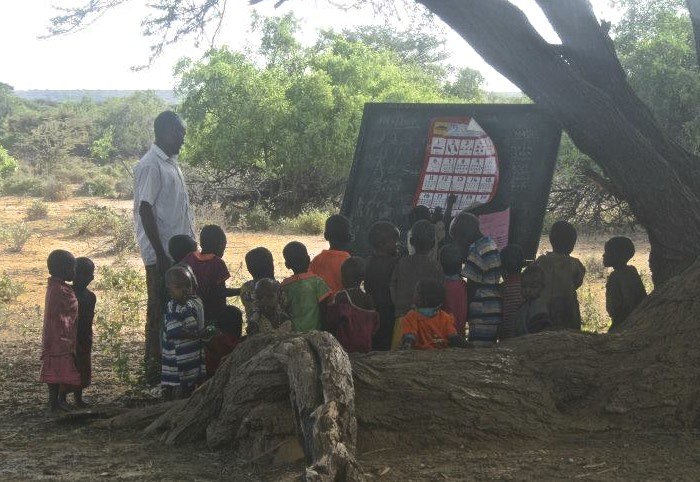
With the acute shortage of trained teachers, particularly in rural areas coupled with increasing student enrollment, obtaining a quality primary education presents a host of challenges for the Ministry of Education.  More than a decade ago they began producing Learning at Taonga Market, a radio-based primary school programme which is broadcast on ZNBC, the national broadcaster, and community radio stations.  In turn, we’ve provided our solar and wind-up radios to where ever children learn in Zambia, even if it’s under a tree.  Radio offers the possibility of reaching the greatest number of learners the most cost effectively, especially for subjects like science.  It’s a reliable distribution channel to deliver educational content to large audiences of learners and to teachers in need of upgrading their skills.
 
And like all technologies, radio has limitations, which is why we introduced MP3 capability into our device.  Valleys and far flung communities might not receive a signal.  If a girl misses a lesson, she can make it up.  If a boy doesn’t understand a concept, he can listen again and again until he does. During the rainy season when roads or small streams might become impassable, entire classes can catch up once it becomes safe.

Broadcasting on ZNBC is expensive and eats deeply into the Ministry of Education’s budget. If it can’t pay for broadcasting fees, ZNBC simply stops airing the Taonga programmes.  I discovered that after five months of being off the air around Lusaka, schools lessons will begin again later in October.  Further, due to the high broadcasting costs, the ministry is scaling back Grades 4-7 on air, meaning that tens of thousands of learners might not receive an education, or certainly not the quality and consistency that Taonga Market offers.Even some community station fees are becoming unaffordable.

Links:

Oct 14, 2012

Primes delivered to Hakalinda Community School

Lifeline Energy’s CEO Kristine Pearson has just returned from visiting community schools in Zambia that use the Taonga Market radio education programme. The Hakalinda Community School in the Southern Province was just one of the country’s expanding community schools that received Prime radios.
 
Hakalinda’s enrolment is only 120 children and Grades 4 and 5 and Grades 6 and 7 are combined. The nearest government primary school is six miles away and although primary education is free in Zambia, textbooks and uniforms for children are beyond many parents’ means.
 
The teacher, Emmanuel, 28, does his best using the teaching workbooks provided by the ministry to instruct these youngsters of subsistence farmers and cattle herders. Until now this class didn’t have a radio.  
 
Each school day at 2:00 pm, 20 Grade 1 Hakalinda learners take their place.  The Grade 1 children don’t seem to mind that they don’t have chairs, desks, a proper blackboard, or that their classroom is thatch and missing walls. Emmanuel isn’t actually a trained teacher. He’s what’s called a ‘mentor’ – a literate adult trained to use interactive radio instruction and to use radio as a teaching tool.  Nonetheless, the children call him teacher, which makes him feel proud.
 
Emmanuel was so thrilled to receive a Prime radio, saying that the radio would help him and the learners ‘so much’. Emmanuel is a volunteer and dreams of becoming a government school teacher.  Serving as a mentor in the Taonga Market programme he says will give him knowledge, discipline and patience. Taonga lessons provide clear instructions to the teachers and pupils according to the Zambian national curriculum.
 
The Taonga programmes are broadcast from the Jesuit-run Chikuni Mission Community Radio Station.  With a footprint of 35 miles, it reaches all 11 community schools in the district, all of which are receiving our radios.
 
Lifeline Energy has been providing radios to the Taonga Market programme for more than a decade. Were it not for communities who build classrooms, mentors and parents who volunteer their time and high-impact engaging radio school lessons, tens of thousands of Zambia children would miss out on an education.
 
The Taonga learners thank you for your continued support of this unique educational initiative.

Sep 25, 2012

Parents able to educate children with Taonga

Shadreck Mulus
Shadreck Mulus

Shadreck Mulus, 33, is the father of a Taonga Market child. His son, Kenny, is four and started the radio distance education programme just over a year ago. Shadreck says he is grateful for the programme as it is the only way he could have educated his son. In fact Shandrek wasn’t able to finish school because his family couldn’t afford it. He says: “When I was a child I used to travel 20km to the closest school, but when I was 12 my parents had to stop me from going. Without the Taonga programme, I don’t know what I would have done for Kenny.”

As an educational tool Shadreck says the Taonga market programme is excellent: “It is a much better education than I received. We used to just listen to a teacher, which was very boring. With the radio, the children are very involved in the class. Kenny loves coming to school.”   

An anonymous donor will match all new monthly recurring donations, but only if 75% of donors upgrade to a recurring donation today.
Terms and conditions apply.
Make a monthly recurring donation on your credit card. You can cancel at any time.
Make a donation in honor or memory of:
What kind of card would you like to send?
How much would you like to donate?
gift Make this donation a gift, in honor of, or in memory of someone?

Reviews of Lifeline Energy

Great Nonprofits
Read and write reviews about Lifeline Energy on GreatNonProfits.org.
